
Victorian Commode Drawers
Victorian commode drawers bring together solid timber utility and decorative continental flair for practical bedroom storage.
Victorian Commode Drawers
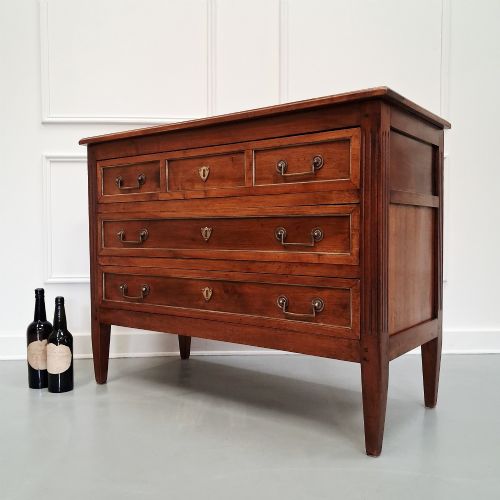
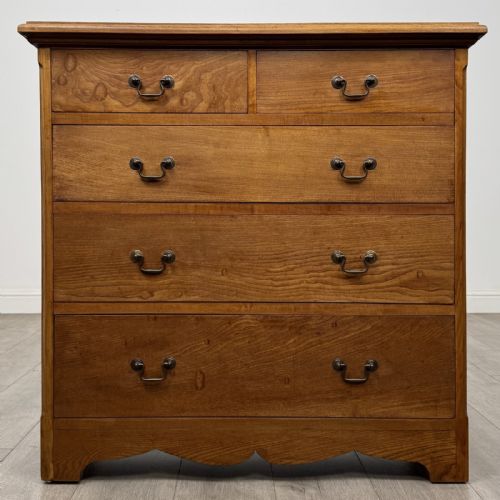
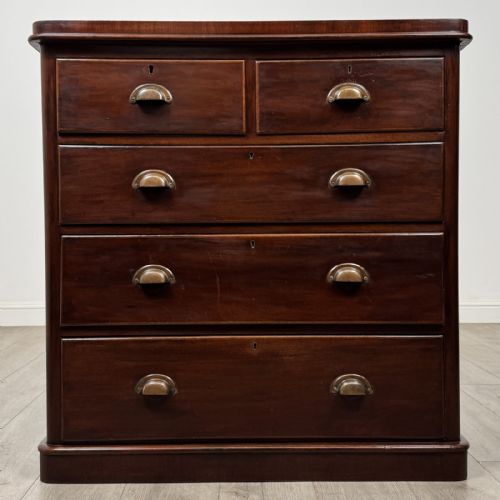
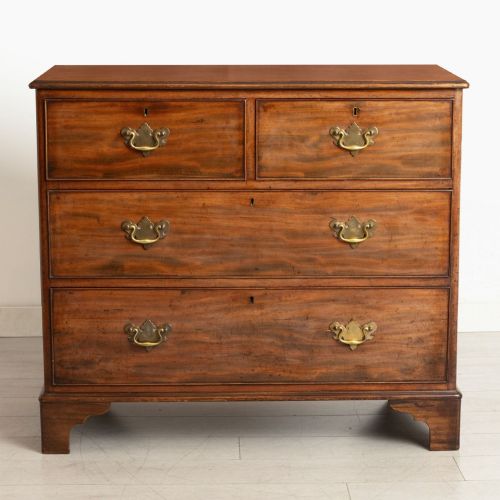
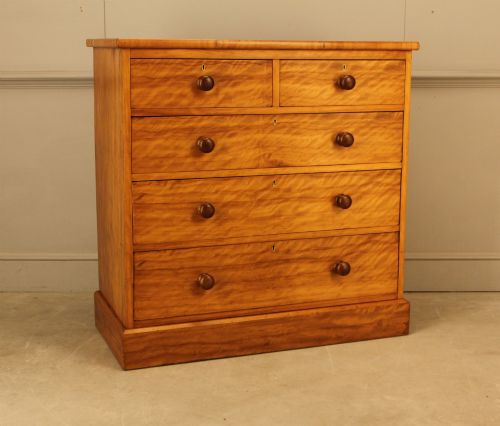
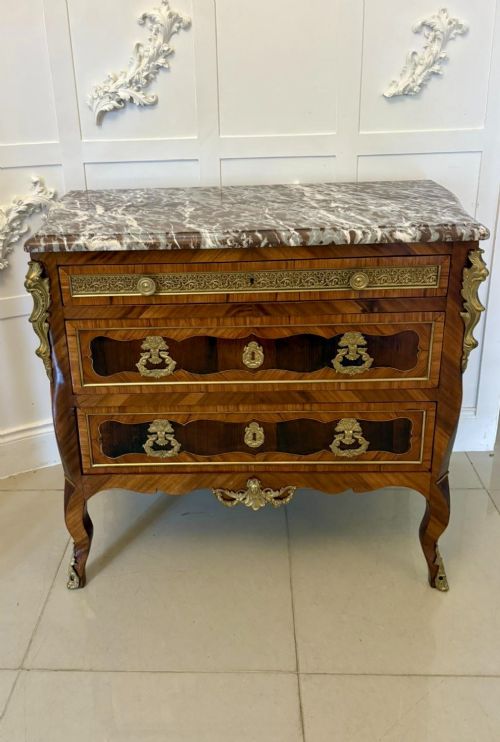
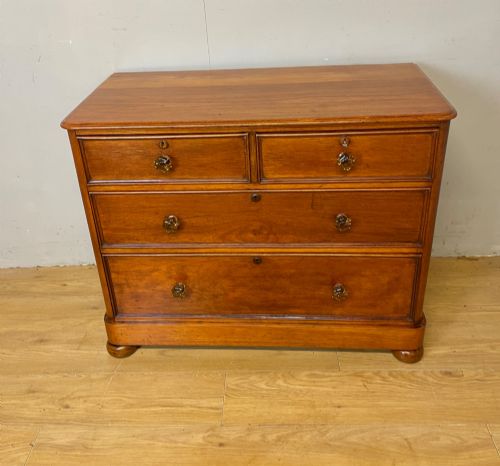
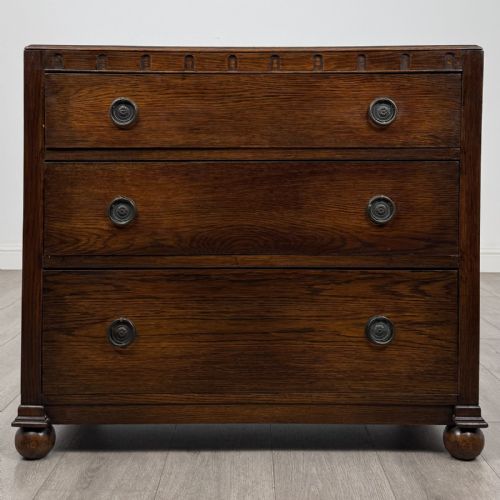
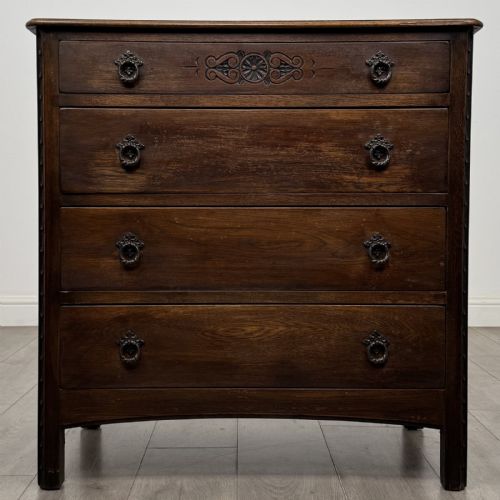
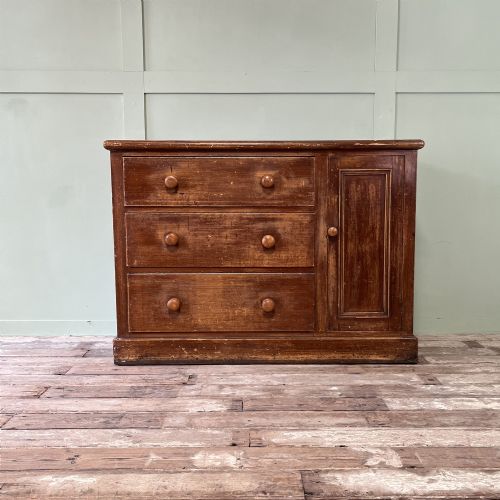
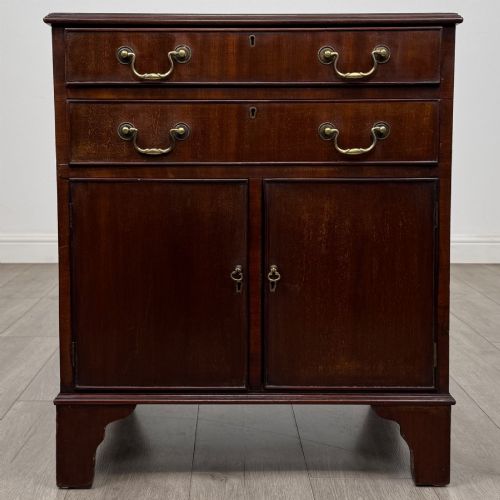
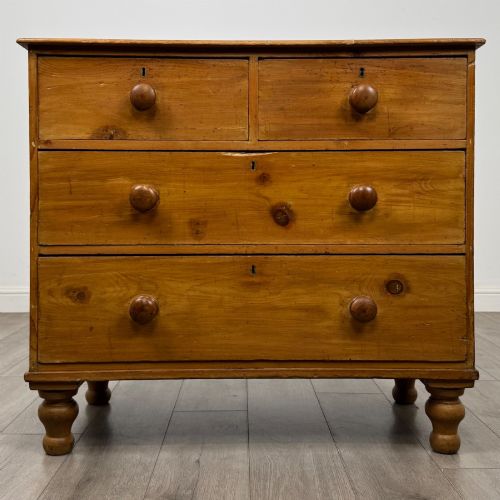
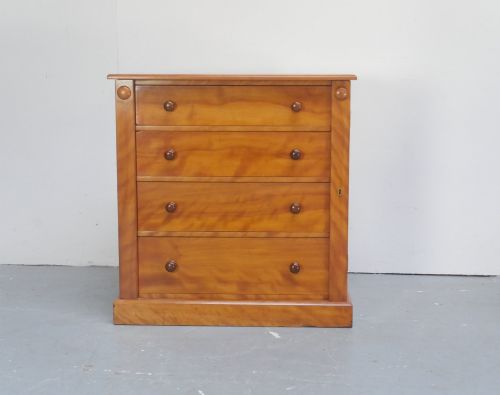
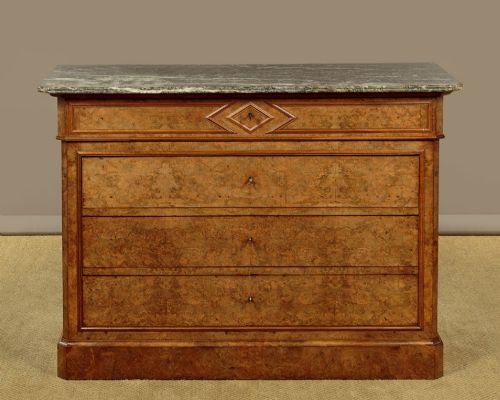
Victorian commode drawers encompass sturdy domestic chests and continental display pieces designed for bedroom and parlour storage. The selection spans straightforward British pine and mahogany utility pieces alongside French-influenced marble top commodes.
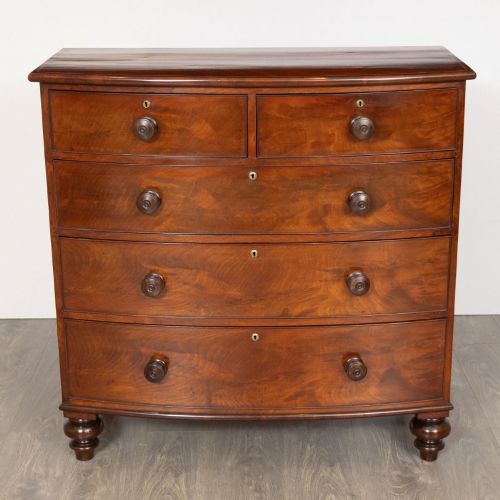
Makers utilised various scales, ranging from low three-height models to large bowfront designs and serpentine outlines. These forms reflect both English country workshops and metropolitan cabinet makers operating during the nineteenth century.
How they were made
Carpenters constructed carcasses primarily from mahogany and pine, frequently applying flame mahogany veneer or decorative marquetry and parquetry. Workshops mounted heavy stone slabs onto French commode tops and integrated brass handles or ormolu mounts.
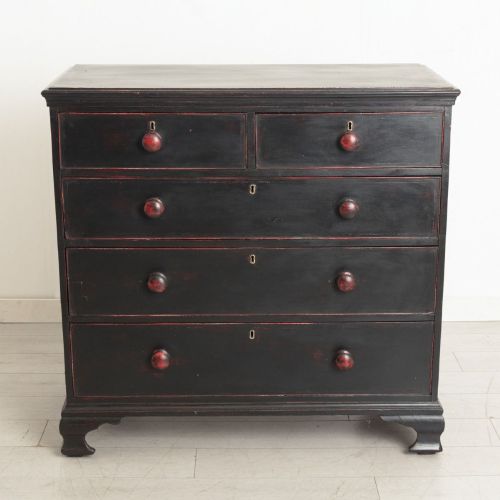
Surface treatments include painted finishes, stencilled details, and clear wax polish over scrubbed timber. Construction methods incorporated dovetailed drawer boxes and turned bun handles secured to multi-height drawer arrangements.
Certain pieces cleverly disguise themselves as ordinary chests while concealing specialised commode functions within.
What varies in quality
Standard alters significantly between utilitarian domestic pine and elaborately veneered French models featuring heavy marble tops. Figured timbers like flame mahogany and burr walnut elevate decorative execution above plain painted or scrubbed pine surfaces.
The precision of serpentine shaping and the integration of intricate parquetry or gilt-bronze mounts separate standard production items from exceptional cabinet work.
Heal and Son·Howard and Sons
The Victorian Commode Drawers Glossary
- Serpentine outline
- A cabinet front featuring a convex centre flanked by concave curves. This contour requires skilled carpentry to shape timber accurately.
- Parquetry
- Geometric wood inlay patterns forming decorative surfaces on tabletops and drawer fronts. Artisans arrange contrasting timber tiles to create visual depth.
- Flame mahogany
- A veneer cut from the branch junction of a mahogany tree showing a distinct tongue-like grain pattern. Cabinet makers prize this figuring for formal furniture.
- Ormolu
- Gilt-bronze mounts applied as decorative ornaments to furniture corners and handles. French commodes frequently utilise these gilded fixtures.
- Marquetry
- Detailed picture inlay using various wood veneers to create floral or abstract motifs. Craftsmen piece together thin sheets of coloured timber within the primary surface.
Victorian Commode Drawers: Frequently Asked Questions
What is the difference between a chest of drawers and a commode?
English chests generally rely on exposed wood drawer fronts for utilitarian storage. Continental commodes frequently incorporate marble tops and decorative veneer.
Both forms served similar storage functions within nineteenth-century bedrooms and sitting rooms.
How do I identify early Victorian pieces?
Early examples often feature simpler mahogany or scrubbed pine construction with fewer decorative additions. Proportions tend to be compact, utilising lower three-drawer arrangements.
Later Victorian items frequently introduce bolder serpentine outlines or imported marble surfaces.
Are painted pine chests authentic to the period?
Stencilled and painted pine examples were standard domestic furnishings in Victorian bedrooms. Workshops produced these items for practical household use rather than formal display.
Waxed finishes and plain scrubbed timber represent alternative treatments found on utilitarian country pieces.
Where should I place a marble top commode?
Marble top commodes function well as bedroom storage or as sideboard surfaces in reception rooms. The heavy stone top provides a durable, heat-resistant shelf.
Keep these heavier pieces away from direct heat sources to protect the underlying timber and veneer.