





Victorian Coin Chest
A victorian coin chest provides tidy, secure storage for small treasures, combining precision joinery with rich timber grains.
Victorian Coin Chest
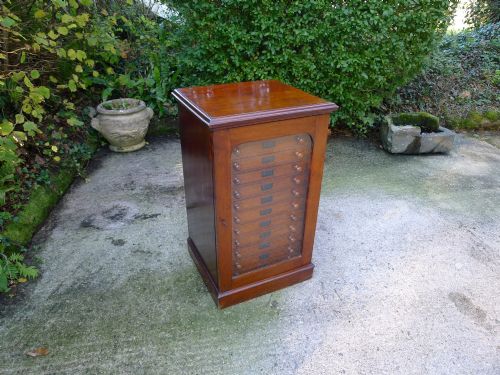
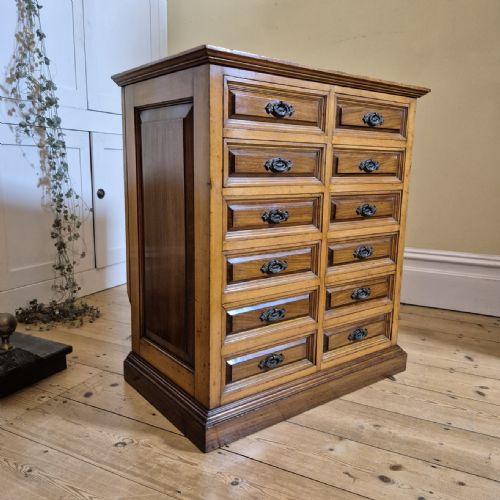
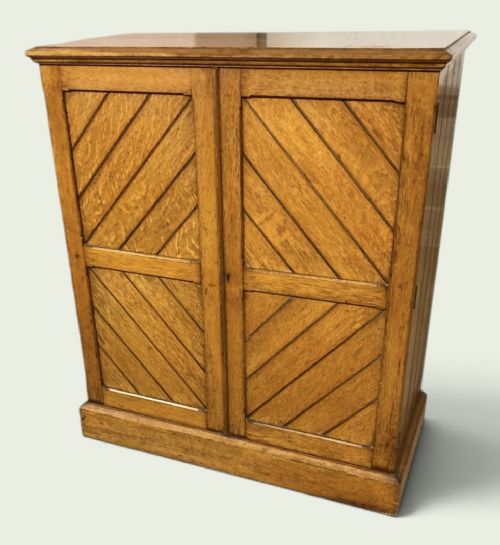
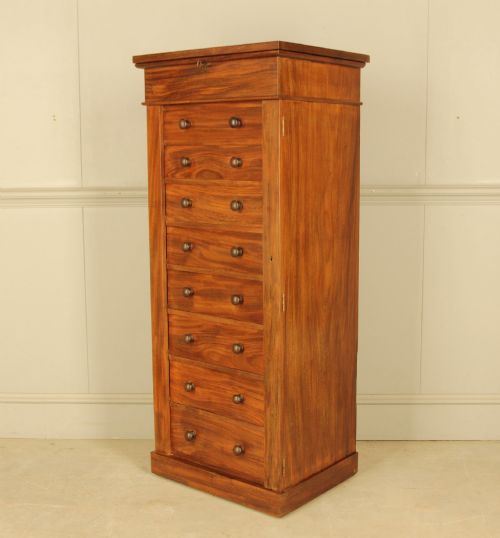
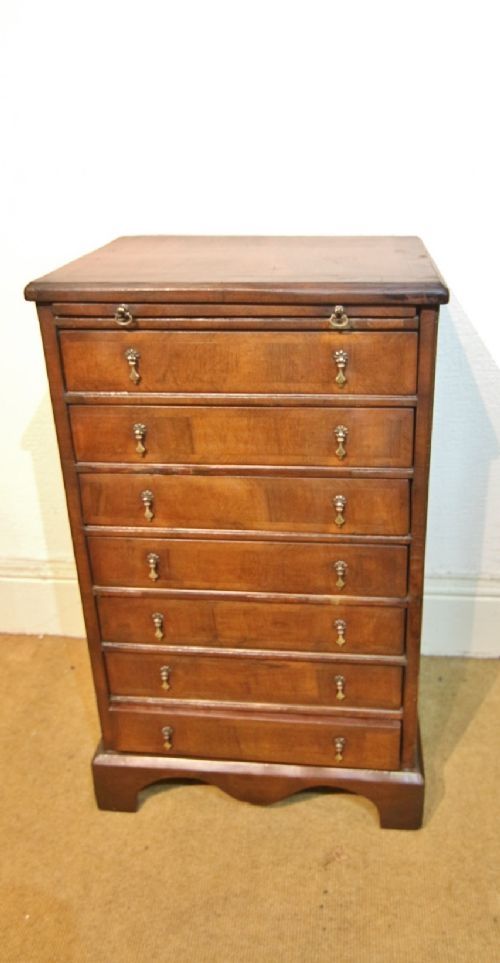
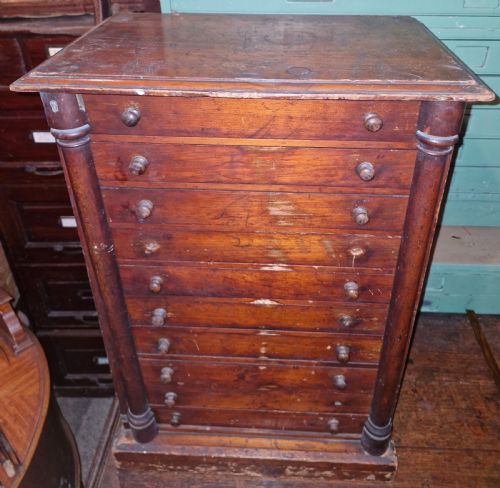
A victorian coin chest is a specialised piece of furniture designed to house numismatic collections, medals, or natural history specimens safely within multiple shallow drawers. Most examples found on this page date from the nineteenth century, spanning from the mid-Victorian era through to nineteen hundred, taking forms such as collectors cabinets, specimen chests, and miniature drawer units.
Buyers will encounter various formats ranging from desktop specimen cases with glass fronts to large multi-drawer floor-standing cabinets. These items originate from the Victorian period, frequently utilising hardwoods and softwoods configured for organised display.
How They Were Made
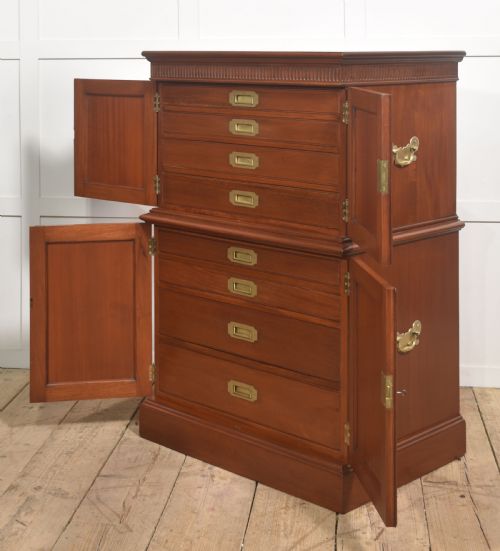
Cabinet makers constructed these pieces primarily using solid mahogany, walnut, burr walnut, and oak, alongside secondary timbers like deal and pine. Many incorporate brass hardware, such as campaign handles and locking mechanisms, while others feature glazed glass doors to protect contents from dust while permitting display.
The construction relies on tightly fitted drawer runners to support numerous shallow tiers without sagging. Finishes involve polished timber surfaces, stained pine, and occasional painted exteriors that highlight the natural grain of satin wood and satin birch.
Victorian Coin Chest Retail Price Guide 2026
Typical asking prices for victorian coin chest among the pieces listed under this phrase on Sellingantiques today, from the lower quarter to the upper quarter. They describe what is for sale here now, not the wider market.
Listings feature woods including mahogany, walnut, burr walnut, oak, satin walnut, and pine across nineteenth-century periods.
What Varies in Quality
The distinction between standard utility storage and high-end craftsmanship lies in the selection of figured timbers, such as burr walnut or figured English oak, and the precision of the internal drawer construction. Cabinets by known makers or those housing dozens of uniform drawers reflect superior workshop standards and specialised joinery.
Attention to detail in the brass fixtures, the inclusion of original locking mechanisms, and the overall integrity of the multi-tier framework separate standard specimens from exceptional examples.
Standish·J T Crockett
The Victorian Coin Chest Glossary
- Specimen cabinet
- A piece of furniture fitted with many shallow drawers intended for organising small objects and natural history items. These units keep delicate items protected in stacked tiers.
- Campaign style
- Furniture built for travel featuring recessed brass handles and reinforced corners for durability. Such designs prioritize sturdy portability.
- Burr walnut
- Timber taken from a tree growth that yields highly figured, swirling grain patterns prized for decorative veneering. It creates a rich, textured surface on cabinet doors.
- Standish
- A maker or firm associated with the production of fine nineteenth-century storage cabinets. Pieces bearing this association command attention for their workshop standards.
Victorian Coin Chest: Frequently Asked Questions
What were victorian coin chests originally used for?
These cabinets were built to house private collections of coins, medals, and small specimens safely. Collectors utilised the shallow drawers to organise items by category while protecting them from handling.
The numerous tiers allowed enthusiasts to display extensive collections in a compact space. Many units featured locking doors to secure valuable contents.
How do I identify a nineteenth century piece?
Examination of the timber, construction methods, and hardware reveals the period of manufacture. Nineteenth-century examples typically employ solid mahogany, oak, or walnut with hand-cut dovetails on the drawer joints.
Makers of this era utilised specific secondary woods and distinct brass locking mechanisms. Labels or stamps occasionally found inside the drawers provide further confirmation of origin.
Can these chests be used for modern storage?
The shallow drawers suit the organisation of jewellery, watches, stationery, and small collectables. The partitioned or felt-lined interior compartments protect delicate items from damage.
Placing the cabinet on a sturdy surface ensures safe daily access to the drawers. Regular polishing maintains the condition of the exterior timber.
What is the difference between a cabinet and a chest?
Collectors cabinets frequently feature glazed or panelled doors enclosing a stack of drawers. Chests typically present the drawers directly on the exterior without a surrounding door enclosure.
Both forms share the characteristic multi-tier internal layout designed for small items. Selection depends on whether display behind glass or direct drawer access is preferred.