

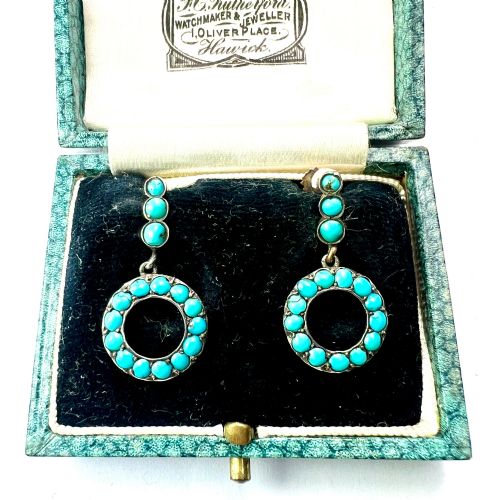


Victorian Cluster Earrings
Victorian cluster earrings gather central stones or motifs within a border of smaller gems, bringing distinct nineteenth-century presence to the ear.
Victorian Cluster Earrings
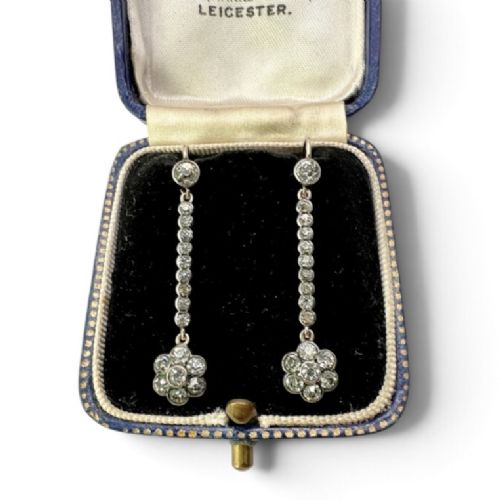
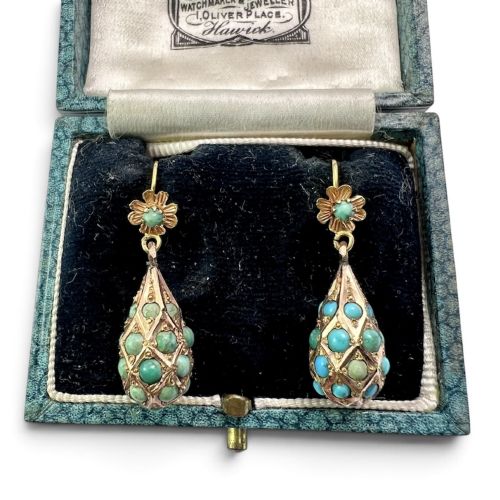
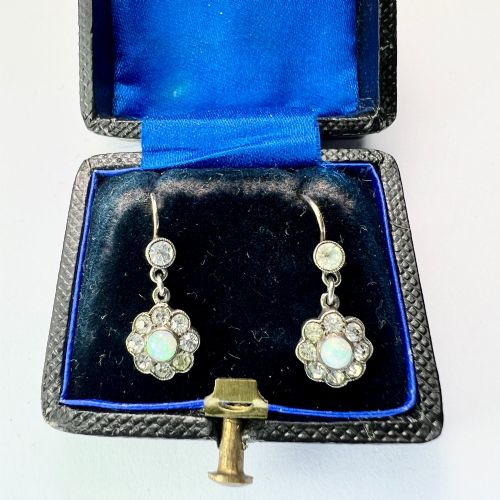
Victorian cluster earrings comprise a central focal gem or flower motif encircled by smaller stones, designed to sit directly on the lobe or suspend as drops. The most frequent iteration encountered here is the gold or silver-backed floral or geometric cluster set with garnets, diamonds, turquoise or pearls.
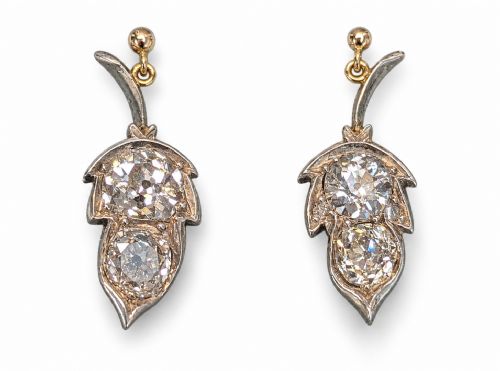
Makers and jewellers of the period drew upon diverse influences, yielding styles that range from austere Aesthetic Movement motifs and canetille work to ornate Austro-Hungarian halo designs and foliate ivy leaf patterns.
Forms extend from tight stud configurations to dangling teardrop shapes, hoop variants, and hinged drop arrangements incorporating natural pearls and paste.
Materials and construction
Artisans employed yellow and rose gold, often graded at nine, fifteen, or eighteen carats, alongside silver settings designed to maximise the brilliance of old cut diamonds.
Gems such as Bohemian garnets, turquoise, rubies, amethysts, and green tourmalines were paired with organic materials like seed pearls, natural pearls, and mabé pearls, occasionally augmented by paste and enamel.
Construction techniques utilised collet settings, prong arrangements, and foil-backing behind specific stones to intensify colour depth.
Victorian Cluster Earrings Retail Price Guide 2026
Typical asking prices for victorian cluster earrings among the pieces listed under this phrase on Sellingantiques today, from the lower quarter to the upper quarter. They describe what is for sale here now, not the wider market.
Grape and ivy leaf motifs let nineteenth-century wearers quietly whisper botanical secrets straight from the garden onto the lobe.
Distinctions in craftsmanship
Quality rests upon the harmony of stone selection, where matched natural colour gradients in garnets or uniform lustre in pearls elevate the overall composition.
The precision of metalwork determines refinement, distinguishing hand-formed canetille wirework and delicate claw settings from simpler production methods.
Knoll & Pregizer
The Victorian Cluster Earrings Glossary
- Cluster
- An arrangement where a central stone or motif is surrounded by a border of smaller gems. This configuration maximises visual impact and light reflection.
- Canetille
- Fine filigree metalwork resembling lace, popular in nineteenth-century jewellery production. It involves twisting and soldering gold or silver wires into openwork patterns.
- Old cut
- A diamond facet style hand-cut before modern machinery, characterised by a smaller table, higher crown, and open culet. These stones catch candle and gas light distinctively.
- Paste
- Hand-cut glass used as a gemstone substitute in antique jewellery. High-quality paste displays deliberate faceting and deep colour.
- Silver gilt
- Silver that has been coated with a thin layer of gold. This technique was frequently utilised in Austro-Hungarian pieces to provide a warm contrasting frame for garnets.
Victorian Cluster Earrings: Frequently Asked Questions
How do I wear antique screwback earrings?
Screwback and screw-on mechanisms use a threaded post and a small paddle to secure the piece onto the unpierced lobe without excessive pinching. Adjust the tension gently until the fitting feels secure against the skin.
Ensure you do not over-tighten the screw mechanism, as historic metal threads can strip with undue force. With care, these fastenings hold firm throughout a day of wear.
Are these earrings suitable for daily wear?
Historic cluster earrings can be worn regularly provided they receive appropriate consideration for their age and delicate settings. Stones like pearls and turquoise require protection from moisture and cosmetics.
Store them individually in soft pouches to prevent abrasion between the settings and other pieces in your collection. Remove them before swimming, sleeping, or strenuous physical activity.
What is Bohemian garnet?
Bohemian garnets originate from the region historically known as Bohemia in central Europe, celebrated for their deep, fiery red hue. Jewellers frequently set these small, rose-cut stones closely together to form dense floral or leaf clusters.
The intense saturation of the garnet material allows pieces to catch light warmly, often mounted in gold or silver gilt to enhance the fiery red tones.
How can I tell a Victorian cluster from a later style?
Victorian pieces often reveal specific construction characteristics upon close examination of the reverse, including closed-back foil settings in earlier examples and hand-cut stones with slightly irregular facets. The presence of natural pearls, old cut diamonds, and regional design traits like canetille further anchor the work in the nineteenth century.
Later Edwardian or twentieth-century adaptations frequently introduce lighter platinum elements, brighter white gold alloys, or more uniform modern gemstone cutting techniques that contrast with nineteenth-century hand fabrication.