

Victorian Cabriole Legs
Victorian cabriole legs define seating and tables from the nineteenth century, bringing curved grace and sturdy proportion to period interiors.
Victorian Cabriole Legs
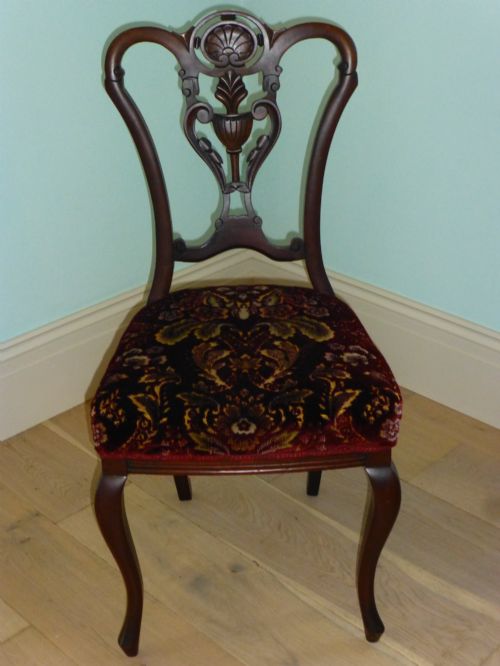
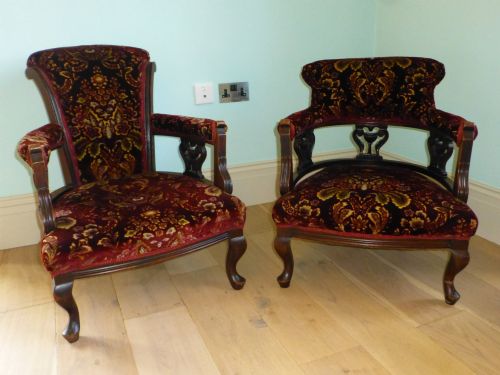
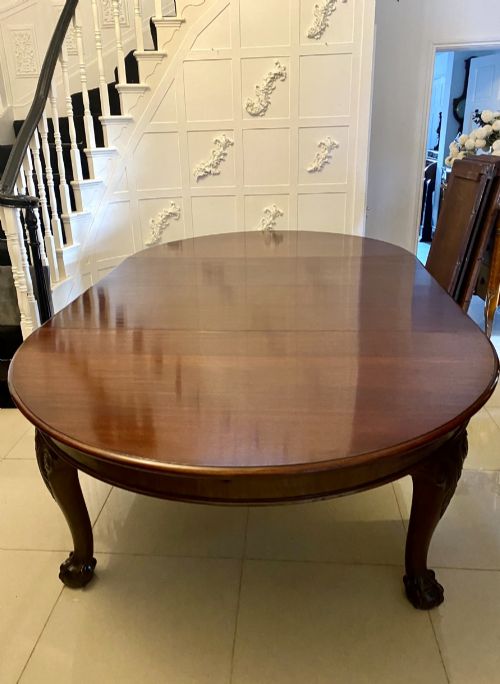
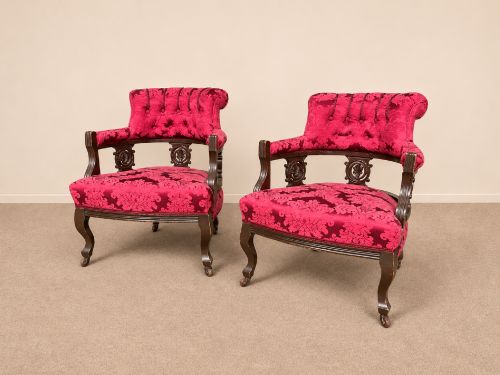
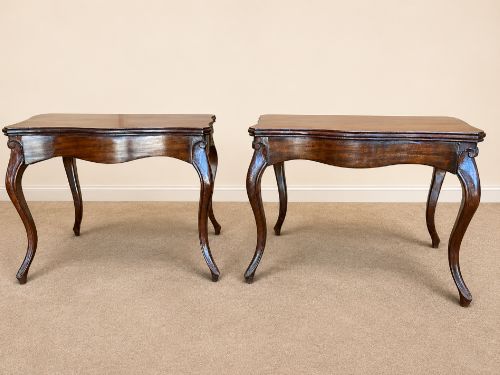
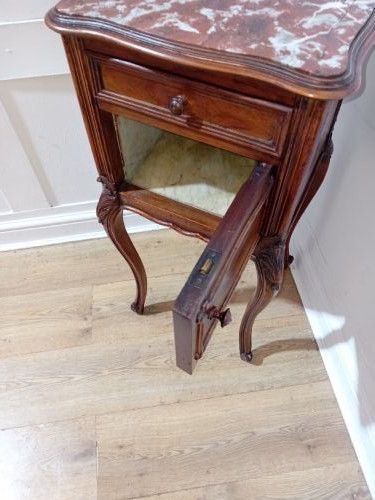
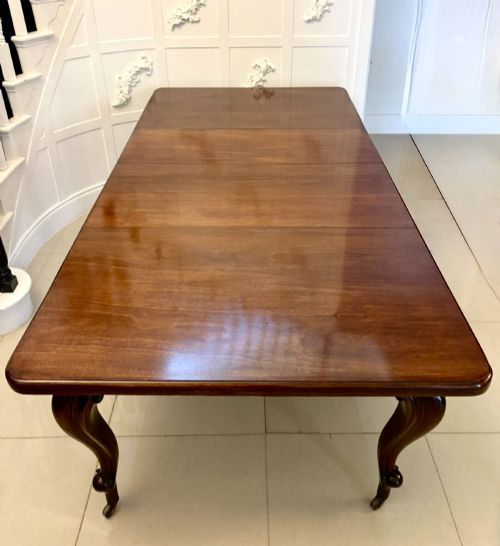
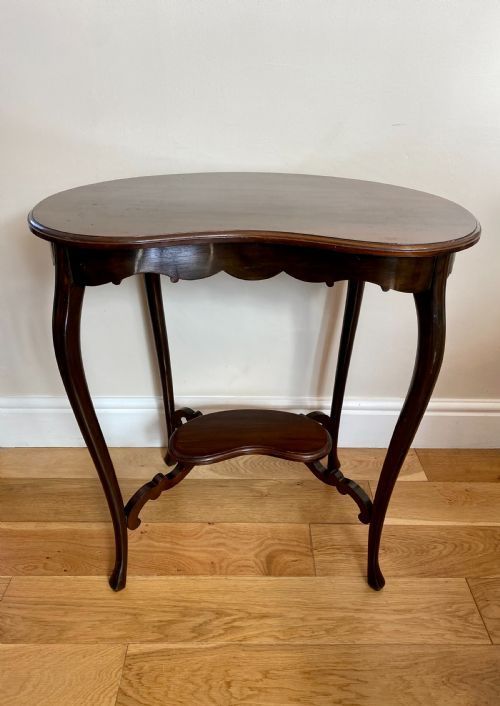
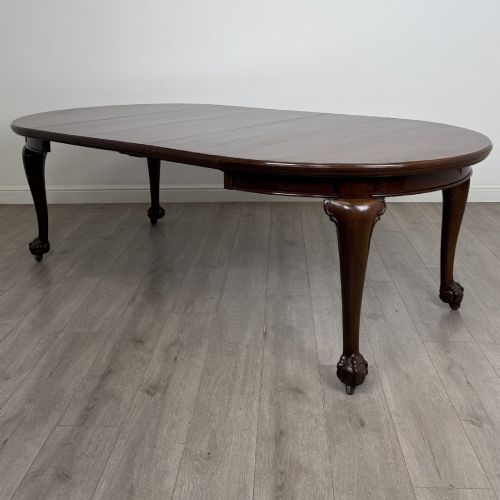
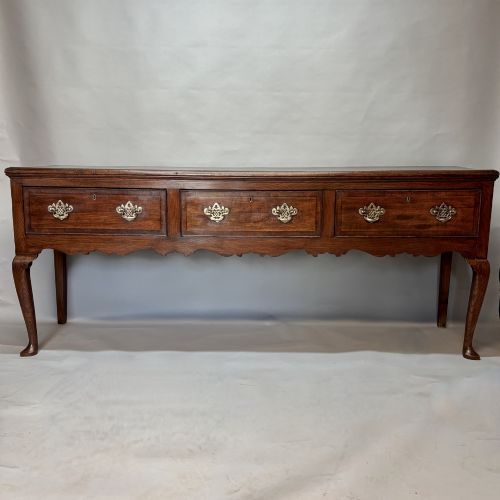
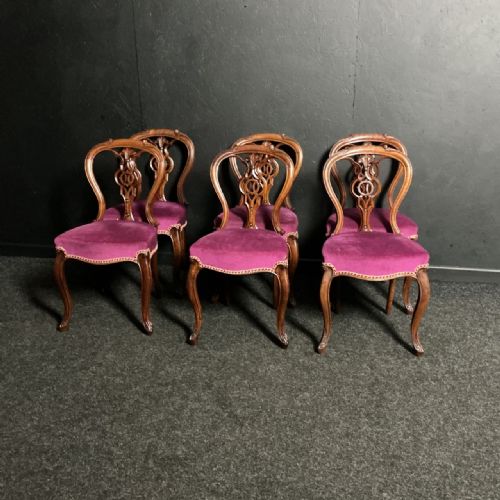
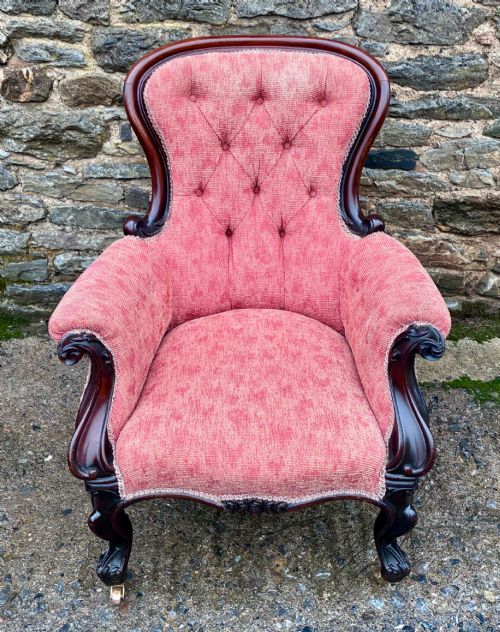
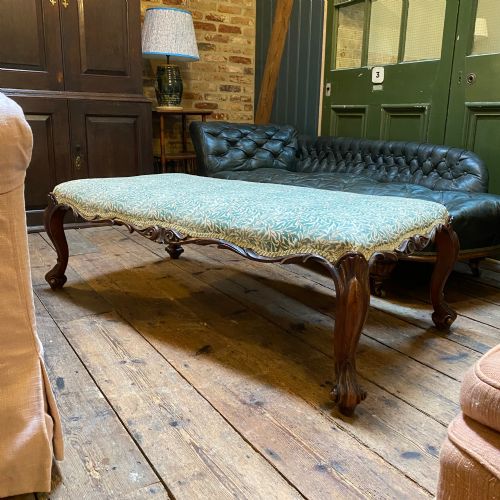
Victorian cabriole legs appear on armchairs, dining chairs, console tables, and occasional furniture spanning the nineteenth century. These items encompass distinct revivals alongside traditional British forms, drawing inspiration from French Rococo and Chippendale aesthetics.
Mahogany and walnut dominate the offerings on this page, often taking the form of occasional tables, desks, and seating groups. Pieces range from straightforward mahogany tripod tables to elaborate marquetry centre tables and burr walnut writing desks.
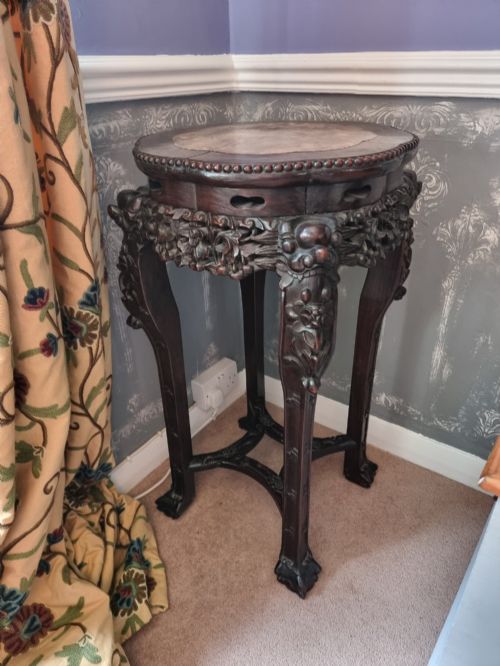
Origins stretch across English workshops and continental influences, including French Napoleon III pieces and Anglo-Indian padauk furniture. Buyers encounter everything from single wine tables to full sets of dining chairs sharing this distinctive double-curved leg form.
Materials and construction
Cabinet makers utilised dense hardwoods such as mahogany and walnut, frequently selecting burr walnut veneers for decorative surfaces on tables and desks. Brass, ormolu, and gilt bronze mounts appear alongside leather writing surfaces and upholstered seats in velvet, fabric, and green textiles.
Carving shapes the wooden cabriole forms, requiring skilled handwork to achieve the characteristic outward knee and inward scroll of the foot. Marquetry and parquetry inlay further ornament specific French and English occasional tables and desks.
Victorian Cabriole Legs Retail Price Guide 2026
Typical asking prices for victorian cabriole legs among the pieces listed under this phrase on Sellingantiques today, from the lower quarter to the upper quarter. They describe what is for sale here now, not the wider market.
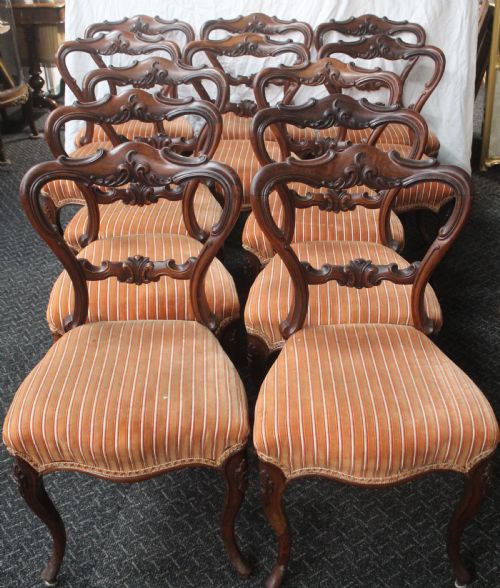
The selection includes seating groups ranging from single hall chairs to sets of ten dining chairs.
Assessing quality
The crispness of hand-carved ornamentation on the knees and feet distinguishes superior examples from simpler production. Subtle variations in timber selection, such as richly figured burr walnut veneers or dense mahogany, mark the upper tier of tables and chairs.
Cohesion of design across matched sets, particularly dining chairs and armchairs, indicates workshop standard. Finer pieces integrate bronze mounts, marquetry details, or stamped maker signatures that elevate the piece beyond standard utilitarian furniture.
Gillow·Howard and Sons·Beare Falcke
The Victorian Cabriole Legs Glossary
- Cabriole leg
- A furniture leg that bends outward at the knee and tapers inward toward the foot, mimicking animal limbs. This form became central to Rococo and revival furniture.
- Marquetry
- Decorative woodwork where pieces of veneer are fitted into a ground to form geometric or pictorial patterns. This technique frequently decorates top surfaces of occasional tables.
- Ormolu
- Gilded bronze used for decorative mounts and furniture trim during the nineteenth century. It adds metallic contrast to kingwood and walnut pieces.
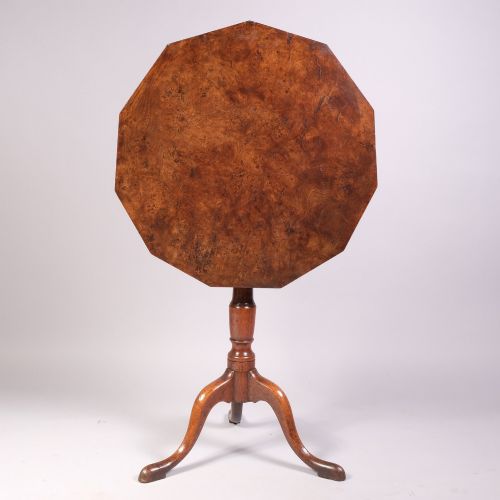
- Tripod table
- A small freestanding table supported by a central pillar and three legs. These often feature tilting mechanisms for easy storage.
Victorian Cabriole Legs: Frequently Asked Questions
What periods do these pieces date from?
Items originate from the nineteenth century, specifically spanning decades from the eighteen-fifties through the eighteen-nineties. Design influences draw from earlier Georgian and French Rococo eras.
Datings align with Victorian manufacturing periods, incorporating both British workshop output and continental French items.
How do I use an occasional table?
Occasional tables function as flexible surfaces for lamps, books, or decorative items within living spaces and bedrooms. Tilt-top versions allow the surface to stand vertically against a wall when not in use.
Smaller tripod and wine tables easily move between rooms to suit changing seating arrangements.
Are these items suitable for daily dining?
Dining chairs and sets handle regular seating while providing nineteenth-century character to modern dining rooms. Sturdy mahogany and walnut frames offer durability for everyday use.
Upholstered armchairs and side chairs function well around dining tables or as standalone seating in studies.
How do I distinguish French revival styles?
French revival pieces incorporate Louis XV and Napoleon III aesthetics, often featuring gilt bronze mounts, kingwood veneers, or elaborate marquetry. These items lean toward ornate curves and decorative hardware.
British Victorian pieces tend to focus on carved mahogany or walnut frames with traditional cabriole shapes.