





Victorian Agate Pendant
A victorian agate pendant brings together banded stones and precious metals, offering a wearable piece of nineteenth-century lapidary work.
Victorian Agate Pendant
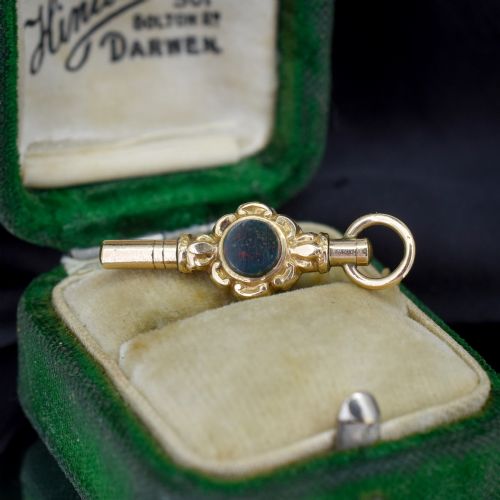
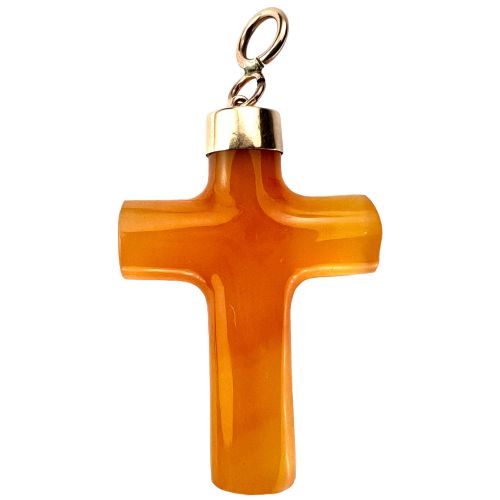
When searching for a victorian agate pendant, a buyer encounters pieces primarily from the nineteenth century alongside occasional Georgian and Edwardian examples. The selection includes crosses, lockets, padlocks, and spinning fobs set in silver, 9ct gold, and 18ct gold.
Many items reflect a distinct regional identity through Scottish pebble and revival styles, incorporating bloodstone, carnelian, and hardstone alongside traditional banded agate. These ornaments frequently double as watch keys or charms, demonstrating the versatility of period jewellery designs.
The objects span varied configurations such as caged silver work, carved crosses, and domed settings. This diversity shows how makers adapted hardstones to suit both daytime attire and formal wear during the Victorian era.
Materials and construction
Lapidaries shaped natural chalcedony, bloodstone, and carnelian into smooth facets, cabochons, and carved forms like crosses and equestrian motifs. These hardstones were selected for their natural banding and rich colour variations.
Gold and silver formed the structural mounts, ranging from 9ct and 18ct gold to silver settings and gold gilt finishes. Metalsmiths secured the stones using bezels, wire cages, and articulated joints for spinning fobs.
Victorian Agate Pendant Retail Price Guide 2026
Typical asking prices for victorian agate pendant among the pieces listed under this phrase on Sellingantiques today, from the lower quarter to the upper quarter. They describe what is for sale here now, not the wider market.
Listings feature periods spanning Georgian, Victorian, and Edwardian eras, executed in silver, 9ct gold, and 18ct gold.
Evaluating craftsmanship and materials
Quality rests in the depth and sharpness of the stone's natural banding, the precision of the lapidary work in carved crosses and geometric segments, and the harmony of colour within multi-stone arrangements.
The weight and purity of the metal mount, from solid 18ct gold to silver and gold-gilt variants, dictate the upper tier of manufacture. Integrated mechanical elements like functioning swivel bezels and secure padlocks further distinguish superior execution.
The Victorian Agate Pendant Glossary
- Agate
- A variety of chalcedony quartz characterised by coloured stripes or bands. It was widely used in nineteenth-century Scottish pebble jewellery.
- Fob
- A small medallion, seal, or ornament attached to a pocket watch ribbon or chain. Many survive today converted into pendants.
- Bloodstone
- A dark green chalcedony flecked with red jasper spots. Often paired with agate in Victorian fobs and brooches.
- Hardstone
- A semi-precious stone shaped and polished for decorative use rather than faceted as a gemstone. Includes agate, carnelian, and chalcedony.
- Padlock
- A clasp shaped like a miniature padlock, frequently used on Victorian bracelets and adapted as a pendant charm.
Victorian Agate Pendant: Frequently Asked Questions
How were watch keys used as pendants?
Victorian watch keys were functional tools used to wind pocket watches before keyless winding mechanisms became standard. Owners wore them on chains alongside fobs and seals.
As watches changed, these items were repurposed as pendants, retaining their spinning mechanisms and hardstone panels for decorative appeal.
What is Scottish pebble jewellery?
Scottish pebble jewellery incorporates locally sourced Scottish hardstones, particularly agates, jaspers, and cairngorms, set into silver or gold. The style gained widespread popularity during the Victorian era.
Pieces often feature interlocking geometric patterns of multi-coloured stones, reflecting nineteenth-century romanticism and royal patronage of the Scottish Highlands.
How do I care for antique agate jewellery?
Agate is a durable quartz but benefits from gentle handling to protect the surrounding metal mounts and delicate carved edges. Clean gently with a soft cloth without harsh chemical immersions.
Store pieces individually to prevent scratching between harder gemstones and softer precious metals like 9ct and 18ct gold.