


Velvet Wingback Armchair
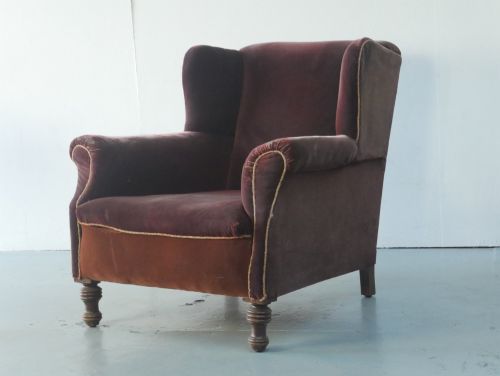
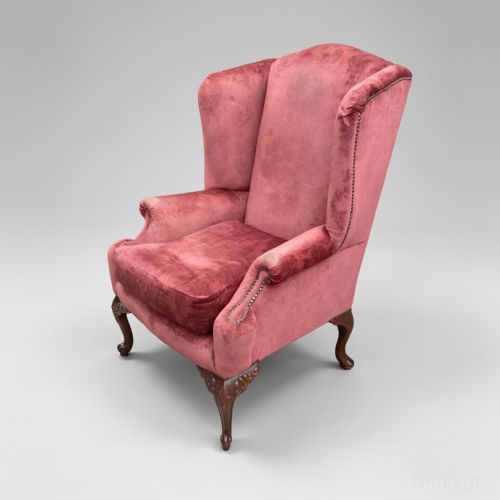
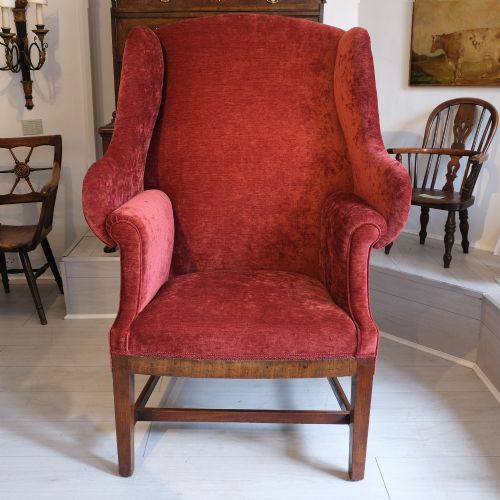
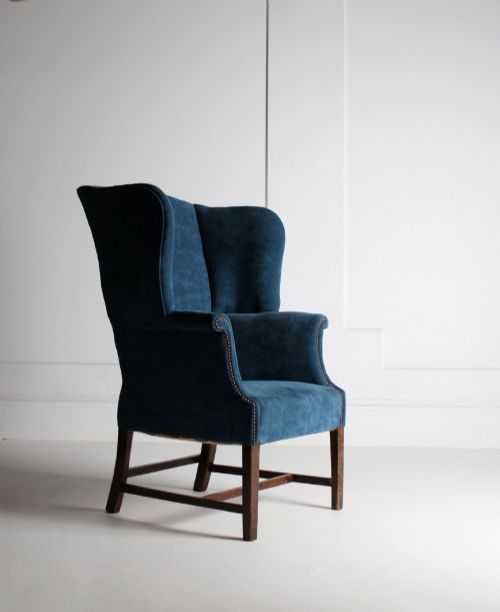
A velvet wingback armchair offers deep draught protection and generous proportions, bringing centuries of upholstered comfort and fireside presence to a room.
Velvet Wingback Armchair
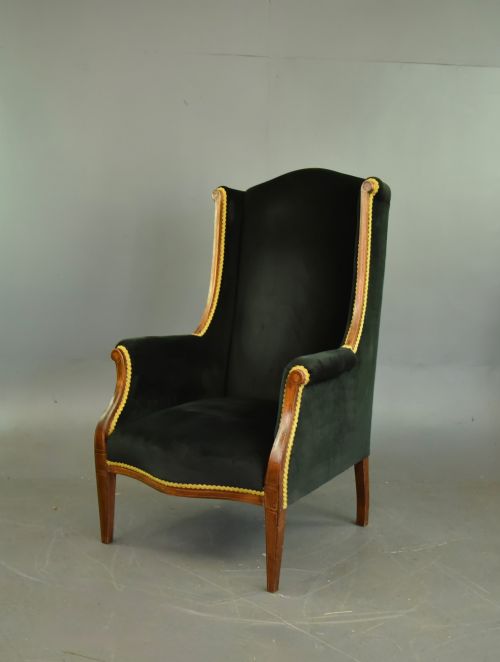
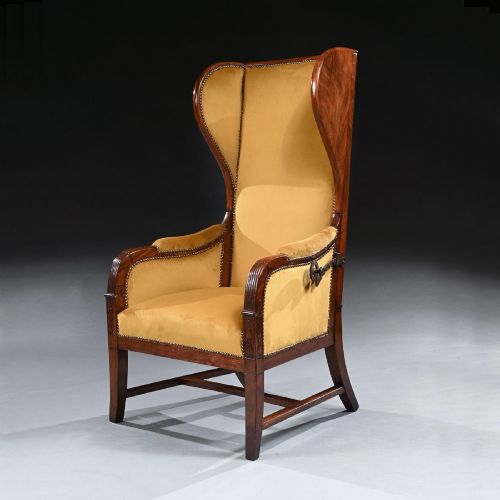
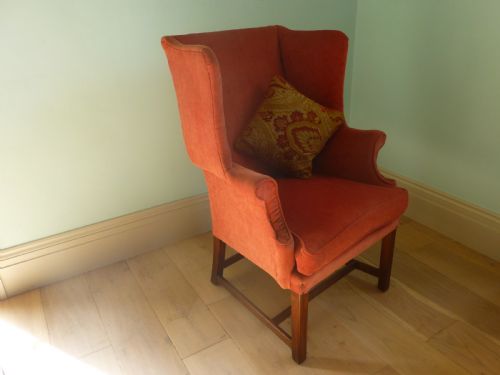
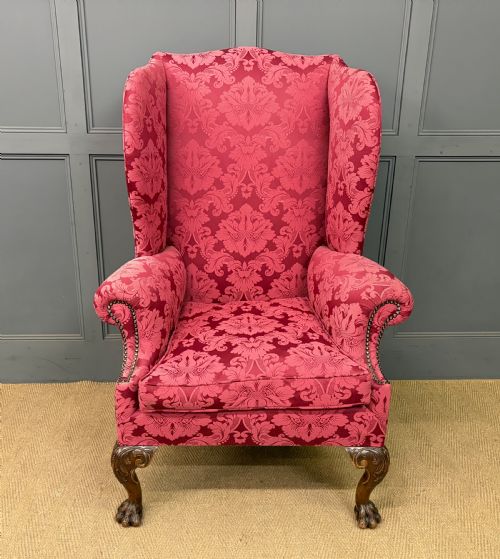
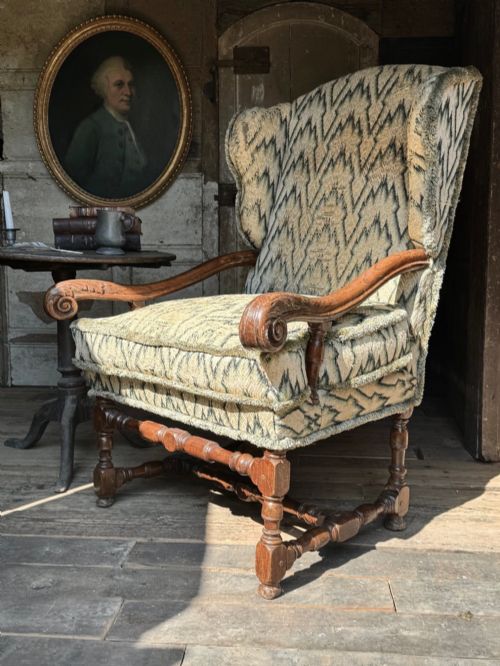
A velvet wingback armchair is a substantial seating form defined by protective side panels on the upper back designed to shield the sitter from draughts. The selection spans robust Georgian examples through to Edwardian interpretations and later revival styles, each offering deep seats and substantial backrests.
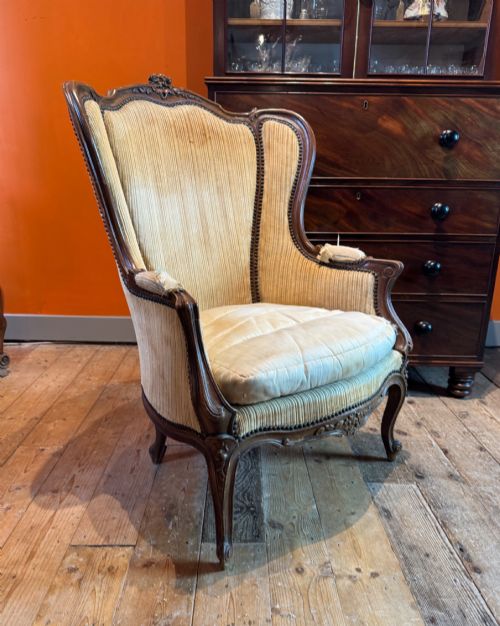
The version most commonly met on this page is the nineteenth century wing arm chair, often upholstered in textile or plush pile. These pieces frequently appear in mahogany, walnut, or oak frames, reflecting both English vernacular traditions and continental French influences.
Makers and workshops range from country house iterations to sophisticated urban pieces bearing maker attributions. The form bridges formal library seating and relaxed fireside comfort, adapting readily to various period interiors.
Materials and construction
The underlying frames are constructed from hardwoods such as mahogany, walnut, oak, and general timber, providing the structural integrity required for deep upholstery. Joinery relies on traditional methods to support the substantial weight of the winged back and sprung or stuffed bases.
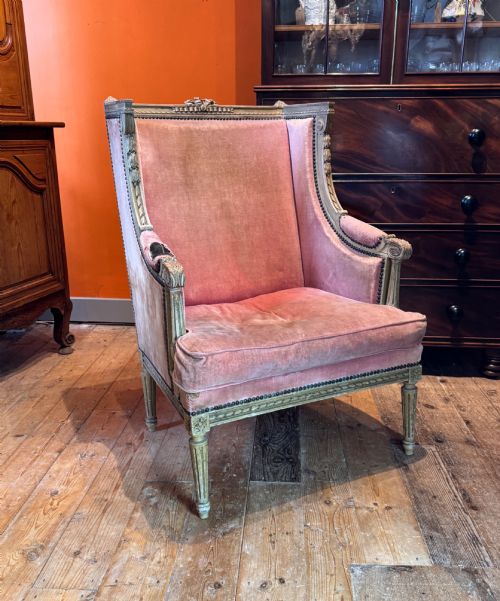
Upholstery materials encompass traditional textiles, chenille twill, and velvet, paired with supportive stuffing materials. Decorative elements sometimes include brass details, inlaid woodwork, or carved and gilded surfaces on continental frames.
At least one past owner lived with a threadbare green velvet surface that bore witness to generations of comfortable repose.
Distinctions in quality
Quality resides in the architectural proportions of the wings and the integrity of the wooden frame beneath the upholstery. Finer examples display harmonious lines, balanced arm heights, and robust timber structures that have retained their rigidity over centuries.
HOWARD AND SONS·Foot and Son
The Velvet Wingback Armchair Glossary
- Wingback
- An armchair featuring protective side panels attached to the backrest designed originally to deflect cold draughts. These wings frame the sitter's head.
- Barrel back
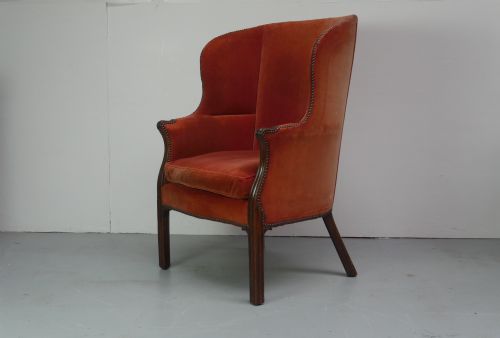
- A seating form where the back and arms form a single continuous semicircular curve. This shape envelops the occupant more completely than a standard flat back.
- Bergere
- An enclosed upholstered armchair with wooden framing exposed around the sides and back. Originating in France, these pieces often feature Louis style influence.
- Chenille twill
- A textured woven fabric utilising a fuzzy yarn that produces a durable and tactile surface. It appears frequently as an alternative to plain pile textiles.
- Inlaid
- Woodwork decorated by inserting contrasting strips of timber into recesses carved into the primary surface. This technique highlights Edwardian cabinet work.
Velvet Wingback Armchair: Frequently Asked Questions
What defines a wingback armchair?
A wingback armchair is distinguished by the prominent side panels attached to the top of the backrest. These wings were originally conceived to trap heat from a fireplace and shield the occupant from cold draughts.
The form evolved through various periods, retaining the characteristic high back and deep seat designed for prolonged comfort and relaxation.
How do I identify a Georgian wing chair?
Georgian examples often display restrained mahogany or walnut frames with careful attention to proportion and leg architecture. They rely on the purity of the silhouette rather than excessive ornamentation.
Looking closely at the timber grain and the sweep of the arms helps differentiate eighteenth century production from later revival pieces.
Are these chairs suitable for daily use?
These robust armchairs were built to serve as primary seating in libraries, drawing rooms, and studies. Their deep frames and substantial upholstery provide enduring support.
Placing them in a modern interior requires simply balancing their scale with surrounding furniture and ensuring the fabric receives appropriate care.