

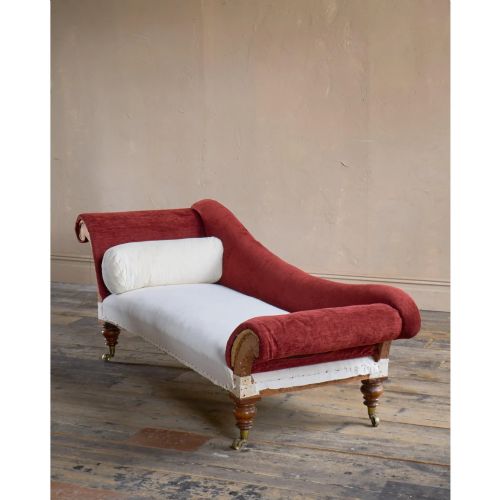
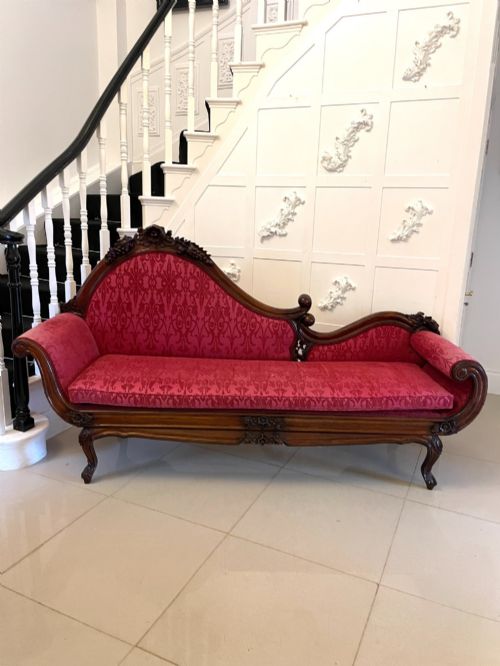
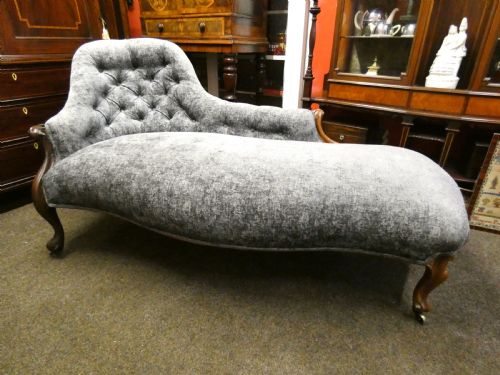
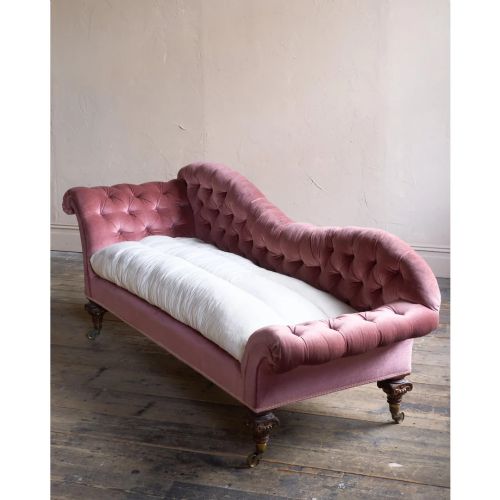


Velvet Fainting Sofa
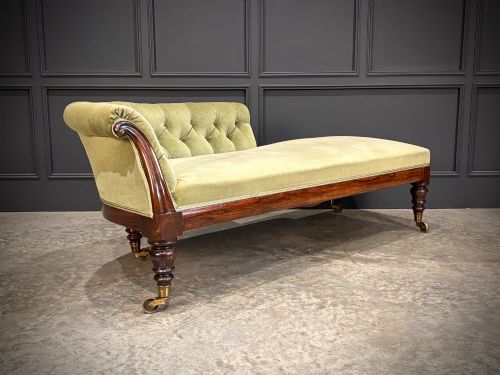
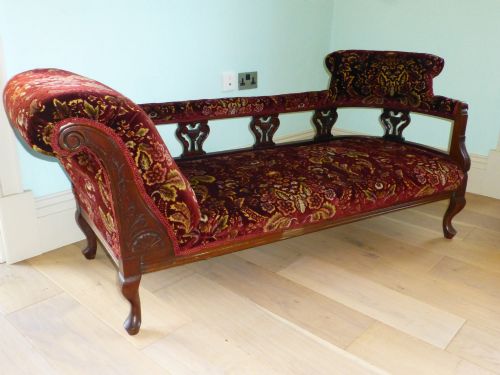
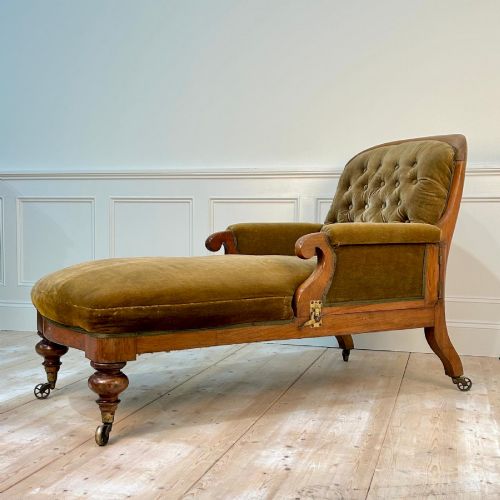
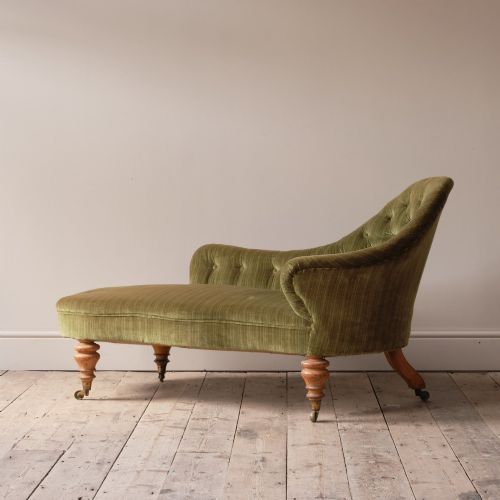
These velvet fainting sofa examples are nineteenth-century day beds and chaise longues designed for reclining in comfort.
Velvet Fainting Sofa
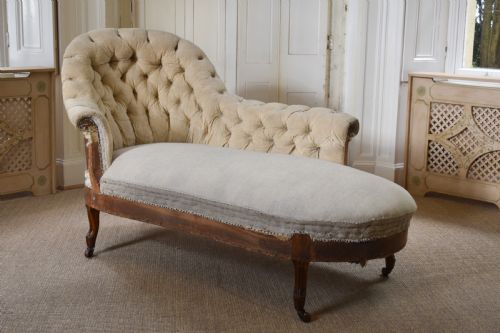
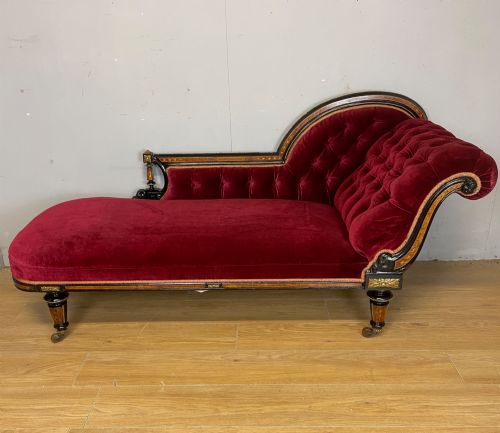
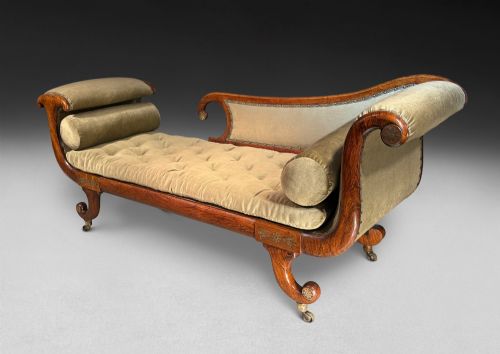
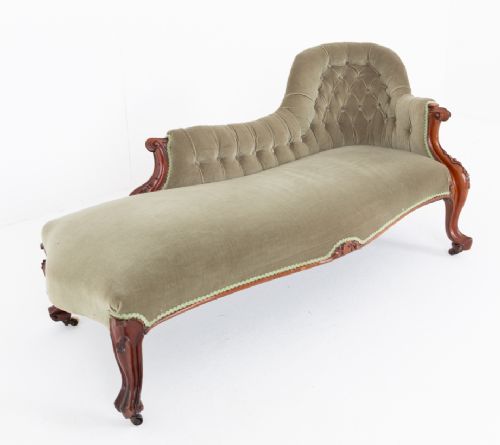
A velvet fainting sofa is an upholstered nineteenth-century day bed or chaise longue designed for semi-recumbent repose. Buyers searching for a velvet fainting sofa will find nineteenth-century forms ranging from Regency styles to Victorian variations.
The pieces appearing here include early Victorian country house examples, late Victorian walnut frames, and Regency simulated rosewood designs. Most items span the nineteenth century, including specific years like 1850, 1860, and circa 1825.
Objects on this page take the shape of chaise longues, day beds, kidney sofas, and ornate settee forms. These items provide long seating proportions with raised single ends for head support.
How they were made
Frames are constructed from timbers such as mahogany, rosewood, walnut, ebonised wood, and simulated rosewood. Joinery incorporates carved wooden elements, brass inlays, inlaid walnut panels, and ormolu decoration.
Upholstery relies on fabric and velvet coverings, often featuring button-back detailing. Structural supports include Ionic column legs and brass components alongside wooden framing.
Velvet Fainting Sofa Retail Price Guide 2026
Typical asking prices for velvet fainting sofa among the pieces listed under this phrase on Sellingantiques today, from the lower quarter to the upper quarter. They describe what is for sale here now, not the wider market.
Listings feature nineteenth-century items spanning Regency and Victorian styles, constructed from mahogany, rosewood, walnut, and ebonised wood with velvet upholstery.
What varies in quality
Quality differences emerge in the execution of carved mahogany or rosewood frames and the refinement of brass inlay and ormolu decoration. Superior examples display sophisticated timber selection and intricate details like inlaid walnut panels.
The sophistication of the upholstery work, particularly button-back detailing on velvet, distinguishes standard production from finer pieces. Structural appointments such as Ionic column legs also indicate higher craftsmanship.
Holland and sons·William Birch·Howard and Sons
The Velvet Fainting Sofa Glossary
- Chaise longue
- An upholstered sofa in the form of a chair with a long seat for reclining. This French term translates to long chair.
- Ormolu
- Gilded bronze decoration applied to furniture mounts and details. It provides metallic contrast against dark timbers like rosewood and mahogany.
- Simulated rosewood
- Painted or stained timber treated to imitate the grain and colour of genuine rosewood. This technique appeared on Regency period frames.
- Button back
- An upholstery style where buttons are pulled deep into the padding to create a quilted diamond pattern. This method secures the filling and adds texture.
- Ionic column
- A classical architectural column style featuring scroll-shaped capitals used as supporting legs on certain frames. It reflects classical revival influences.
Velvet Fainting Sofa: Frequently Asked Questions
What is a velvet fainting sofa?
A velvet fainting sofa is a nineteenth-century day bed or chaise longue designed for reclining. These pieces combine wooden frames in mahogany, rosewood, or walnut with velvet upholstery and button-back detailing.
Such furniture originated to accommodate fashion and health requirements of the nineteenth century when upright corseted sitting required moments of rest. They function today as statement day beds in living spaces and bedrooms.
How do I date a chaise longue?
Dating relies on timber choices, decorative motifs, and framing styles associated with Regency and Victorian periods. Regency examples often feature brass inlay and simulated rosewood, while Victorian pieces utilise rosewood, walnut, and carved mahogany.
Reference points include specific styles like early Victorian country house pieces or mid-nineteenth-century dates such as 1850 and 1860. Maker attributions to firms like Howard and Sons or William Birch also help establish periods.
Where should I place a day bed?
Day beds suit bedrooms, large hallways, or drawing rooms where their elongated form can be viewed from the side. Because the backrest runs along only one long edge, they require placement against a wall or floating in a spacious room.
Ensure adequate clearance around the piece to showcase carved wooden frames, Ionic column legs, or ormolu decorations.
What materials are used in these sofas?
Frames utilise solid and veneered timbers including mahogany, rosewood, walnut, ebonised wood, and simulated rosewood. Decorative elements incorporate brass inlays, ormolu mounts, and carved wooden details.
Upholstery consists of fabric and velvet, frequently finished with button-backed padding. Supporting structures often feature brass fittings and column-form legs.