




Upholstered Barley Twist Chair
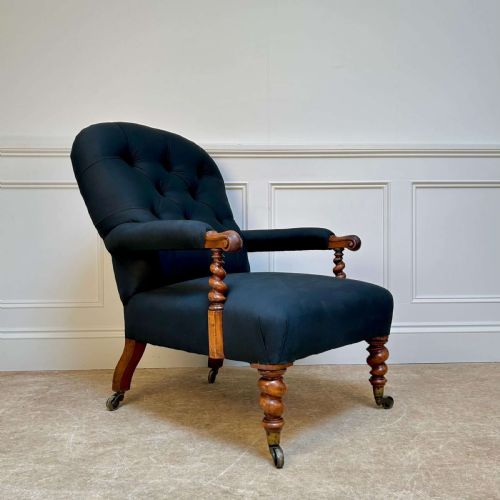
An upholstered barley twist chair brings robust timber turning and soft textile comfort together, offering a tangible connection to nineteenth-century domestic life.
Upholstered Barley Twist Chair
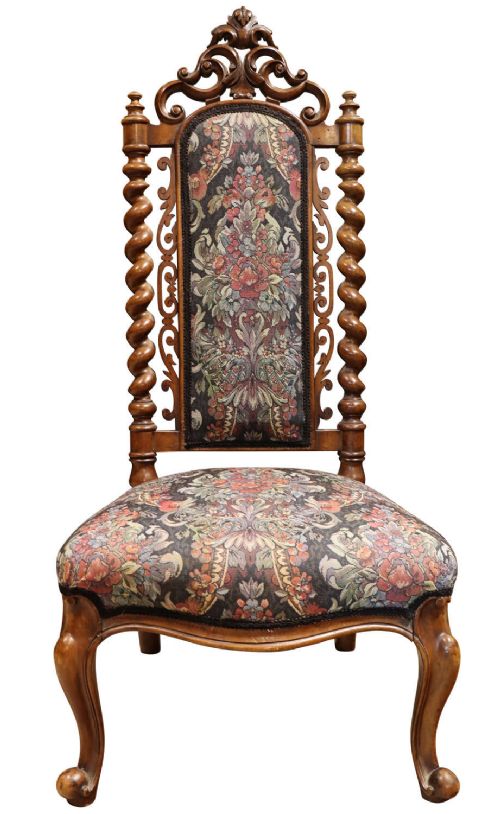
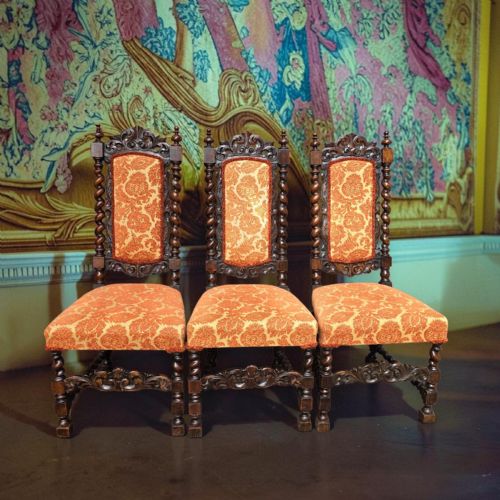
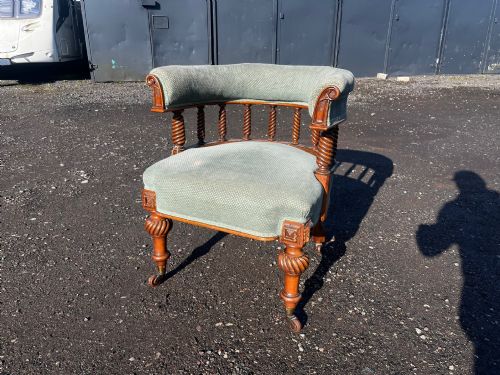
When you search for an upholstered barley twist chair, you encounter a distinct form defined by spiralling wooden supports and padded seating. These pieces emerge predominantly from the Victorian and Edwardian eras, alongside later revivals stretching into the twentieth century. You will find them in various formats ranging from single parlour seats to matched dining sets.
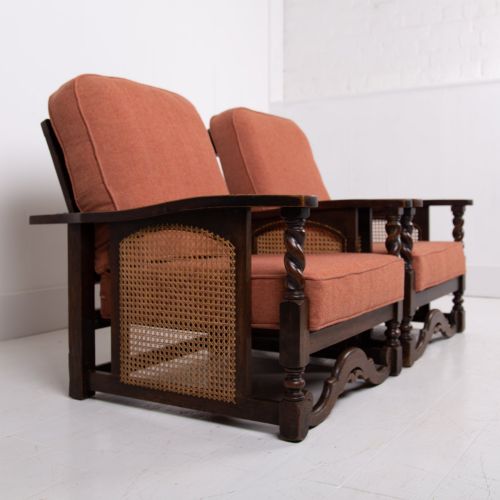
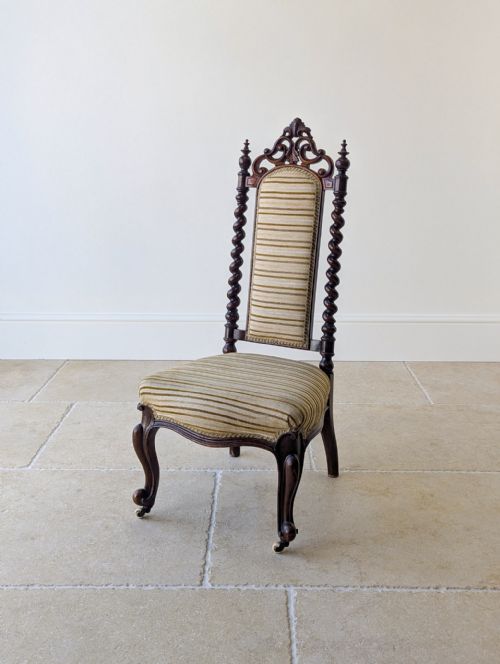
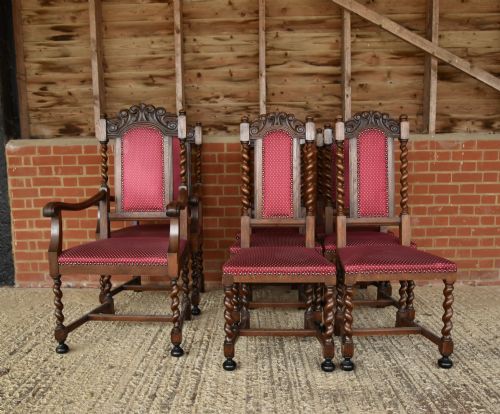
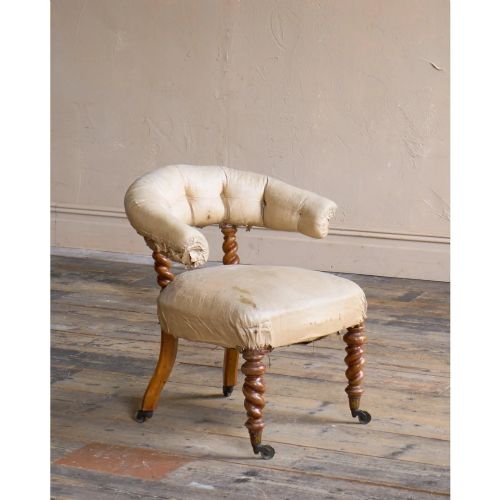
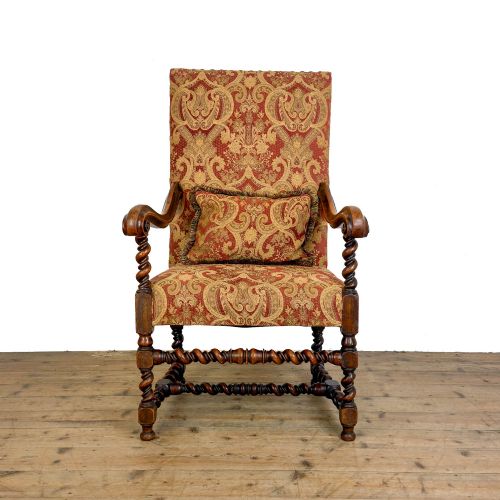
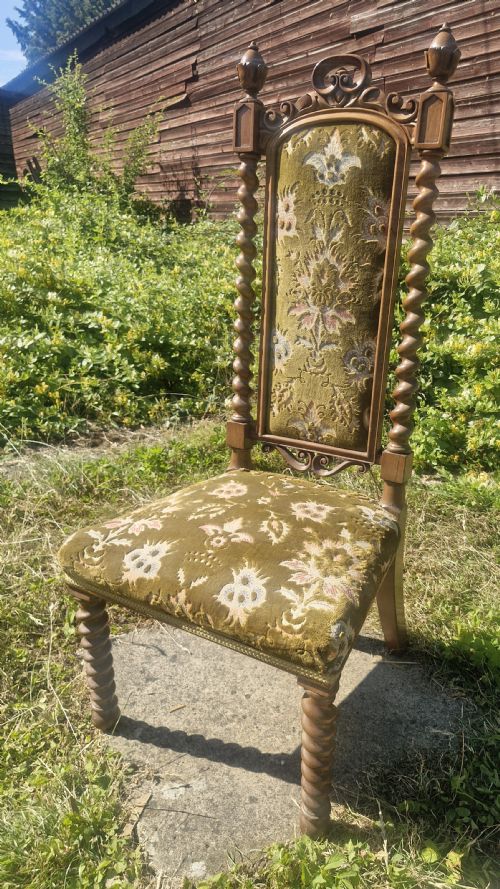
The evidence shows these chairs appearing across multiple forms including armchairs, side chairs, nursing chairs, and larger throne or conversation seats. Oak and walnut serve as the most common primary timbers, while rosewood, mahogany, ash, and laburnum appear less frequently. Frames are paired with diverse textile coverings such as velvet, silk cotton, tapestry, leather, and modern fabric replacements.
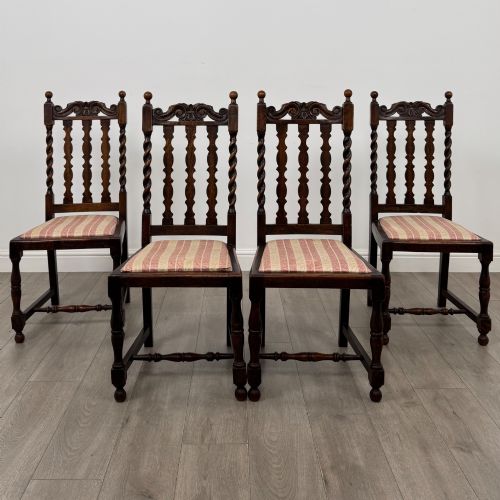
Victorian examples dominate the selection, often showcasing carved details alongside the characteristic twisted framing. Dining sets and pairs of armchairs represent common configurations, though singular reading or desk chairs also surface. The convergence of turned wooden members and upholstered surfaces creates a utilitarian yet decorative seating option.
Materials and construction methods
Cabinet makers utilised dense hardwoods like oak, walnut, and mahogany to form the structural frames and turned members. The signature twist was achieved by turning timber on a lathe or hand-carving the spiralling rope pattern into the solid wood uprights and stretchers. Joinery relied on traditional mortise and tenon joints to ensure stability under daily use.
Upholstery techniques involved webbing, stuffing with natural materials, and securing top covers with decorative brass tacks or gimp braid. Buttoning often added structural tension and aesthetic depth to backs and seats, using leather, velvet, or woven textiles. Show-wood frames exposed polished timber sections around the padded elements, displaying the grain and colour of the underlying wood.
The recorded listings demonstrate a strong prevalence of Victorian craftsmanship, alongside substantial oak dining sets produced around 1920.
Distinctions in quality and execution
Quality rests primarily in the crispness of the timber turning and the selection of the primary wood. Superior examples display deeply carved and accurately proportioned twists without splitting or excessive wear in the grain. The integration of the frame with detailed carving, such as lion heads or leaf motifs, elevates certain pieces above plain utilitarian designs.
The standard of upholstery work and the choice of covering material significantly influence the overall character of a piece. Original or sympathetic textile choices maintain historical integrity, while structurally sound internal webbing and springs ensure lasting resilience. Well-executed joinery that remains tight and uncompromised distinguishes master-carved seating from simpler workshop output.
C. Hindley & Sons
The Upholstered Barley Twist Chair Glossary
- Barley twist
- A decorative turning style resembling a spiralling rope or barley sugar stick. This form was widely utilised on chair legs, stretchers, and uprights during the seventeenth century and revived extensively in the Victorian period.
- Carver armchair
- A sturdy wooden armchair, traditionally designed with arms to sit at the head of a dining table. These pieces often feature matching side chairs to complete a dining set.
- Show wood
- Polished or carved timber portions of an upholstered chair frame left visible around the padded sections. This technique highlights the quality of the wood and the skill of the carver.
- Prie dieu
- A low devotional chair featuring a high back, often equipped with an upholstered top rail designed for kneeling or resting arms during prayer. These forms frequently incorporate turned framing.
- Stretcher
- A horizontal timber connecting the legs of a chair to provide structural rigidity and prevent the joints from spreading under weight. On these pieces, stretchers frequently exhibit the same twisted turning as the legs.
Upholstered Barley Twist Chair: Frequently Asked Questions
What periods do these chairs come from?
The pieces span from the seventeenth century up through the Victorian and Edwardian periods into the 1920s and 1930s. Victorian examples form the largest group, often combining revival styles like Jacobean or Gothic.
Earlier seventeenth-century iterations appear occasionally, while matching dining sets frequently date to the early twentieth century. Each era brings subtle shifts in timber selection and carving depth.
How were barley twists made?
Makers produced the characteristic spiral by mounting timber on a lathe or by hand-carving the rope pattern directly into the wood. This technique required precise hand-eye coordination to ensure an even, continuous helix along legs and stretchers.
Master craftsmen integrated these turned members seamlessly into the mortise and tenon framework of the chair.
What woods were used for the frames?
Oak and walnut serve as the predominant framing timbers across the recorded pieces, providing the necessary strength for turned elements. Mahogany, rosewood, ash, and laburnum appear in specific regional or period examples.
The choice of timber directly affected the grain pattern and the final colour tone of the exposed show wood.
Are the upholstery coverings original?
Upholstery often undergoes restoration or replacement to ensure usability, though remnants of silk cotton, velvet, leather, or tapestry sometimes survive. Listings frequently note new cushions, updated covers, or restored webbing.
Buyers encounter a mix of period-appropriate textiles and fresh reupholstery applied to preserve the functional integrity of the seat.
Where were these chairs used in a home?
These versatile seats served multiple domestic functions, from formal dining rooms and parlours to bedrooms and reading corners. Specific forms like nursing chairs, desk chairs, and conversation seats indicate specialised placement within nineteenth-century interiors.
Pairs of armchairs and larger throne chairs anchored principal reception spaces.