
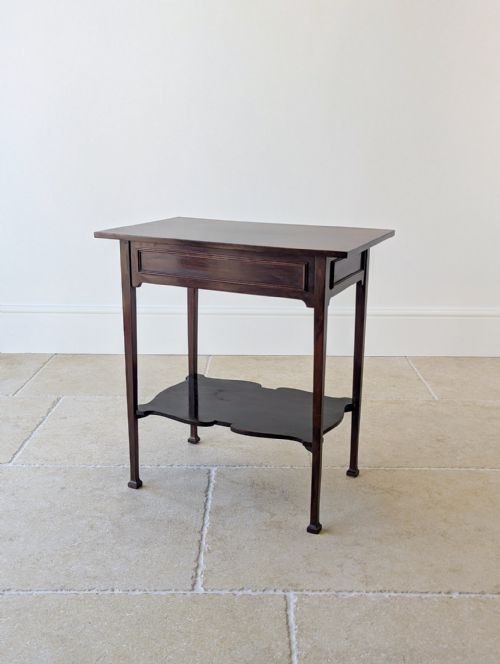
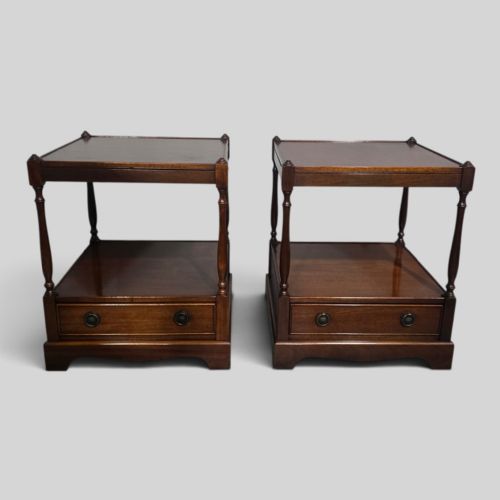
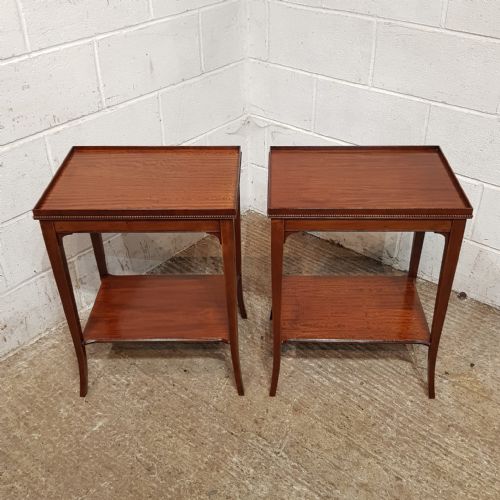
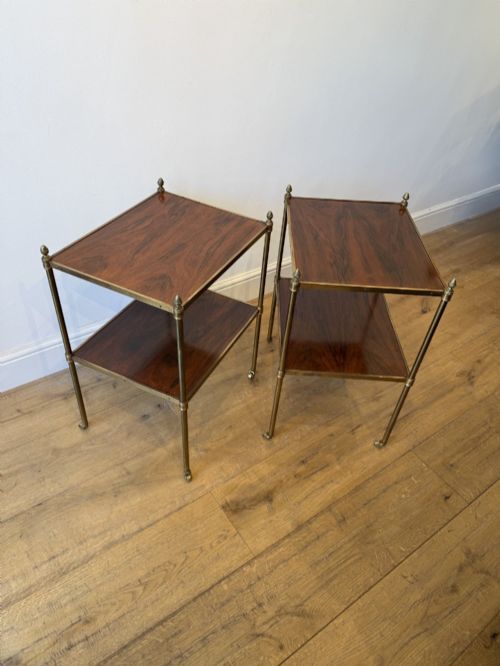


Two Tier Nightstand
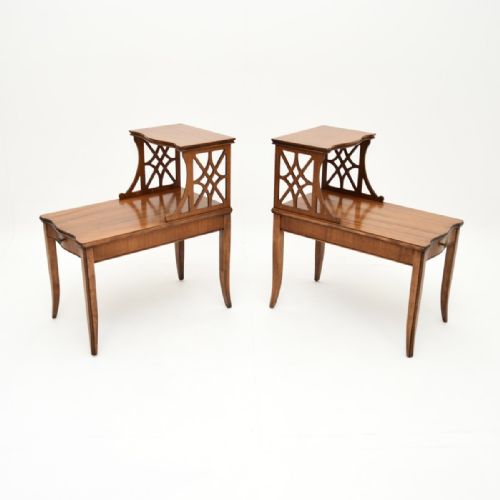
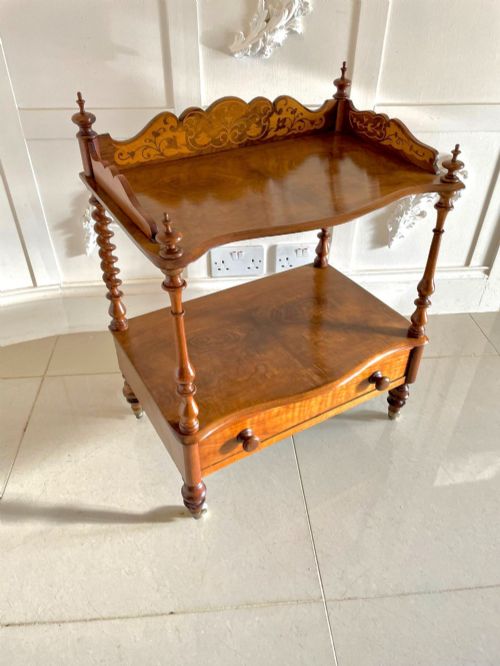
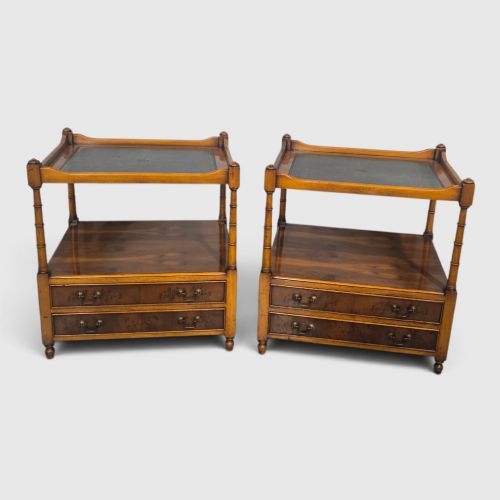
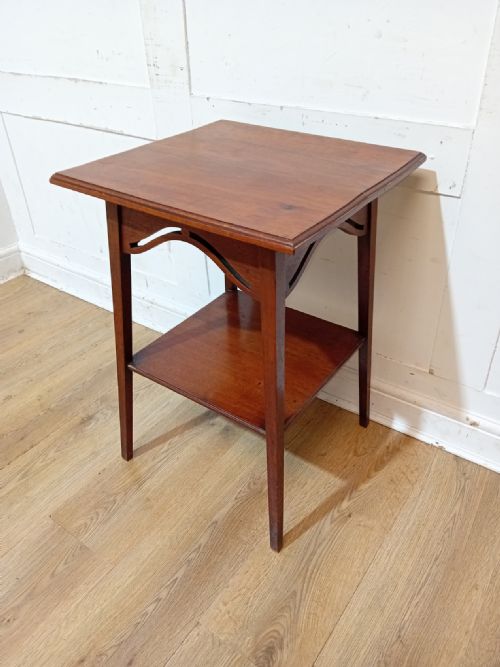
These two tier nightstand designs range from compact Victorian walnut pieces to refined Edwardian mahogany models, offering practical surface space beside a bed.
Two Tier Nightstand
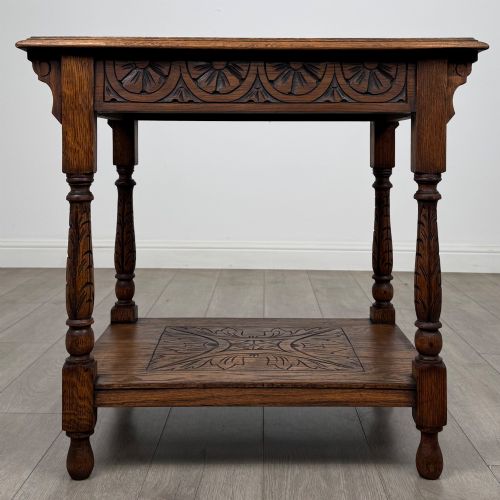
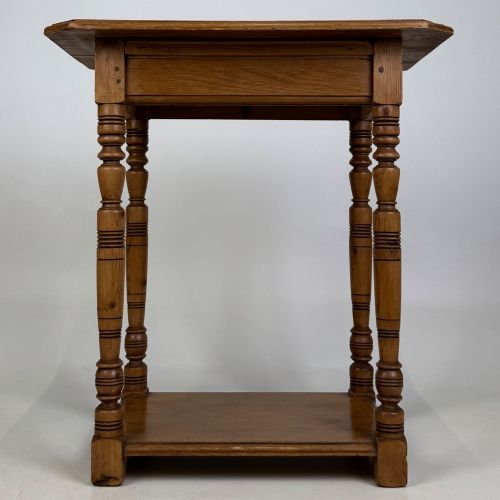
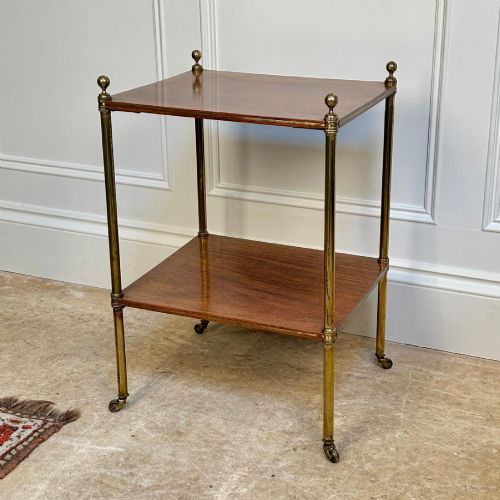
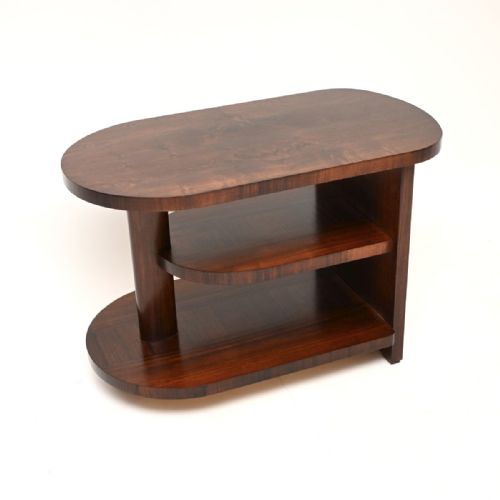
When you search for a two tier nightstand, you encounter a selection of occasional tables, side tables, and etageres adapted for bedside use across multiple periods. The material evidence spans the nineteenth century through the nineteen-thirties, taking forms such as small bedside cupboards, lamp tables, and tiered display stands.
You meet Victorian and Edwardian examples most frequently on this page, often constructed in mahogany, walnut, or oak with dual platforms. These pieces serve to hold bedside lamps and books while utilising vertical space through their secondary lower shelves.
How they were made
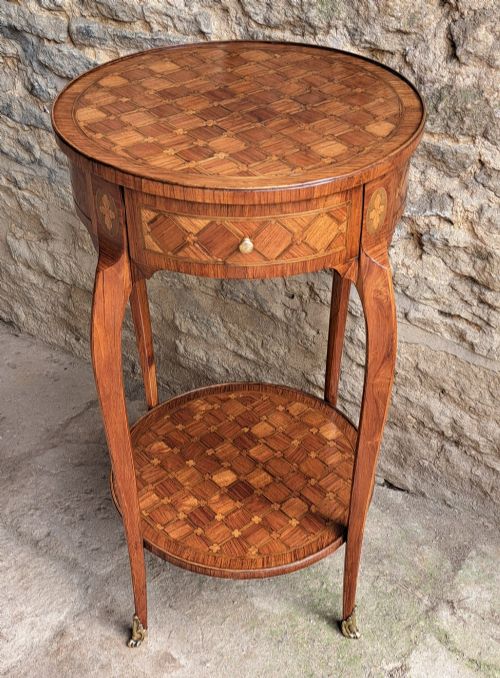
Cabinet makers utilised dense hardwoods like mahogany, walnut, rosewood, and oak, frequently applying intricate crossbanding, marquetry, or brass mounts to enhance the surfaces. Timber selection governed the structural integrity of the upper and lower tiers.
Joinery techniques involved precise mortise and tenon frames, dovetailed drawer construction where applicable, and turned or tapered legs supporting the stacked platforms.
Several tables feature hidden folding shelves and miniature brass galleries designed to keep morning tea sets from sliding off during bedside service.
What varies in quality
The degree of refinement in timber figure and veneer selection separates standard utility pieces from high workshop output. Figured burr walnut or rich mahogany grain elevates the visual weight of a bedside table.
Execution of decorative details, such as hand-carved mouldings, fine brass gallery rails, and balanced proportions between the two tiers, determines the distinction of the piece.
Mallett·Liberty of London
The Two Tier Nightstand Glossary
- Etagere
- A piece of furniture consisting of a set of open shelves for displaying small objects. These tiered stands frequently function as bedside surfaces.
- Crossbanding
- A strip of veneer applied to the border of a table top, running perpendicular to the main grain. This technique frames the primary timber.
- Marquetry
- Decorative patterns formed by the insertion of small pieces of coloured wood or other materials into a veneer. It appears on French and Victorian tiered tables.
- Dumb waiter
- A tiered movable serving table with circular shelves. Such forms evolved into multi-level stands used beside seating and beds.
Two Tier Nightstand: Frequently Asked Questions
How do I place a two tier nightstand?
Position the furniture beside the bed so the top surface sits level with or slightly above the mattress top. This placement ensures easy access to lamps and reading materials on both tiers.
Keep the piece clear of direct radiator heat to protect timber veneers and solid mahogany or walnut frames from splitting.
What periods do these tables represent?
The selection encompasses nineteenth century Victorian and Regency designs alongside Edwardian and nineteen-thirties Art Deco examples. Each era brings distinct leg turns and wood treatments.
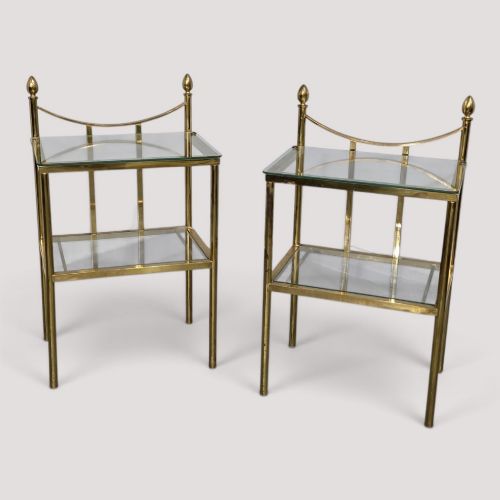
Earlier nineteenth century pieces lean toward heavy mahogany and rosewood, while nineteen-twenties and thirties items often introduce modernist walnut or brass and glass elements.
Are lower shelves useful?
The secondary lower tier provides extra storage for books, journals, and small objects without cluttering the primary top surface. This vertical stacking suits compact bedrooms.
Heavier items belong on the lower tier to maintain physical stability and balance the table structure.