

Turned Leg Furniture
Turned leg furniture brings together centuries of timber framing, offering sturdy tables, chairs, and benches defined by lathe-shaped supports.
Turned Leg Furniture
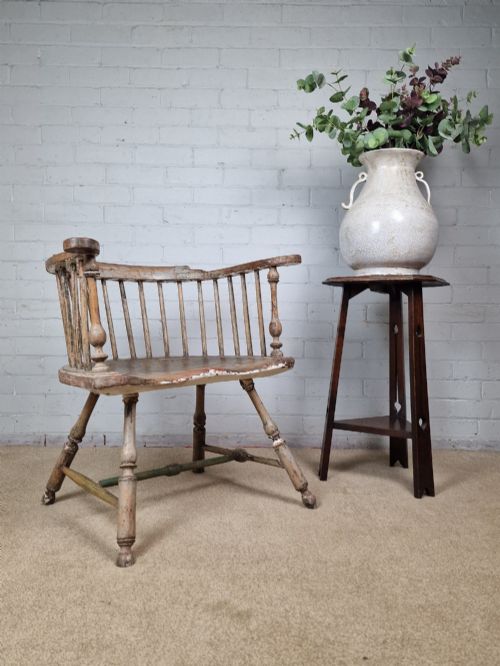
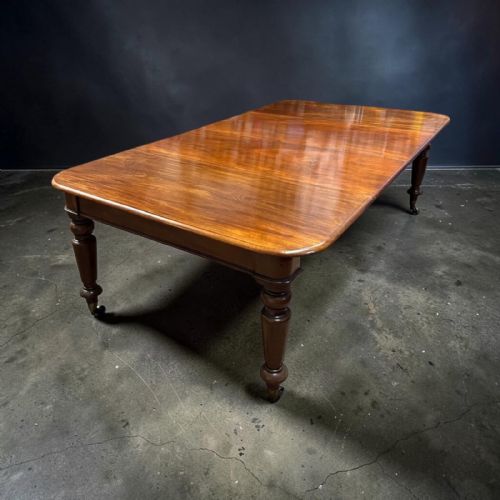
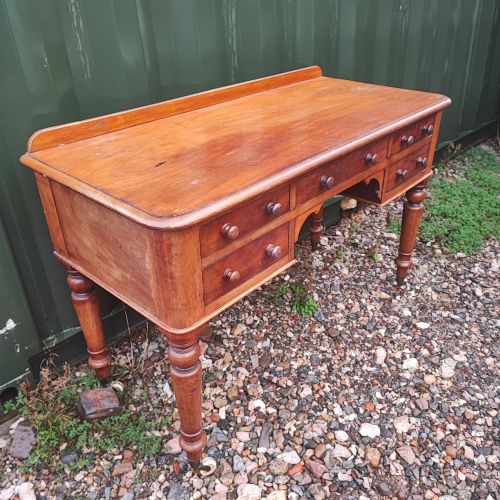
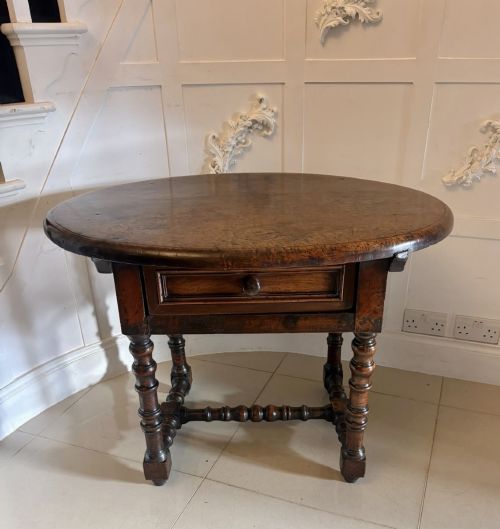
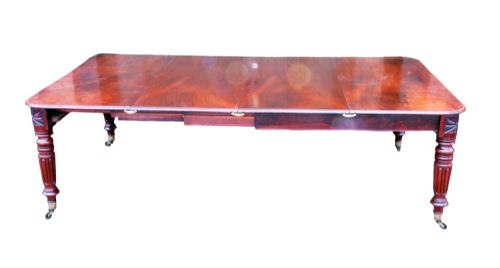
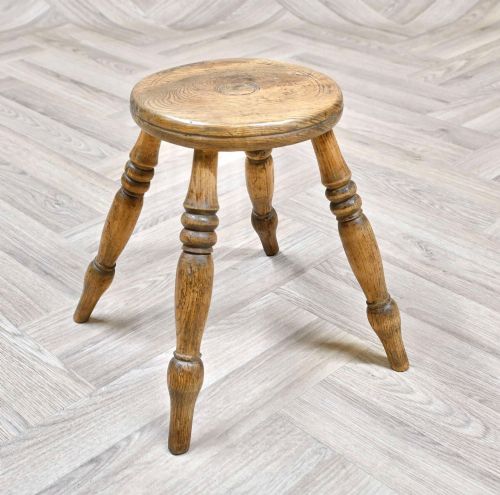
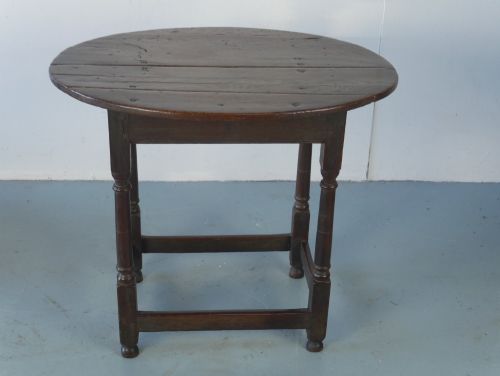
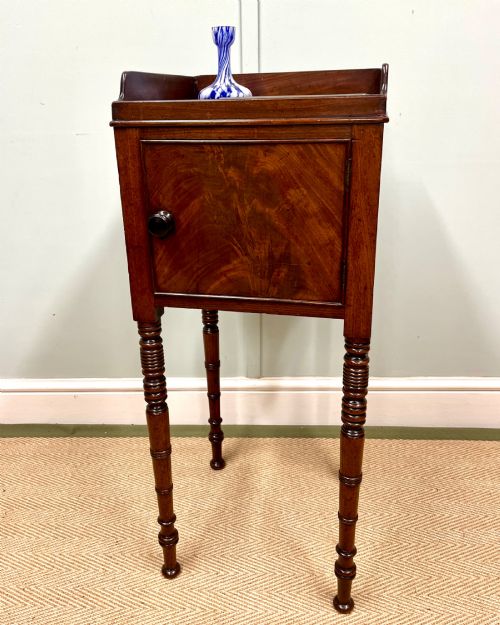
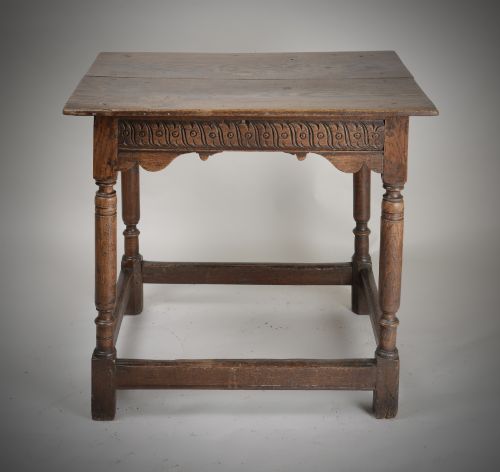
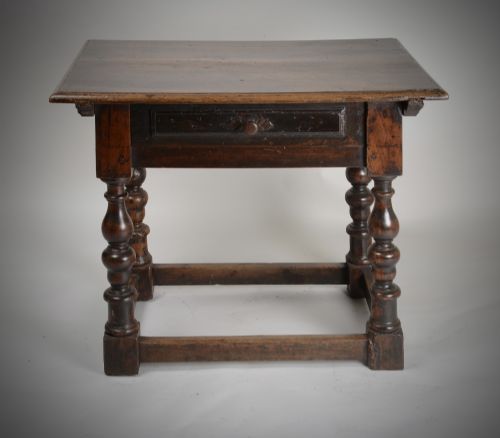
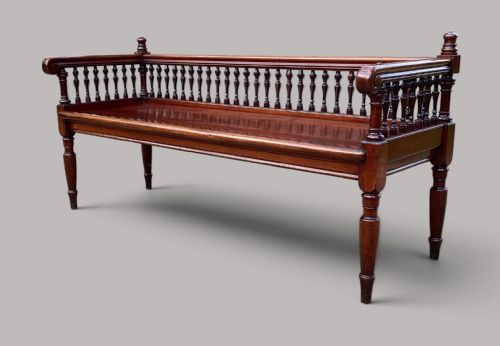
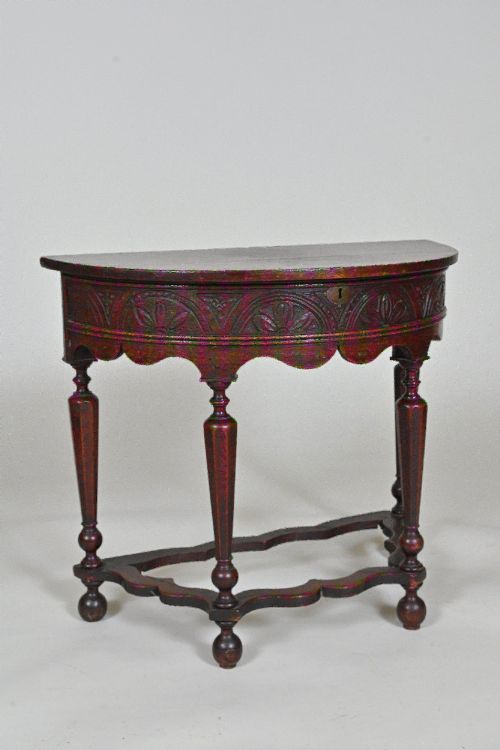
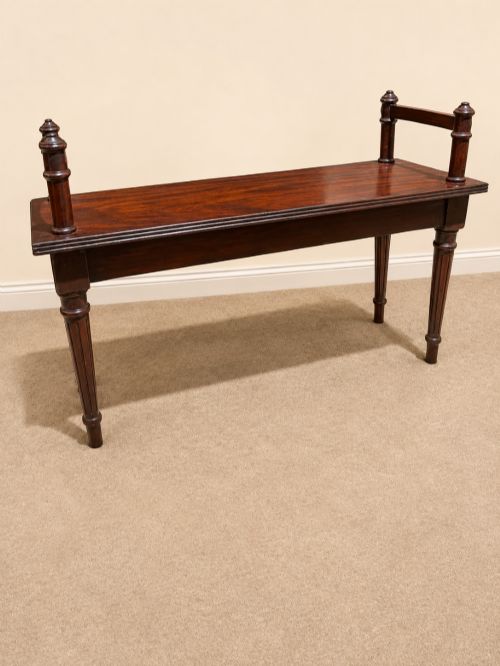
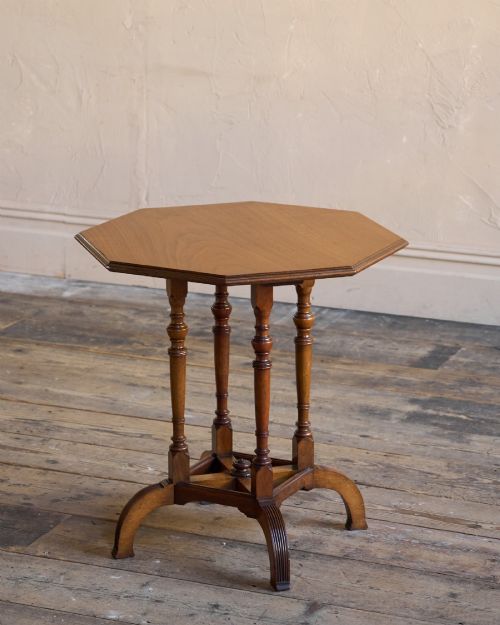
Turned leg furniture spans multiple centuries, appearing in practical forms like oak joint stools, mahogany work tables, and pine washstands. Buyers searching for turned leg furniture will encounter sturdy seating and occasional tables shaped on a lathe, ranging from seventeenth-century oak to nineteenth-century mahogany.
The pieces on this page originate across various periods including the seventeenth century, Victorian era, and Regency period. Common formats include side tables, benches, and armchairs supported by cylindrical, bobbin, or spool-shaped legs.
Materials and Construction
Cabinet makers utilised dense hardwoods such as oak, mahogany, walnut, and elm to shape both the primary structures and the lathe-turned supports. Secondary timbers like beech, satinwood, fruitwood, and pine also appear across various regional items.
Joinery techniques rely heavily on traditional jointing methods, where turned uprights connect securely to tabletops, stretchers, and seat frames. Brass inlay, marble tops, and rush seating occasionally supplement the timber framework.
Turned Leg Furniture Retail Price Guide 2026
Typical asking prices for turned leg furniture among the pieces listed under this phrase on Sellingantiques today, from the lower quarter to the upper quarter. They describe what is for sale here now, not the wider market.
Some nineteenth-century work tables managed to hide sewing supplies while doubling as elegant bedside companions.
Assessing Quality and Execution
Quality rests upon the crispness of the lathe turning and the selection of figured timbers such as burr walnut or Cuban mahogany. Well-executed pieces show precise symmetry in the turned profiles and sound structural integrity in the joints.
Proportion and timber matching differentiate standard utility pieces from finer examples. Grain alignment and the retention of original structural components dictate the overall standard of the item.
Guillows
The Turned Leg Furniture Glossary
- Bobbin-turned
- A style of lathe turning resembling a string of rounded bobbins or spools end to end. This cylindrical shaping appears frequently on seventeenth-century and revival oak supports.
- Joint stool
- A sturdy wooden seat constructed with mortise and tenon joints rather than turned legs alone. These low forms served multiple domestic purposes in early households.
- Gateleg table
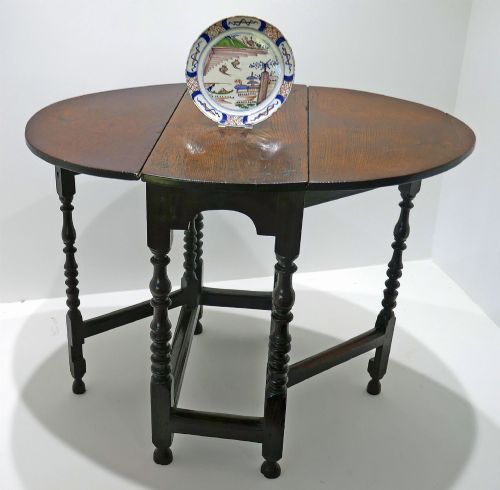
- A dining or occasional table featuring hinged flaps supported by swinging legs that pivot outward. This design allows the surface area to expand or fold away.
- Work table
- A small occasional table fitted with drawers or fabric bags for sewing and needlework. Makers often produced these in mahogany or satinwood during the Regency and Victorian eras.
- Washstand
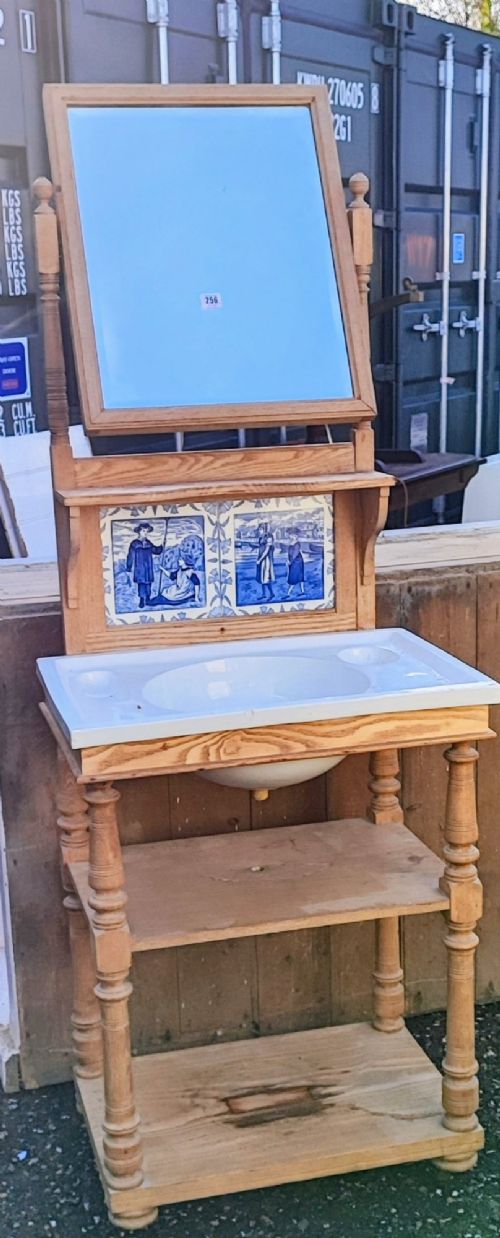
- A utilitarian piece designed to hold a basin and pitcher for personal washing. Many feature marble tops or protective galleries above turned legs.
Turned Leg Furniture: Frequently Asked Questions
What is turned leg furniture?
Turned leg furniture encompasses tables, chairs, stools, and storage pieces supported by wooden legs shaped on a lathe. These supports range from simple cylindrical posts to decorative bobbin and spool forms.
Such pieces draw from a long history of timber craftsmanship spanning the seventeenth century through to the Edwardian period.
How do I date turned furniture?
Dating relies upon identifying the primary timber species, construction joints, and the specific profile of the lathe turning. Oak and elm typically point towards earlier seventeenth-century pieces, while mahogany and satinwood are more common in later periods.
Examining the underside and assembly methods helps confirm the manufacturing era.
Where were these pieces used?
Earlier forms such as joint stools and oak side tables served functional roles in seventeenth-century domestic interiors. Later nineteenth-century iterations like work tables and washstands were designed for drawing rooms and bedrooms.
Their sturdy construction suited daily use in both country houses and urban homes.
How should I care for timber tables?
Protect wooden surfaces from direct sunlight and extreme humidity changes to prevent the timber from drying out or splitting. Regular dusting with a soft, dry cloth preserves the finish without requiring heavy polishes.
menjaga the natural patina requires minimal intervention and gentle cleaning.