

Turned Leg Easy Chair
Turned leg easy chair designs offer deep comfort and robust frames, bringing nineteenth century seating into contemporary drawing rooms.
Turned Leg Easy Chair
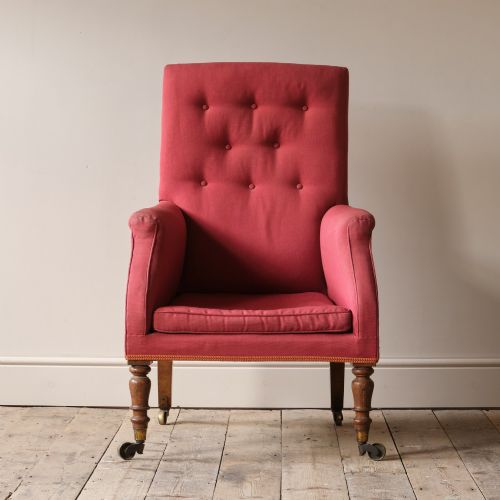
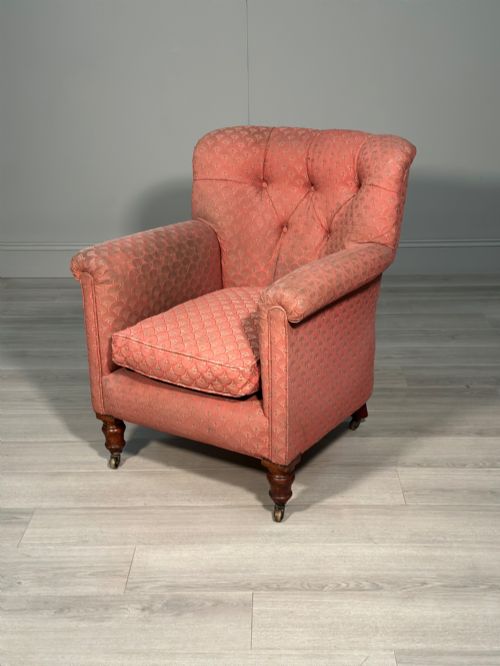
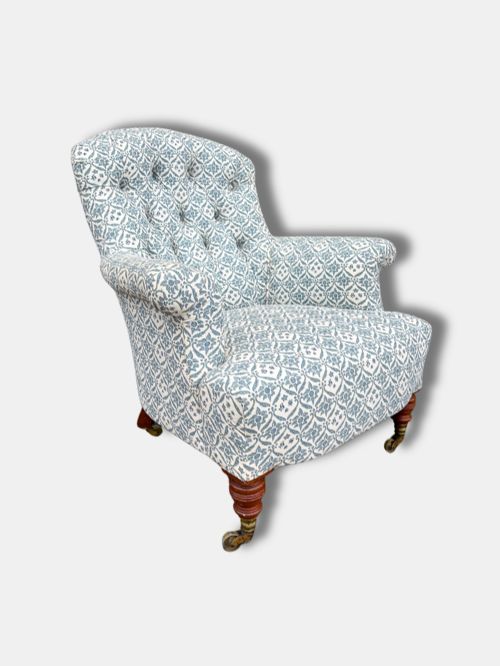
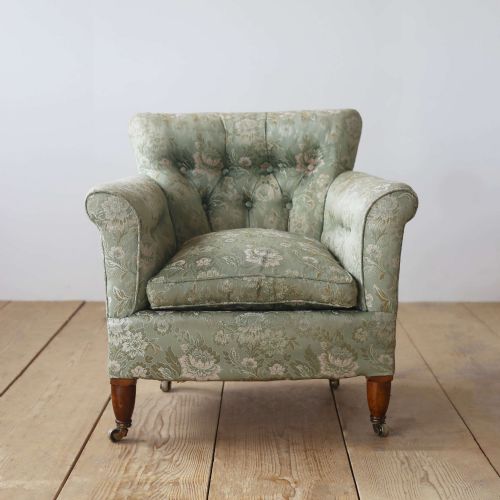
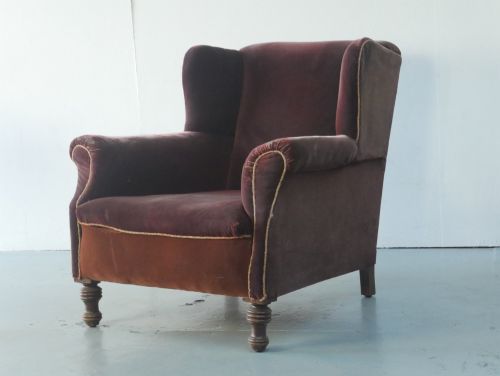
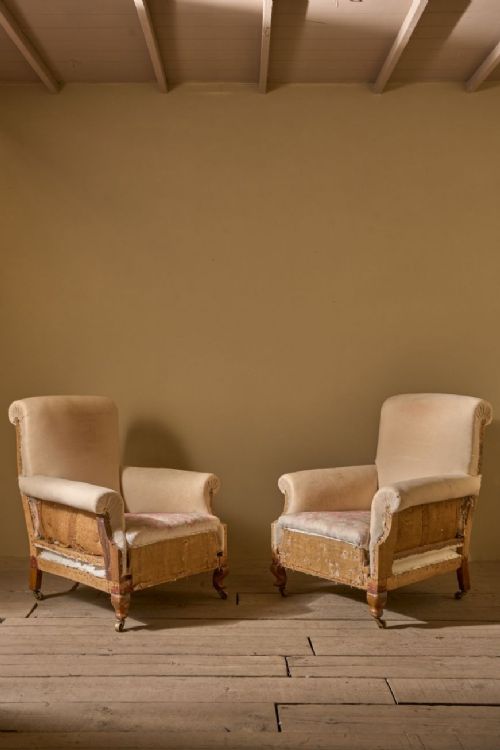
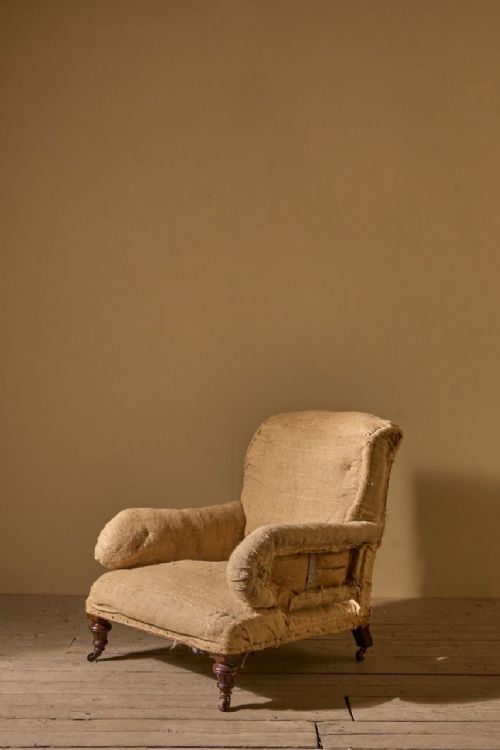
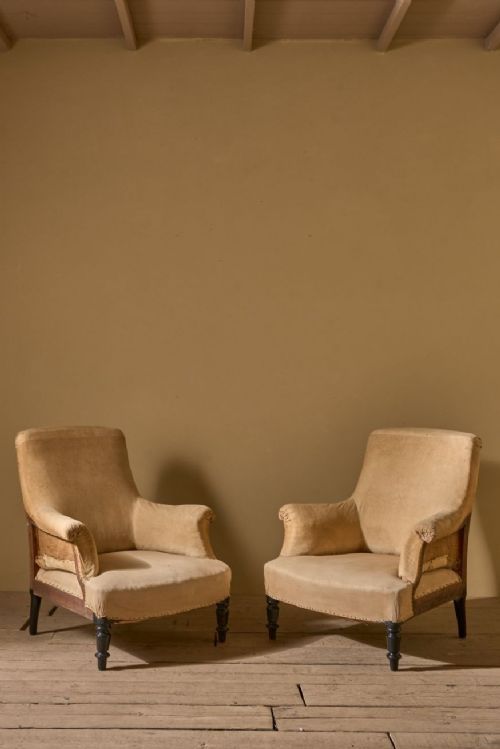
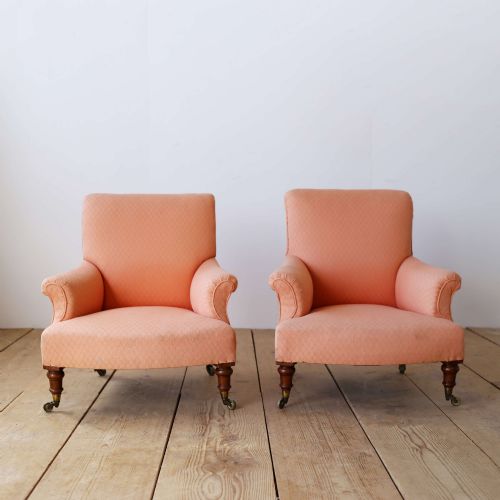
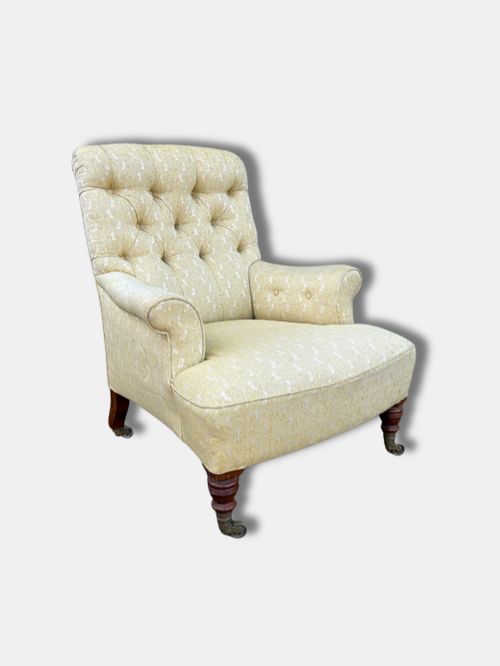
A turned leg easy chair provides deep, upholstered seating designed for relaxation, typically taking the form of an armchair from the nineteenth century. These seats emerge from periods including the Regency, Victorian, and Edwardian eras, reflecting diverse regional aesthetics such as English Country House and French styles.
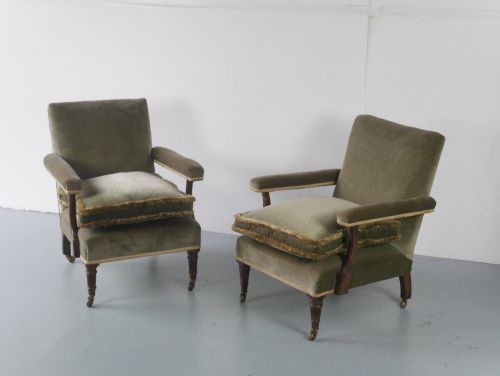
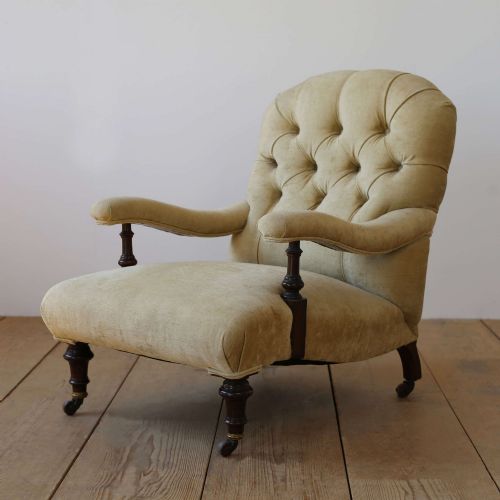
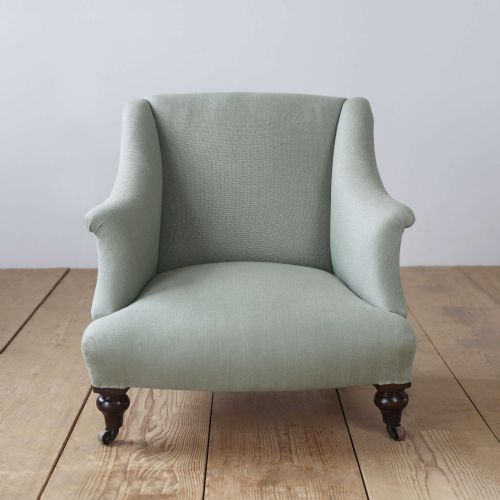
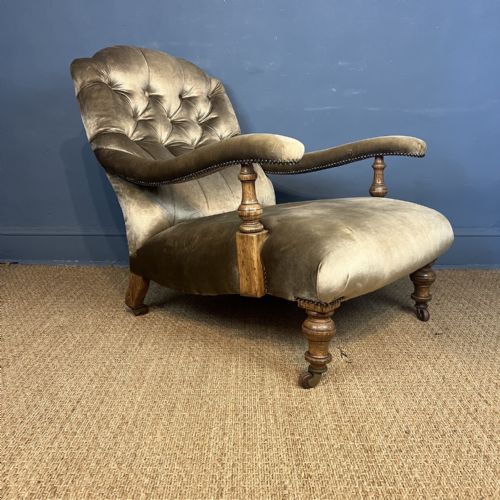
The pieces on this page span several decades, featuring substantial proportions alongside diminutive and petite variants. Armchairs appear with open wooden frames, square backs, and distinctive upholstered profiles, often linked to distinct stylistic traditions.
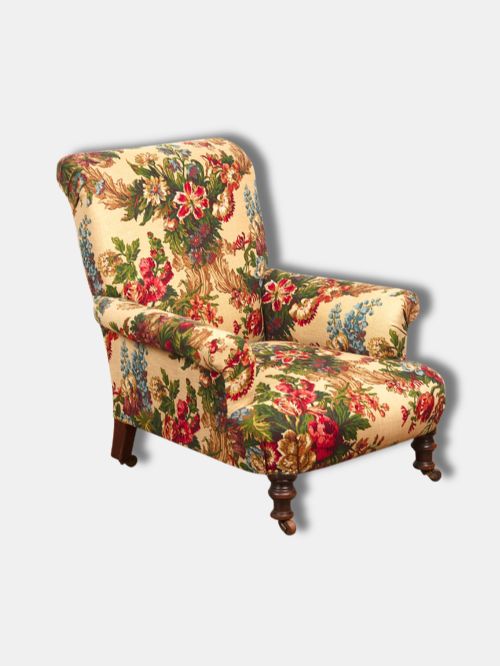
Makers and workshops of the nineteenth century heavily influenced these forms, producing comfortable seating covered in calico, velvet, leather, and patterned fabrics. Buyers encounter armchairs ranging from plain designs to elaborate club styles and wingback configurations.
Materials and construction
Frames rely on sturdy timbers such as mahogany, walnut, oak, and general hardwoods to support deep upholstery. Wood turning shapes the legs, while brass castors frequently facilitate movement beneath the heavy frames.
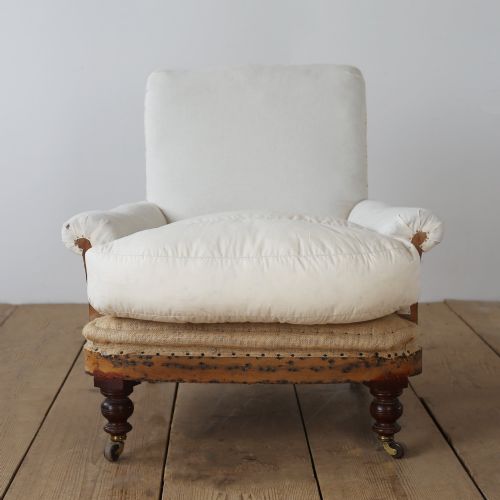
Upholstery employs traditional stuffing covered in textiles like velvet, linen, calico, Hessian, and printed fabrics, occasionally accented with button detailing. Skilled makers combined internal springing with durable outer covers to ensure lasting comfort.
Turned Leg Easy Chair Retail Price Guide 2026
Typical asking prices for turned leg easy chair among the pieces listed under this phrase on Sellingantiques today, from the lower quarter to the upper quarter. They describe what is for sale here now, not the wider market.
Listings feature armchairs produced across the nineteenth century, encompassing Regency, Victorian, and Edwardian periods.
Distinctions in quality
Quality rests upon the integrity of the wooden frame and the precision of the turned leg details. Superior pieces maintain their structural rigidity and retain harmonious proportions across the seat and back.
The refinement of the upholstery work and the choice of covering fabric distinguish standard examples from masterworks. Finer armchairs demonstrate careful attention to internal springing and durable textiles that withstand decades of use.
Howard and Sons·James Shoolbred·Gillows·Trollope and Sons·Robert Strahan Dublin·Mellier and Co·SF Cullen
The Turned Leg Easy Chair Glossary
- Calico
- A plain-woven textile, frequently used as an underlying cover for upholstery before decorative outer fabrics are applied. It provides a stable foundation for stuffing.
- Hessian
- A dense coarse fabric, traditionally woven from jute fibres, utilised inside upholstered furniture to support internal padding. It ensures the stuffing remains securely contained.
- Castor
- A small wheel mounted on a swivel assembly, attached to the base of furniture legs to ease relocation. Brass variants are common on nineteenth-century armchairs.
- Wingback
- An armchair style featuring protective side panels extending from the back to block draughts. These pieces often combine exposed wood frames with deep leather or fabric upholstery.
- Open armchair
- A seating form characterised by uncovered wooden arms rather than fully upholstered padded sides. This design highlights the craftsmanship of the structural frame.
Turned Leg Easy Chair: Frequently Asked Questions
How do I date a turned leg easy chair?
Dating relies on examining the timber species, leg turning styles, and structural framing methods typical of specific decades. Victorian and Edwardian examples often display distinct upholstery profiles and castor designs.
Comparing construction traits with documented workshop practices helps narrow the manufacturing period. Subtle shifts in arm shapes and back heights further indicate the era of production.
Were these armchairs used in bedrooms or drawing rooms?
These comfortable seats primarily served formal drawing rooms and libraries where relaxation was paired with reception duties. Diminutive variants also found places in private dressing rooms.
Their robust construction and deep seating accommodated daily repose across grand country houses and urban townhouses alike. The choice of covering fabric often reflected the specific interior scheme of the room.
What fabrics were originally used on these chairs?
Original upholstery frequently featured durable wool velvet, printed cotton, leather, or patterned textiles secured over calico and Hessian foundations. William Morris and crewelwork designs also appeared on period pieces.
Many chairs retain later historic recovering campaigns, reflecting changing tastes in interior decoration over the centuries. Examining the inner layers reveals the primary lining materials.
How do I care for antique upholstery?
Preserving upholstered seating involves gentle surface cleaning and protecting fabrics from direct sunlight to prevent fading. Regular inspection of the internal springs and wooden frame ensures long-term stability.
Professional conservation maintains the integrity of original textiles without compromising the historical structure. Environmental humidity control keeps the underlying timbers and brass castors in stable condition.