


Tufted Walnut Chair
A tufted walnut chair brings nineteenth-century comfort and carved timber frames together for any sitting room or parlour.
Tufted Walnut Chair
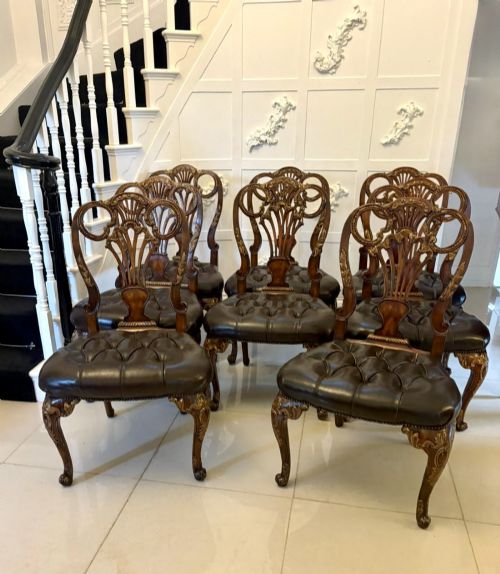
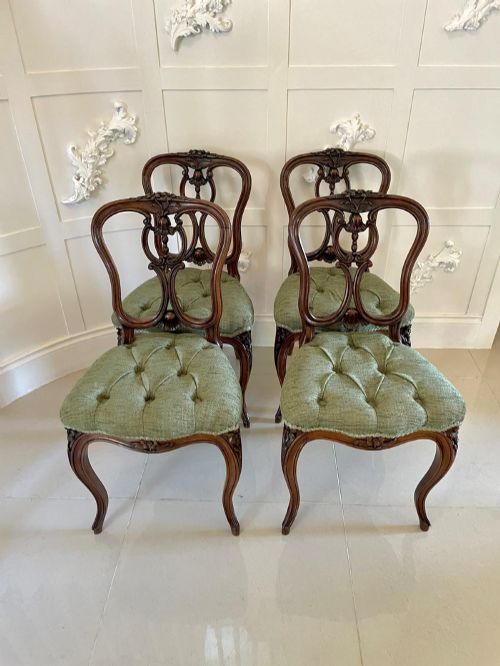
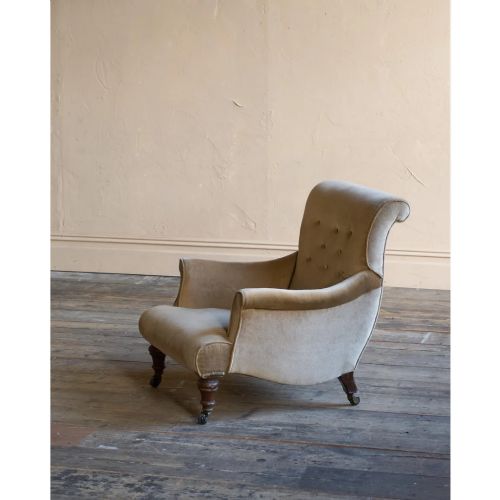
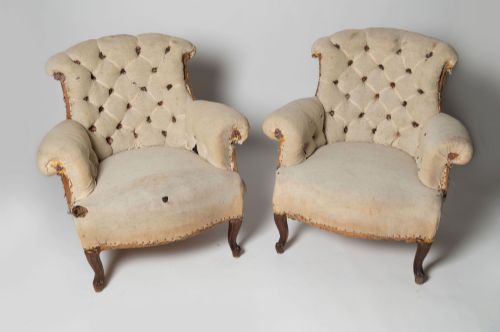
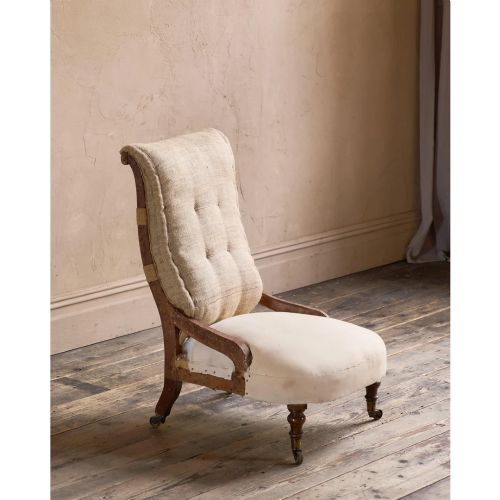
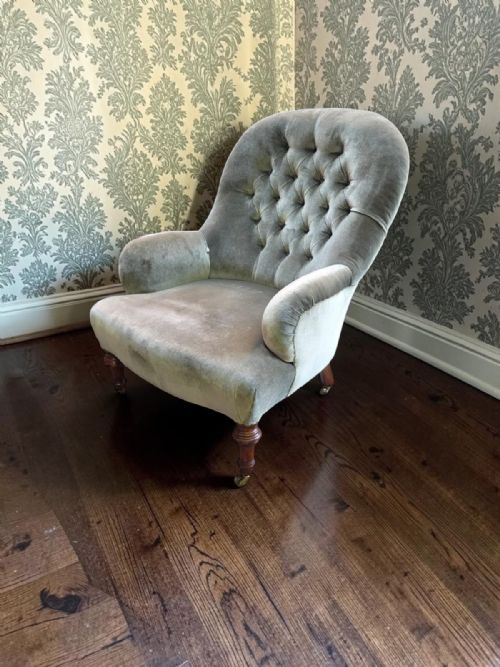
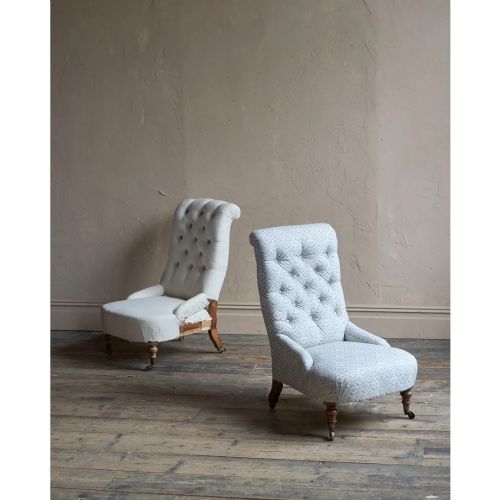
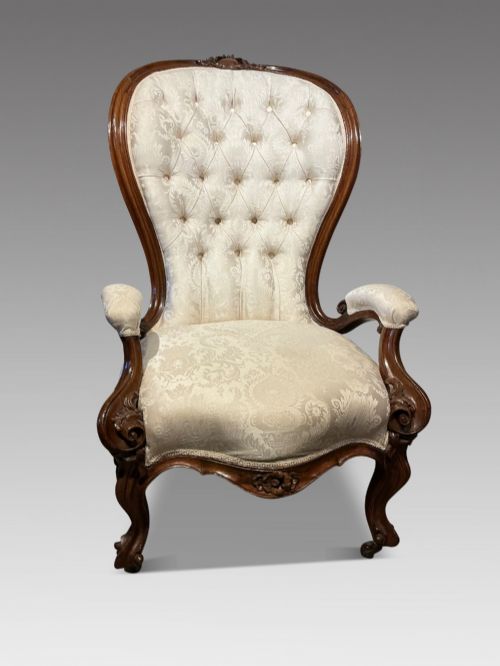
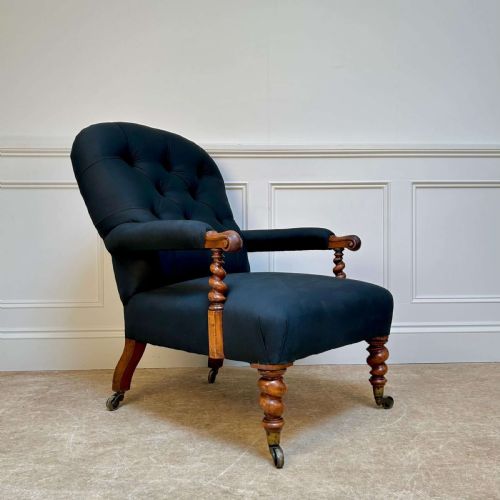
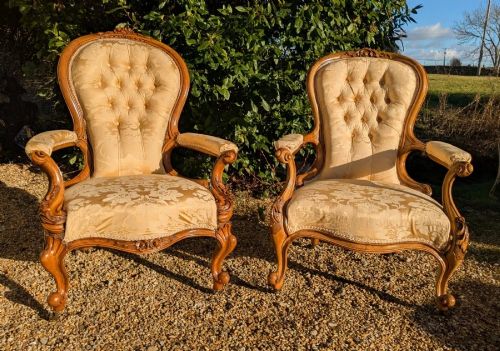
A tufted walnut chair combines deep buttoning with dark timber frames, appearing across nineteenth-century and Edwardian periods in forms ranging from low nursing chairs to library armchairs. Buyers searching for a tufted walnut chair encounter Victorian spoonback designs, French revival seating, and dining chairs built from solid timber.
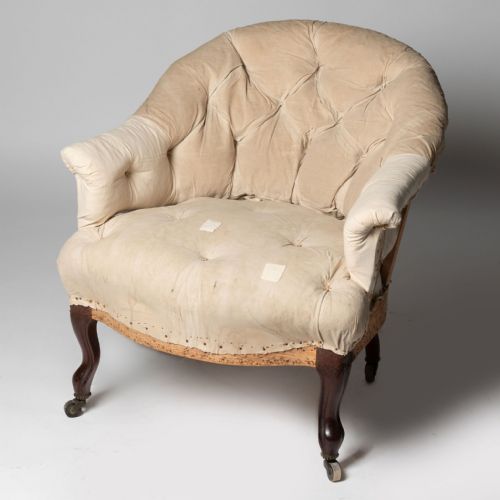
The most common examples on this page date from the Victorian era, specifically the middle and late decades of the nineteenth century, utilising walnut frames shaped with curves and scrolls. These pieces range from compact bedroom chairs and boudoir seating to large upholstered armchairs designed for country houses.
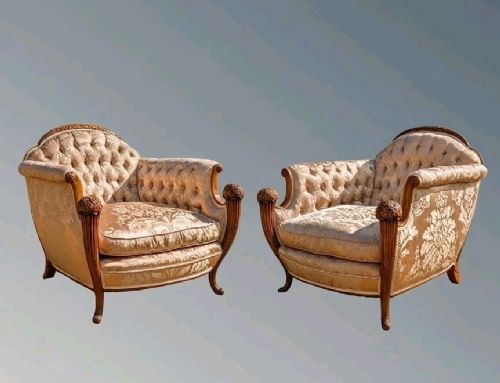
Makers and workshops of the period produced these seats in various configurations, including pairs, sets of dining chairs, and matching suites with settees. The defining characteristics remain the exposed walnut woodwork and the padded upholstery secured with deep buttoning.
How they were made
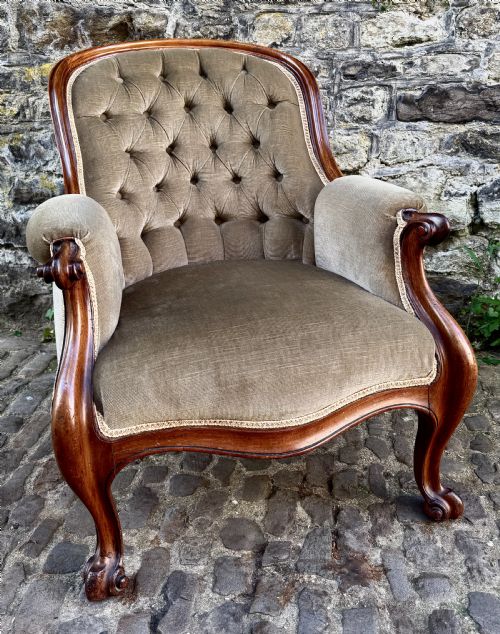
Cabinetmakers shaped the structural frames from walnut, often employing carved ornamentation on the crest rails, arms, and cabriole legs. Workshops utilised traditional joinery methods to ensure the timber supported the tension of heavy upholstery.
Upholsterers built the padding using horsehair, springs, and webbing before covering the frames in velvet, silk, linen, or leather. Deep tufting was then created by pulling twine through the stuffing to secure buttons in a diamond pattern, anchoring the textiles firmly to the internal frame.
Tufted Walnut Chair Retail Price Guide 2026
Typical asking prices for tufted walnut chair among the pieces listed under this phrase on Sellingantiques today, from the lower quarter to the upper quarter. They describe what is for sale here now, not the wider market.
Listings feature walnut frames paired with velvet, leather, silk, and linen upholstery across the Victorian and Edwardian periods.
What varies in quality
The refinement of the timber carving sets individual examples apart, distinguishing workshop pieces with hand-chiseled details from simpler turned frames. Crisp foliage, deep relief work on the walnut, and well-balanced proportions indicate superior craftsmanship.
The integrity of the internal stuffing and the choice of covering material dictate the comfort and finish of the seat. Original silks, fine leathers, or heavy velvets applied with precise buttoning elevate the overall execution of the furniture.
Howard and Sons·Hindley and Sons·Blyth and Sons·Holland and Sons
The Tufted Walnut Chair Glossary
- Tufted
- Upholstery secured with deep buttons arranged in a geometric grid or diamond pattern. This technique pulls the fabric tight against the internal padding.
- Walnut
- A dense, dark hardwood favored for nineteenth-century furniture framing. It takes a fine polish and allows for intricate carving.
- Spoonback
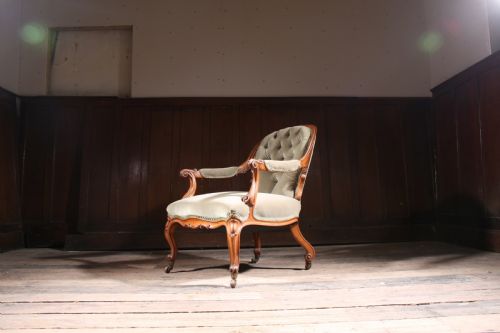
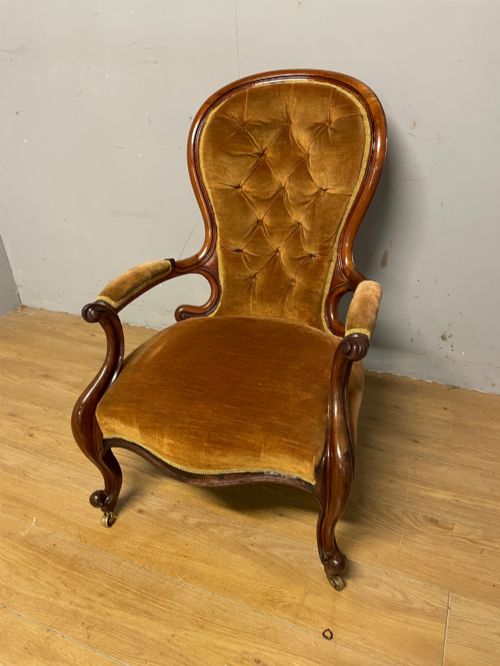
- A chair back shaped in a concave oval resembling the bowl of a spoon. This form appeared frequently in Victorian nursing and drawing room chairs.
- Cabriole leg
- A furniture leg that curves outward in a convex arc and then bends inward in a concave arc, finishing in a pad or scroll foot.
- Button back
- An upholstered backrest featuring sunken buttons that create tufted indentations across the surface.
Tufted Walnut Chair: Frequently Asked Questions
What is a tufted walnut chair?
A tufted walnut chair is a nineteenth-century or Edwardian seat featuring an exposed walnut timber frame and button-upholstered padding. These pieces include armchairs, nursing chairs, and library seating.
They combine structural woodwork with soft textiles, utilising deep buttoning to hold the internal padding in place while displaying carved details on the legs and back.
How do I identify a Victorian chair?
Victorian chairs usually feature walnut frames with dark patination, curved spoonbacks, or carved crest rails. Stylistic influences often draw from Rococo Revival or French fashions.
Looking closely at the timber turnings and the joinery helps distinguish mid-nineteenth-century examples from later Edwardian reproductions.
Where were these chairs used?
These chairs served multiple rooms in nineteenth-century homes, from formal drawing rooms to private bedrooms and libraries. Lower models functioned as nursing chairs by the hearth.
Larger armchairs and library seating provided heavy upholstery for reading rooms, while pairs and sets furnished dining spaces and parlours.
How do I care for antique upholstery?
Care involves gentle dusting of the fabric and occasional professional cleaning suited to the specific textile, whether silk, velvet, or leather. Direct sunlight should be avoided to prevent fading.
The walnut frame benefits from occasional polishing with traditional wax to maintain the finish of the timber.