




Traditional Oak Umbrella Holder
These traditional oak umbrella holder pieces keep hallways tidy while bringing warmth and character to an entrance.
Traditional Oak Umbrella Holder
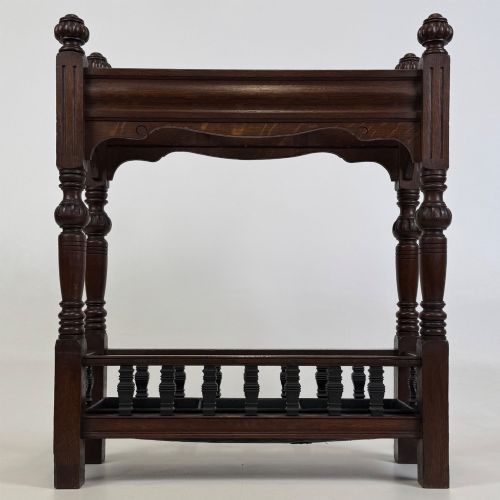
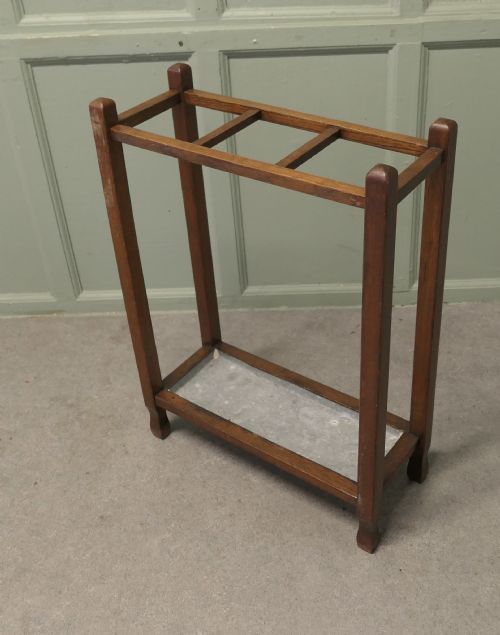
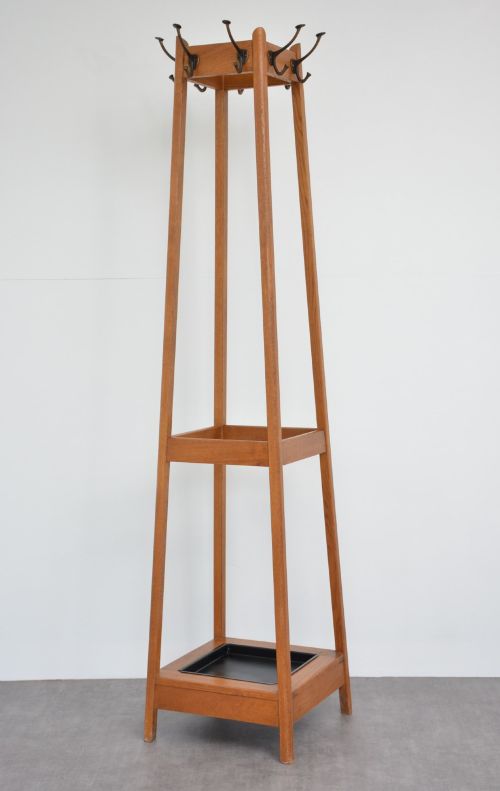
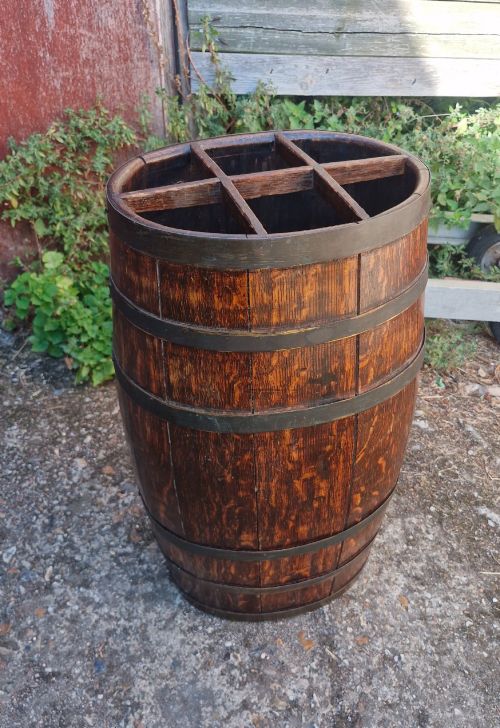
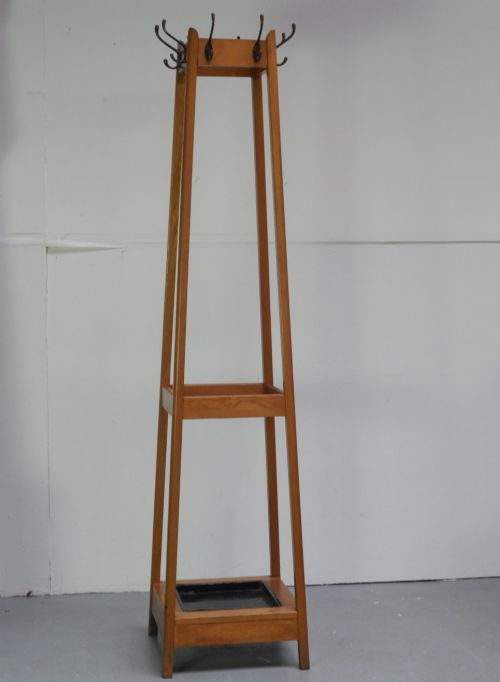
A traditional oak umbrella holder provides a practical place for walking sticks, canes and wet umbrellas in a hallway or boot room. You will encounter various forms ranging from barrel-shaped coopered vessels to full hall stands incorporating coat hooks and mirrors.
The pieces listed on this page span several decades, crossing the Victorian, Edwardian and mid-twentieth-century periods. These items draw on English country house and Arts and Crafts design traditions, focusing on utility and honest materials.
How they were made
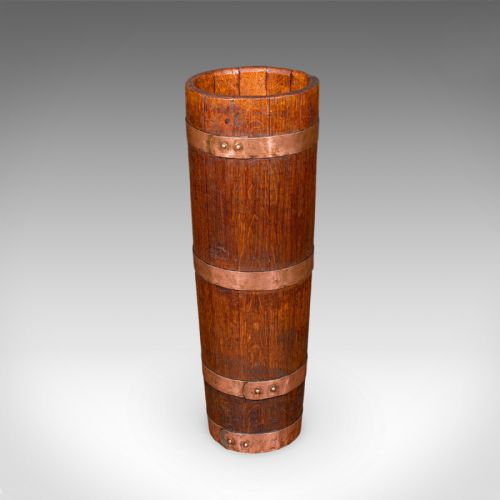
Constructed primarily from oak, these holders utilise solid timber, often showing rich grain patterns such as golden oak. Coopered examples employ curved staves bound together with metal bands, echoing traditional barrel-making techniques.
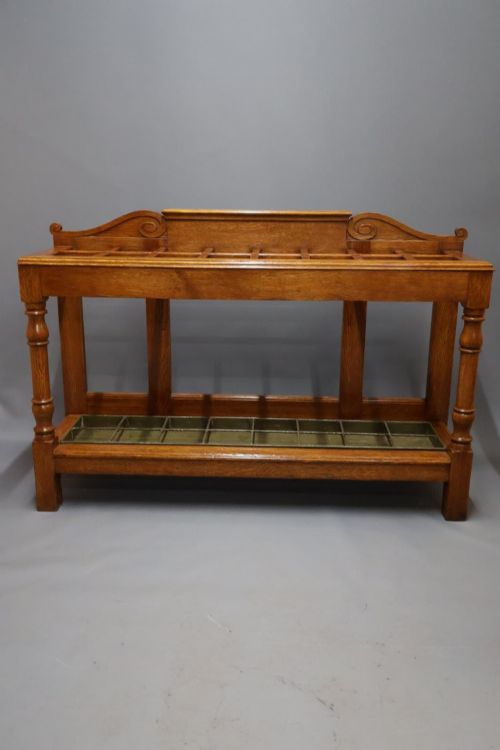
Makers integrated functional elements like metal drip trays made from brass, zinc, iron, or copper to catch water from wet umbrellas and protect the wooden base. Some pieces also feature cast iron components or brass loop handles to aid placement within the hallway.
Traditional Oak Umbrella Holder Retail Price Guide 2026
Typical asking prices for traditional oak umbrella holder among the pieces listed under this phrase on Sellingantiques today, from the lower quarter to the upper quarter. They describe what is for sale here now, not the wider market.
Listings feature oak material combined with brass, zinc, iron, and copper across Edwardian, Victorian, and mid-twentieth-century periods.
What varies in quality
The quality of a traditional oak umbrella holder often rests on the integrity of its construction and the preservation of its original components. Pieces that retain their original metal drip trays and binding hoops command greater interest from collectors.
Subtle differences in joinery, such as coopered staves versus panelled construction, separate utilitarian workshop pieces from more refined Arts and Crafts or country house examples.
The Traditional Oak Umbrella Holder Glossary
- Coopered
- Made by a cooper using curved wooden staves bound together with metal hoops, much like a traditional barrel.
- Drip tray
- A removable metal tray placed at the base of a stand to catch water and protect the floor or lower woodwork.
- Hall stand
- A larger piece of hallway furniture combining an umbrella holder with coat hooks, a hat shelf, and frequently a mirror.
- Arts and Crafts
- A design movement prioritising traditional craftsmanship, simple forms, and visible construction methods over mass-produced ornamentation.
Traditional Oak Umbrella Holder: Frequently Asked Questions
Where should I place an umbrella holder?
These pieces fit naturally in an entrance hall, porch, or boot room where wet outerwear is removed upon entering the home.
Position the stand on a hard floor surface near the front door for easy access when coming and going.
How do I care for oak hallway furniture?
Dust the wood regularly with a dry cloth and occasionally apply a suitable beeswax to nourish the timber surface.
Empty and dry the metal drip tray frequently to prevent moisture from damaging the surrounding oak base.
What is the difference between a stick stand and an umbrella stand?
Stick stands were originally designed for walking canes and riding crops, whilst umbrella stands accommodate rain gear.
In practice, makers often built these stands to serve both functions interchangeably.
How can I tell an Edwardian stand from a Victorian one?
Victorian pieces often lean towards heavier proportions and darker finishes, reflecting formal nineteenth-century interior tastes.
Edwardian and Arts and Crafts examples typically display lighter golden oak tones and simpler, more functional lines.