




Traditional Indian Furniture
Traditional indian furniture brings heavy teak, painted folk art and rich colonial character straight into a modern room.
Traditional Indian Furniture
Traditional indian furniture covers practical storage and seating built from robust regional timbers. When you search for traditional indian furniture, you encounter sturdy cupboards, low benches and carved chairs dating across the nineteenth and early twentieth centuries.
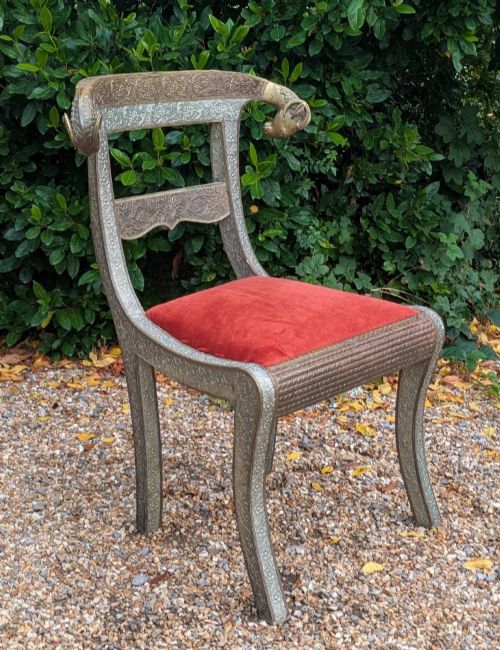
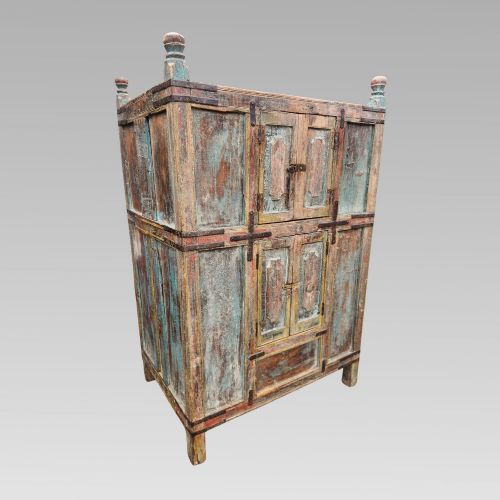
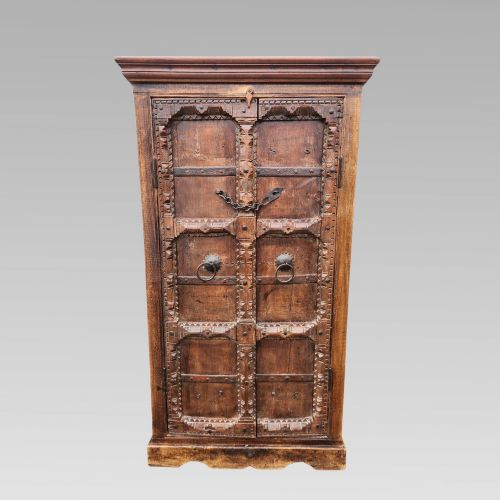
The pieces on this page span several distinct vernacular and colonial traditions, including Anglo-Indian Regency designs, painted folk art cabinets and South Indian utility items. Forms range from monumental almirahs and dowry chests to solid armchairs and elephant seats.
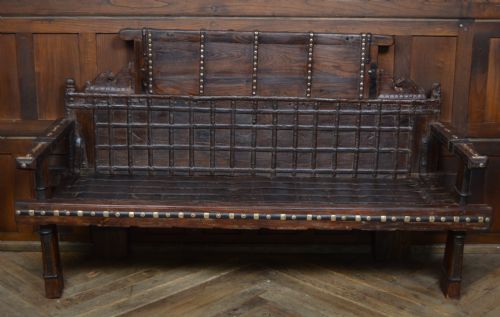
Many items reflect domestic rituals and daily work, such as wedding chairs, bullock cart benches and coconut scrapers repurposed for modern interiors. Teak and hardwood dominate the selection, often enriched with brass, iron or silver metal sheet.
How they were made
Workshops relied heavily on dense tropical timbers like teak, ebony and general hardwoods, selected for their structural strength in warm climates. Carpenters joined heavy planks using traditional framing methods, often mounting doors and lids on pivot hinges.
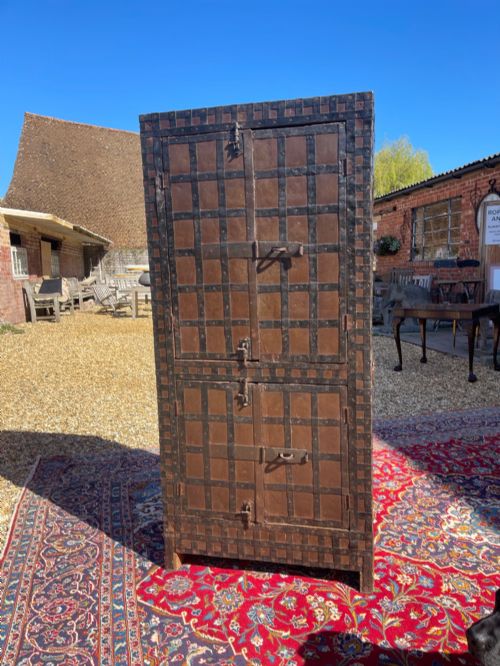
Metal reinforcement played a structural role, with iron bands and brass fittings securing heavy storage cabinets and dowry chests against seasonal movement. Artisans also applied surface colour through decorative paintwork or overlaid sheets of silver metal to highlight carved details.
Sculpted wooden elephant seats complete with tusks bring a touch of nineteenth-century menagerie charm straight to the floor.
What varies in quality
Quality rests in the integrity of the original timber and the depth of the hand-carved detail. Superior pieces retain their structural timber without excessive modern reconstruction, displaying crisp execution in motifs like rams heads and figural seats.
The handling of decorative surfaces sets finer examples apart, particularly where painted folk art or inlaid marble remains intact and vibrant. Utility pieces show quality through the straightforward honesty of their blacksmith-made iron mounts and sturdy peg construction.
The Traditional Indian Furniture Glossary
- Almirah
- A traditional freestanding cupboard or wardrobe used for storage in South Asian households. These tall cabinets often feature heavy panelled doors and robust internal shelving.
- Damchiya
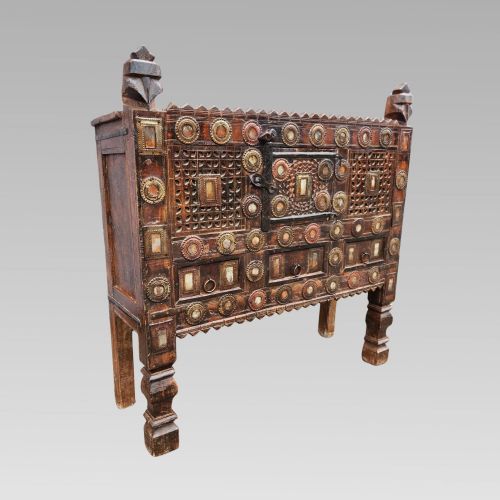
- A traditional low storage chest or cabinet, frequently associated with dowries and featuring carved teak panels. They often incorporate sliding or hinged fronts with hidden compartments.
- Bergere
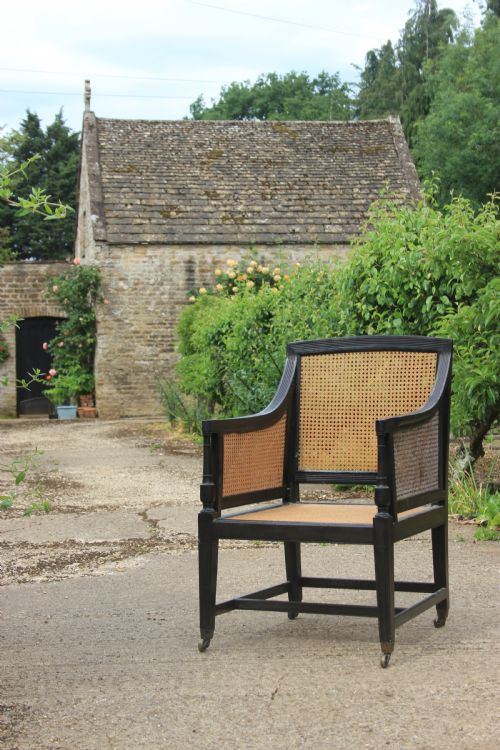
- An upholstered armchair with enclosed sides, though some regional adaptations translate the form into solid turned wood. The style reflects European influence adopted by local makers.
- Savonarola chair
- A folding armchair constructed from multiple intersecting wooden slats, forming an X-shaped frame. The design derives from Italian Renaissance models reinterpreted through local craftsmanship.
- Anglo-Indian
- A descriptive term for furniture made in India under British colonial rule, combining British furniture forms with local materials and carving traditions.
Traditional Indian Furniture: Frequently Asked Questions
What woods were used?
Makers relied primarily on dense regional timbers such as teak, ebony and assorted tropical hardwoods. These woods provided the necessary weight and durability for large storage pieces and seating.
Secondary materials like iron and brass frequently appear as structural straps, hinges and decorative mounts on cabinets and chests.
How do I date pieces?
Dating relies on construction methods, tool marks and the style of decoration, spanning from nineteenth-century vernacular items to early twentieth-century examples. Elements like hand-forged ironwork and traditional pegged joints point towards earlier production.
Colonial influences, such as Regency forms executed in local timber, also help place pieces within specific nineteenth-century periods.
Are these pieces heavy?
These items are constructed from solid tropical hardwoods and substantial metals, making them significantly heavier than modern flat-pack furniture. Cupboards, benches and almirahs require adequate floor support and careful placement.
Moving larger storage pieces often requires two people due to the dense timber and iron reinforcement.
How do I clean the surfaces?
Dust regularly with a dry, soft cloth to protect vulnerable painted finishes and delicate wood carvings. Avoid harsh chemical cleaners that can strip historic wax or damage pigmented folk art.
Application of a natural beeswax helps nourish dry teak and hardwood surfaces without creating artificial gloss.