
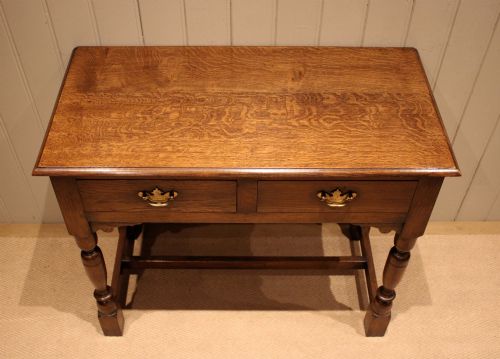
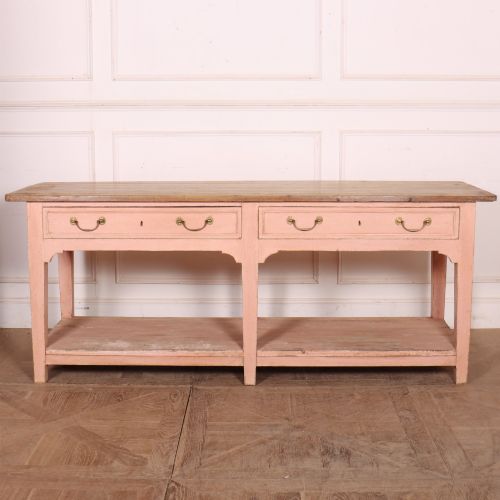
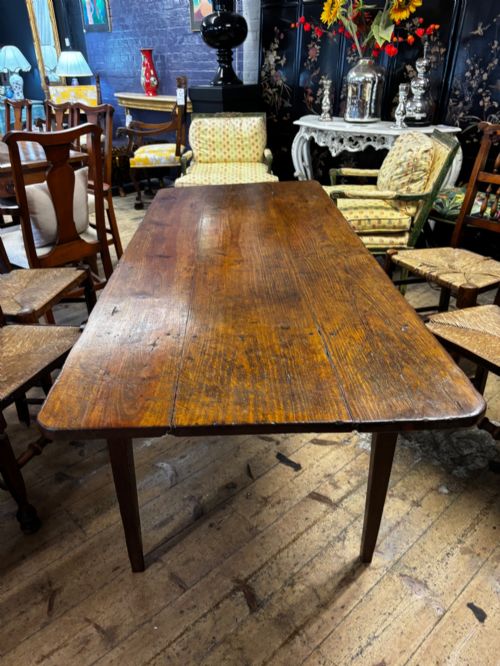
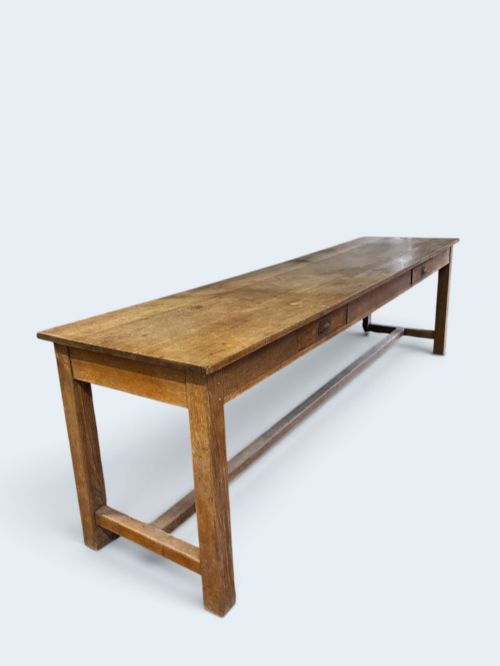
Traditional Country Table
A traditional country table brings honest utility and enduring character to a room, built from solid timbers like oak and pine for daily service.
Traditional Country Table
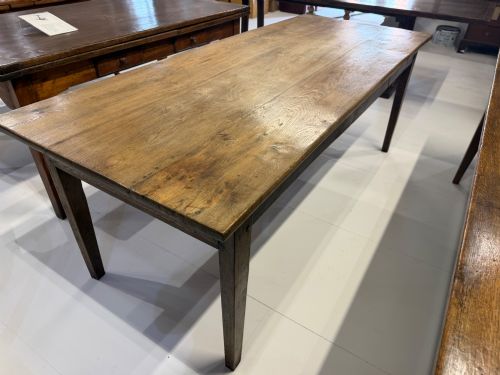
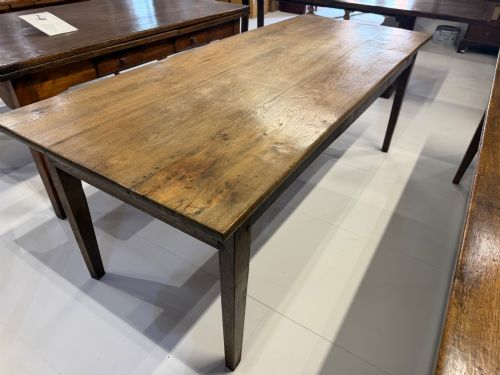
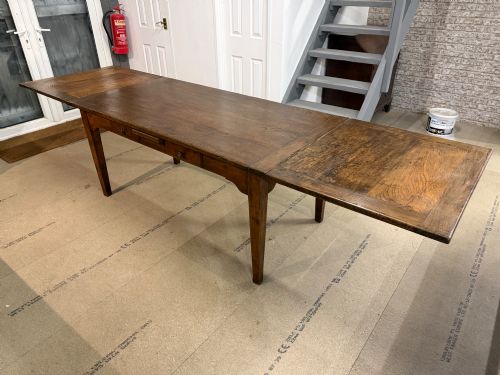
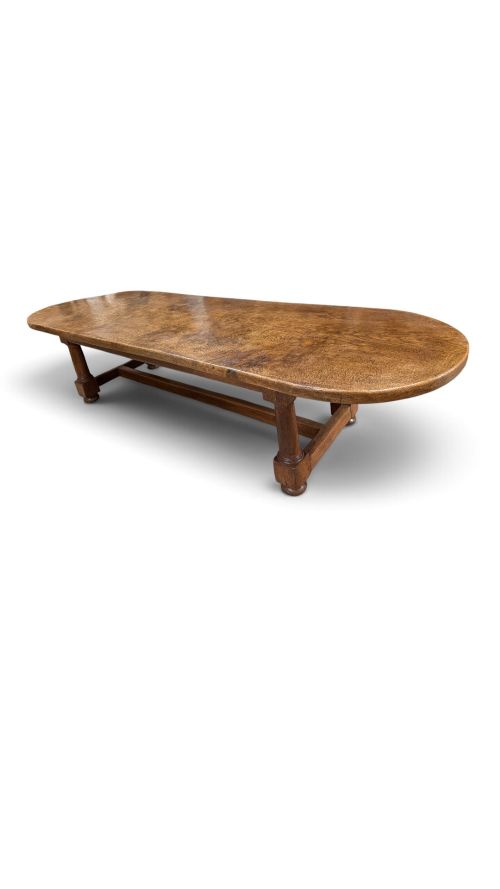
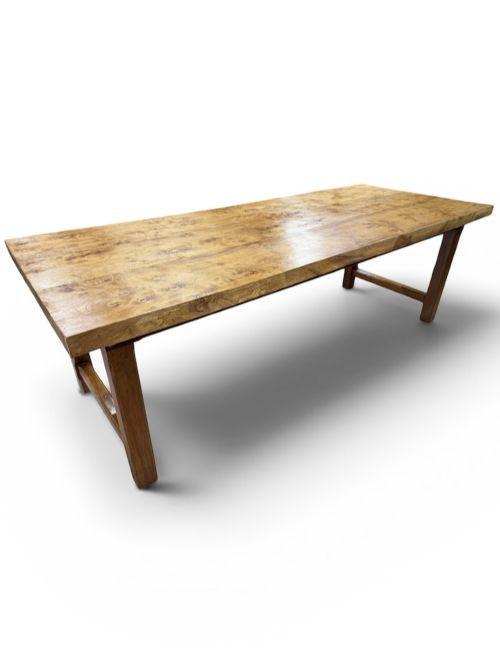
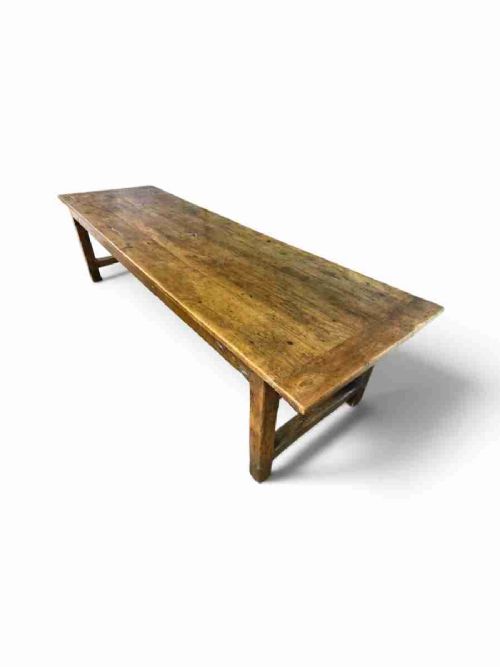
A traditional country table serves as the hearty centrepiece of a rural interior, designed originally for heavy domestic labour and communal meals. When searching for a traditional country table, buyers encounter robust dining forms, refectory surfaces, and smaller side pieces built to withstand generations of use.
The pieces on this page span from the eighteenth century through the Edwardian era, drawing on styles such as Rustic Farmhouse, English Country, and George III. Oak predominates as the primary wood, complemented by pine, fruitwood, and beech in various regional formats.
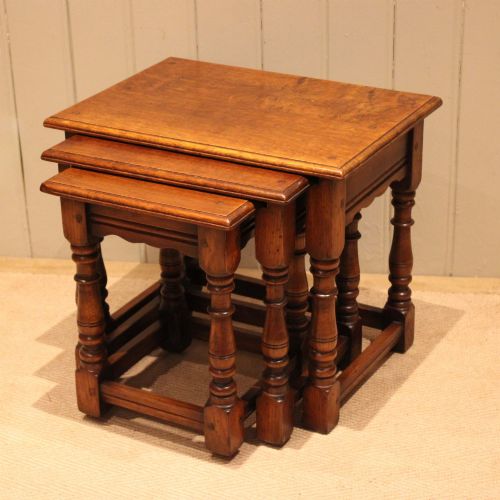
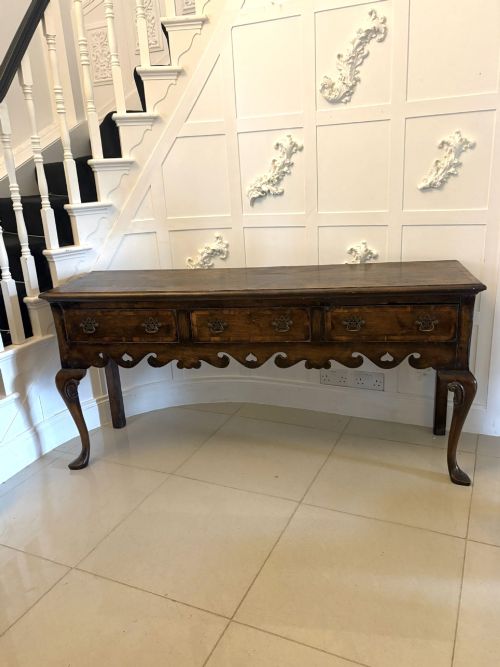
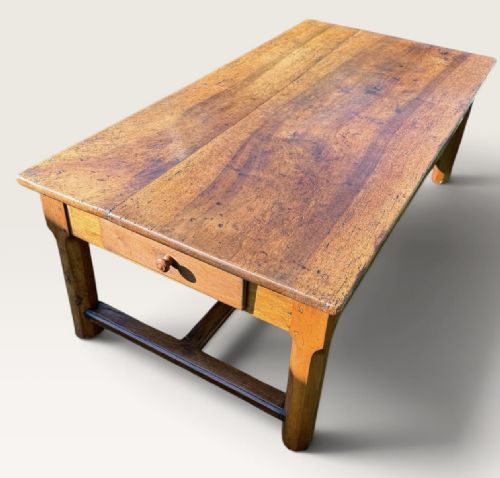
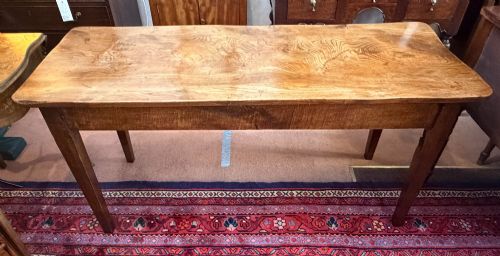
Form follows function closely in these objects, yielding large dining tables alongside potboard dresser bases, serving tables, and occasional coffee tables. The proportions remain generous, often accommodating numerous guests around thick planked tops.
Quality Variations
Quality rests primarily on the integrity of the timber selection and the degree of original construction that remains intact. Single plank tops and substantial framing elevate certain examples above standard utilitarian pieces.
The depth of the accumulated patina and the subtlety of hand-turned legs distinguish finer workshops from mass-produced later variants. Proportion and balance also dictate value, with well-balanced seating heights and stable frames representing superior craftsmanship.
Some tables retain historical paint layers beneath modern wax, hiding secret coats of colourful history.
The Traditional Country Table Glossary
- Refectory table
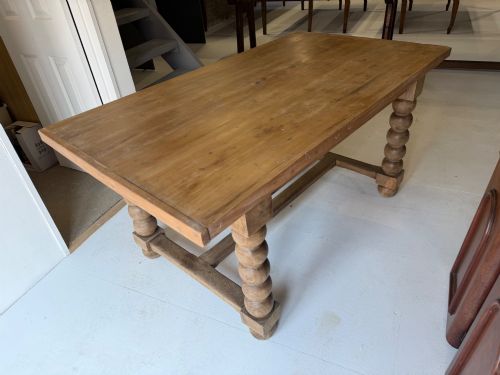
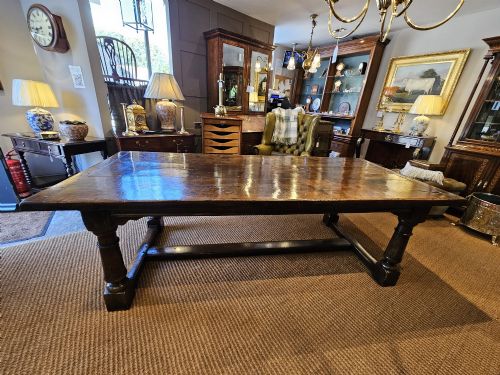
- A long dining table historically used in monastic dining halls and later adopted in country houses. These pieces feature elongated tops supported by substantial legs linked with floor-level stretchers.
- Potboard dresser base
- A sideboard featuring an open lower shelf used traditionally for storing pots and domestic utensils. This form provides a stable base beneath a serving surface.
- Bobbin leg
- A turned furniture leg shaped to resemble a series of wooden bobbins or spools strung together. This decorative turning technique appears frequently on seventeenth and nineteenth-century pieces.
- Plank top
- A table surface constructed from individual long boards joined edge to edge. Single plank variations are particularly prized for their width and unbroken grain.
Traditional Country Table: Frequently Asked Questions
How do I clean a wooden table?
Dust the surface regularly with a soft, dry cloth to prevent grit accumulation. Apply a natural beeswax periodically to nourish the timber and maintain its protective sheen.
Avoid placing hot items or wet glassware directly on the bare wood to prevent staining. Mild soap and water can address minor marks, provided the cloth remains barely damp.
Can I seat eight people comfortably?
Many refectory and farmhouse formats accommodate eight diners easily due to their generous length and lack of restrictive side aprons. Reviewing the specific dimensions and leg placement ensures adequate legroom for guests.
Longer formats often span multiple feet, allowing chairs to tuck neatly along the entire perimeter. Measuring your dining space beforehand guarantees proper clearance around the seating.
Are pine and oak equally durable?
Oak offers superior hardness and resistance to heavy daily impacts, making it the preferred choice for primary dining surfaces. Pine provides a softer, lighter alternative that ages with a distinct rustic charm.
Both timbers endure decades of domestic life when treated with appropriate care and maintenance. The choice between them typically depends on the desired visual weight within a room.
What defines a refectory table?
A refectory table is distinguished by its long, narrow proportions designed originally for communal dining. Low stretchers running between the legs provide structural stability to the elongated frame.
This form originated centuries ago and remains a staple of country house interiors. Their sturdy construction makes them ideal for modern family kitchens and dining rooms.