
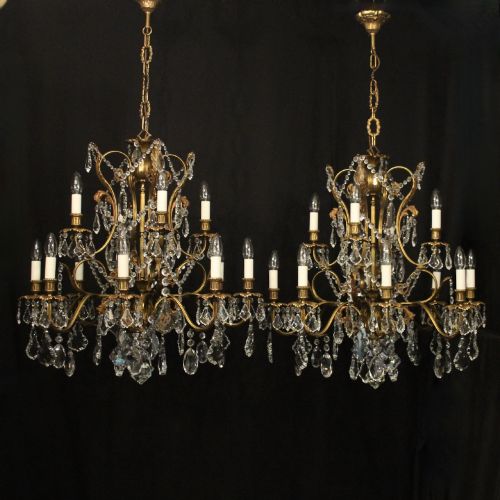
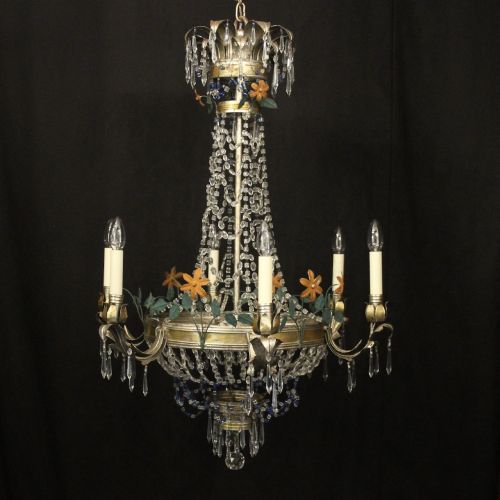
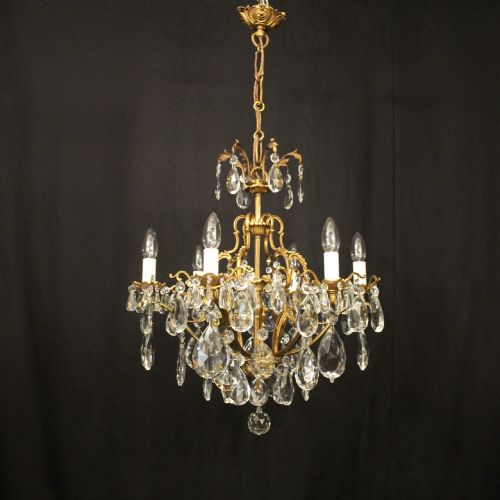
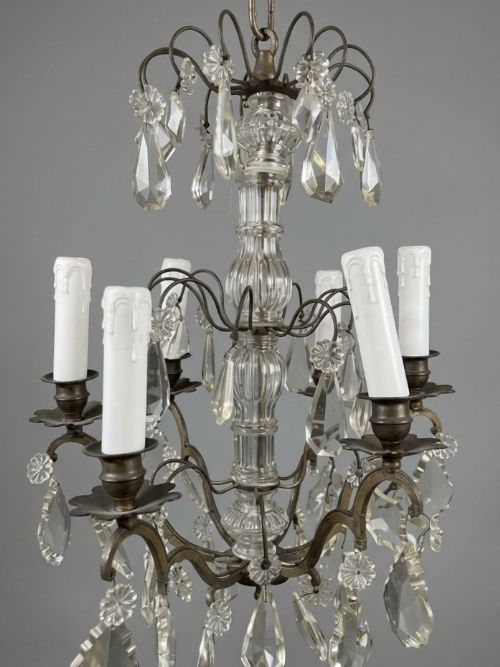
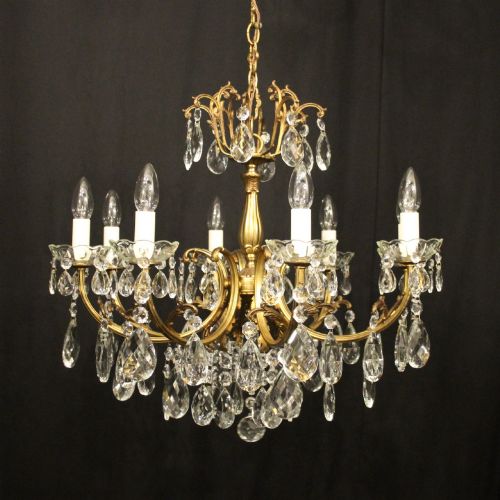
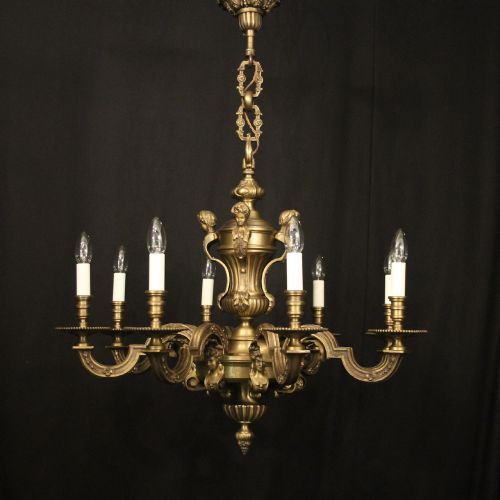
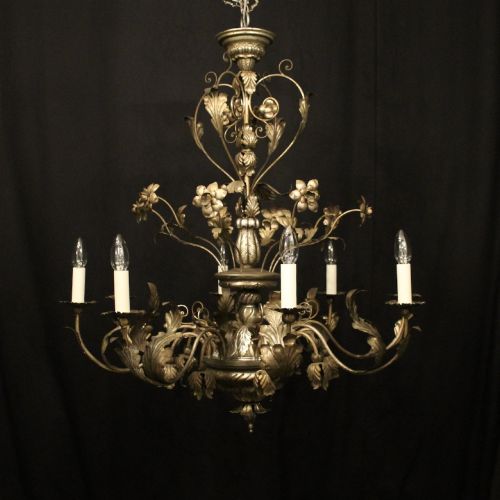
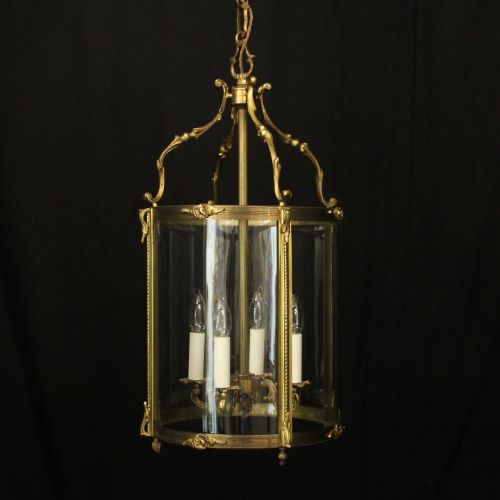
Traditional Chandelier
A traditional chandelier brings layered illumination and focal presence to a room, using cut glass, crystal, and cast metal to catch the light.
Traditional Chandelier
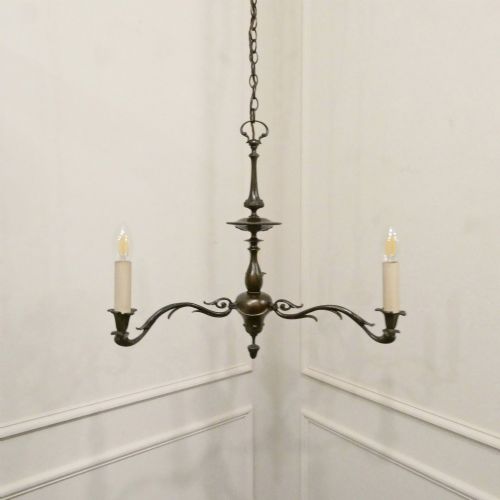
A traditional chandelier brings together metal frames and glass elements to suspend multiple lights from a ceiling, creating a distinct focal point in a room. When searching for a traditional chandelier, buyers encounter pieces originating predominantly from French, Italian, and English workshops spanning the nineteenth century and the early decades of the twentieth century.
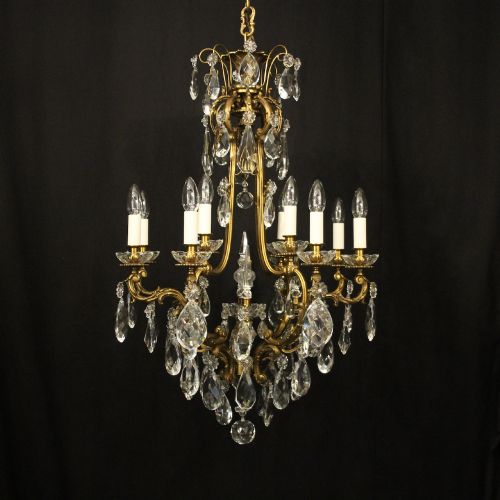
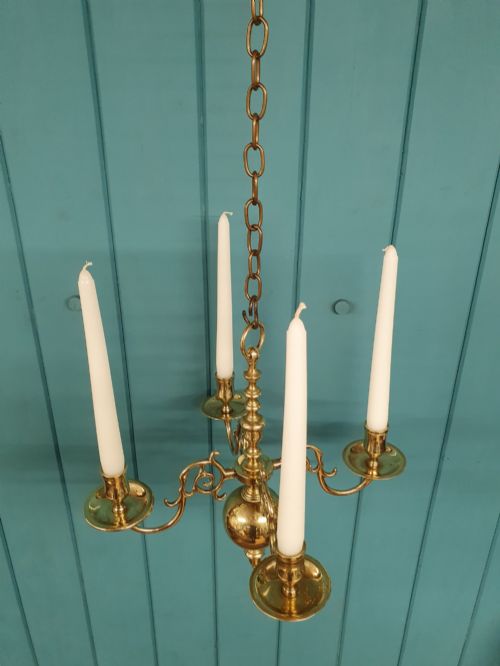
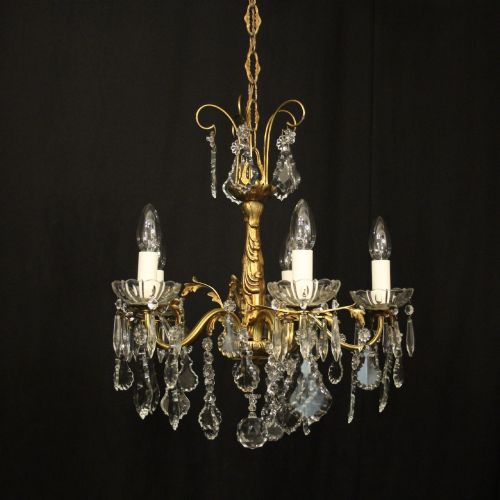
The selections on this page lean heavily towards French models featuring gilded bronze, gilt brass, and abundant crystal lustres, alongside Italian Florentine and Genoese works. Formats range from large multi-tier ballroom pieces with tent and waterfall configurations down to smaller four-arm candle fixtures and hall lanterns.
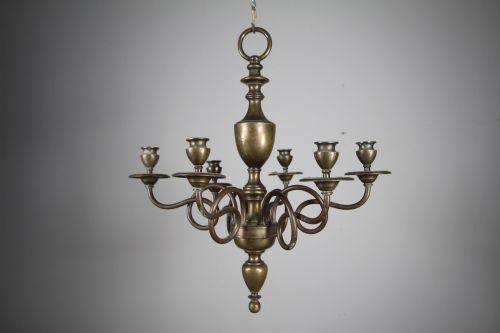
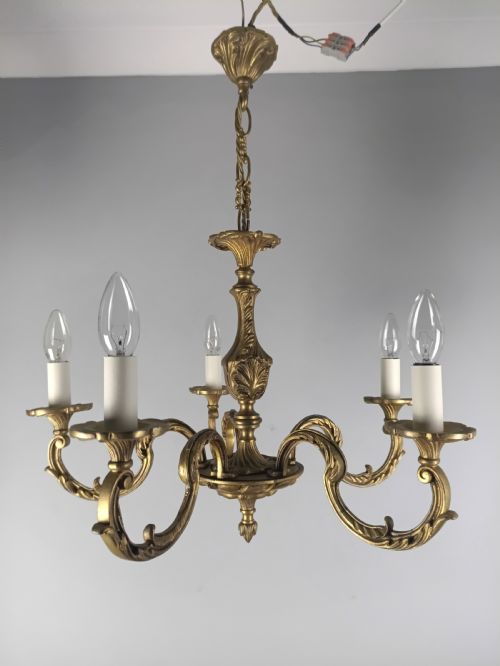
Edwardian and nineteenth-century variations also appear, utilising brass and copper structures that reflect earlier Neo-Classical, Rococo, and Empire revivals. Buyers find both simple brass candle branches and complex twelve-light crystal compositions designed for principal reception spaces.
Materials and Technique
Makers constructed the primary skeletons of these fixtures using cast or spun brass, bronze, copper, and wrought iron, frequently applying layers of gold leaf, silver gilding, or polychrome paint to the metal surface. Gilt bronze and gilded brass provide both structural rigidity and a reflective base that enhances the overall illumination of the room.
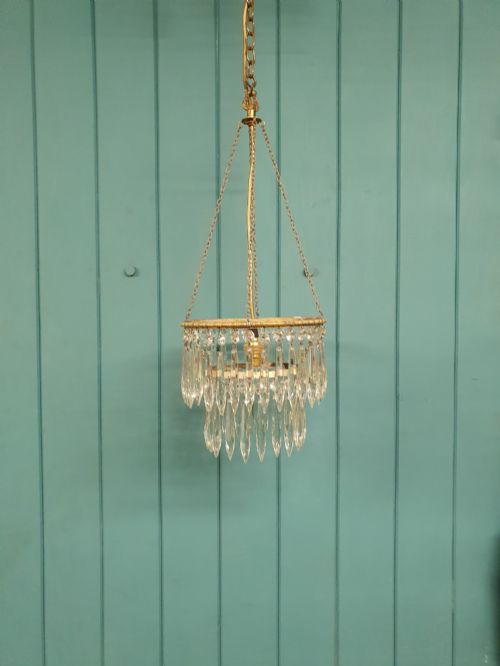
Cut glass and crystal components, including drops, lustres, spikes, and draped beads, were hand-wired to the metal armature to create the characteristic tent and waterfall profiles. These glass elements refract the light from multiple internal bulbs or candles, diffusing brightness evenly across the surrounding space.
Materials recur across brass, bronze, gilt brass, and cut glass crystal, forming configurations from single lanterns to fourteen-light ballroom fixtures.
Distinctions in Execution
Quality rests in the precision of the metal casting, the depth of the fire-gilding or silvering, and the clarity of the cut crystal drops. Finer examples display crisp chisel work on bronze mounts and hand-cut facets on glass prisms that disperse light cleanly without distortion.
Heavier gauge brass and bronze frames support larger multi-light configurations securely, while superior assembly ensures that glass drops hang in balanced, uniform cascades rather than irregular groupings.
The Traditional Chandelier Glossary
- Crystal lustre
- A cut glass pendant suspended from the arms or crown of a lighting fixture to refract light. These drops hang in various geometric shapes.
- Tent and waterfall
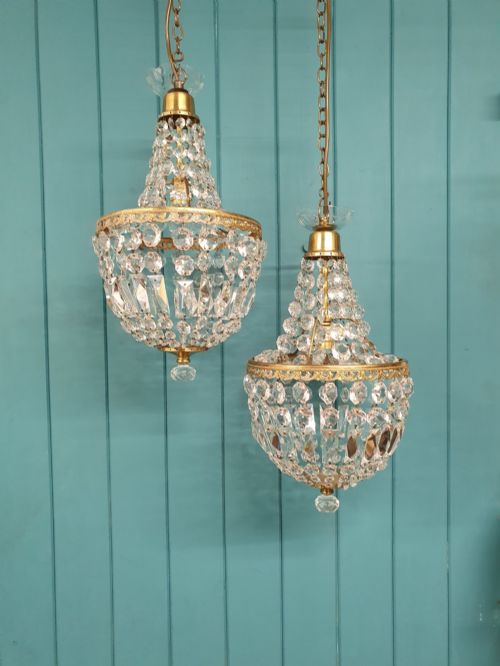
- A chandelier configuration where upper strings of beads form an inverted cone tent above a broader cascading tier of crystal drops. This style defines many French fixtures from the early twentieth century.
- Hall lantern
- An enclosed ceiling light, often glazed or framed in brass and bronze, designed for entryways and corridors. They appear in convex and multi-panel formats.
- Gilt bronze
- An alloy of copper and tin treated with a gold amalgam or leaf finish to impart a rich metallic sheen. It allows for sharp cast details in revival styles.
- Marie Theresa
- A specific chandelier style characterised by flat metal arms covered in glass strips and secured with rosette pins, originating in Central Europe.
Traditional Chandelier: Frequently Asked Questions
How do I clean a crystal chandelier?
Maintenance involves wiping individual crystal elements with a specialist glass cleaning solution while supporting each drop by hand to prevent strain on the wire ties.
Technicians recommend cleaning the metal frame separately using dry cloths to preserve gilt or silver surfaces without introducing moisture into the electrical fittings.
Are these wired for modern ceilings?
Most antique fixtures arrive adapted for contemporary electrical standards while retaining their original brass or bronze lamp holders and internal channels.
Buyers should consult a qualified electrician to check weight capacities and ensure secure ceiling joist attachment before hanging heavier multi-light examples.
What ceiling height do I need?
Placement depends on the drop length of the specific fixture and whether it hangs above furniture like a dining table or in an open circulation space.
Shorter hall lanterns and four-arm fixtures suit standard ceiling heights, whereas multi-tier tent and waterfall models require taller rooms to maintain correct proportions.
How do I date a brass chandelier?
Dating relies on observing manufacturing techniques, such as the transition from sand-cast brass in the nineteenth century to machine-finished components in the early twentieth century.
Stylistic cues like Empire revival motifs or Edwardian proportions further narrow down the decade of production when maker marks are absent.