



Tortoiseshell Inlaid Clock
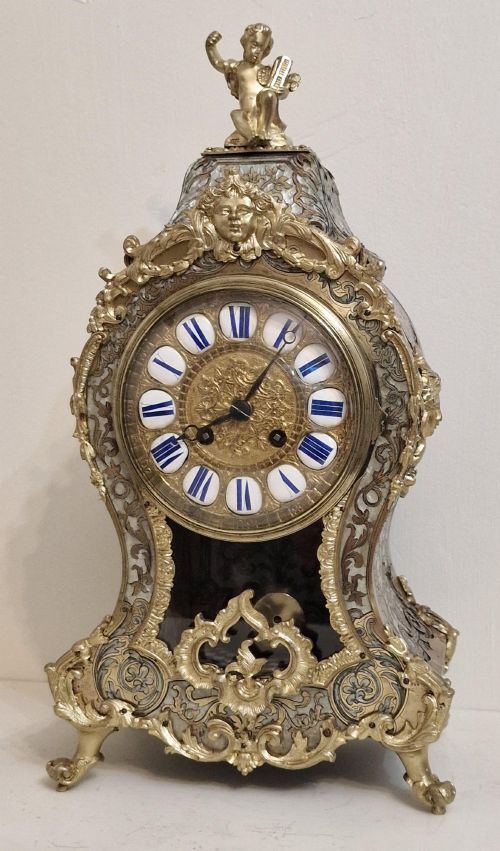
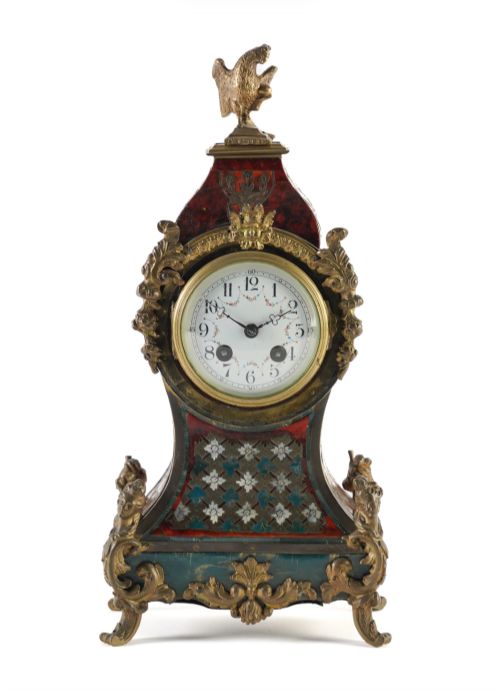
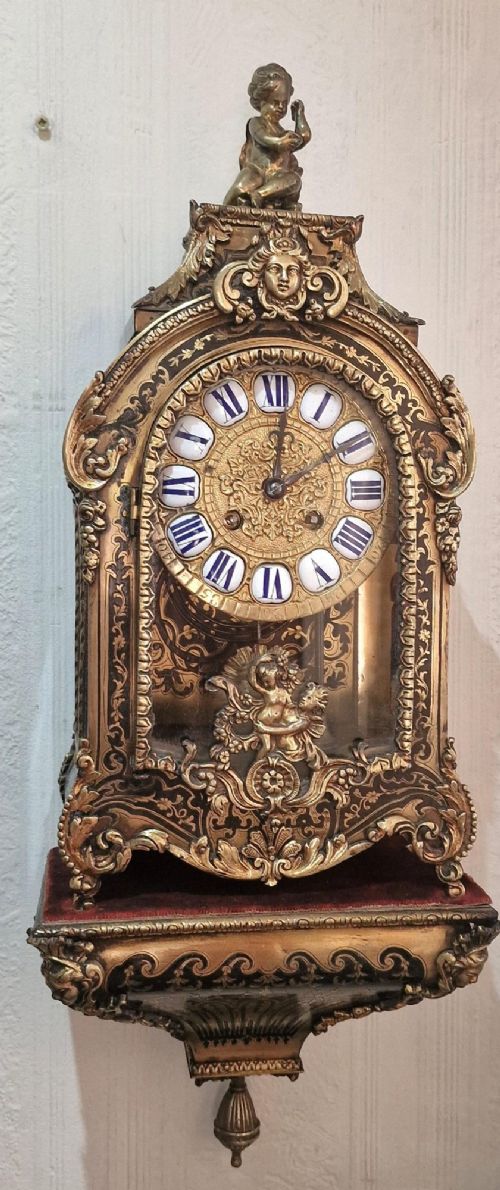
These tortoiseshell inlaid clock examples bring nineteenth century French craftsmanship into a room, offering striking brass work alongside rich shell panels.
Tortoiseshell Inlaid Clock
A tortoiseshell inlaid clock is typically a nineteenth century French timepiece, drawing heavily on Louis XIV and Louis XV revival styles as well as Napoleon III aesthetics.
The selections encountered most often on this page take the form of mantel clocks, frequently accompanied by brackets, pedestals, or matching wall fixings.
Makers such as Henri Marc, Samuel Marti, and Payne of London appear amongst these examples, alongside grander longcase and bracket pieces.
Materials and technique
These pieces utilise brass and tortoiseshell arranged in traditional Boulle marquetry, often set upon ebonised wood cores with ormolu or gilt bronze mounts.
Enamel dials feature prominently on the clock faces, protected by glass bezels while intricate bone inlay and silver mounting appear on smaller carriage formats.
Tortoiseshell Inlaid Clock Retail Price Guide 2026
Typical asking prices for tortoiseshell inlaid clock among the pieces listed under this phrase on Sellingantiques today, from the lower quarter to the upper quarter. They describe what is for sale here now, not the wider market.
Listings feature pieces from the Victorian era alongside specific dates spanning from eighteen fifty to eighteen ninety.
What separates the grades
The distinction between standard and superior pieces rests upon the precision of the brass and tortoiseshell cutting, where finer marquetry displays tight, seamless junctions.
Richer colouring within the shell panels and heavier, more deeply chased gilt bronze mounts elevate the overall presence of a clock.
Henri Marc of Paris·Samuel Marti·Payne London
The Tortoiseshell Inlaid Clock Glossary
- Boulle work
- A method of marquetry using brass and tortoiseshell inlaid together, named after the famous cabinetmaker Andre Charles Boulle. This technique allows two contrasting panels to be cut simultaneously.
- Ormolu
- Gilt bronze mounts applied to furniture and clocks, adding decorative weight and architectural form. The process involves applying a gold amalgam to bronze.
- Fusee
- A conical pulley used in clock movements to maintain even tension on the chain as the mainspring unwinds. This mechanical addition improves timekeeping accuracy over the running period.
- Bracket clock
- A portable clock designed to sit upon a dedicated wall bracket or shelf. Many nineteenth century French versions include matching brackets in the inventory.
Tortoiseshell Inlaid Clock: Frequently Asked Questions
How do I wind a tortoiseshell inlaid clock?
Most eight day movements require a key inserted gently into the dial holes, turning clockwise until gentle resistance halts the motion.
Care must be taken not to overwind the spring, as this risks internal damage to the gear train.
Where should I place my clock?
Mantel clocks sit best on stable, level surfaces away from direct sunlight and sudden temperature shifts that might affect the wood and shell.
Wall clocks require secure fixing to solid masonry or wall studs to support their substantial weight.
How do I date a Boulle clock?
Dating relies on stylistic clues like Napoleon III or Louis XIV revival details, alongside movement signatures and dial typography.
Most pieces originate from the nineteenth century, particularly between eighteen fifty and eighteen ninety.
Are these clocks suitable for daily use?
These timepieces function well for daily timekeeping provided they receive regular mechanical servicing by a qualified horologist.
Gentle handling during setting and winding preserves the delicate brass and tortoiseshell inlay for years to come.