



Tall Glass Front Cabinet
A tall glass front cabinet organises books or curiosities behind timber and glazing, bringing height and proportion to any room.
Tall Glass Front Cabinet
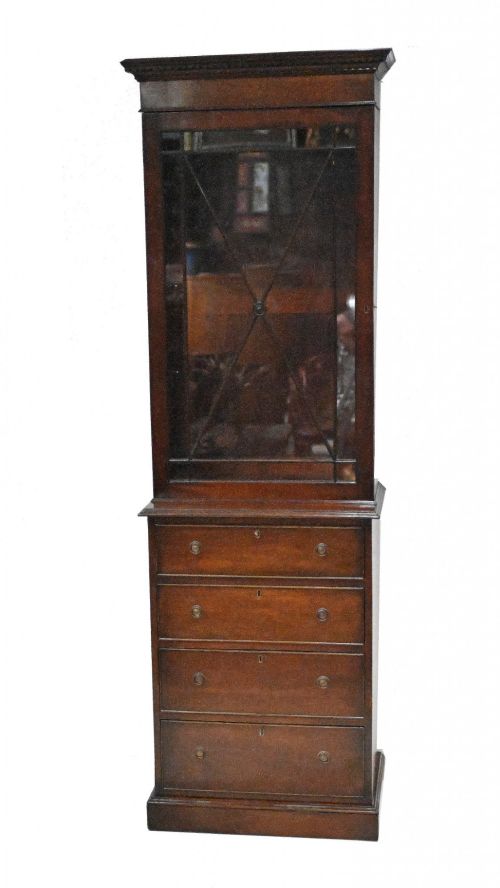
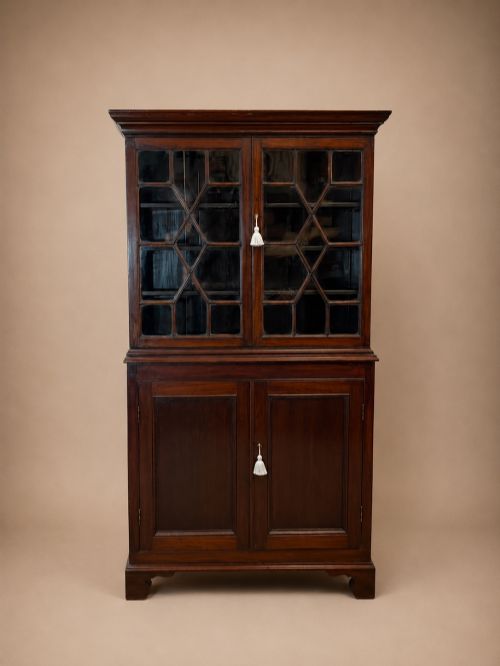
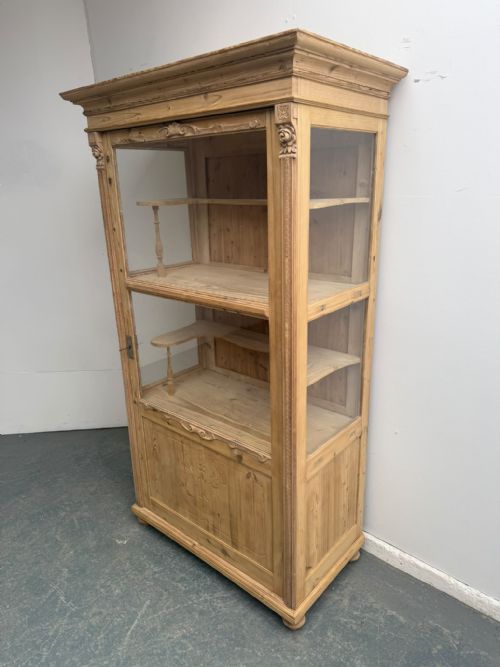
A tall glass front cabinet combines vertical timber construction with transparent viewing panels, serving as a prominent storage and display piece in domestic or commercial interiors. The pieces catalogued under this search phrase span display cabinets, bookcases, specimen cabinets, vitrines, library bookcases, and armoires, offering varied internal configurations for books and collections.
The most common version met on this page is the tall mahogany bookcase or display cabinet originating from the nineteenth century or the Edwardian era. These items utilise vertical proportions to maximise floor space while keeping contents visible and protected behind glass doors.
Origins across the selection range from the Victorian and Edwardian periods down to specific dates like eighteen-ninety and nineteen-twenty, incorporating styles such as Victorian, Edwardian, Georgian style, and French provincial. Forms vary from slim bookcases and stacking sections to bow front shop display cabinets and pier cabinets with marquetry.
How they were made
Construction relies predominantly on traditional hardwoods and softwoods such as mahogany, oak, walnut, and pine, paired with glass panes and occasionally lead cames. Brass hardware provides functional hinges and locks, while marquetry inlay adds decorative surface detail to specific walnut and mahogany examples.
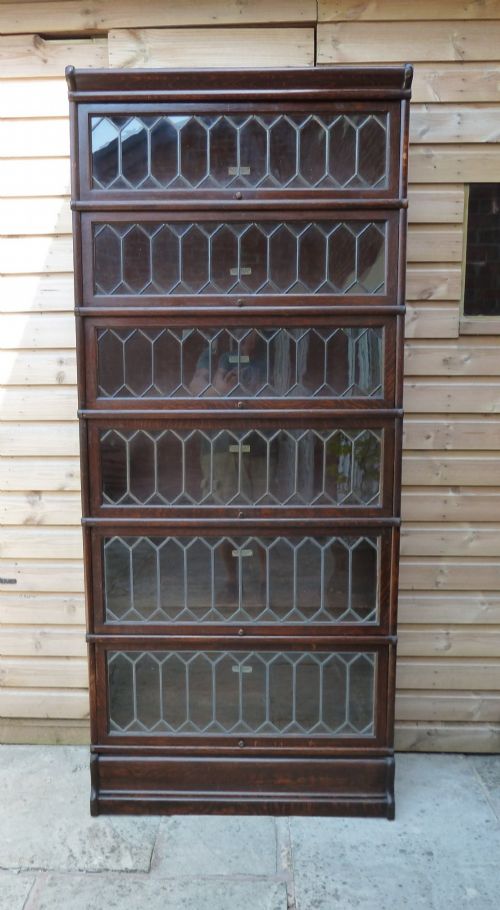
Makers utilised framed glass doors to enclose shelving, employing leaded joints in sectional stacking designs and curved glass for bow front shop variants. Painted wood surfaces and wax finishes appear alongside polished hardwood grains to prepare the timber for domestic or retail environments.
Tall Glass Front Cabinet Retail Price Guide 2026
Typical asking prices for tall glass front cabinet among the pieces listed under this phrase on Sellingantiques today, from the lower quarter to the upper quarter. They describe what is for sale here now, not the wider market.
One towering nineteenth century bookcase evidently decided it had not reached high enough and brought along its own built-in ladder for reaching the upper shelf.
What varies in quality
Quality separates through the selection of cabinet timbers, such as figured mahogany or walnut with marquetry, compared against simpler pine or painted wood constructions. The sophistication of the glazing, from standard panes to leaded segments and curved shop glass, defines the execution.
Construction methods also set pieces apart, distinguishing modular stacking bookcases and fitted library cases from standard upright cabinets. Finer items demonstrate careful proportioning in narrow or tall formats, retaining original brass fittings and integrated architectural details.
The Tall Glass Front Cabinet Glossary
- Pier cabinet
- A low or tall display piece designed to stand against the narrow wall space between windows. These often feature glazed doors and decorative wood veneers.
- Vitrine
- A glass-fronted cabinet used specifically for displaying fine porcelain, curiosities, or objects of art. They prioritise visibility through large glazed door panels.
- Marquetry
- The art of applying pieces of veneer to a structure to form decorative patterns and pictures. Walnut and mahogany examples frequently display this technique.
- Globe wernicke
- A sectional barrister bookcase system made of stacked, glass-fronted units. These allow individual tiers to be added or rearranged vertically.
- Armoire
- A tall wardrobe or cupboard featuring doors that open to internal storage. French provincial variants provide a decorative storage alternative.
Tall Glass Front Cabinet: Frequently Asked Questions
What is a tall glass front cabinet used for?
These cabinets serve primarily to store and display books, collections, or retail goods while protecting the contents behind glass doors. They utilise vertical wall space efficiently in domestic rooms or shop interiors.
Depending on the specific internal layout, they accommodate anything from library volumes to delicate specimen collections and decorative objects.
How do I date a tall glass front cabinet?
Dating relies on identifying period characteristics, timber choices, and construction methods associated with nineteenth century, Victorian, or Edwardian manufacturing. Specific markers include leaded glazing, stacking modular designs, or distinctive marquetry inlay.
Stylistic cues such as Georgian revival proportions or French provincial influences further help narrow the era of production.
Are these cabinets suitable for small rooms?
Tall narrow formats and slim bookcase variants provide significant vertical storage without occupying a large footprint on the floor. Their glass doors also reflect light and keep sightlines open across the room.
Placing a tall narrow piece against a blank wall or pier space maximises capacity in restricted layouts.
How do I care for antique timber and glass?
Maintaining these pieces involves regular dusting with a soft cloth and occasional treatment of the wood with appropriate wax or polish. Glass panels require standard non-abrasive glass cleaner applied sparingly to avoid the surrounding frame.
Keeping the cabinets away from direct heat sources and strong sunlight protects both the polished timber and the historical glass.