


Sterling Silver Owl
When you search for sterling silver owl, you find charming figural pieces ranging from Victorian pepper pots to Edwardian menu holders.
Sterling Silver Owl
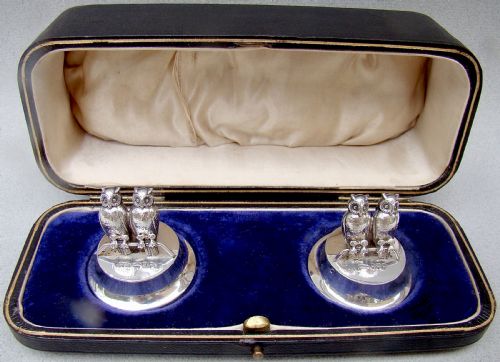
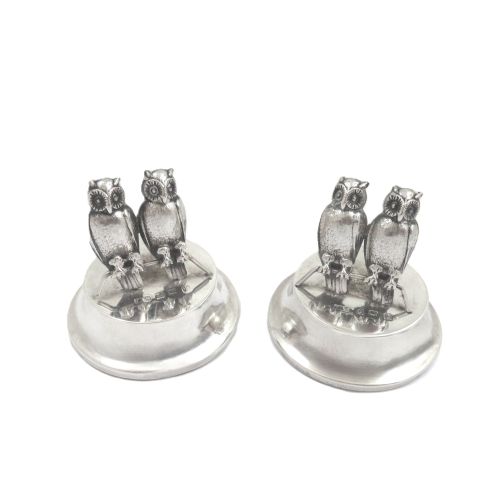
Items associated with the search phrase sterling silver owl encompass practical table wares and decorative accessories modelled in the form of the bird. You will frequently encounter pepper pots, menu holders and condiment sets, alongside occasional scent bottles and sugar boxes.
The selections span the Victorian, Edwardian and mid-century periods, with strong representation from early twentieth-century makers. These whimsical creations served both functional dining roles and decorative display purposes in period homes.
How they were made
Objects matching the search phrase sterling silver owl were typically produced using traditional silversmithing techniques such as casting, chasing and repoussé. These methods allowed artisans to shape the precious metal into detailed feathered textures and distinct avian forms.
Makers occasionally combined sterling silver with contrasting materials like coloured glass for scent bottles or velvet and silk within fitted presentation cases. Hallmark stamps stamped directly into the metal record the assay office, date letter and standard of the silver.
Listings featuring a sterling silver owl span the Victorian, Edwardian, and mid-century eras, utilising materials such as glass, velvet, and leather.
What varies in quality
The crispness of the feather chasing and the anatomical proportion of the bird determine the standard of a sterling silver owl. Pieces by known makers often display superior definition in the modelling of the head and eyes.
Completeness also dictates desirability, particularly when items were originally issued as pairs, matched sets or within fitted leather and velvet cases. The legibility of the Birmingham, London or Chester hallmarks adds contextual weight to the piece.
Levi & Salaman·Sampson Mordan
The Sterling Silver Owl Glossary
- Hallmark
- Official marks stamped into precious metal to indicate the standard of purity, the assay office, and the year of manufacture. These small punch marks provide the primary evidence for dating an antique.
- Repoussé
- A metalworking technique where the artisan hammers the silver from the reverse side to form a raised design in relief. This method creates the tactile texture of feathers on bird figures.
- Menu holder
- A small desk or table accessory designed to display the meal schedule at formal dinners. Many examples take sculptural animal forms.
- Pepper pot
- A table vessel pierced with small holes for dispensing ground pepper onto food. Victorian iterations frequently utilised bird and animal figures for functional amusement.
- Scent bottle
- A small container for holding liquid perfume, often fitted with a screw cap. Glass bodies paired with silver mountings represent typical construction.
Sterling Silver Owl: Frequently Asked Questions
How were sterling silver owl pepper pots used?
Pepper pots in the form of owls stood on dining tables during formal meals to hold and dispense ground seasoning. The removable heads or base plugs allowed servants to refill the cavities.
Their realistic or stylised bird figures added a touch of conversation and character to the dining room.
How do I date a silver owl?
You date these items by examining the struck hallmarks for specific assay office symbols and date letters. Comparing the style of the chasing and the form to Edwardian or Victorian examples also helps establish the era.
Many pieces bear clear stamps indicating the exact year of manufacture.
Are silver owl menu holders rare?
Menu holders modelled as birds appear less frequently than standard domestic silverware, often surviving in matched pairs. Their survival rate depends heavily on whether they retained their original presentation cases.
Collectors prize them for their dual role as miniature sculptures and table accessories.