

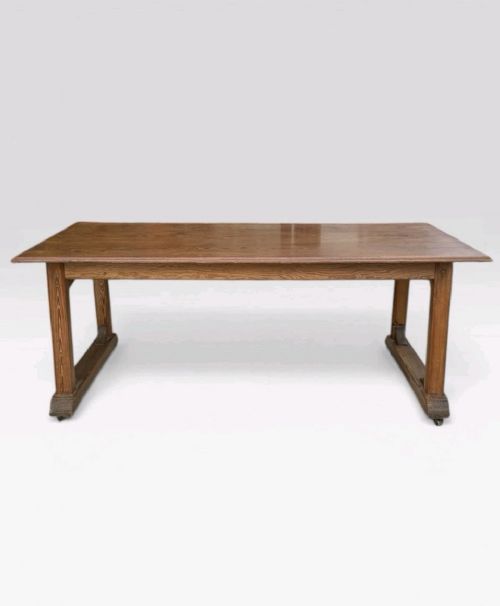


Solid Wood Trestle Table
A solid wood trestle table anchors a room with timber construction and sturdy supports, drawing people together for daily meals and long conversations.
Solid Wood Trestle Table
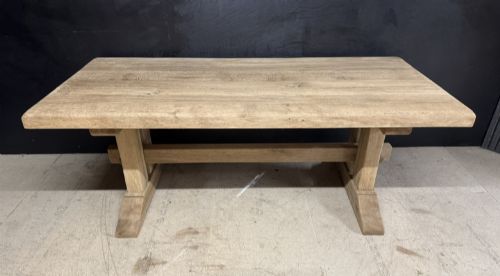
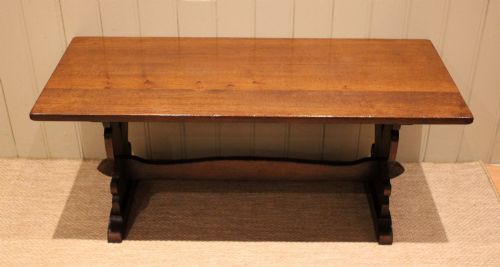
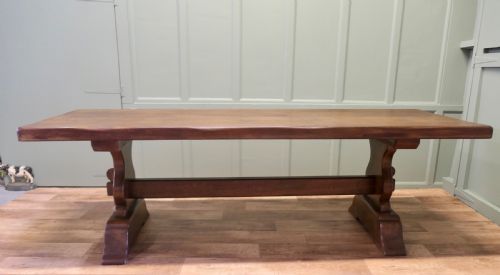
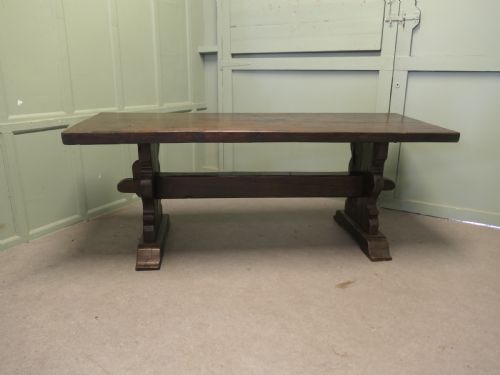
A solid wood trestle table typically takes the form of a long dining or refectory surface supported by end uprights rather than four corner legs. These tables trace their origins through centuries of European domestic architecture, designed for communal dining spaces.
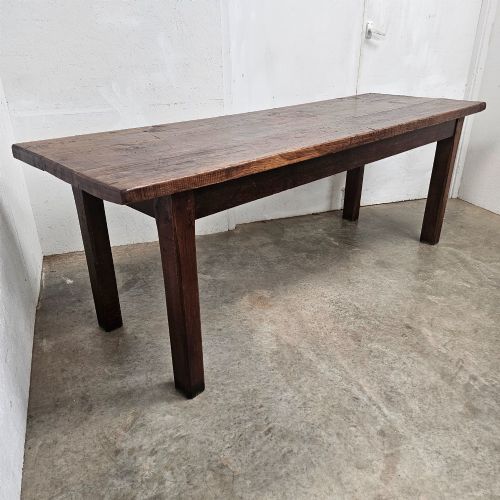
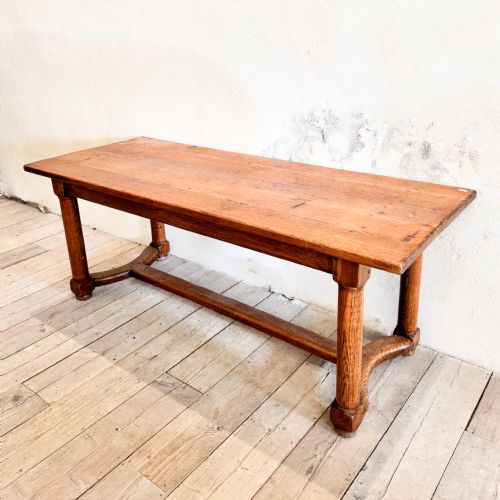
The selections available span multiple eras and regional styles, from 17th century Spanish walnut pieces to 18th century George I oak refectory tables and 19th century French country examples. Oak and walnut dominate the offerings, frequently appearing alongside elm, cherrywood, and mahogany.
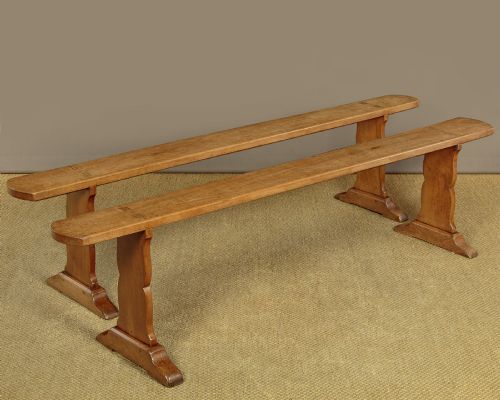
Beyond traditional dining formats, the category encompasses serving tables, coffee tables, and tavern tables built with thick timber tops. Buyers encounter both rustic farmhouse interpretations and formal Arts and Crafts pieces originating from British and continental workshops.
Materials and construction methods
Construction relies heavily on native hardwoods, primarily oak and walnut, selected for structural integrity and longevity. Carpenters utilised thick boards for the table tops, sometimes employing single planks or joined timbers secured with pegged joints and cross-strep supports.
Support systems integrate heavy timber trestles, sometimes reinforced with wrought iron or wooden stretchers to prevent lateral movement. Surface finishing ranges from waxed natural grain to polished patinas, preserving the natural figuring of the wood.
Solid Wood Trestle Table Retail Price Guide 2026
Typical asking prices for solid wood trestle table among the pieces listed under this phrase on Sellingantiques today, from the lower quarter to the upper quarter. They describe what is for sale here now, not the wider market.
Listings feature solid wood trestle tables spanning four centuries, from the 17th century through to the 1930s.
Factors influencing quality and craftsmanship
Quality rests upon the selection of the timber and the integrity of the joinery rather than surface ornamentation alone. Superior examples display dense, well-figured grain across substantial boards that remain flat and stable over centuries of use.
The refinement of the hand-carved details on the trestle supports and the tightness of the pegged joints distinguish exceptional pieces from standard utility furniture. Original surface patinas and untouched timber surfaces hold greater appeal than heavily restored finishes.
The Solid Wood Trestle Table Glossary
- Refectory table
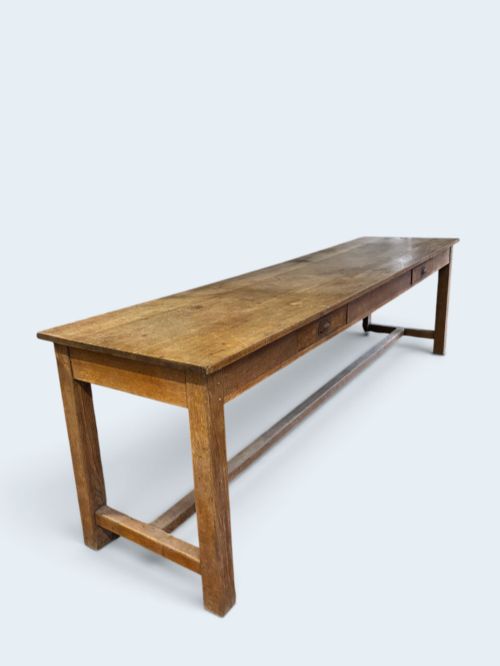
- A long narrow dining table historically used in monasteries and large halls, characterised by substantial legs or trestles connected by a central stretcher.
- Patina
- The surface sheen and colour developed over decades or centuries through handling, waxing, and exposure to light.
- Trestle
- A supporting structure consisting of a horizontal beam fixed to two splayed uprights at each end.
- Stretcher
- A horizontal wooden or iron bar connecting the legs or trestles of a table to provide structural rigidity.
- Plank top
- A table top constructed from individual boards laid side by side, valued when single wide planks are utilised.
Solid Wood Trestle Table: Frequently Asked Questions
What is a refectory table?
A refectory table is a long, narrow dining table originally designed for communal dining halls in monasteries. They are built for heavy daily use and feature robust stretcher bases.
Today, these tables serve as primary dining surfaces in large kitchens and open-plan living spaces.
How do I care for a solid wood table?
Solid wood furniture responds best to consistent indoor humidity and regular application of natural waxes. Avoid placing timber tables near direct heat sources to prevent the wood from splitting.
Using coasters and placemats protects the historical surface patina from moisture rings and thermal shock.
Are these tables suitable for everyday dining?
These tables were constructed from durable hardwoods like oak and walnut specifically to withstand heavy daily use. Their sturdy trestle design allows ample legroom around the perimeter.
Routine cleaning with a soft, dry cloth maintains the timber without stripping the original finish.
How can I tell the age of a wooden table?
Age is determined by observing tool marks, timber selection, joint construction, and the nature of the surface patina. Hand-sawn boards and pegged joinery typically indicate older periods.
Comparative analysis of regional styles, such as French country or Arts and Crafts, helps narrow down the era.