

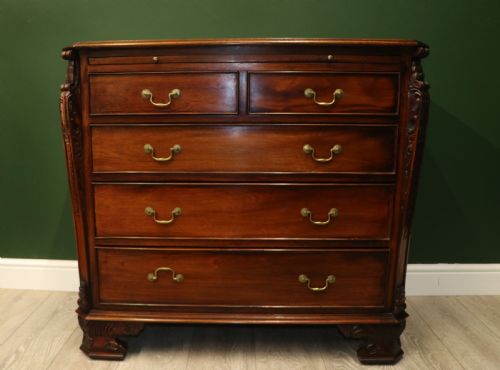


Solid Wood Dresser
A solid wood dresser grounds a room with timber built to last centuries, combining storage and display in practical form.
Solid Wood Dresser
A solid wood dresser encompasses heavy timber sideboards, plate racks, housekeeper cupboards, and drawer chests originating from the seventeenth to the mid-twentieth century. Buyers search for these pieces to anchor dining rooms, kitchens, and hallways with genuine hardwood construction.
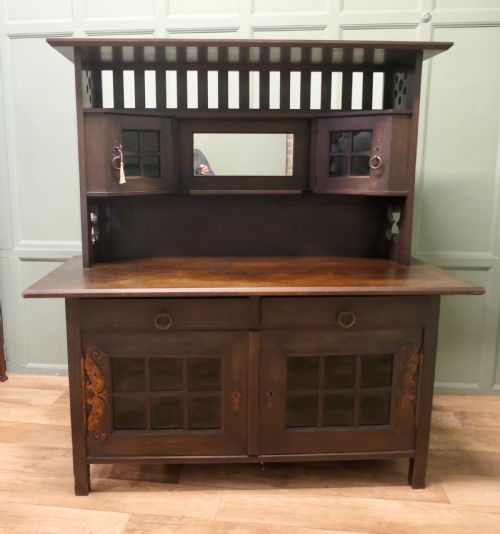
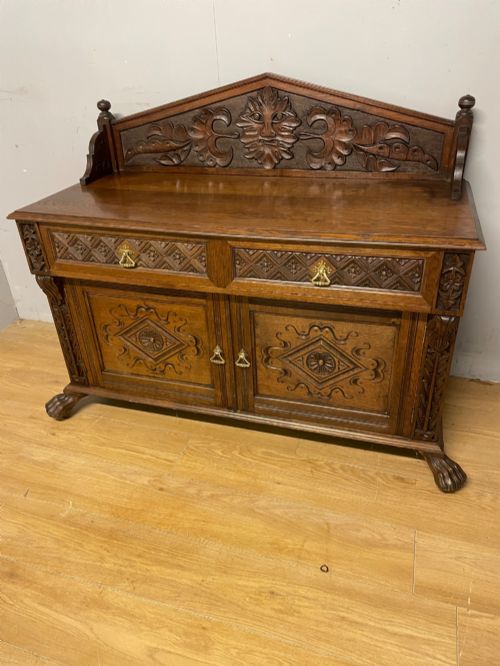
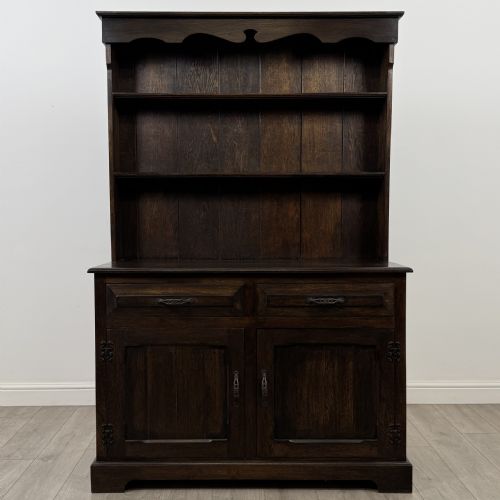
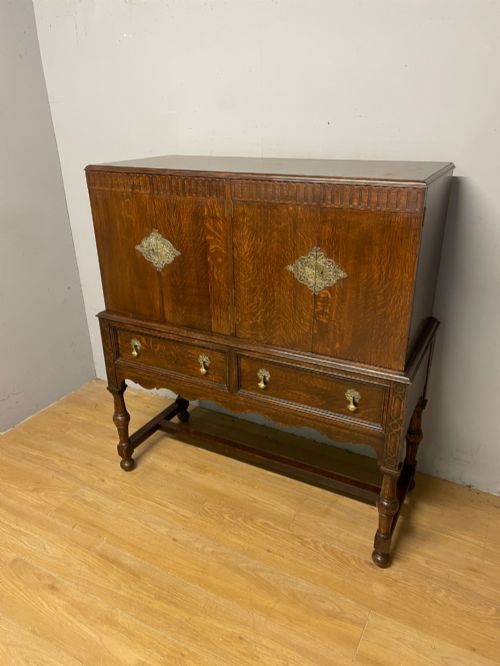
The version most commonly encountered on this page is the oak sideboard or dresser base from the nineteenth and early twentieth centuries, often featuring traditional Welsh or Arts and Crafts styling. These functional items balance open display space or deep drawer storage with honest joinery.
Regional variations span English country, French Provincial, and Dutch Colonial designs, utilising timbers such as oak, ash, cherry wood, and fruitwood. Each piece reflects the domestic storage needs of its period without relying on modern veneers or manufactured boards.
Construction methods and materials
Cabinet makers utilised heavy timbers like oak, ash, cherry wood, and fruitwood, joining boards with traditional mortise and tenon joints to withstand decades of daily use. Solid construction ensures that every structural element bears weight natively.
Metalwork details such as brass handles, iron hinges, and functional iron metalwork provide necessary hardware that secures doors and drawers while patinating naturally over time. Glass panelling appears in upper display cabinets to protect contents while maintaining visibility.
Listings feature solid timbers including oak, ash, cherry wood, fruitwood, satinwood, maple, pine, and yew wood across centuries of production.
Distinctions in craftsmanship
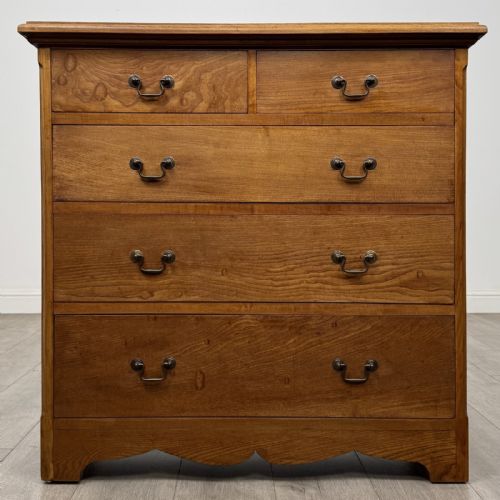
Quality rests in the selection of timber quarters and the integrity of the secondary woods used for drawer linings and carcase backs. Superior items display careful grain matching and hand-cut dovetailing that holds structural firmness without modern adhesives.
Carved decorations, whether geometric Jacobean panels, Arts and Crafts motifs, or carved green man details, demonstrate the hand of a skilled artisan rather than mass-produced machine routing. The weight and gauge of original brass or iron hardware further separate everyday utility pieces from finer works.
Leonard Wyburd·Liberty and Co·Edward Barnsley
The Solid Wood Dresser Glossary
- Plate rack
- An open shelving superstructure attached to the top of a dresser base, designed to display ceramic plates and platters upright. This element defines traditional Welsh and country kitchen formats.
- Dresser base
- The lower cabinet portion of a dresser, featuring cupboards or drawers, which can also stand alone as a sideboard. It provides heavy-duty surface space and internal storage.
- Housekeeper cupboard
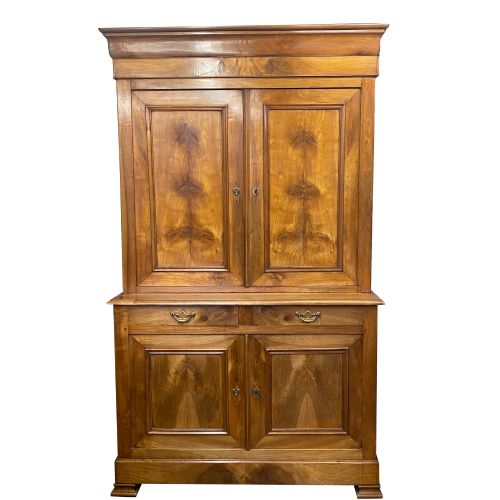
- A large two-part storage cabinet utilised in country houses to store linens, dried goods, and household provisions. These tall pieces offer substantial vertical capacity.
- Bombe
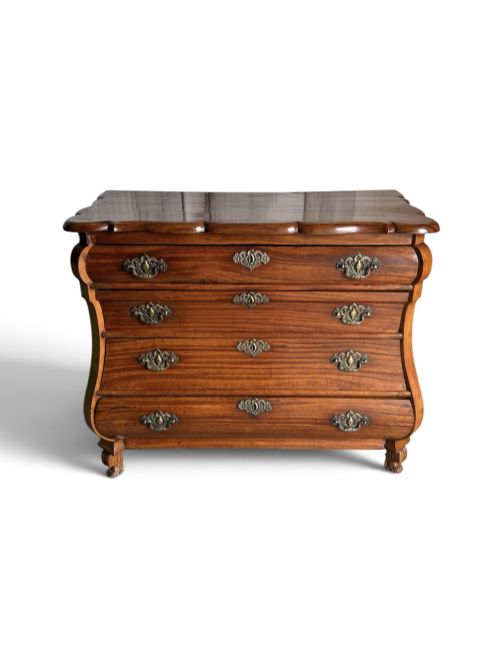
- A swelling, convex curved profile shaping the front and sides of a chest of drawers, requiring advanced cabinet-making skill. This contour appears in Dutch Colonial pieces.
- Green man
- A sculptural architectural ornament depicting a human face entwined with leaves, vines, or branches. It frequently surfaces on Arts and Crafts oak furniture.
- Dovetail
- A wedge-shaped interlocking wood joint used in drawer construction to resist pull forces. Hand-cut dovetails indicate earlier periods of manufacture.
Solid Wood Dresser: Frequently Asked Questions
What is a solid wood dresser?
A solid wood dresser is a heavy timber cabinet, sideboard, or chest designed for household storage and display. These items utilise natural hardwoods throughout their construction.
They serve as functional furniture in dining spaces and kitchens, housing tableware, linens, and provisions while offering sturdy surface tops.
How do I care for solid wood furniture?
Maintenance requires avoiding direct sunlight and maintaining stable indoor humidity to prevent timber movement. Regular dusting with a dry cloth keeps the surface clean.
Application of natural beeswax feeds the grain and preserves the patina without sealing the wood in modern synthetic finishes.
How can I tell older oak dressers apart?
Earlier pieces from the seventeenth and eighteenth centuries show adze marks, hand-cut joinery, and board widths that vary according to tree size. Iron or brass hardware is typically handmade and fitted with slotted screws.
Later nineteenth-century and Arts and Crafts examples display machine-sawn timber uniformity alongside revival styling cues like Jacobean geometric panels or green man carvings.
Where were these pieces used historically?
Dressers and sideboards belonged in kitchens, pantries, and dining rooms to hold daily dining equipment and food stores. Housekeeper cupboards stood in utility corridors for household linens.
They functioned as the logistical heart of the home, keeping essential domestic items close at hand.