



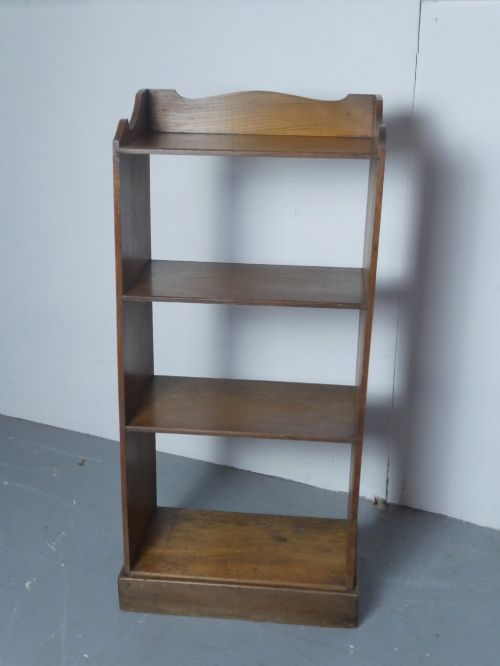
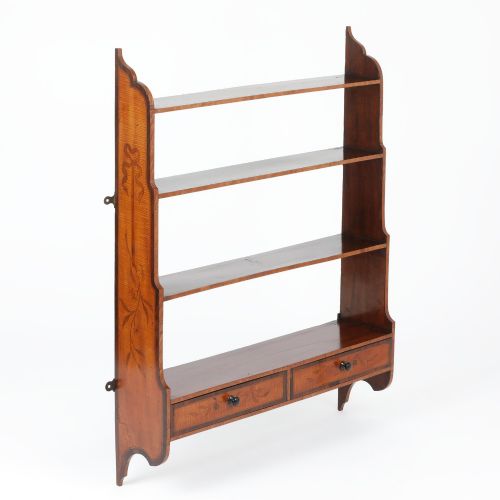
Small Wooden Shelf Unit
A small wooden shelf unit organises compact spaces with period character, spanning open oak bookcases to inlaid mahogany wall racks.
Small Wooden Shelf Unit
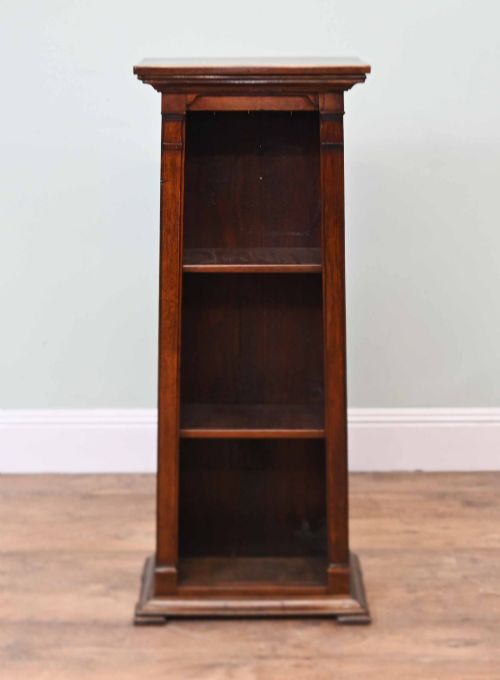
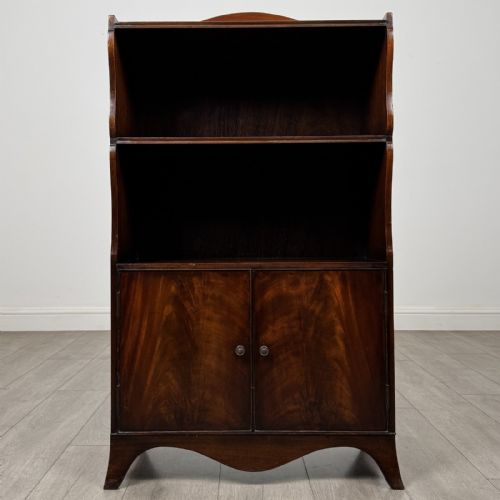
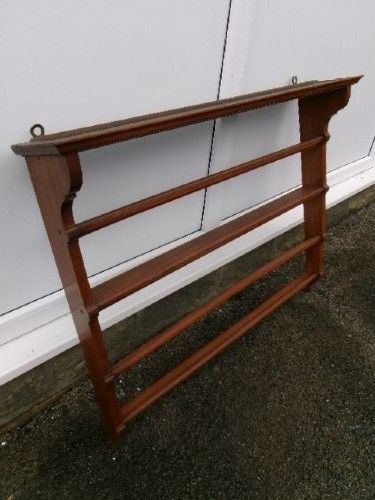
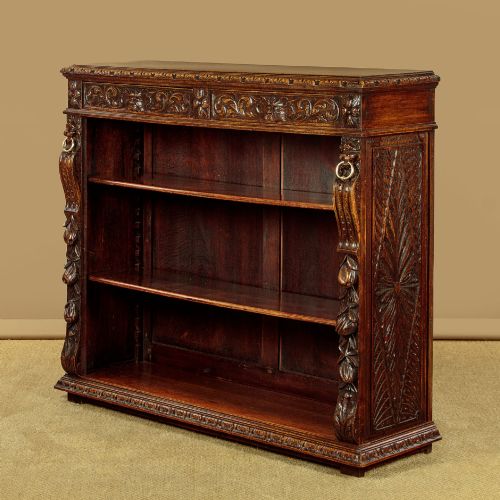
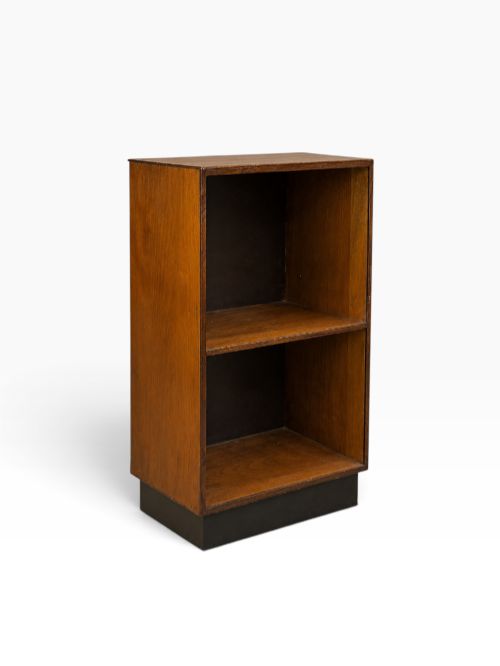
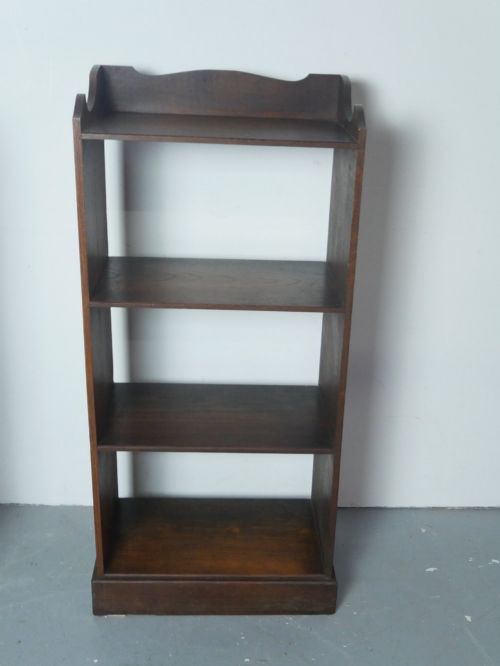
A small wooden shelf unit appears in forms such as open bookcases, wall hanging shelves, whatnots and diminutive cabinets. These pieces serve to hold books and display small objects in modest spaces.
The versions most commonly met on this page span the Victorian, Edwardian and Art Deco periods, alongside earlier Georgian and 19th Century examples. Oak and mahogany dominate the offerings, often complemented by satinwood and ebonised wood.
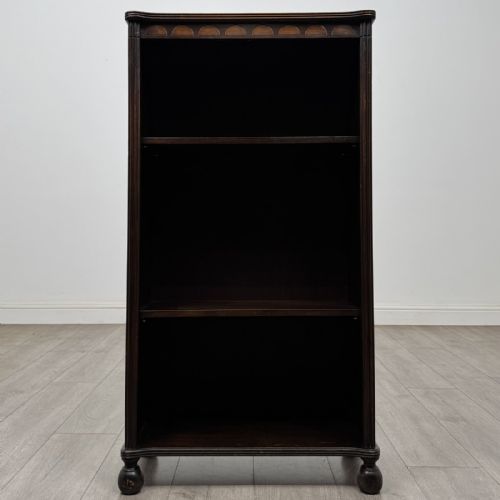
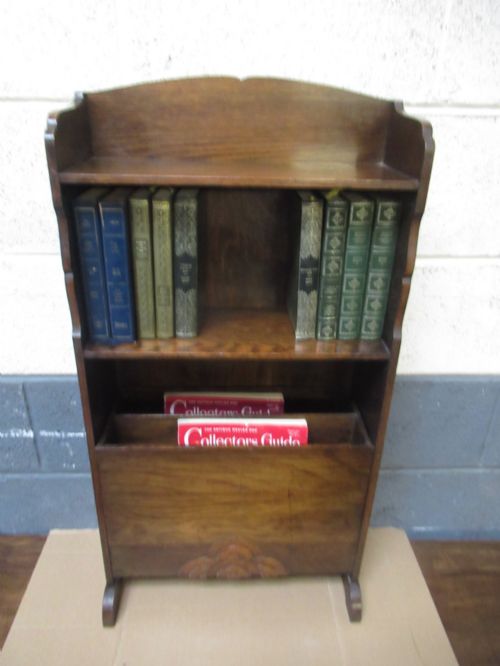
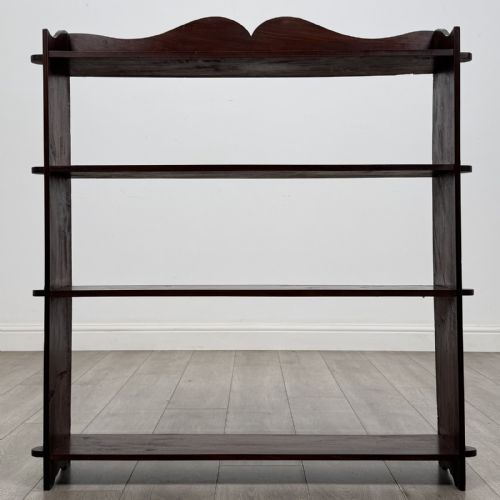
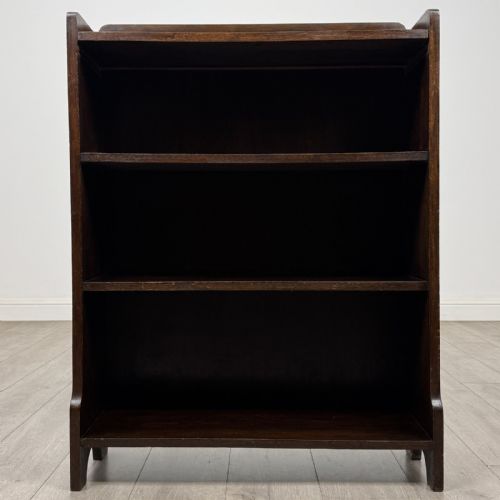
Buyers encounter standing floor models alongside wall-mounted racks and tiered etageres. Each format brings a distinct proportion to domestic interiors, from bracket-footed bookcases to hanging waterfall shelves.
Materials and construction
Cabinet makers built these pieces using solid timbers like oak, mahogany and walnut, frequently applying satinwood or boxwood inlay for decorative contrast. Wall racks and shelf units rely on sturdy joinery to support the weight of books and ceramics.
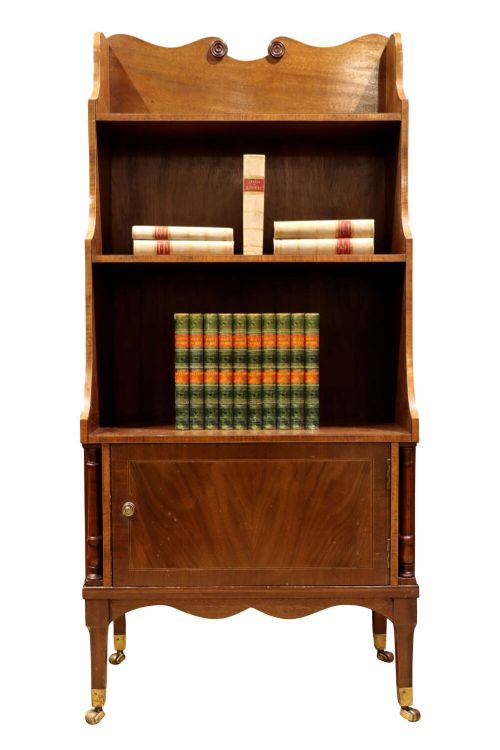
Details such as raised galleries, bracket feet and brass castors appear across the various styles. Finishing techniques include ebonising wood to mimic more costly materials and polishing timber to reveal natural grain patterns.
Small Wooden Shelf Unit Retail Price Guide 2026
Typical asking prices for small wooden shelf unit among the pieces listed under this phrase on Sellingantiques today, from the lower quarter to the upper quarter. They describe what is for sale here now, not the wider market.
Some diminutive bookcases come equipped with tiny brass castors so they can quietly scurry across the parlour floor.
Distinctions in quality
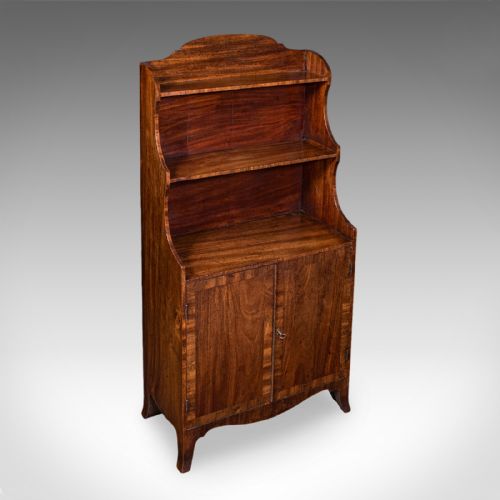
Quality rests on the selection of timber and the precision of inlaid details, such as contrasting friezes and boxwood stringing. Finer pieces demonstrate careful attention to proportion, particularly in waterfall arrangements and carved galleries.
The integrity of the structural joints and the retention of original brass hardware or castors distinguish standard utility items from finer decorative examples.
The Small Wooden Shelf Unit Glossary
- Waterfall bookcase
- A set of open shelves where each tier steps back progressively from the one below it. This style became popular during the Georgian and Victorian periods.
- Whatnot
- An open tiered piece of furniture designed for displaying ornaments, books or small objects. These units often feature multiple levels supported by slender uprights.
- Gallery
- A raised ornamental border running along the top edge of a shelf or cabinet. It prevents items from sliding off the surface.
- Etagere
- A piece of furniture consisting of a set of open shelves for displaying small articles. The term derives from French and typically describes tiered standalone units.
Small Wooden Shelf Unit: Frequently Asked Questions
Where should I place a hanging shelf?
Hanging shelves suit compact rooms where floor space is limited. They fit securely above desks, sideboards or seating areas to display books and small collections.
Ensure the wall construction supports the weight of the timber and the objects placed upon the ledges.
How do I care for antique wood?
Maintain timber surfaces by dusting with a soft, dry cloth and avoiding direct sunlight. Excessive heat causes wood to dry out and split over time.
Apply a microcrystalline wax sparingly if the finish appears dry, following the grain of the wood.
What is a whatnot used for?
Whatnots serve as display furniture for ornaments, books and treasured possessions. Their tiered design allows light to pass through while offering multiple surfaces.
Victorian homes used them extensively in drawing rooms to exhibit decorative ceramics and small items.
How do I identify an Edwardian bookcase?
Edwardian bookcases often feature lighter timbers such as satinwood and lighter mahogany compared to earlier Victorian furniture. The decorative elements tend to show restrained classical or Arts and Crafts influences.
Bracket feet and simple inlaid friezes frequently distinguish pieces from this era.