

Small Pendant Light
A small pendant light brings concentrated illumination and decorative presence to modest spaces, drawing the eye upwards with period character.
Small Pendant Light
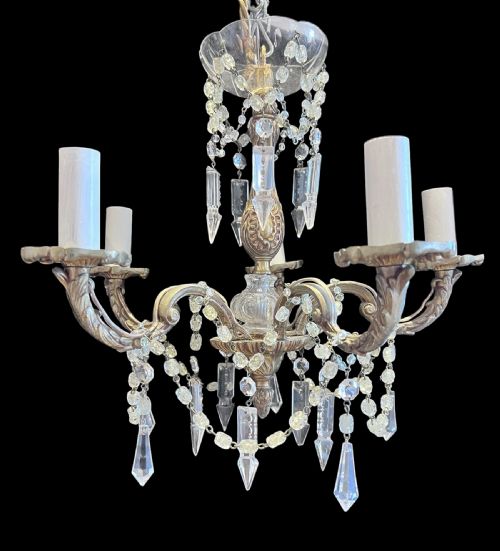
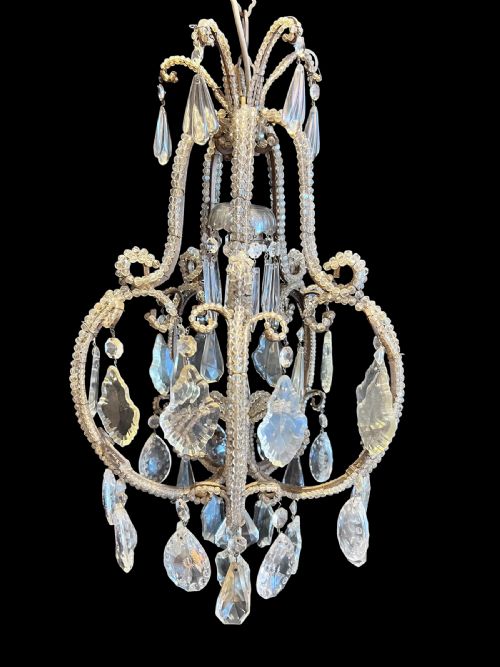
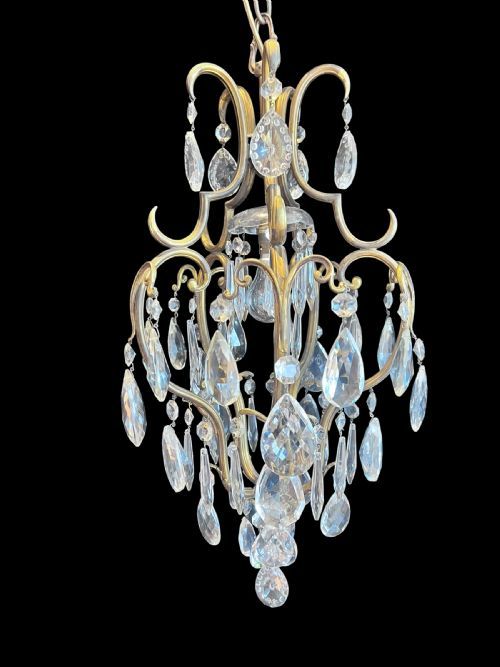
A small pendant light encompasses compact hanging fixtures such as mini chandeliers, single-light drops, and small hanging lanterns. These pieces span from the nineteenth century through the Edwardian era and into the early twentieth century.
The selections on this page lean heavily toward early twentieth-century and Edwardian examples, alongside pieces dating to the nineteen-twenties and nineteen-thirties. Buyers frequently encounter French and Italian designs alongside domestic British forms.
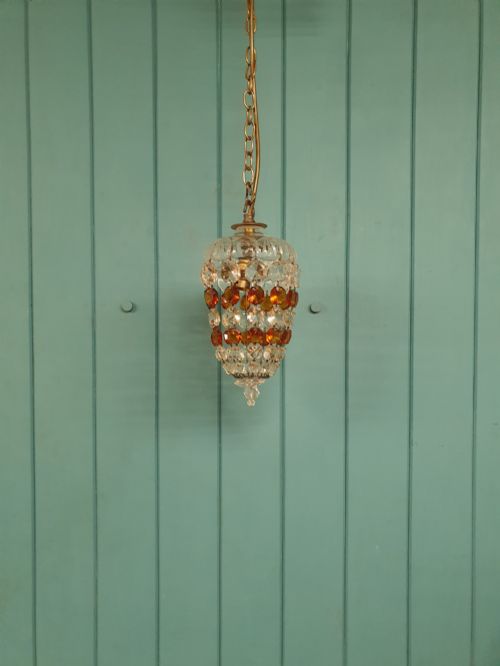
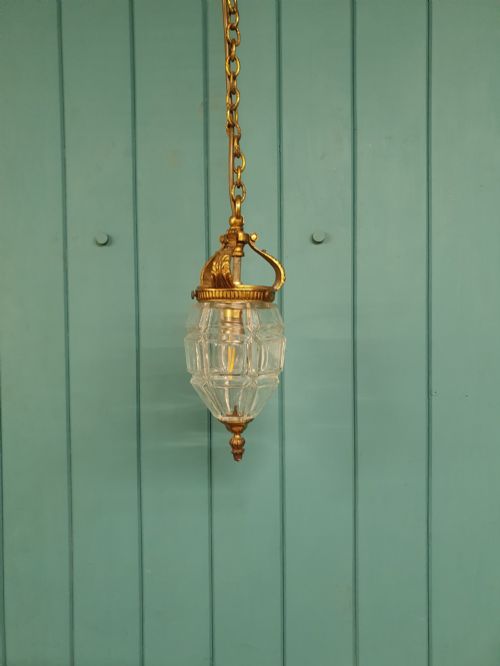
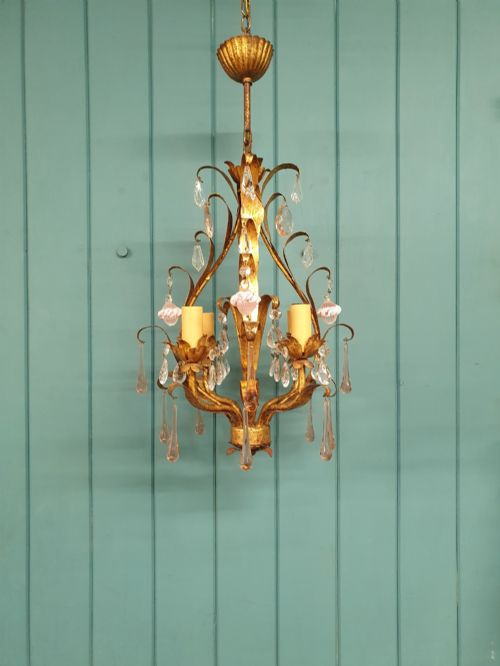
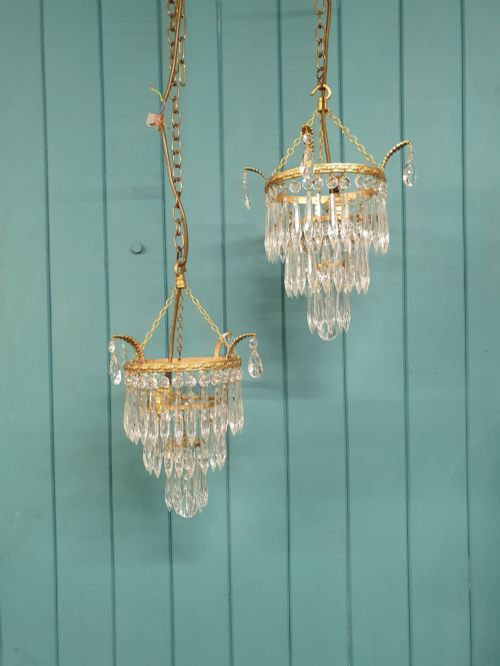
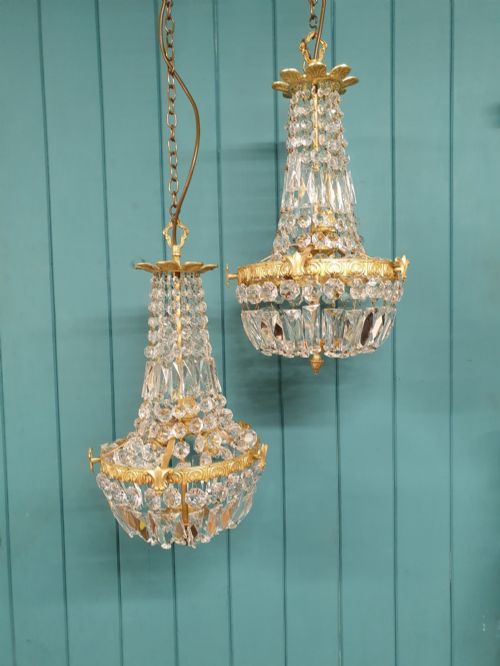
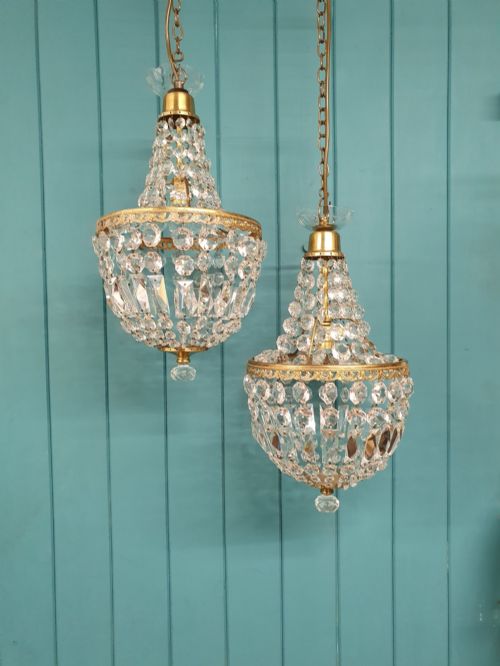
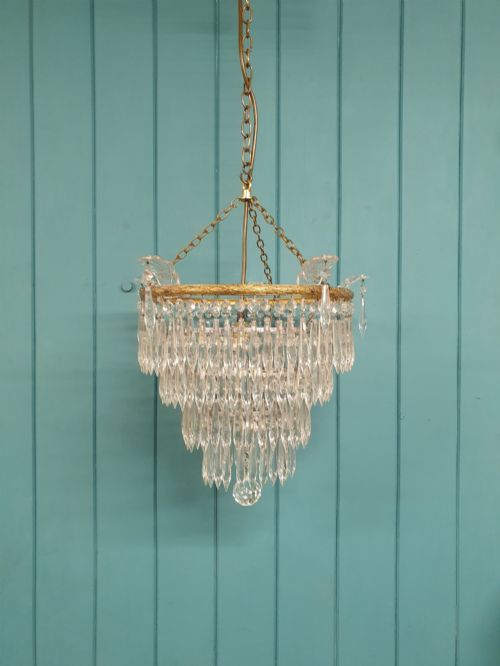
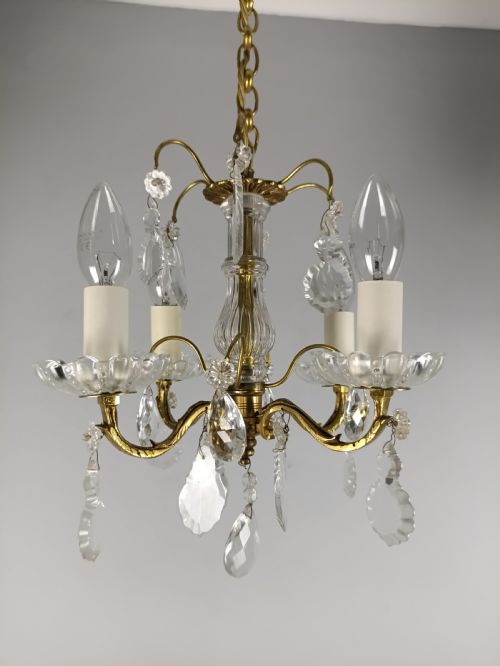
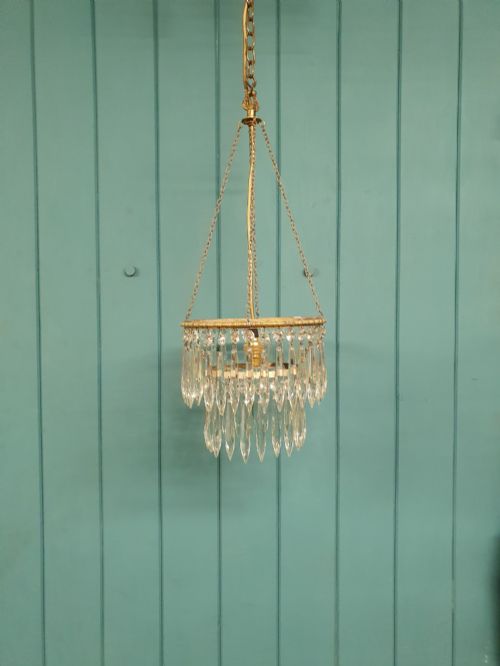
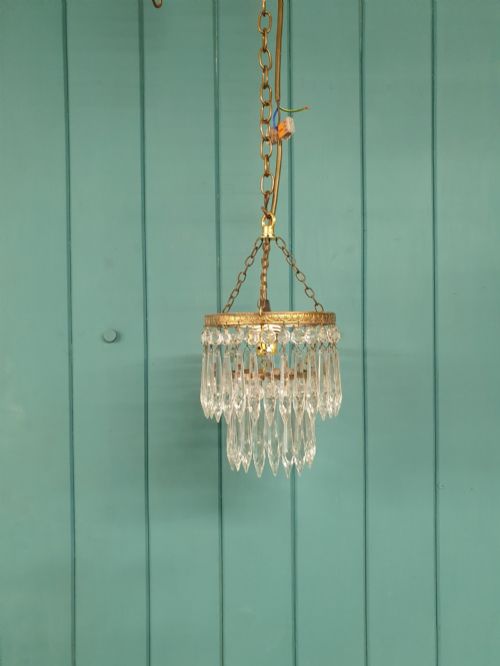
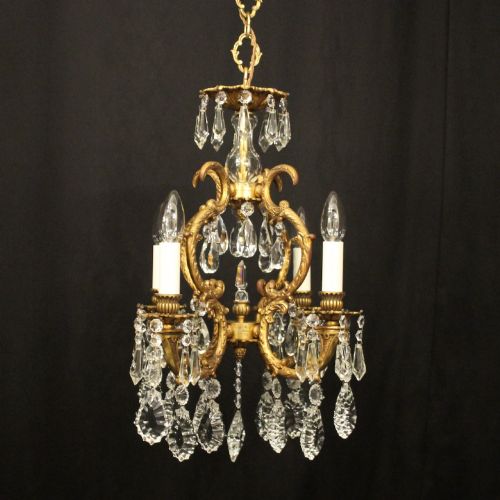
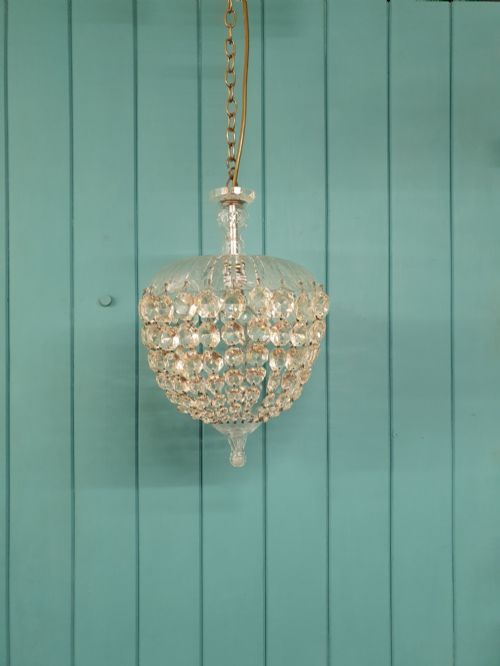
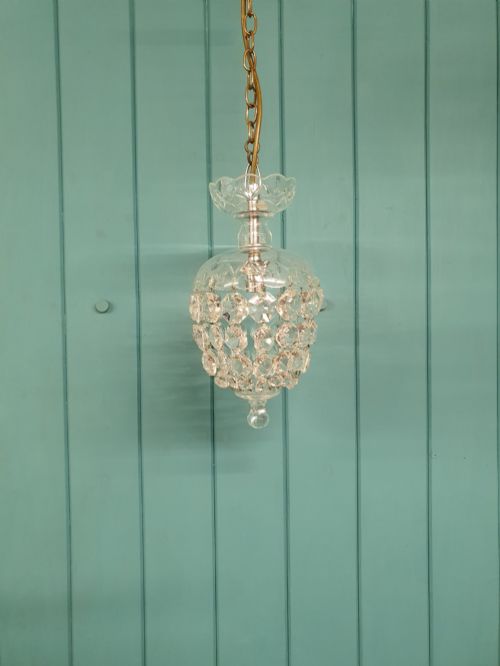
Common configurations include bag chandeliers, tent and bag formats, dome tops, and single-light drop pendants fitted with crystals. Brass mounts and gilt bronze frames support glass beads, prisms, and cut glass components.
Materials and construction
Metalwork frames utilise brass, gilt brass, and gilded bronze to form the structural skeletons that support suspended glass elements. These frames hold arms, rings, and bands designed to carry arrays of hanging prisms and beads.
Glass components combine moulded glass, lead crystal, and cut glass elements to catch and refract light. Cut glass spikes, coffin prisms, and beaded garlands attach via wire pins to the metal framework below the ceiling canopy.
Small Pendant Light Retail Price Guide 2026
Typical asking prices for small pendant light among the pieces listed under this phrase on Sellingantiques today, from the lower quarter to the upper quarter. They describe what is for sale here now, not the wider market.
Early twentieth-century lighting catalogues sometimes offered interchangeable crystal spikes so families could update their drawing room sparkle for the winter season.
Distinctions in craftsmanship
The crispness of the glass cutting and the clarity of the crystal define the upper tiers of production. Finely faceted cut glass reflects light with sharp brilliance, whilst lesser pieces utilise simpler moulded or pressed glass.
The weight and finish of the metal armature separate standard examples from finer commissions. Substantial cast brass or gilded bronze frames with intricate leafy detail hold their alignment better than thinner stamped metal structures.
The Small Pendant Light Glossary
- Bag chandelier
- A light fixture featuring a flattened lower basket or bag shape formed from rows of glass beads suspended from a metal ring.
- Tent and bag chandelier
- A lighting form combining an upper tent of gathered glass strings leading down to a lower basket or bag of beads.
- Coffin prism
- A long, flat-backed glass pendant with a pointed lower tip, shaped like a traditional coffin.
- Spike chandelier
- A fixture characterised by radiating cut glass spikes projecting outwards from the central frame or crown.
- Marie Theresa chandelier
- A distinctive flat-crowned chandelier style originating from Central Europe, featuring glass straps covering the metal arms.
Small Pendant Light: Frequently Asked Questions
Where should a small pendant light be hung?
These compact fixtures suit hallways, small landings, and spaces with restricted ceiling heights where a full-scale chandelier would overwhelm the room. They provide focused overhead illumination while adding decorative period detail.
Ensure the drop allows sufficient clearance for walking underneath, particularly in narrow corridors or smaller reception rooms.
How do I identify an Edwardian pendant light?
Edwardian pieces often combine brass frames with cut glass crystals, tent configurations, and bag chandelier formats reflecting late Victorian excess refined by early twentieth-century tastes. Look for structured brass mounts holding bead garlands and spear prisms.
Dates are supported by stylistic markers such as cast brass collars and specific prism cuts popular during the nineteen-hundreds and nineteen-tens.
How are antique glass crystals cleaned?
Crystals are best cleaned in situ using a mild solution of warm water and a gentle cleaning agent applied with a soft cloth. Individual prisms may be unhooked and washed separately if accumulated grime obscures the glass facets.
Avoid harsh chemical submerses that can strip the original patination from surrounding brass or gilt bronze mounts.