





Small Mahogany Vitrine Table
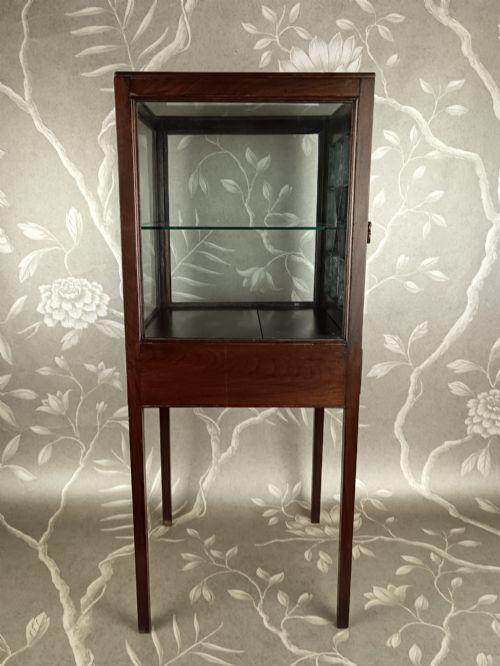
A small mahogany vitrine table is a glass-topped display surface designed to showcase cherished ornaments and curiosities within the home.
Small Mahogany Vitrine Table
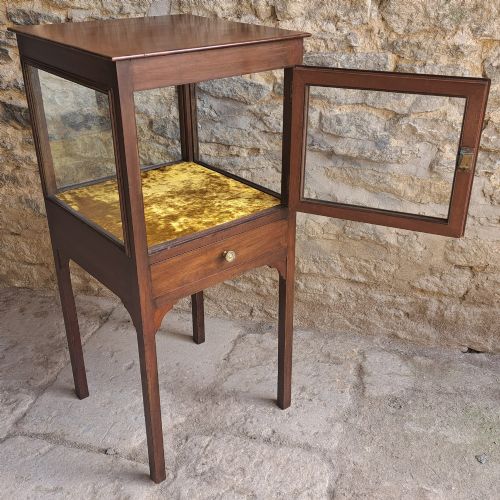
A small mahogany vitrine table combines a display cabinet with a functional table, offering a glazed compartment for valuables. These pieces appear frequently in Edwardian and Georgian iterations, serving as sophisticated furniture for drawing rooms and parlours.
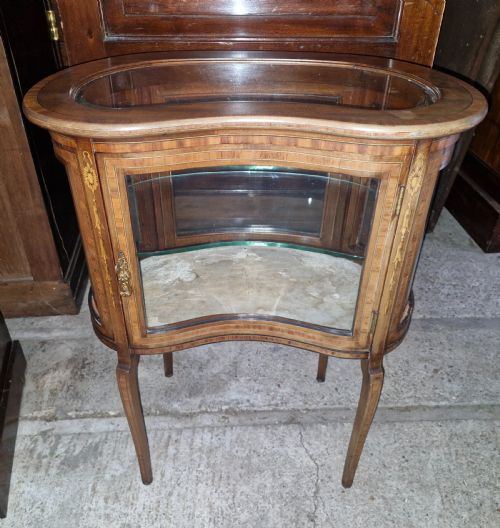
Makers shaped these items into distinct forms, including kidney shapes and display tables with satinwood or marquetry inlay. Collectors encounter various types such as bijouterie tables, display cabinets, and whatnots across the Victorian and Edwardian eras.
The primary function remains the exhibition of jewellery, curiosities, and personal collections beneath clear glass panels. Such tables bring both practical surface space and elegant display capability into traditional interiors.
How they were made
Craftsmen built these tables using solid mahogany or mahogany veneers, often incorporating satinwood for decorative contrast and marquetry details. The woodwork supports glazed display sections designed to protect small objects from dust while keeping them visible.
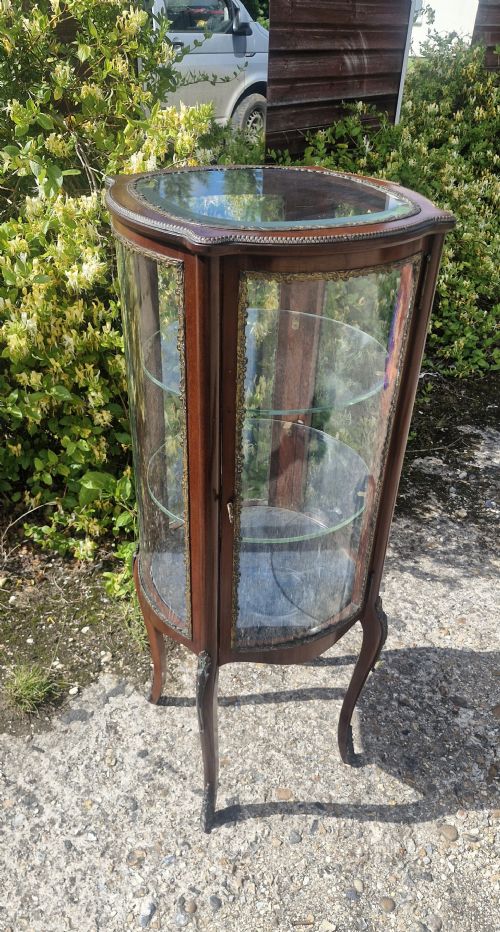
Many examples feature brass, ormolu, or gilt metal mounts that accent the structural lines and hinges of the glass case. Interior surfaces are frequently lined with fabric or velvet to cushion displayed items and enhance the visual presentation.
Small Mahogany Vitrine Table Retail Price Guide 2026
Typical asking prices for small mahogany vitrine table among the pieces listed under this phrase on Sellingantiques today, from the lower quarter to the upper quarter. They describe what is for sale here now, not the wider market.
Listings feature Edwardian, Victorian, and Georgian eras, showcasing mahogany alongside glass, velvet, brass, satinwood, and ormolu.
What varies in quality
The refinement of the woodwork and the intricacy of any marquetry inlay set individual pieces apart from standard production. Superior examples display precise joinery in mahogany alongside carefully fitted glass and quality metal mounts.
Design complexity also defines the upper tier, with specialised shapes like kidney forms or French-inspired styling indicating higher craftsmanship. The choice of secondary woods and the quality of interior fabric linings contribute further to the distinction between ordinary and exceptional specimens.
Edwards and Roberts
The Small Mahogany Vitrine Table Glossary
- Vitrine
- A glass-fronted or glass-topped cabinet used for displaying fine objects and curiosities. These pieces protect delicate items while allowing full visibility from above or the sides.
- Bijouterie table
- A low display table with a glazed top specifically designed for holding jewellery and small treasures. They frequently stand on slender legs and feature hinged lids.
- Ormolu
- Gilded bronze ornamentation applied to furniture and decorative objects, particularly popular in revival styles. This technique adds metallic lustre and sculptural detail to the mahogany structure.
- Marquetry
- Decorative woodwork where pieces of contrasting veneer are assembled to form intricate patterns. Artisans used this method on tabletops and cabinet borders to create pictorial or geometric designs.
- Satinwood
- A pale, lustrous timber utilised for contrasting stringing and inlay work on darker woods like mahogany. It brings a bright visual element to Edwardian and Georgian cabinetwork.
Small Mahogany Vitrine Table: Frequently Asked Questions
What is a vitrine table used for?
These tables are designed to display small collections, jewellery, and curiosities beneath a protective glass top. They allow owners to showcase treasured items in a drawing room or parlour while keeping them secure from dust.
Historically, they functioned both as decorative furniture and as personal exhibition spaces for items gathered during travels or inherited as family heirlooms.
How do I date a mahogany vitrine table?
Dating relies on examining the timber, construction methods, and stylistic influences present in the piece. Pieces span from the 18th century through the Georgian, Victorian, and Edwardian periods, each showing distinct cabinetmaking characteristics.
Revival styles from the Edwardian era often replicate earlier Georgian or French Rococo forms, making a close inspection of the interior framing and hardware essential.
Where should I place it at home?
A vitrine table works well in a drawing room, study, or hallway where natural or artificial light can illuminate the glazed display area. Because the top surface is glass, placement away from heavy foot traffic prevents accidental impact.
Positioning the table near a seating area allows guests to view the contents easily from above while adding a refined antique element to the room.
What styles are available?
The selection includes Georgian designs alongside Victorian examples and Edwardian interpretations of Chippendale and Louis XVI styles. Arts and Crafts variations also appear, reflecting the diverse aesthetic preferences of different decades.
Details such as kidney shapes, gilt metal mounts, and satinwood marquetry further differentiate the visual style of individual pieces.