


Small Library Bookcase
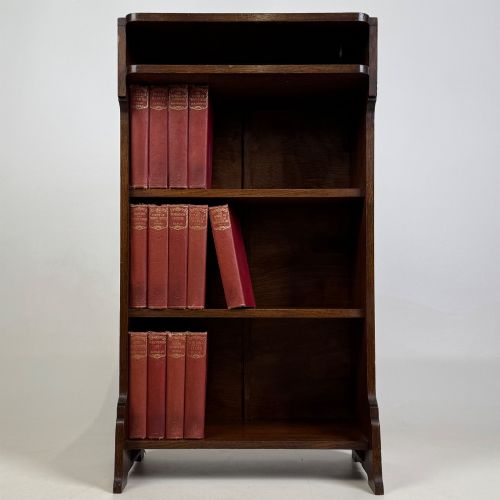
These small library bookcase examples span the Georgian, Regency, Victorian, and Edwardian periods, offering compact shelving for domestic spaces.
Small Library Bookcase
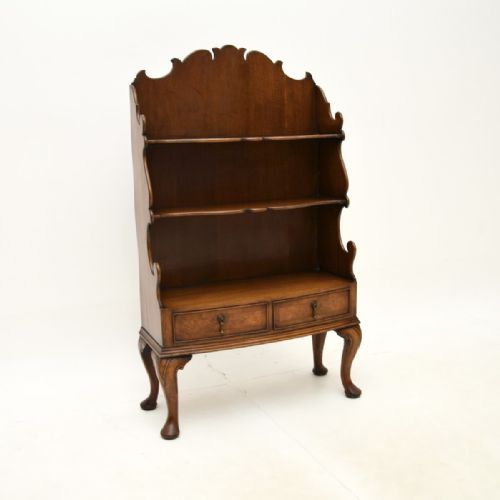
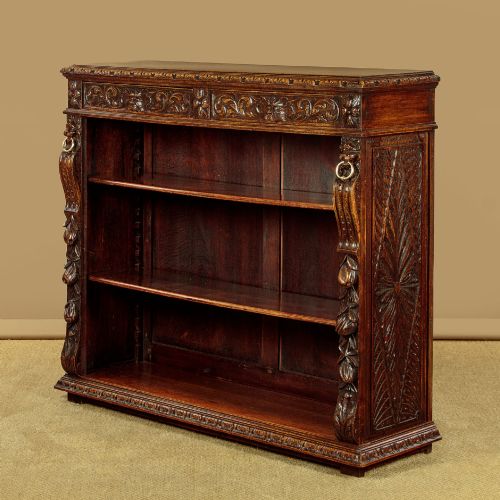
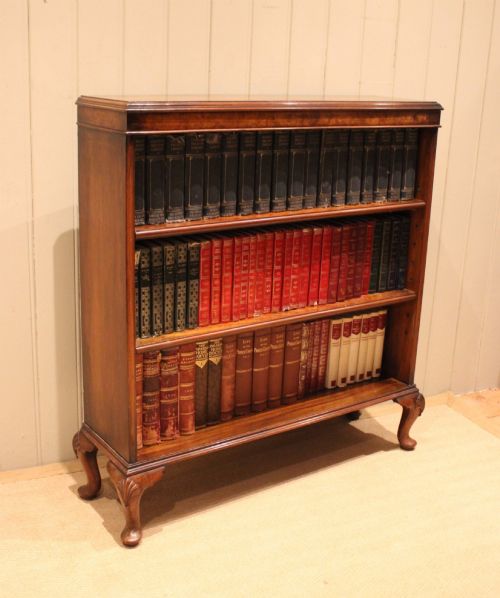
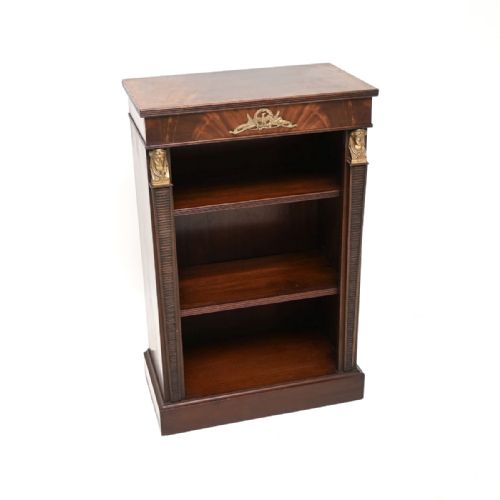
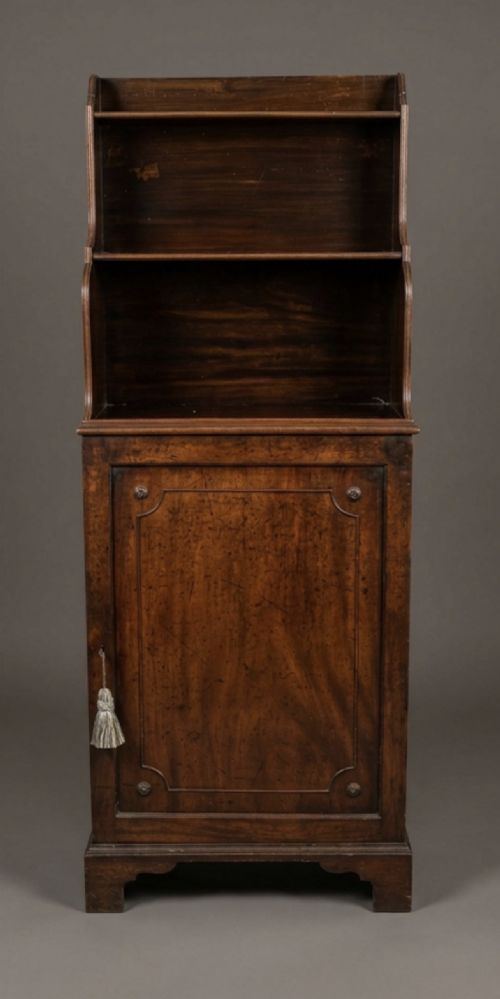
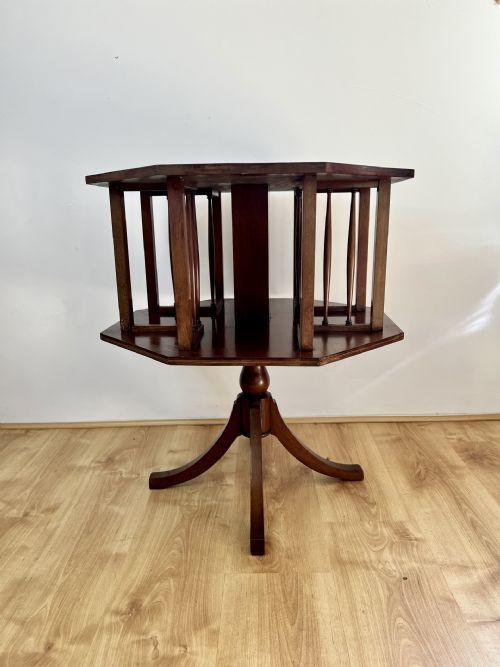
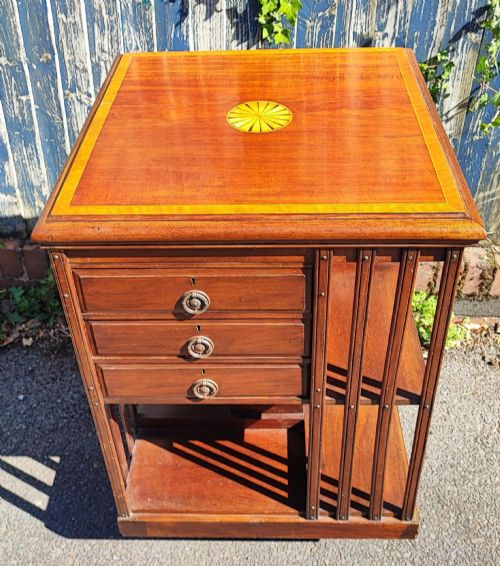
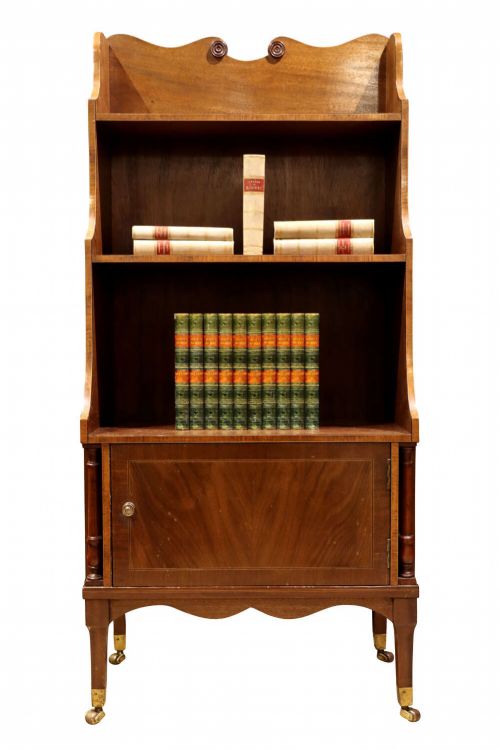
A small library bookcase provides compact shelving for books within domestic interiors, appearing across various historical periods from the Georgian era through to the 1930s. The selection on this page includes open styles, revolving designs, breakfront cabinets, and secretaire versions suited for smaller rooms.
Makers and cabinetmakers constructed these pieces primarily in mahogany, walnut, oak, and satinwood, frequently incorporating adjustable shelves, glass doors, brass castors, and inlaid details. Pieces range from simple open formats to revolving book stands and breakfront library bookcases of diminutive proportions.
Materials and Construction
Cabinetmakers utilised hardwoods such as mahogany, walnut, oak, rosewood, and satinwood, often selecting figured veneers and adding contrasting inlay. Brass fittings appear frequently, including castors on floor-standing models and mechanisms on revolving tables.
Construction techniques include glazed doors, panelled cupboards, drawers, and adjustable shelving systems. Revolving models rely on internal wooden or metal rotating assemblies concealed beneath the book platform.
Miniature complete works of Shakespeare offer a whole library contained within a tiny desk-friendly bookshelf.
Distinctions in Quality
Quality depends upon the choice of timber and the precision of the cabinetwork, visible in figured veneers, crisp inlay, and well-fitted joints. Finer examples display superior timber selection across secondary surfaces and refined proportions.
Hardware and mechanical elements also separate standard pieces from superior ones, such as smoothly rotating mechanisms on revolving book stands and original brass castors on larger cabinets.
Gillows of Lancaster
The Small Library Bookcase Glossary
- Revolving Bookcase
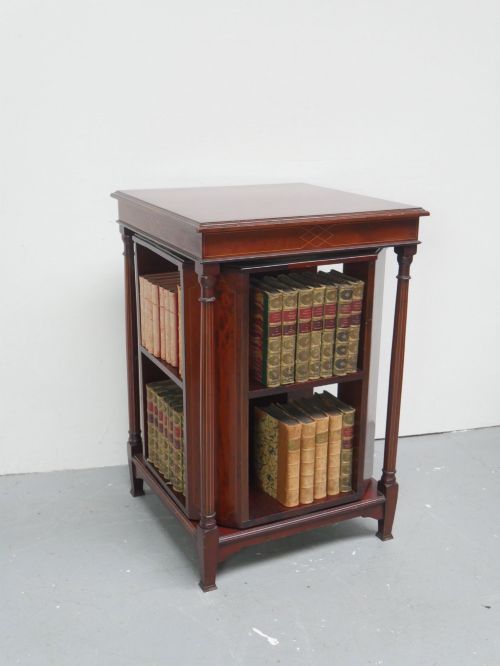
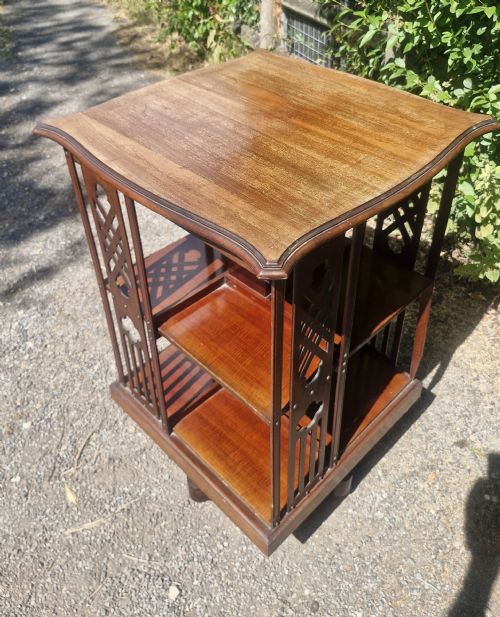
- A rotating stand designed to sit on a table or floor, allowing access to books from multiple angles. These often feature slatted sides and cross-banded timber tops.
- Breakfront
- A cabinet design where the central section projects forward from the flanking wings. This architectural arrangement creates depth and visual interest in smaller library furniture.
- Secretaire Bookcase
- A piece incorporating a pull-down writing drawer fitted with internal compartments and small drawers, combining a desk with shelving above.
- Waterfall Bookcase
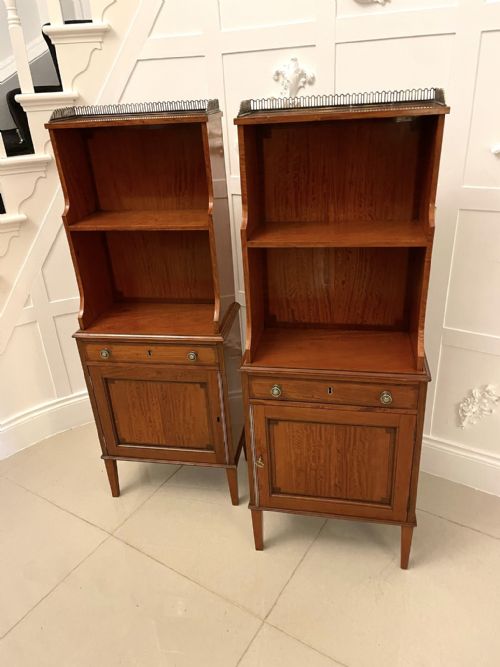
- A graduated open shelving unit where each successive shelf steps back from the one below. This creates a cascading silhouette reminiscent of a waterfall.
- Satinwood
- A pale, dense timber prized for its smooth grain and golden lustre, frequently utilised for inlay and banding on Edwardian and Georgian furniture.
Small Library Bookcase: Frequently Asked Questions
Where do I place a revolving bookcase?
A revolving bookcase functions well beside an armchair or desk where volumes need to remain within arm's reach. Their rotating design allows placement in corners or open floor spaces.
Because they turn freely, ensure adequate clearance around the circumference so the books clear adjacent furniture when spun.
How do I adjust wooden shelving?
Many period bookcases feature adjustable shelves supported by wooden pegs, brass pins, or notched upright strips. Lift the shelf slightly to clear the supports before repositioning.
Take care when shifting older timbers to avoid damaging the interior veneer or straining the sides of the bookcase.
What is the difference between open and glazed bookcases?
Open bookcases provide immediate access to volumes without doors, which suits frequently read reference books and decorative bindings. Glazed cabinets feature glass doors that protect contents from dust.
Enclosed glazed versions often include locks and key mechanisms, offering additional security for delicate or collected volumes.
How do I care for mahogany and walnut finishes?
Maintain polished hardwood surfaces by dusting with a dry, soft cloth and occasionally applying a suitable beeswax polish. Avoid placing timber furniture in direct sunlight or near heat sources to prevent the wood from drying.
Keep leather writing surfaces, where present, conditioned with specialist balms to prevent cracking over time.