




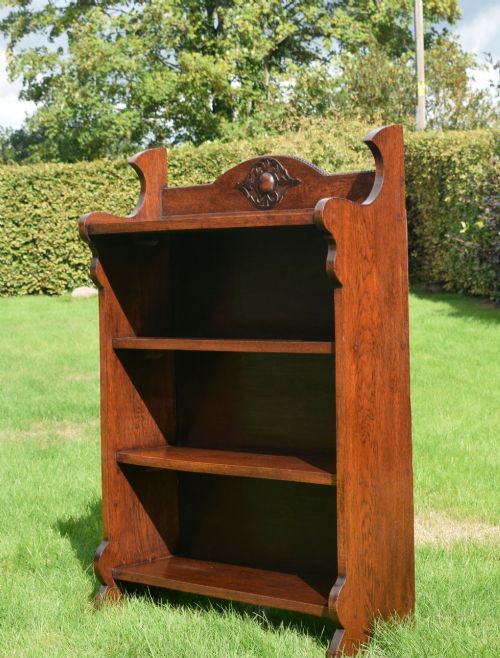
Small Display Shelf
A small display shelf holds your daily books and small treasures without crowding the floor, spanning open mahogany bookcases and neat wall racks.
Small Display Shelf
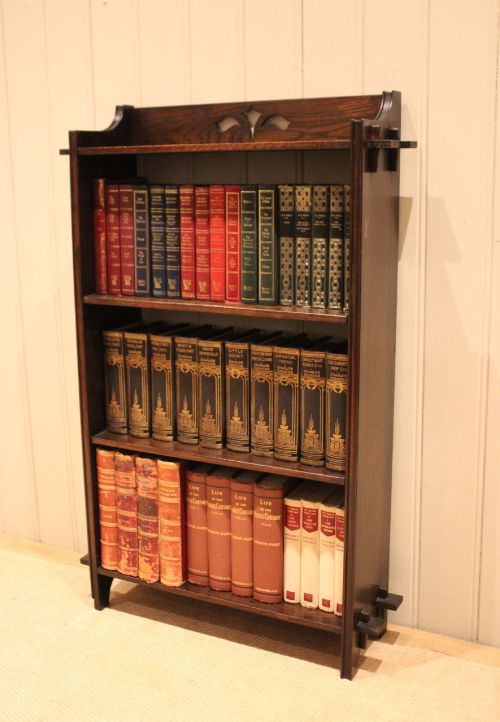
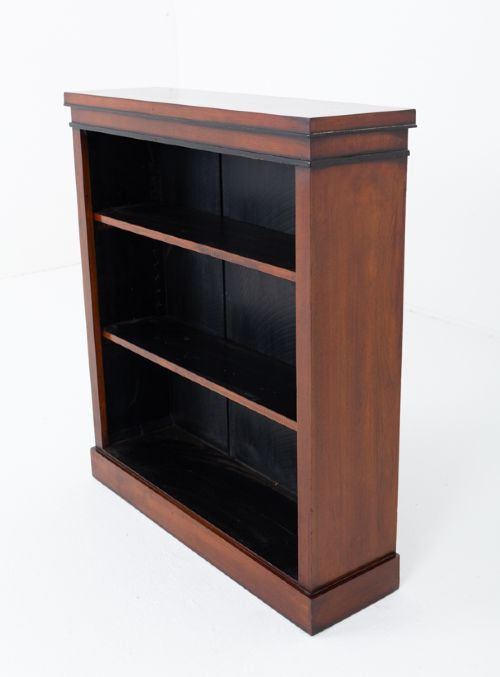
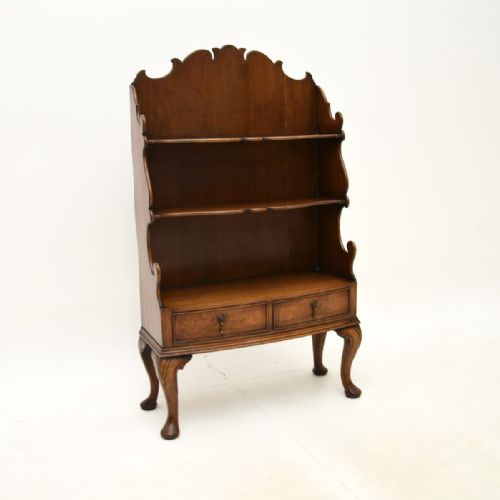
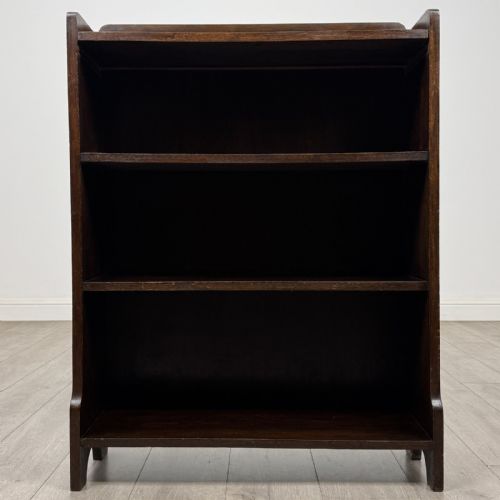
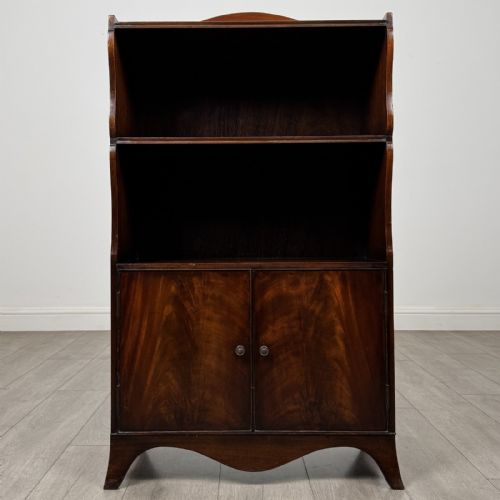
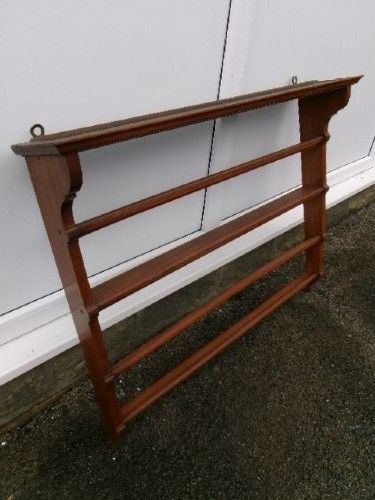
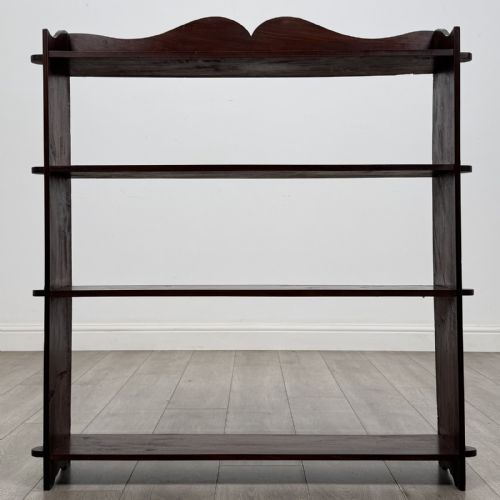
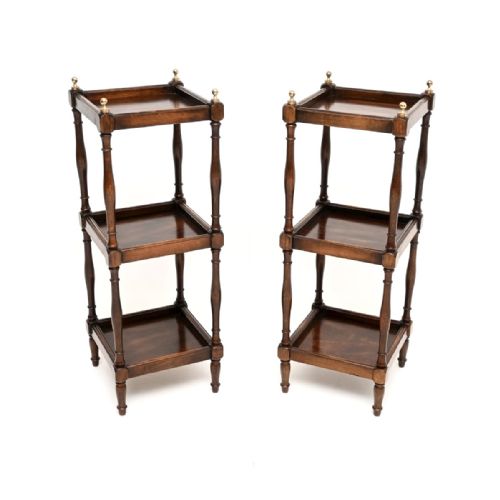
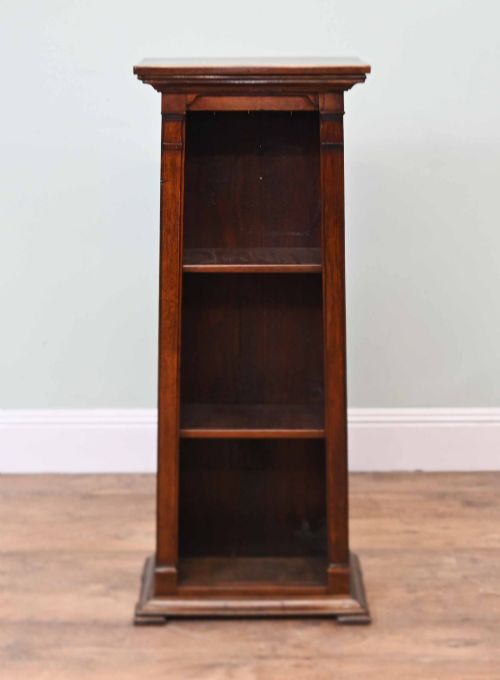
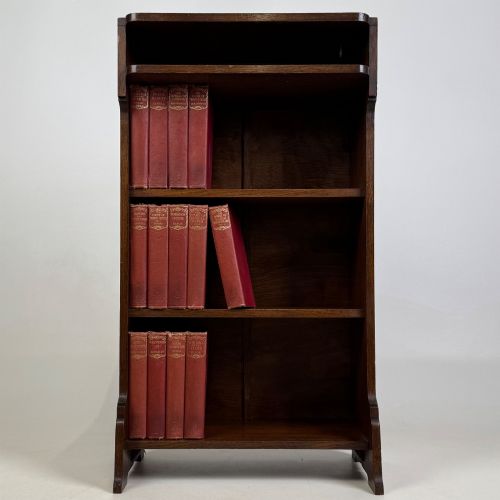
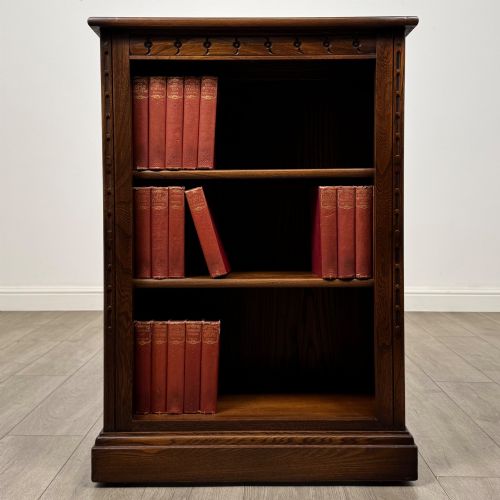
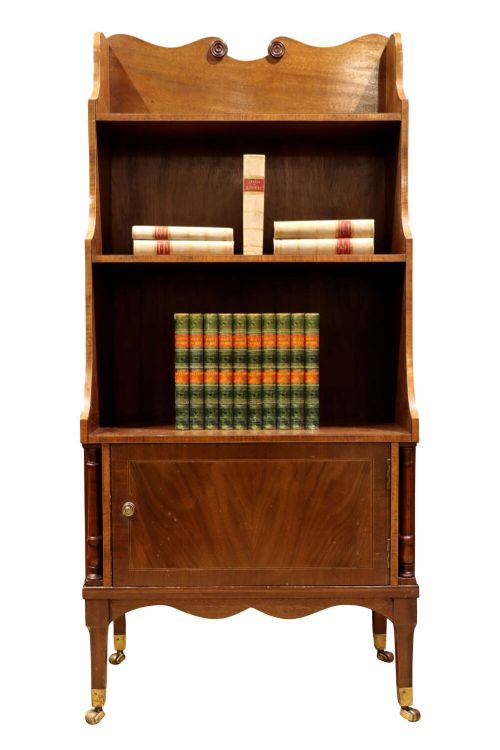
A small display shelf serves as a compact home for books and decorative objects, drawing from 19th Century, Victorian, and Edwardian periods. These pieces include open bookcases, wall hanging racks, and étagères designed for tight spaces.
Mahogany and oak dominate the selection, appearing alongside walnut, rosewood, and burr walnut in both simple open formats and pieces fitted with lower drawers or carved cupboard doors.
Styles range from straightforward Arts and Crafts and Art Deco designs to revival pieces like Jacobean and Regency, reflecting how makers adapted storage to smaller rooms over the decades.
How they were made
Cabinet makers relied on solid hardwoods like mahogany and oak, frequently applying flame mahogany veneer or burr walnut to visible surfaces for striking grain patterns.
Functional details include raised galleries, adjustable shelves, and occasional brass castors, while smaller wall racks utilise simpler bracket construction to support lighter loads.
Small Display Shelf Retail Price Guide 2026
Typical asking prices for small display shelf among the pieces listed under this phrase on Sellingantiques today, from the lower quarter to the upper quarter. They describe what is for sale here now, not the wider market.
Pieces span from the 19th century through the Edwardian era into the 1930s, encompassing Arts and Crafts, Art Deco, and Regency styles.
What varies in quality
The refinement of the timber selection and the crispness of carved details dictate the standing of a piece, distinguishing standard utility items from finer cabinet work.
Construction methods such as integrated drawers, inlaid banding, and thoughtful proportioning separate ordinary shelving from more ambitious Victorian and Edwardian examples.
Ercol·Gillows
The Small Display Shelf Glossary
- Étagère
- An open piece of furniture with multiple tiers for displaying small objects and ornaments. It typically stands on slender upright supports.
- Waterfall bookcase
- A shelving unit where each tier steps back progressively from bottom to top, creating a cascading profile. These frequently incorporate small lower cupboards.
- Canted corners
- Vertical edges that are bevelled or cut away at an angle rather than meeting in a sharp ninety-degree square. This softens the silhouette of cabinets and bookcases.
- Raised gallery
- A low decorative railing or rim around the top surface of a shelf or table. It prevents small items from sliding off the edge.
Small Display Shelf: Frequently Asked Questions
Where should I place a small display shelf?
These compact pieces fit easily into alcoves, narrow hallways, or beside seating where floor space is limited. Wall-hanging versions free up the floor entirely while keeping items at eye level.
Heavier wood pieces need stable placement away from direct heat sources to protect the polish and prevent the timber from drying out.
How do I tell Victorian from Edwardian shelves?
Victorian pieces often feature darker timbers, heavier carving, and formal revival styles like Jacobean. Edwardian examples tend to look lighter and brighter, with simpler lines and subtle inlay.
Both periods utilise mahogany and oak, but the overall proportion and decorative restraint usually point toward the date of manufacture.
Can open bookcases hold heavy books?
Most solid oak and mahogany shelves easily support standard volumes, though fixed or adjustable placement plays a role in weight distribution. Inspecting the shelf thickness and bracket supports gives a clear indication of load capacity.
For very heavy folios, shorter shelves provide natural structural strength compared to longer horizontal spans.
What is the difference between a whatnot and a bookcase?
A whatnot is primarily designed for display across open tiers with slender supports, holding decorative objects as much as books. A bookcase focuses strictly on book storage, often featuring enclosed cupboards below or solid upright sides.
Many examples blur these lines by combining open upper shelving with a compact cabinet base.