

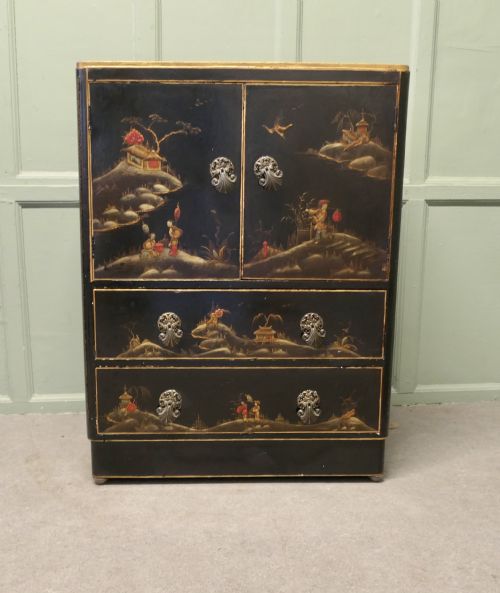


Small Decorative Chest
These small decorative chest options bring compact scale and rich surface detail to a room, offering practical storage alongside distinctive period character.
Small Decorative Chest
A small decorative chest encompasses a diverse group of compact storage forms, ranging from table cabinets and tea caddies to miniature commodes and dome-top trunks. When searching for a small decorative chest, buyers encounter pieces spanning from the mid-eighteenth century up through the early twentieth century.
The selections on this page demonstrate a wide geographical reach and varied utility, featuring English country chests, French provincial commodes, Japanese lacquer kodansu cabinets, and colonial tin caskets. Each object serves to contain smaller valuables, documents, or collections while acting as a striking focal point on a surface or within a smaller space.
Most items reflect domestic storage traditions where ornamentation mattered as much as capacity. From rosewood specimen cases to leather and brass-studded trunks, these pieces offer a tangible connection to historical craftsmanship and varied regional styles.
How they were made
Construction relies upon traditional cabinetmaking woods such as mahogany, satinwood, and rosewood, often paired with structural metals like iron and brass. Artisans utilised these dense timbers to build durable carcases that could withstand regular handling.
Surface ornamentation defines many pieces, employing specialised techniques such as black chinoiserie lacquering, hand-painting, and gilding. Other examples feature applied leather secured with decorative brass studs or protective tin plating over wooden cores.
Small Decorative Chest Retail Price Guide 2026
Typical asking prices for small decorative chest among the pieces listed under this phrase on Sellingantiques today, from the lower quarter to the upper quarter. They describe what is for sale here now, not the wider market.
Dome-top tin caskets from the colonies prove that even humble storage was once dressed up to travel the high seas in style.
What varies in quality
Quality rests in the execution of decorative finishes, such as the depth and clarity of chinoiserie lacquer or the finesse of hand-painted motifs on wood. Superior examples display crisp detail work that remains intact across surfaces and edges.
The selection of materials and hardware further separates standard items from finer works, evident in the weight of brass mountings, the integration of leather work, and the precision of joinery in miniature drawers and lids.
The Small Decorative Chest Glossary
- Chinoiserie
- European decorative style reflecting Chinese artistic influences, frequently seen in lacquered surfaces and painted motifs. It became especially popular in elite interior design during various historic periods.
- Kodansu
- A small Japanese tabletop cabinet containing multiple internal drawers for storing documents or small valuables. These pieces often feature fine lacquerwork and delicate metal fittings.
- Commode
- A low chest of drawers or cabinet originating in France, designed for domestic use in reception rooms or bedrooms. They frequently exhibit refined veneers, paintwork, or decorative mounts.
- Caddy
- A small box or chest originally constructed for storing tea leaves securely under lock and key. Surviving examples often feature fitted interiors and rich cabinet timbers.
- Satinwood
- A durable, light-coloured tropical timber prized for its smooth grain and reflective quality. It was frequently used for fine veneering and decorative table boxes during the eighteenth and nineteenth centuries.
Small Decorative Chest: Frequently Asked Questions
Where were small decorative chests typically placed?
These items generally stood on top of larger furniture, such as sideboards, desks, or commodes, where their detailed surfaces could be easily appreciated.
They also sat upon dedicated tables in parlours or studies to hold correspondence, tea, or small collections.
How do I care for lacquered wood surfaces?
Lacquered surfaces require gentle dusting with a soft, dry cloth to prevent abrasion of the delicate painted or polished layers.
Keep these pieces away from direct sunlight and fluctuating heat sources to protect the wood and lacquer from drying out.
What is the difference between a trunk and a caddy?
A trunk is a robust storage container built with a hinged lid, often reinforced with leather, iron, or brass for transit or secure domestic storage.
A caddy is a much smaller, highly refined box specifically designed for the domestic storage of dry goods like tea, featuring internal compartments.
How can I identify a Georgian piece?
Georgian items typically display restrained proportions, classical architectural influences, and solid cabinet timbers such as mahogany.
Construction details often include hand-cut dovetails and traditional hardware characteristic of eighteenth-century workshop practices.