

Small Ceiling Pendant
A small ceiling pendant brings concentrated illumination and period character to compact rooms, making it a favourite choice for hallway and bedroom lighting.
Small Ceiling Pendant
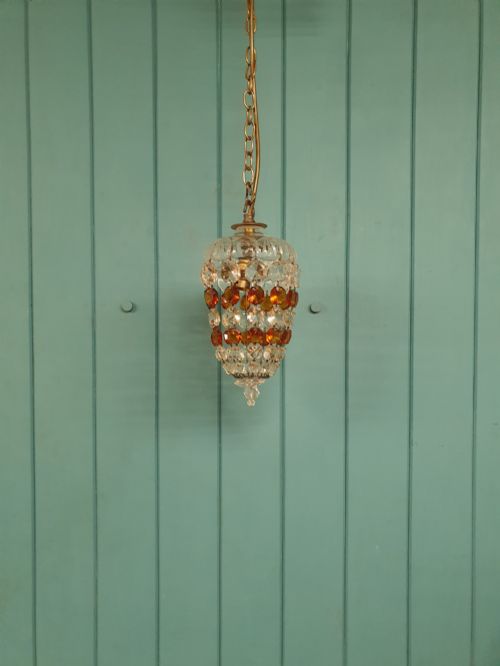
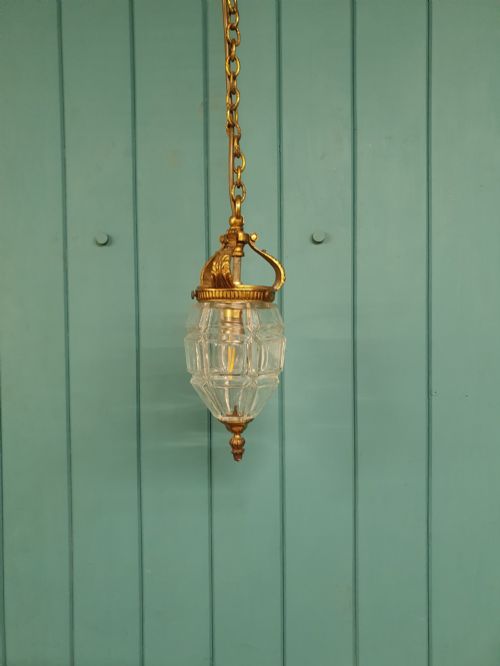
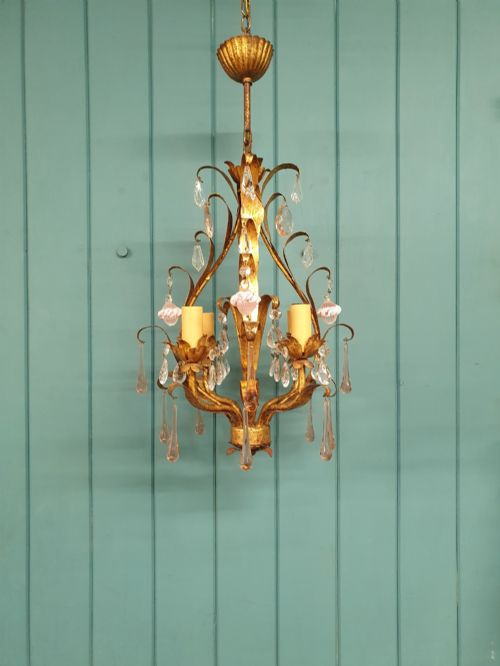
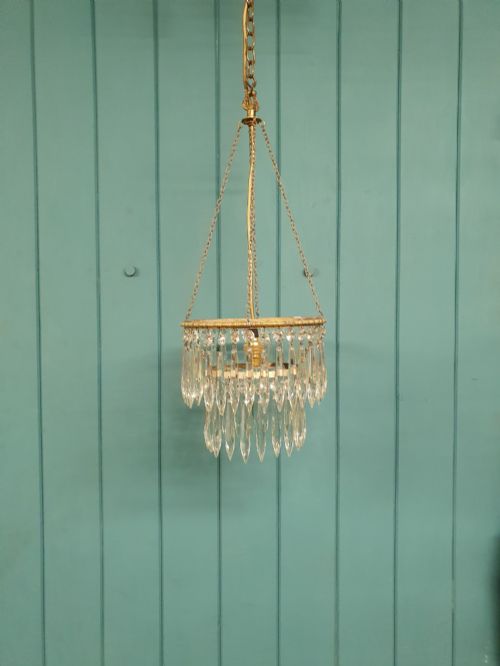
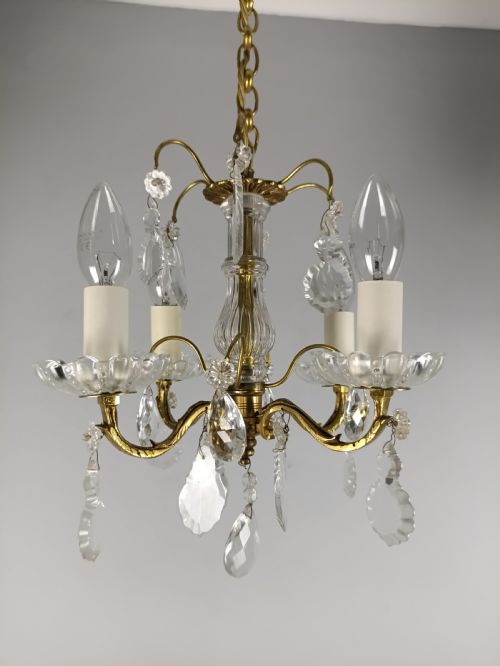
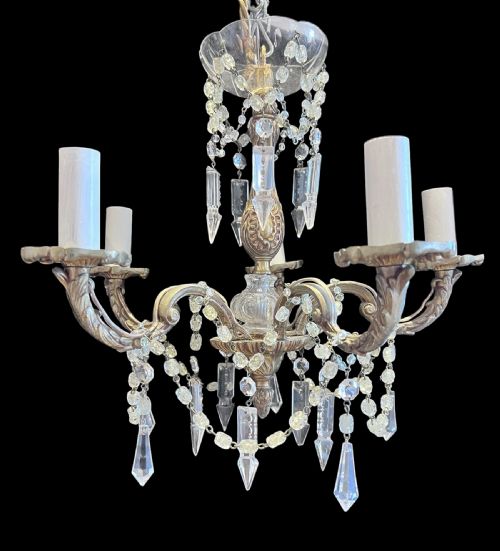
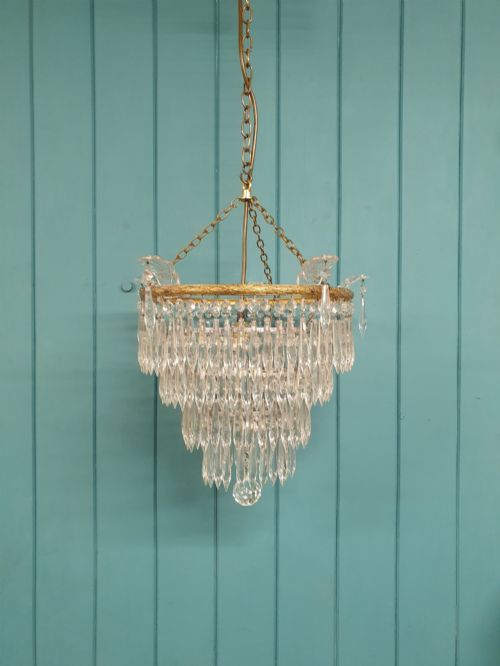
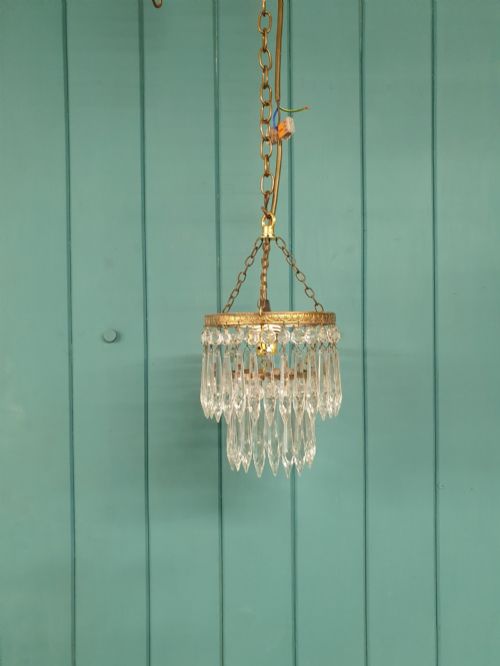
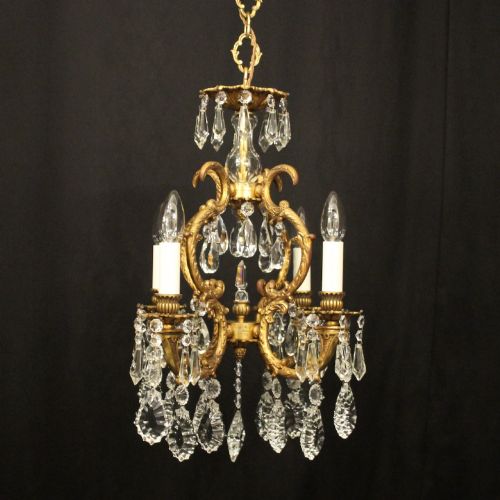
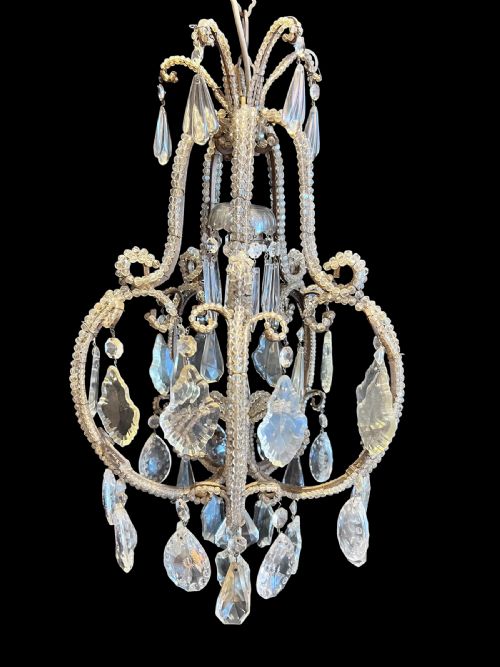
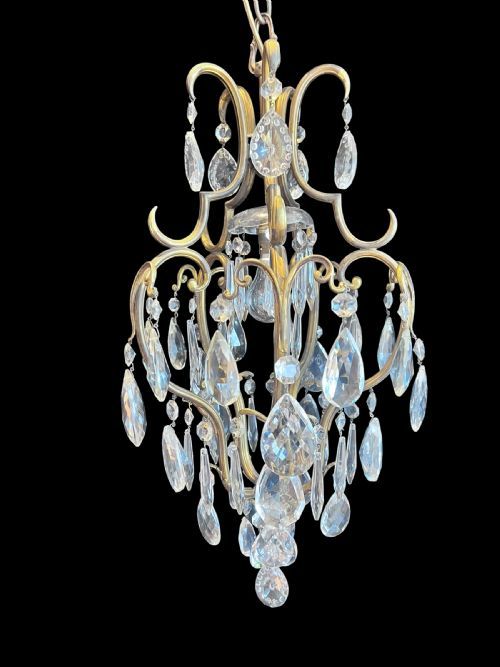
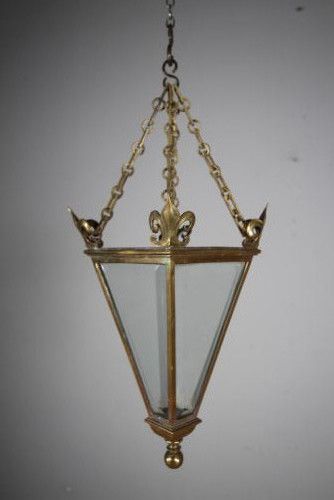
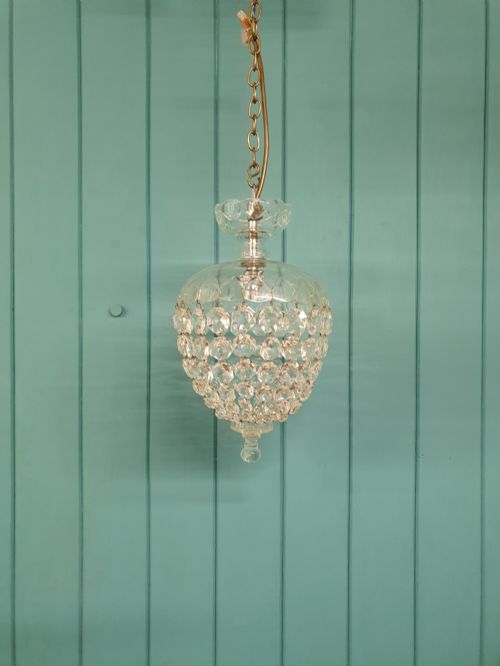
A small ceiling pendant encompasses hanging luminaires, drop chandeliers, and small hanging lanterns designed for rooms with limited space. Buyers searching for a small ceiling pendant encounter compact fixtures spanning the nineteenth century through the early twentieth century, including Edwardian designs and 1930s productions.
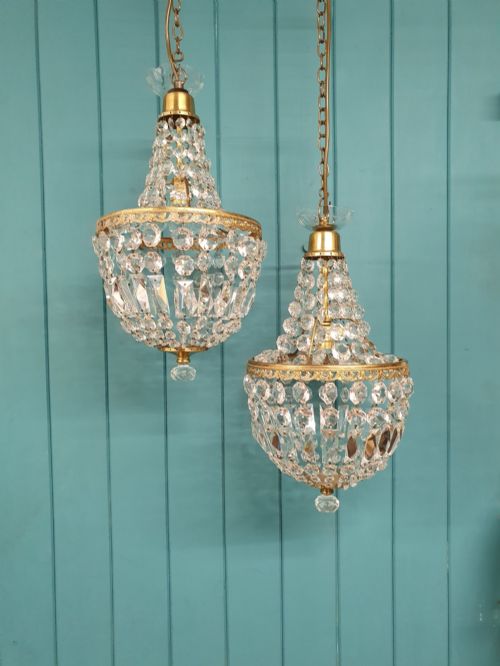
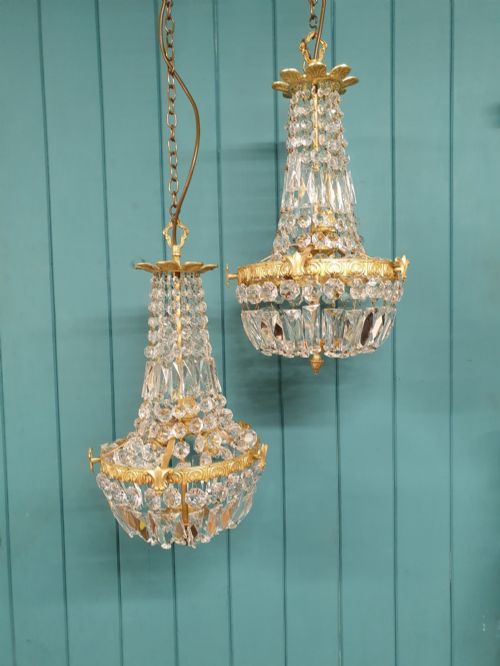
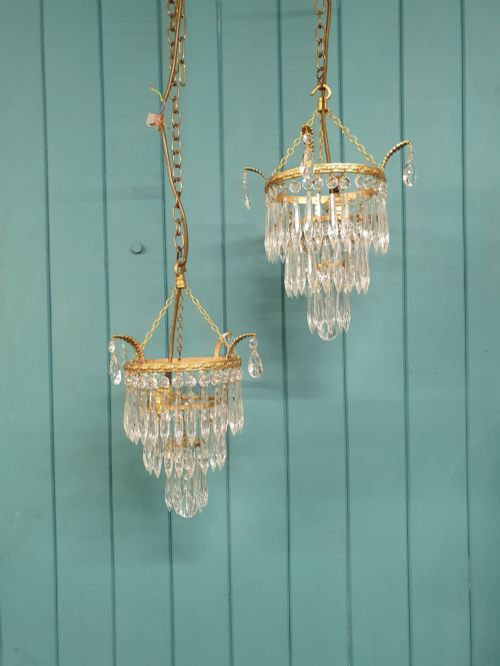
The selections on this page concentrate heavily on miniature chandeliers and single or multi-light drop fixtures rather than sprawling ballroom centrepieces. Common forms include dome top chandeliers, spike chandeliers, bag chandeliers, and tent styles that maximise refraction in tighter quarters.
Origins span British and continental workshops, with numerous examples reflecting French Empire and Italian aesthetics alongside traditional Edwardian output. These lighting fixtures serve practical illumination purposes while introducing distinct historical presence to domestic interiors.
How they were made
Construction relies upon a marriage of metalwork and glassware, utilising brass, gilt brass, and gilded bronze to form the structural frames and mounts. Artisans secured glass components - including cut glass, lead crystal, and beaded strands - directly to these metallic armatures.
Pendant designs incorporate specific optical elements such as coffin prisms, drop lustres, and faceted crystal spikes to disperse light effectively. Metal components were cast or stamped before hand-assembly, ensuring each hanging element remained securely wired or pinned to the central frame.
Small Ceiling Pendant Retail Price Guide 2026
Typical asking prices for small ceiling pendant among the pieces listed under this phrase on Sellingantiques today, from the lower quarter to the upper quarter. They describe what is for sale here now, not the wider market.
Some miniature chandeliers measure a mere five inches across, proving that grand illumination occasionally arrives in pocket-sized packages.
What varies in quality
Quality rests upon the purity and depth of the glass cutting, alongside the substantial weight of the brass or gilded bronze framework. Superior examples display crisp faceting on every crystal prism and precise hand-wiring that keeps individual drops aligned correctly.
Finer specimens exhibit intricate casting on metal mounts and cohesive decorative schemes, such as matching coloured crystals or integrated gilt leafy motifs. Lesser variations rely on simpler stamped metal components and standard pressed glass rather than hand-cut crystal.
The Small Ceiling Pendant Glossary
- Bag chandelier
- A lighting fixture featuring a flattened profile where strings of beads sweep down from a circular ring to a lower pendant terminal. This design creates a tapered silhouette reminiscent of a small pouch.
- Coffin prism
- A long, flat, wedge-shaped pendant cut with bevelled edges designed to refract light intensely. They hang from the perimeter of older chandeliers and lanterns.
- Tent chandelier
- A lighting arrangement where strings of small beads rise from a central crown to form a tent-like canopy above the main body of lights. It represents a classic eighteenth and nineteenth-century configuration.
- Spike chandelier
- A compact drop light featuring an array of outward-pointing crystal spikes radiating from a central stem. These fixtures were favoured for lower ceilings during the Edwardian era.
- Gilt brass
- A brass base metal treated with a thin layer of gold or gold-coloured wash to simulate solid ormolu. This finish adds warmth and lustre to the framing components.
Small Ceiling Pendant: Frequently Asked Questions
Where should I hang a small ceiling pendant?
These compact fixtures suit smaller spaces such as hallways, cloakrooms, dressing rooms, and cosy bedrooms where large chandeliers overwhelm the proportions.
Their reduced drop allows them to provide concentrated illumination without interfering with headroom or door clearances.
How do I distinguish Edwardian pendants from later pieces?
Edwardian examples often feature specific mounting styles and characteristic configurations like dome tops or simple spike arrangements typical of the early twentieth century.
Examining the metal patina, wiring apertures, and the cut of the glass helps place the fixture within the broader timeline of nineteenth and twentieth-century production.
Are these pendants difficult to install?
Most pieces arrive as self-contained hanging units that connect to standard ceiling junction boxes through existing suspension chains or rods.
Professional electrical installation is recommended to ensure the antique metalwork and vintage frames are safely secured and wired to current standards.
What maintenance do crystal pendants require?
Routine care involves gentle dusting with a soft cloth to keep the glass prisms and faceted drops free from accumulation.
When deeper cleaning is necessary, individual crystals can be wiped with a mild solution while remaining attached, or unhooked for thorough washing.