

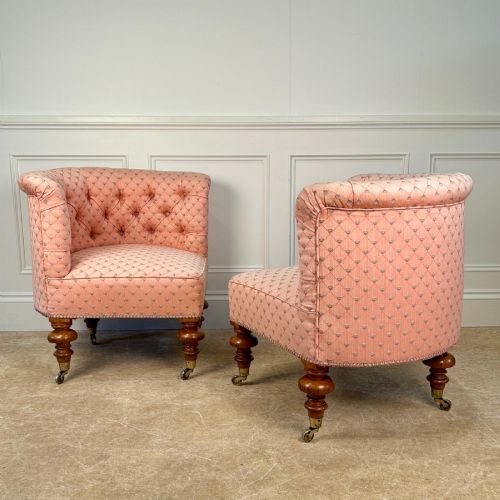


Small Bedroom Armchair
A small bedroom armchair offers compact seating rooted in nineteenth and early twentieth century domestic comfort.
Small Bedroom Armchair
A small bedroom armchair is a compact seating form designed for private chambers, blending modest proportions with upholstered comfort. When searching for a small bedroom armchair, buyers encounter pieces spanning the nineteenth century through the early twentieth century, including Victorian, Edwardian, and Regency examples.
The selection here encompasses various configurations, from corner chairs and open armchairs to bergere designs and shaped bedroom chairs. Materials range from mahogany and oak to exposed brass details and timber frames.
Most entries originate from the nineteenth century, featuring buttoned upholstery, linen, velvet, or contemporary fabric coverings. Buyers frequently find pairs or single seating options suited to smaller spaces.
How they were made
Frames rely on traditional timber construction using woods like mahogany and oak, shaped into structural supports, curved arms, and supportive legs. Joinery methods of the period ensure stability across both restrained Regency forms and ornate revival styles.
Upholstery techniques involve durable internal stuffing finished with textiles such as velvet, linen, and standard fabric coverings. Buttoning and brass tacking provide both structural retention and decorative detail on pieces like country house chairs.
Listings feature oak and mahogany frames paired with velvet, linen, and traditional fabric upholstery across nineteenth and early twentieth century pieces.
What varies in quality
Quality rests in the refinement of the timber frame, the integrity of the joinery, and the authenticity of the period upholstery materials. Pieces bearing maker stamps or specific cabinetmaker attributions demonstrate superior workshop origins.
Proportion and decorative restraint dictate distinction, separating standard utility furniture from exceptional cabinetmaker productions. The survival of original brass fittings and undisturbed wood surfaces further elevates an example.
Howard and Sons·CVS
The Small Bedroom Armchair Glossary
- Bergere
- An enclosed upholstered armchair with wooden framing exposed around the sides and back. This French-inspired form often incorporates cane panels or tight fabric upholstery.
- Corner chair
- A seating design engineered to fit neatly into the corner of a room, featuring a diagonal orientation. These typically possess a curved backrest supported by multiple vertical spindles or turned pillars.
- Open armchair
- An armchair characterised by uncovered wooden arm supports rather than fully upholstered padded arms. This style maintains a lighter visual profile suitable for compact chambers.
- Regency
- A British design period spanning the early nineteenth century defined by neoclassical restraint and classical revival motifs. Furniture from this era emphasises clean architectural lines and refined proportions.
Small Bedroom Armchair: Frequently Asked Questions
Where were small bedroom armchairs used?
These compact seats were traditionally placed in dressing rooms, private boudoirs, and sleeping chambers for resting or reading.
Their reduced scale allowed them to fit comfortably into tight corners and alcoves without obstructing chamber traffic.
How do I date a small bedroom armchair?
Dating relies on observing structural timber types, upholstery methods, and stylistic cues associated with periods like the Regency or Edwardian eras.
Maker stamps, specific revival motifs, and construction hardware also provide clear indicators of manufacturing decades.
Are these chairs suitable for daily sitting?
Most surviving examples are structurally sound and built with traditional hardwood frames capable of supporting regular use.
Buyers should consider the condition of the internal padding and fabric to determine if professional reupholstery is required for comfort.
What is the difference between Victorian and Edwardian chairs?
Victorian examples often feature heavier timber frames, buttoned upholstery, and darker woods like mahogany, reflecting elaborate nineteenth-century tastes.
Edwardian pieces tend to display lighter proportions, simpler lines, and influences from simpler country house aesthetics.