



Silver Plated Mirror
A silver plated mirror brings reflective light and period design to a room, ranging from small handheld vanities to large wall-hanging plates.
Silver Plated Mirror
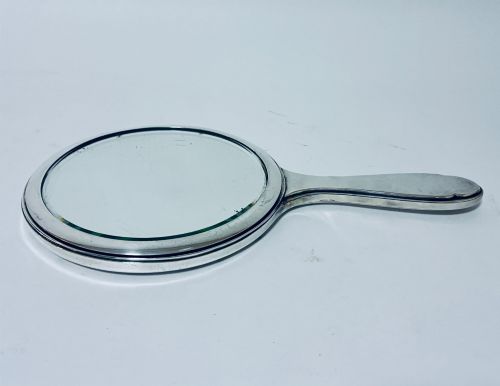
A silver plated mirror encompasses a diverse selection of reflective items, from compacts and hand-held vanities to large wall pieces and table plateaus. These objects serve both practical dressing functions and decorative interior display roles.
The selections span multiple eras, including Victorian, Edwardian, and Art Deco designs. Buyers frequently encounter dressing table mirrors, triptychs, and easel-backed vanity pieces alongside French brasserie trays and Venetian wall mirrors.
Origins stretch across Britain, France, Italy, Peru, and Germany, reflecting varied regional tastes in metalwork and glass. This variety ensures that each piece displays distinct stylistic markers characteristic of its period of manufacture.
How they were made
Construction relies upon a base metal or wood substrate coated in silver plate, often paired with bevelled mirror glass. Frames integrate brass, enamel, and suede linings to create structured support for the reflective plates.
Manufacturing techniques include etching glass surfaces, pressing metal into decorative Art Nouveau or Art Deco motifs, and securing plates within wooden or metal easel backs. Makers applied silver plating over base metals using period electroplating methods.
Silver Plated Mirror Retail Price Guide 2026
Typical asking prices for silver plated mirror among the pieces listed under this phrase on Sellingantiques today, from the lower quarter to the upper quarter. They describe what is for sale here now, not the wider market.
Listings feature items spanning the 1850s to the 1950s, utilising silver plate, brass, wood, glass, and enamel.
What varies in quality
Quality differences emerge in the execution of the metalwork, the clarity and preservation of the glass plate, and the integrity of the silver plating. Superior pieces exhibit crisp detailing in decorative borders and sturdy structural joins.
The presence of original backing materials, intact bevels, and specialised components like blue enamel or silk linings elevate a piece. Lesser examples show uneven plating wear, degraded mirror silvering, or replacement glass.
WMF·Evans·Elkington
The Silver Plated Mirror Glossary
- Silver plate
- A thin layer of silver applied to a base metal core such as brass or copper. This technique allowed manufacturers to produce decorative items at a lower cost than solid silver.
- Surtout de table
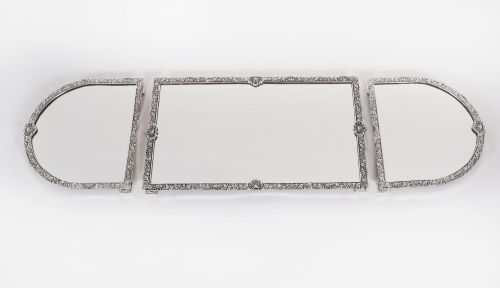
- A large mirrored plateau or tray placed in the centre of a dining table. These pieces hold decorative centrepieces or tableware to reflect candlelight.
- Triptych mirror
- A three-panel dressing table mirror featuring a central glass flanked by two smaller hinged side plates. This arrangement allows the user to adjust the viewing angles.
- Foxed plate
- Mirror glass displaying dark spots and discolouration caused by the degradation of the reflective backing over time. Collectors often appreciate this sign of age.
- Easels
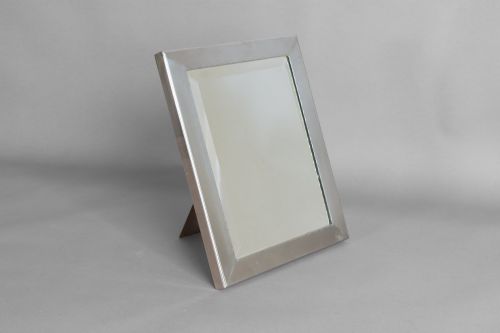
- A hinged stand attached to the reverse of a tabletop mirror for vertical support. These frames allow the glass to stand independently on dressing surfaces.
Silver Plated Mirror: Frequently Asked Questions
How do I clean a silver plated mirror?
Use a soft cloth and a gentle metal cleaner specifically formulated for silver plate. Avoid harsh abrasives that might strip the thin metallic layer from the base.
Keep moisture away from the edges of the glass plate to prevent the silver backing from lifting or developing further foxing.
Are these mirrors suitable for daily bathroom use?
Most antique vanity and dressing table mirrors are better suited to dry bedrooms or living spaces. Humidity can accelerate the degradation of the original mirror plate.
Placement in damp environments risks tarnishing the silver plating and damaging the underlying wooden or metal frames.
What is a plateau used for?
A plateau is a large mirrored tray designed to sit flat on a table or sideboard. They traditionally display glassware, bottles, or decorative table centrepieces.
The reflective surface amplifies light from candles or surrounding chandeliers.
How can I tell an Art Deco mirror apart from Victorian pieces?
Art Deco mirrors from the 1920s and 1930s typically feature geometric shapes, clean lines, and stylised motifs like soldiers or abstract borders. In contrast, Victorian examples lean towards ornate floral engraving, heavy frames, and romantic silhouettes.
The choice of accompanying materials like bright blue enamel also points firmly towards the 20th century.