




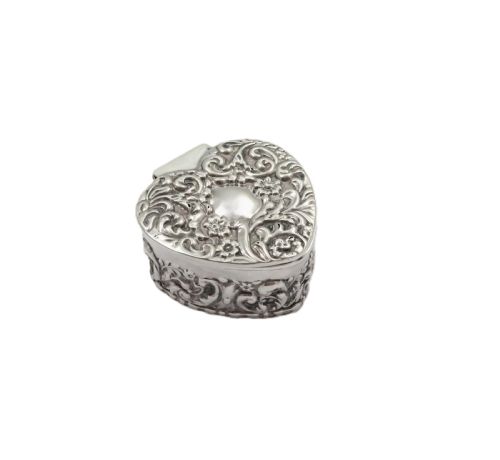


Silver Heart Trinket
These silver heart trinket boxes and dishes span the Victorian and Edwardian eras, offering miniature storage shaped for sentiment.
Silver Heart Trinket
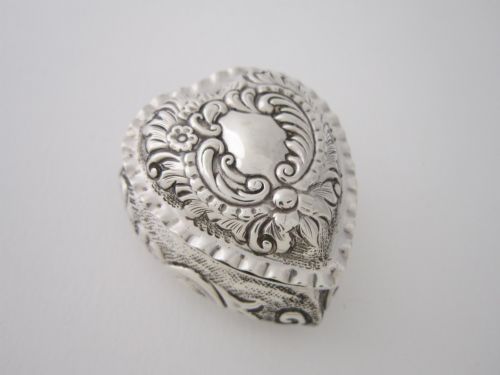
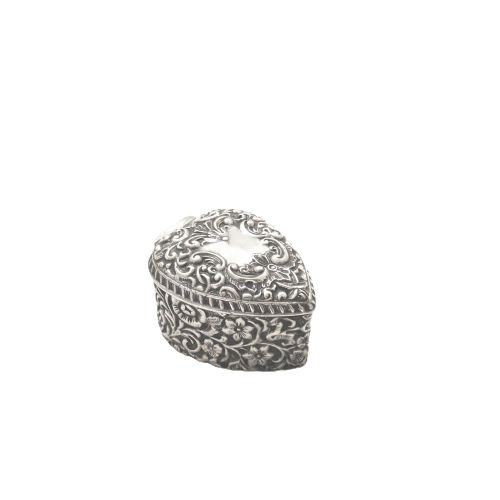
A silver heart trinket takes the form of a small container or dish shaped as a heart, designed to hold rings, pills, or small keepsakes on a dressing table. When searching for silver heart trinket items, buyers encounter hinged boxes and open dishes produced across late Victorian and Edwardian decades.
The selection on this page runs from small pill boxes to larger cut crystal and sterling silver receptacles. Most examples hail from the late nineteenth and early twentieth centuries, bearing hallmarks from Birmingham, London, and Chester.
Makers utilised sterling silver alongside cut glass and enamel to create these domestic objects. Forms range from simple heart-shaped dishes to hinged trinket boxes with fitted interiors.
Materials and construction methods
Silversmiths formed the bodies of these boxes and dishes from sterling silver, often pressing or hammering sheet metal into heart moulds. Hinged lids required careful alignment to fit the lower halves of pill and trinket boxes securely.
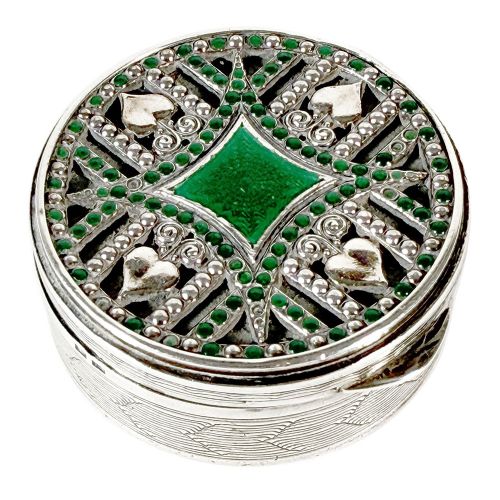
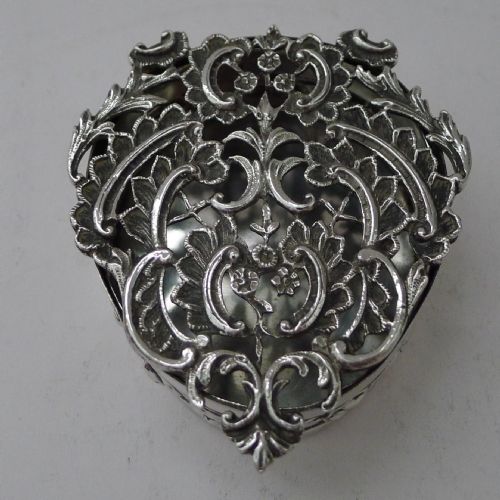
Cut glass and crystal formed the lower basins of larger boxes, mounted with pierced or chased silver lids. Enamel work and vermeil added colour and contrast to specific pill boxes of the period.
Silver Heart Trinket Retail Price Guide 2026
Typical asking prices for silver heart trinket among the pieces listed under this phrase on Sellingantiques today, from the lower quarter to the upper quarter. They describe what is for sale here now, not the wider market.
Listings feature sterling silver, cut glass, and enamel forms spanning the Victorian, Edwardian, and George V periods.
Distinctions in quality and execution
The crispness of the chasing and the weight of the sterling silver define the calibre of a piece. Finer examples display detailed floral patterns or smooth, heavy walls that resist denting.
The integration between glass bodies and silver mounts dictates quality in composite items. Well-made boxes show secure seating where the silver rim meets the cut crystal or glass.
William Comyns·George Adam Scheid
The Silver Heart Trinket Glossary
- Sterling silver
- A silver alloy containing 92.5 percent pure silver and 7.5 percent other metals, usually copper. This standard composition appears frequently in British hallmarks.
- Hallmark
- An official mark stamped on precious metals to indicate the standard of purity, the assay office, and the year of manufacture. London, Birmingham, and Chester offices minted many of these pieces.
- Vermeil
- Sterling silver plated with a thin layer of gold. This finish provides a warm golden tone to the interior or exterior of small boxes.
- Pot pourri box
- A small container with a pierced or perforated lid designed to diffuse scent from dried flower petals. Several surviving examples take the heart shape.
- Chasing
- A metalsmithing technique where the artisan depresses metal from the front with a hammer and punch to create raised decorative designs. It ornaments many Victorian box lids.
Silver Heart Trinket: Frequently Asked Questions
What were silver heart trinket boxes used for?
Victorians used these small heart-shaped containers to hold rings, pins, and personal pills on dressing tables. Their intimate size made them suitable for keeping sentimental tokens close at hand.
Over time, these pieces shifted from functional dressing table items to decorative collectors' objects. Today, people use them on sideboards or desks to store small modern trinkets.
How do I date a silver heart trinket?
Dating relies on the assay office hallmarks stamped into the silver, which include specific letters corresponding to the year of manufacture. Makers' marks and style indicators like Art Nouveau enamel also help narrow the period.
The pieces visible here predominantly date from the Victorian and Edwardian eras, spanning the late nineteenth and early twentieth centuries. Comparing the style of decoration to known period designs confirms the timeline.
Are cut glass and silver boxes authentic?
Cut glass and crystal bodies mounted with silver lids were standard production methods for dressing table accessories during the Edwardian period. Manufacturers combined heavy glass bases with sterling silver rims and lids to create durable containers.
These composite objects show the same hallmarking standards on the silver components as solid metal boxes. The glass is typically thick cut crystal designed to withstand daily use.
How should I clean antique silver boxes?
Cleaning requires a soft microfibre cloth and a gentle silver polish formulated for antiques, applied sparingly to avoid damaging any surface chasing or enamel. Harsh chemical dips can strip away the natural patination built up over a century.
For boxes with glass or paper elements, moisture must stay away from vulnerable interiors. Regular light dusting keeps the silver bright without wearing down the hallmarks.