



Silver Fitted Vanity
Silver fitted vanity pieces are portable treasures of personal grooming, combining precious metals and internal organisation to keep belongings secure on the move.
Silver Fitted Vanity
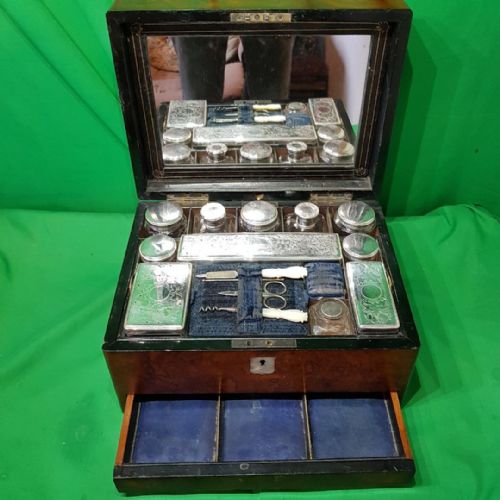
When you search for silver fitted vanity items, you encounter a range of portable containers designed for personal grooming and jewellery storage. These objects span several eras, appearing as large travelling cases, smaller dressing boxes, and specialised sets containing glass bottles and grooming tools.
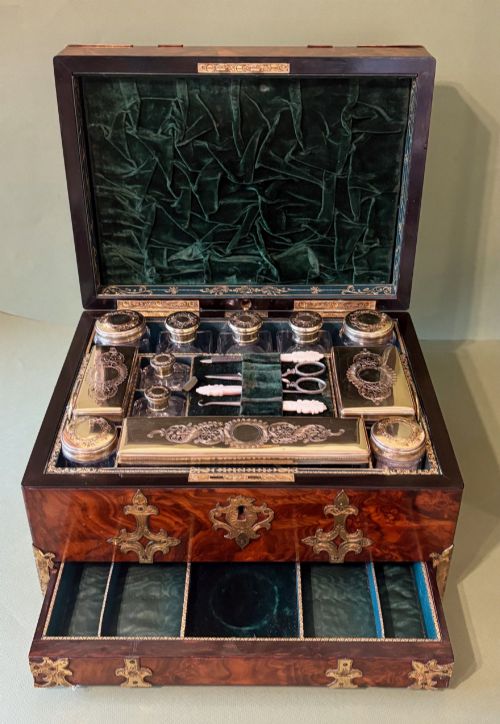
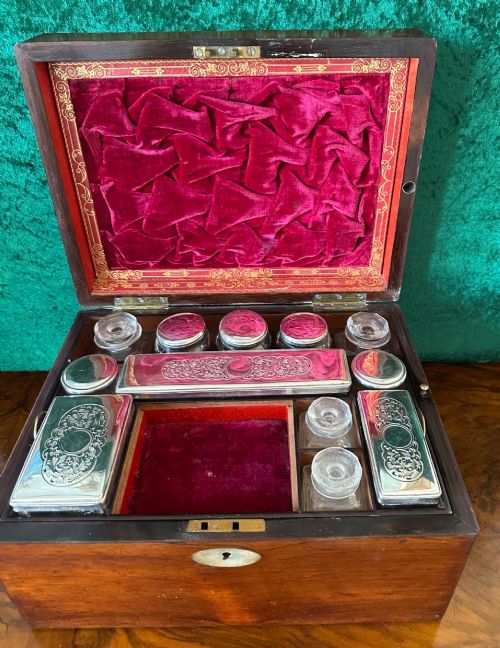
The most frequent examples on this page date from the Victorian and 19th Century periods, constructed as substantial wooden cases lined with compartments. Gentlemen's travelling vanity sets and ladies' dressing cases dominate the selection, often retaining their original internal fittings.
Earlier pieces reach back to the Georgian and 18th Century periods in smaller forms, such as the pocket etui or individual scent bottles. Later items include Art Deco shaving sets and 1920s manicure cases, showing how personal care adapted through the decades.
Materials and Construction
Makers built these pieces using durable timber carcases overlaid with decorative veneers including burr walnut, coromandel, kingwood, and rosewood. Brass banding and reinforcement protected the edges of travelling boxes during transit, while leather provided an alternative exterior finish.
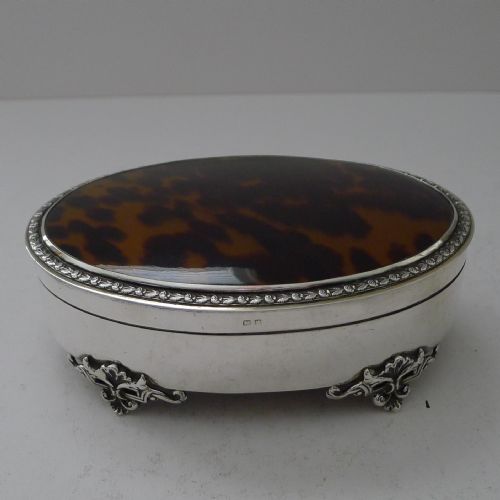
Interiors utilised velvet linings and fitted trays to secure sterling silver, silver gilt, and tortoiseshell implements. Glass and crystal formed the bodies of scent bottles and jars, paired with matching silver lids and stoppers.
Silver Fitted Vanity Retail Price Guide 2026
Typical asking prices for silver fitted vanity among the pieces listed under this phrase on Sellingantiques today, from the lower quarter to the upper quarter. They describe what is for sale here now, not the wider market.
Assessing Quality
The distinction between standard examples and superior pieces rests on the completeness and originality of the internal fittings. Sets that retain their full complement of matched silver-topped glass bottles, jars, and grooming tools command greater interest.
The choice of cabinet timber and the complexity of the interior mechanism also dictate standard. Cases featuring luxury veneers like coromandel or burr walnut alongside secret drawers and gilt silver hallmarks demonstrate superior workmanship.
Asprey·Parkins and Gotto
The Silver Fitted Vanity Glossary
- Etui
- A small ornamental case used for holding needles, cosmetics, or writing implements. These compact containers date back to the Georgian era.
- Sterling Silver
- An alloy containing ninety-two point five percent silver by mass, widely used for the fitted lids, brushes, and instruments inside these cases.
- Coromandel
- A dense, dark cabinet wood with contrasting light streaks imported from Asia, utilised by makers for high-end Victorian vanity boxes.
- Silver Gilt
- Silver that has been coated with a thin layer of gold on its surface, frequently found on the interior instruments of nineteenth-century travelling sets.
- Dressing Case
- A portable box fitted with compartments, mirrors, and containers for cosmetics, hairbrushes, and jewellery during travel.
Silver Fitted Vanity: Frequently Asked Questions
What is a silver fitted vanity?
A silver fitted vanity is a portable box or case containing compartments for personal grooming items, jewellery, and cosmetics, usually accented with silver lids and tools.
These pieces were designed for travel or domestic dressing table use, keeping personal effects organised and secure.
How do I date a vanity case?
Dating relies on examining the timber veneers, the style of the brass hardware, and any hallmarks stamped on the silver components. Victorian examples often use burr walnut and coromandel, while Georgian pieces appear in smaller forms like etuis.
Interior materials such as velvet and celluloid also point to specific decades of manufacture between the eighteenth and twentieth centuries.
Were these boxes meant for travel?
Many of these pieces served as travelling companions for affluent Victorians and Edwardians, built with sturdy wooden carcases and brass corner mounts for transit.
Gentlemen's and ladies' sets were configured to fit inside carriages, trains, or ships, securing glass bottles against movement.
What is the difference between a vanity case and a dressing box?
The terms often overlap, though dressing boxes traditionally emphasise compartments for letters and writing alongside cosmetics, while vanity cases focus primarily on grooming and beauty implements.
Both forms incorporate fitted trays and silver-topped glass jars within wood or leather-covered structures.