




Shell Cameo Carving
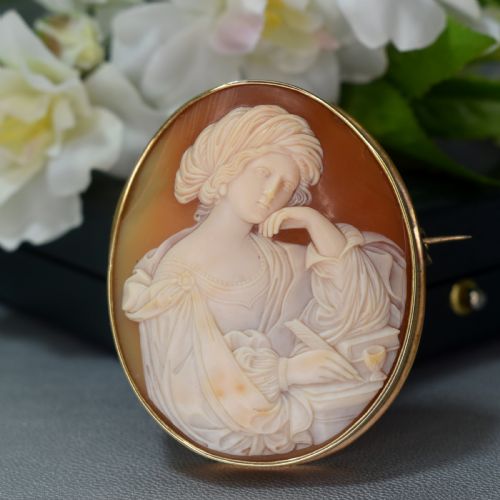
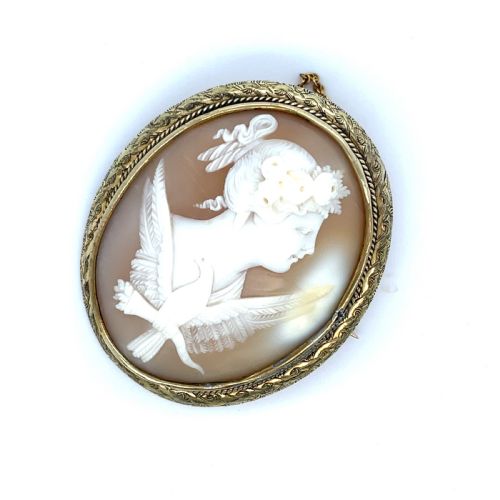
Shell cameo carving brings together layered shell and precise handwork, offering classical figures and mythological scenes mounted in gold or silver.
Shell Cameo Carving
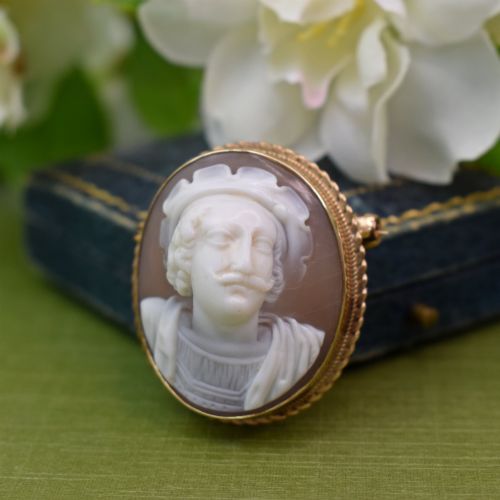
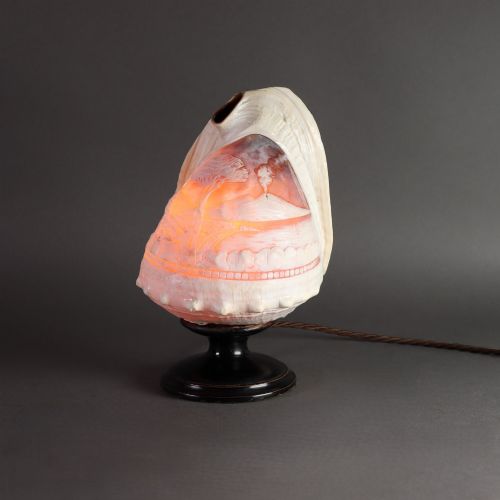
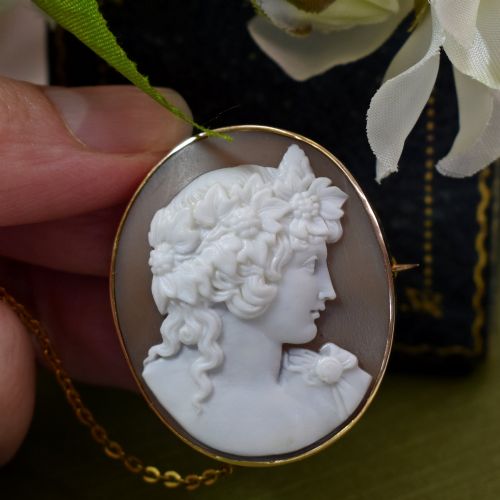
When you search for shell cameo carving, you encounter relief items shaped from natural shells, predominantly mounted as jewellery or decorative ornaments. The selection spans brooches, earrings, and pendants alongside larger decorative table lamps and tabletop ornaments. Most examples on this page date from the Victorian and Edwardian eras, reflecting the high period of production for carved shell work.
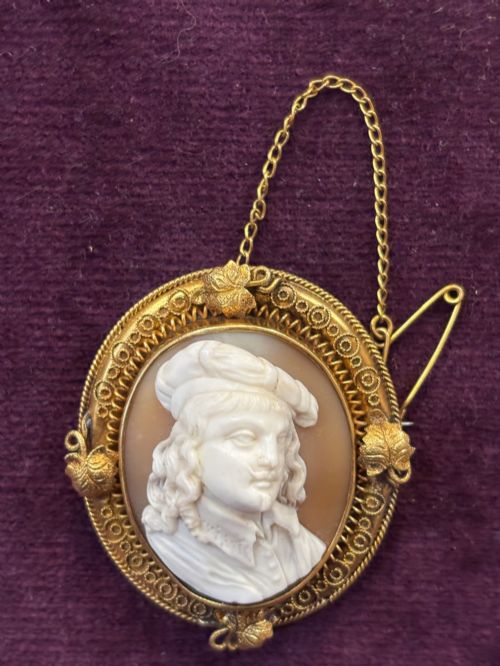
The subjects draw heavily on classical antiquity, featuring deities such as Aurora, Flora, and Aphrodite, as well as historical figures like Bonnie Prince Charlie and mythological scenes including Psyche and Cupid. You will also find architectural vistas, notably views of the Bay of Naples with Vesuvius, which typify Grand Tour souvenirs. These carvings utilise the differing colour layers of the shell to create contrast between the raised figure and the darker background.
How shell cameo carving was made
Carvers selected specific shells possessing distinct colour strata, such as conch shells with their pink tones or helmet shells with white and brown layers. Working by hand with small gravers and burins, the artisan cut away the exterior layer to leave the subject standing in relief against the contrasting background. The depth of the carving dictated how much detail could be achieved in the hair, drapery, and facial expressions.
Once carved, the shell plaques were set into frames fashioned from gold, silver, or pinchbeck. Mounts ranged from simple wire frames to ornate filigree designs, often incorporating pearls or coral. Larger display pieces, such as table lamps and tabletop ornaments, required substantial metal stands or ebonised wood mounts to support the weight of the carved shell.
Shell Cameo Carving Retail Price Guide 2026
Typical asking prices for shell cameo carving among the pieces listed under this phrase on Sellingantiques today, from the lower quarter to the upper quarter. They describe what is for sale here now, not the wider market.
Listings feature shell cameos mounted in gold, silver, and pinchbeck, spanning periods from the Georgian era to the mid-twentieth century.
What varies in quality
The choice and execution of the mount also mark the tier of the piece. Top examples feature substantial gold frames with detailed filigree, chased work, or maker signatures like R. Pernice. Standard versions utilise simpler settings in silver, low-carat gold, or base metals, occasionally showing solder marks or lighter gauge wire mountings.
R. Pernice
The Shell Cameo Carving Glossary
- Conch shell
- A marine mollusc shell utilised for its warm pink and white colour layers. Carvers favoured queen conch shells for larger classical portrait subjects.
- Grand Tour
- A cultural journey undertaken by wealthy Europeans during the eighteenth and nineteenth centuries. Travellers purchased carved shell cameos and architectural plaques as mementos of Italy.
- Relief
- A sculptural technique where the figures project from a flat background. Shell cameos rely on high or low relief to separate the subject from the coloured shell layer beneath.
- Pinchbeck
- An alloy of copper and zinc developed to imitate gold. It frequently appears in nineteenth-century jewellery mounts and earring wires.
- Filigree
- Ornamental work consisting of fine wire twisted into delicate patterns. This technique frequently frames Victorian and Edwardian shell cameos.
Shell Cameo Carving: Frequently Asked Questions
What periods do these carvings come from?
The pieces span the Georgian, Victorian, and Edwardian eras, with notable examples continuing into the mid-twentieth century. Most items reflect nineteenth-century production when Grand Tour travel popularised Italian shell carvings.
Datings can often be identified through the mounting styles, metal types, and the specific depiction of classical or mythological subjects.
How were these pieces used originally?
Smaller carvings served as personal adornment in the form of brooches, pendants, earrings, and rings. Larger pieces functioned as decorative table ornaments, lamps, and framed tabletop displays.
Wearers pinned brooches to garments or wore pendant necklaces, while travellers displayed architectural shell scenes in their homes as mementos.
What materials make up the frames?
Mounts utilise various metals including silver, 9ct gold, 14ct gold, 18ct gold, and 20ct gold, alongside pinchbeck and ebonised wood. Some settings incorporate decorative additions such as pearls or coral.
The choice of metal often corresponds to the period and the quality of the carving it surrounds.
How do you identify the subjects depicted?
Subjects typically draw from classical mythology, history, and European landscape views. Figures like Aurora, Flora, and Aphrodite are recognised by their traditional attributes, such as chariots or floral garlands.
Inscribed titles or recognisable compositions, such as famous paintings or Italian vistas, help clarify specific portraits and scenes.