

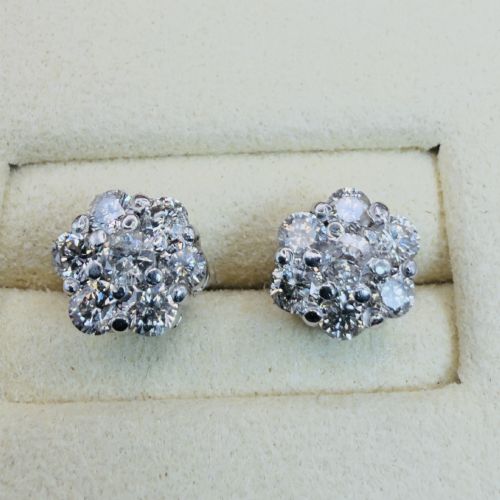
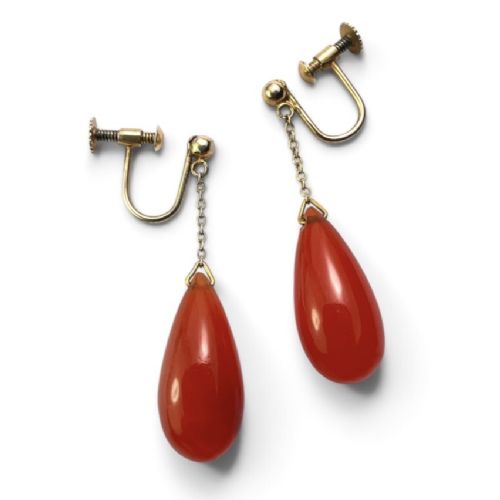
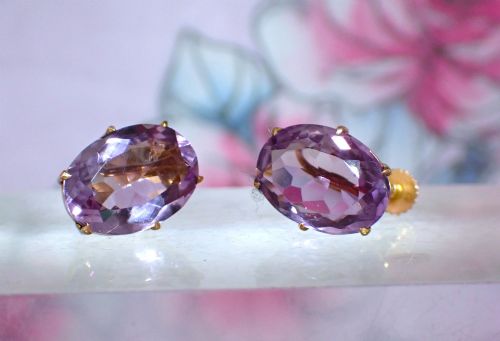


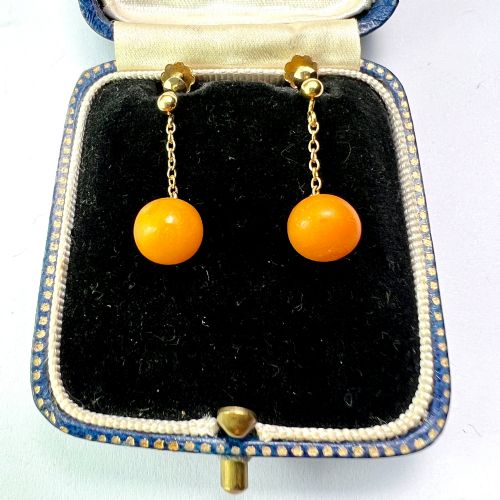


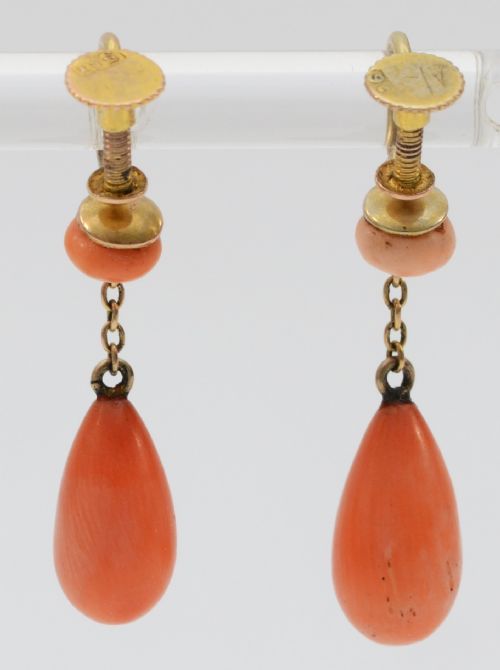
Screw Back Gold Earrings
Screw back gold earrings provide secure wear through an adjustable mechanical fastening.
Screw Back Gold Earrings
Screw back gold earrings are functional items designed for pierced or non-pierced lobes, relying on a threaded post and a small nut to hold the fitting in place. When searching this phrase, buyers encounter examples spanning the Victorian, Edwardian, Art Deco and Mid-Century periods.
The material palette ranges from nine carat yellow and white gold up to eighteen carat gold and platinum, often set with gemstones such as diamond, pearl, amethyst, turquoise and jadeite. Forms include simple studs, cluster designs, drops and chain dangles.
Edwardian and Victorian iterations frequently incorporate pearls, garnets or citrine within ornate settings, while Art Deco and Mid-Century pieces lean towards geometric clusters and white gold frames. Studs and drops appear regularly across the historic eras recorded in the archive and current listings.
Materials and Construction
The construction relies on precious metals including nine carat gold, eighteen carat gold, platinum and silver-topped gold, formed into wires, sheet metal and cast mounts. Stones are secured via claw settings, bezels, or flush mountings depending on the period.
The defining mechanism uses a threaded screw post combined with a threaded backing nut, allowing the wearer to adjust the tension against the earlobe. This mechanical closure distinguishes them from standard push-back posts or clip-on levers.
Screw Back Gold Earrings Retail Price Guide 2026
Typical asking prices for screw back gold earrings among the pieces listed under this phrase on Sellingantiques today, from the lower quarter to the upper quarter. They describe what is for sale here now, not the wider market.
Some pairs started life as Victorian watch fobs before being converted into dangling screw back earrings.
Assessing Quality
Quality rests upon the precision of the threaded mechanism, the weight and purity of the gold, and the matching and cut of the set stones. Finer examples show smooth movement in the screw thread without binding or excessive lateral play.
Artistry in the metalwork and the selection of well-matched natural gemstones, such as matched diamonds, deep garnets or clean jadeite, elevate a piece above standard mass production. The integration of the screw fitting into the overall design without clumsiness also marks superior output.
The Screw Back Gold Earrings Glossary
- Screw back
- A fastening mechanism utilising a threaded post and a rotating nut to secure the earring. This permits adjustable pressure on the lobe.
- Cluster
- An arrangement of smaller gemstones grouped tightly around a central stone. This layout maximises visual sparkle in a compact area.
- Chain drop
- A design where the main decorative element hangs suspended below the earlobe on a short length of chain. It introduces movement when worn.
- Paste
- Hand-cut glass used as a gemstone substitute in historic jewellery. It mimics the appearance of diamonds or coloured stones.
- Doublet
- A composite gemstone formed of two joined layers, often a thin slice of precious stone on a supportive base. This method creates a larger visual presence.
Screw Back Gold Earrings: Frequently Asked Questions
Are these for pierced ears?
Many screw back earrings suit traditional pierced lobes because the threaded post functions similarly to a standard post. The adjustable nut simply replaces the friction butterfly.
Certain historic pairs were originally made for unpierced lobes by using the screw mechanism to pinch the flesh gently. Buyers should examine the post length and thickness to confirm compatibility with their own piercings.
How do I date an Edwardian pair?
Edwardian pieces often feature light platinum-topped gold, delicate millegrain edges, and specific stones like amethyst, tourmaline, or demantoid garnets. The use of natural pearls and intricate openwork filigree is also typical of this era.
Comparing the specific gemstone combinations and fastener styles with known period benchmarks helps confirm the decade. Faint maker marks or hallmarks can provide further chronological clues.
How should I clean them?
Cleaning requires warm soapy water and a soft brush to remove dust from behind the settings and around the screw threads. Harsh chemical dips should be avoided, especially with softer organic materials like pearls, coral, or turquoise.
The threaded mechanism benefits from being kept dry and free of lint buildup to ensure the nut turns smoothly.