

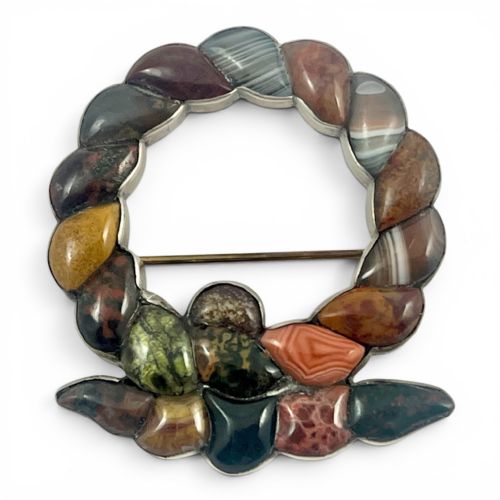


Scottish Jasper Pin
A Scottish jasper pin brings together rugged stones and sturdy silver to fasten traditional Highland dress with distinct regional character.
Scottish Jasper Pin
A scottish jasper pin sits firmly in the Victorian Scottish Revival tradition, taking the form of brooches and kilt pins designed to secure heavy woollen garments. Buyers searching for this phrase encounter solid silver mounts housing earthy jasper alongside related stones like agate, bloodstone and citrine.
The prevailing examples on this page date from the mid to late Victorian era, spanning decades from the eighteen forties to nineteen hundred. These pieces range from simple bows to intricate braided plaid designs and basket-hilted broadsword motifs.
Makers of the period drew heavily on traditional Highland weaponry and symbols, translating them into wearable ornaments fashioned from local Scottish materials. The resulting pieces served both a functional purpose in fastening plaid and an aesthetic role in the nineteenth century revival movement.
Materials and construction
Silversmiths shaped sterling silver into substantial brooches and kilt pins, often employing provincial techniques seen in centres like Inverness. Metalwork includes detailed chasing, basket-hilt configurations and braided silver wire designed to hold multiple hardstone panels securely.
Lapidaries cut and polished native Scottish jasper, agate, bloodstone and citrine into geometric or fitted shapes before setting them flush within the silver framework. The combination of hard minerals and structural silver created durable ornaments capable of withstanding the weight of thick wool cloth.
Scottish Jasper Pin Retail Price Guide 2026
Typical asking prices for scottish jasper pin among the pieces listed under this phrase on Sellingantiques today, from the lower quarter to the upper quarter. They describe what is for sale here now, not the wider market.
Victorian jewellers literally shrunk broadswords into pocket-sized kilt pins so Highlanders could wear their weaponry on their chests without alarming dinner guests.
Judging quality in hardstone jewellery
Quality rests on the depth of the silverwork and the stone-cutter's skill in matching natural mineral patterns. Finer examples display tight stone settings, substantial silver weight and inventive motifs such as swords or intricate braids rather than simple bezels.
The choice of stones also distinguishes the range, with select pieces incorporating vibrant citrine or carefully patterned jasper alongside standard agate. Superior items maintain crisp definition in the chased metal details and strong structural integrity across the pin mechanism.
The Scottish Jasper Pin Glossary
- Jasper
- An opaque, microcrystalline variety of quartz occurring in various earthy colours, frequently utilised in nineteenth-century Scottish jewellery. It forms striking geometric panels within silver mounts.
- Agate
- A common chalcedony stone prized in Victorian pebble jewellery for its natural banded patterns. Lapidaries shaped these stones to complement the tones of local jasper.
- Plaid brooch
- A large fastening device historically used to secure a Highland plaid or shawl over the shoulder. These objects provided a primary canvas for elaborate silver and stone designs.
- Basket-hilt
- A protective guard on a broadsword featuring interlaced metal bars, which Victorian jewellers translated directly into kilt pin and brooch forms. This motif grounds the jewellery in military heritage.
- Provincial silver
- Silverware marked and created outside major urban assay offices, such as pieces originating from Inverness. Such items often display distinct regional traits.
Scottish Jasper Pin: Frequently Asked Questions
How do I wear a scottish jasper pin?
These pieces function traditionally as heavy cloak or plaid fastenings, though modern wearers often place them on thick coats, scarves or heavy knitwear.
The sturdy pin stems and substantial weight require robust fabrics to support them properly without sagging.
What periods do these pieces come from?
The examples here date primarily from the Victorian era, spanning the mid nineteenth century through to around nineteen hundred.
This timeframe aligns with the height of the Scottish Revival, when Highland imagery gained widespread popularity.
What stones appear alongside jasper?
Jewellers frequently combined jasper with banded agate, dark green bloodstone and yellow citrine within the same silver mount.
These minerals reflect the natural stones found across Scottish landscapes during the period.
How do I care for antique silver and stone jewellery?
Keep the pieces away from moisture and harsh chemical cleaners to protect both the natural stones and the aged silver surface.
Gentle cleaning with a soft cloth helps maintain the metal without disturbing the secure stone settings.