



Scottish Highland Jewellery
Scottish highland jewellery brings together silver, agate, and citrine in traditional forms worn on plaids and kilts.
Scottish Highland Jewellery
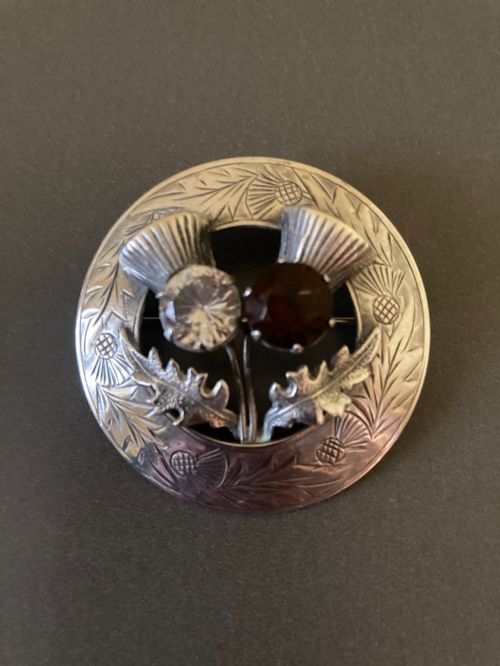
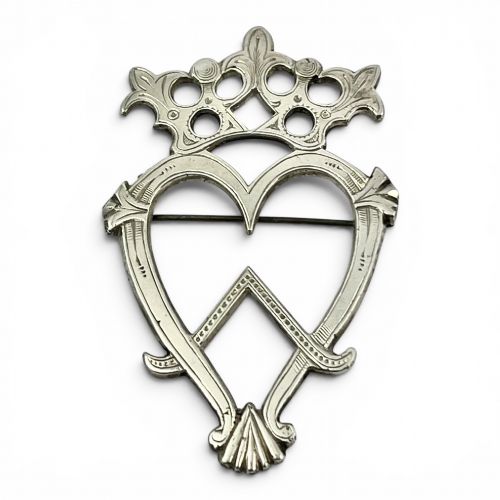
Scottish highland jewellery comprises brooches and pins fashioned into traditional regional forms such as dirks, broadswords, and shields. These pieces originate predominantly from the Victorian era, alongside later mid-century examples from the nineteen-sixties.
A buyer searching for scottish highland jewellery encounters sterling silver and nine-carat gold settings embellished with hardstones. Agate, bloodstone, and jasper feature heavily, often paired with yellow or amber-hued citrine stones.
The objects served both practical and decorative purposes on highland attire, functioning as kilt pins or plaid fastenings. Pieces from the Victorian Scottish revival sit alongside mid-century interpretations influenced by Celtic revival design.
How they were made
Silversmiths shaped sterling silver and nine-carat gold into elaborate edged-weapon and shield motifs, incorporating pierced work and engraved detailing. Stones were cut, polished, and set tightly within metal bezels to form geometric and banded patterns.
Hardstones including Scottish agates, bloodstones, and jaspers were selected for their natural banding and colour variations, then arranged alongside faceted citrines. Metalwork techniques combined traditional hand engraving with secure prong and bezel settings to hold the heavy stones.
Scottish Highland Jewellery Retail Price Guide 2026
Typical asking prices for scottish highland jewellery among the pieces listed under this phrase on Sellingantiques today, from the lower quarter to the upper quarter. They describe what is for sale here now, not the wider market.
Wearing a miniature broadsword brooch safely lets you carry a blade on your lapel without alarming the authorities.
What varies in quality
Quality rests in the intricacy of the metalwork and the depth of hand engraving across the silver or gold surface. Better examples display crisp detailing on sword hilts and basket-hilted broadswords rather than soft or worn casting.
The selection and matching of the hardstones dictate the distinction of a piece, with finely polished agates and clear citrines elevating the overall composition. Substantial weight in the silver and secure stone settings separate standard productions from finer workshop outputs.
John Hart of Iona
The Scottish Highland Jewellery Glossary
- Agate
- A variety of chalcedony showing distinct natural bands of colour. It appears frequently in red, grey, and brown tones within nineteenth-century Scottish brooches.
- Dirk
- A traditional long Scottish dagger. Miniature versions of its hilt inspired the shape of many highland kilt pins.
- Citrine
- A yellow variety of quartz valued for its transparent warmth. It often centres antique silver and gold highland brooches.
- Celtic Revival
- An artistic movement reviving ancient Celtic motifs and interlace patterns. This style heavily influenced Scottish jewellery designs across the nineteenth and twentieth centuries.
- Bloodstone
- A dark green jasper flecked with red spots of iron oxide. Craftsmen utilised this durable stone alongside agate for contrast in highland pins.
Scottish Highland Jewellery: Frequently Asked Questions
What is scottish highland jewellery?
Scottish highland jewellery consists of silver and gold accessories shaped as swords, dirks, and shields, decorated with regional hardstones.
These pieces date largely from the Victorian revival period and mid-century workshops, serving as traditional fastenings for highland dress.
How were these brooches worn?
The pieces functioned primarily as kilt pins and plaid brooches, securing heavy wool garments in place.
Their sturdy pin mechanisms and substantial metal construction allowed them to anchor thick tartans effectively while displaying decorative stones.
How do I identify Victorian pieces?
Victorian examples display characteristic nineteenth-century brooch fastenings, deep hand engraving, and specific hardstone combinations like bloodstone and banded agate.
Stylistic markers often align with the Victorian Scottish revival movement, drawing directly on traditional weaponry and Celtic motifs.
What stones are used?
Makers utilised native hardstones including jasper, bloodstone, and multi-coloured agates alongside faceted yellow citrines.
These minerals were polished smooth and set into silver or gold mounts to create striking contrasts against the metalwork.