


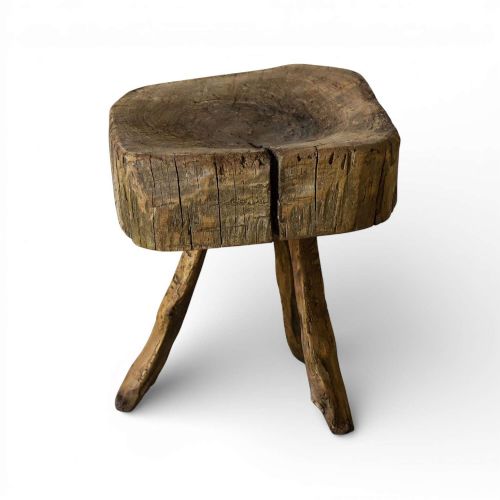

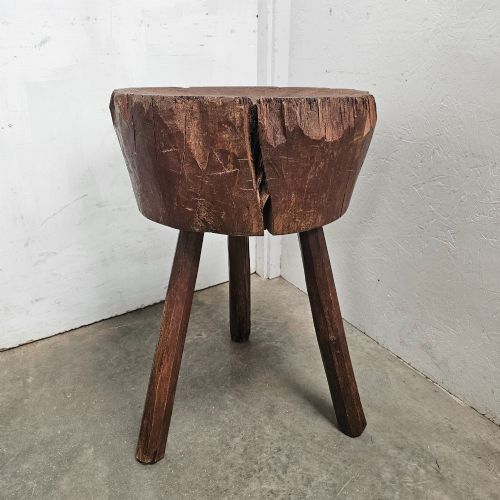


Rustic Wooden Block
A rustic wooden block brings honest utilitarian heritage into a modern interior, offering a deeply textured surface rooted in practical kitchen history.
Rustic Wooden Block
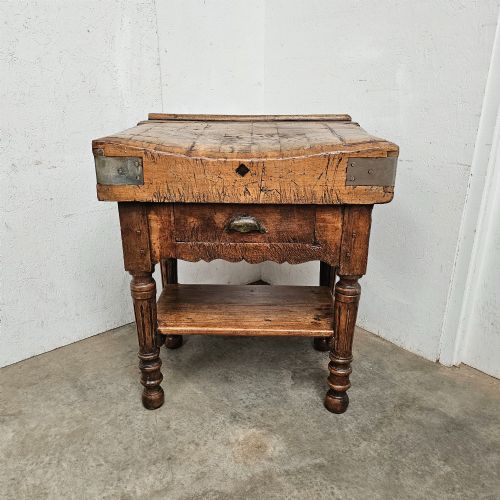
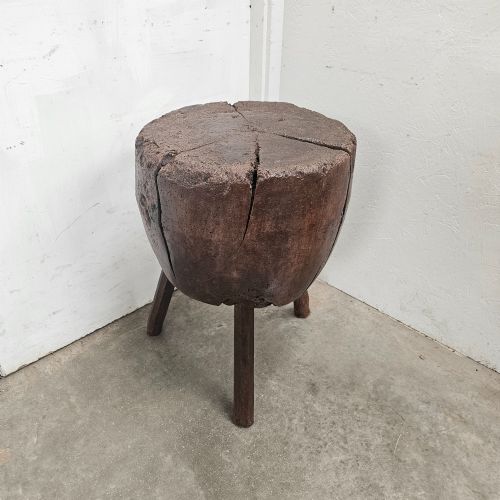
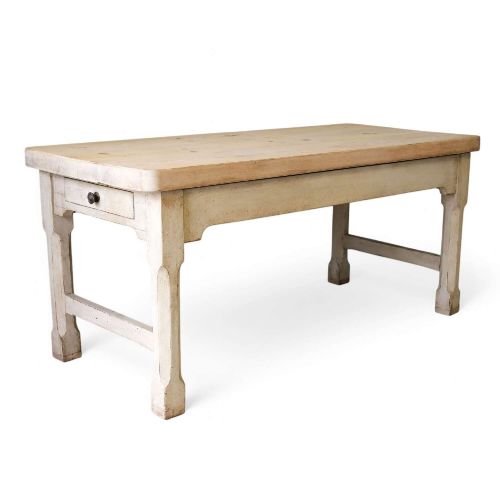
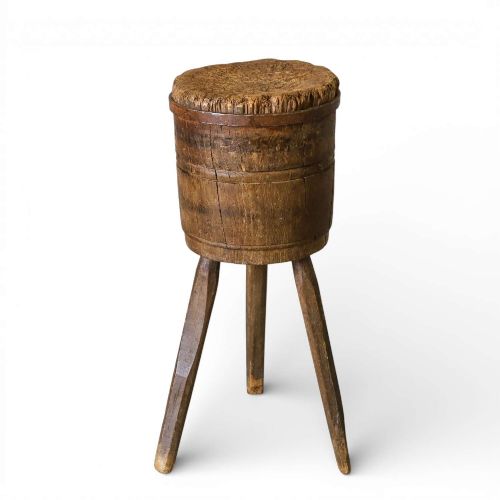
When you search for a rustic wooden block, you are looking at solid prep tables, game blocks, and charcuterie blocks built for hard work. These pieces carry heavy patination from decades of honest service in domestic kitchens, dairies, and commercial spaces.
You are most likely to meet French provincial examples shaped from dense beech, elm, or oak on this page. They frequently appear as thick chopping surfaces supported by original stands, trestle bases, or gnarled legs.
The selection ranges from Victorian country pieces to mid-century formats, encompassing primitive chopping blocks and large kitchen preparation tables. Each item retains the distinct marks of its working past, whether through scrubbed timbers or later paint.
Evaluating quality and proportion
Quality rests in the integrity of the thick top and the originality of its supporting base. Heavy end-grain or plank construction that remains stable and square commands greater interest among collectors.
The character of the surface patination distinguishes superior examples. Deep scarring, authentic weathering, and untouched historical finishes elevate a piece beyond standard utilitarian items.
Rustic Wooden Block Retail Price Guide 2026
Typical asking prices for rustic wooden block among the pieces listed under this phrase on Sellingantiques today, from the lower quarter to the upper quarter. They describe what is for sale here now, not the wider market.
Listings feature woods such as beech, oak, elm, ash, and sycamore paired with iron and pine.
The Rustic Wooden Block Glossary
- Butchers block
- A heavy table or standalone block featuring a thick wooden top designed for chopping meat. These surfaces display deep indentations from years of heavy cleaver work.
- Game block
- A specialised block historically used for preparing game birds and venison. They frequently appear in dense French beech or oak.
- Scrubbed finish
- A surface repeatedly washed with water and stiff brushes to clean the timber. This process leaves the grain raised and pale.
- Trestle table
- A table construction where the top rests on two or more supporting frames. This design provides maximum knee room and stability.
- Vernacular rural
- Objects built by local craftspeople using regional materials to solve practical domestic problems. They lack high-style academic ornament in favour of pure function.
Rustic Wooden Block: Frequently Asked Questions
What is a rustic wooden block?
A rustic wooden block is a heavy-duty prep table or chopping surface built from dense hardwoods like oak, beech, and elm. They originate from domestic kitchens, game larders, and butcher shops where utility dictated form.
These pieces feature thick timber tops bearing the scars of historical food preparation. They survive today as central furniture items in country houses and modern kitchens alike.
How do I clean a vintage chopping block?
Cleaning requires simple scraping and wiping with warm water and mild soap rather than harsh chemical agents. Keeping the timber hydrated with food-safe mineral oil preserves the grain.
Avoid soaking the wood or running it through modern dishwashing methods. Gentle maintenance protects the historic patination accumulated over generations.
Can I use these blocks for food preparation?
Many buyers continue to use these solid hardwood surfaces for daily cooking and chopping tasks. The dense end-grain or thick plank construction remains entirely functional.
You should assess the stability and historical finish of each individual piece before deciding on active culinary use. Some fragile or painted examples suit decorative placement better.
How do I date a 19th-century preparation table?
Dating relies on examining the tool marks left on the timber, the style of the leg construction, and the type of fasteners used. Hand-sawn boards and pegged joints often point toward earlier periods.
Wear patterns also tell a story of age and intensity of use. Comparing the top to the base helps determine if the components remain original to one another.