





Rustic Umbrella Rack
A rustic umbrella rack brings immediate character to an entrance hall, offering sturdy utility crafted from oak, walnut, carved wood, and antler.
Rustic Umbrella Rack
A rustic umbrella rack encompasses hall stands, stick stands, and umbrella stands designed to hold wet walking gear and coats in hallways. Buyers searching this phrase encounter substantial nineteenth-century pieces alongside Victorian and Arts and Crafts examples.
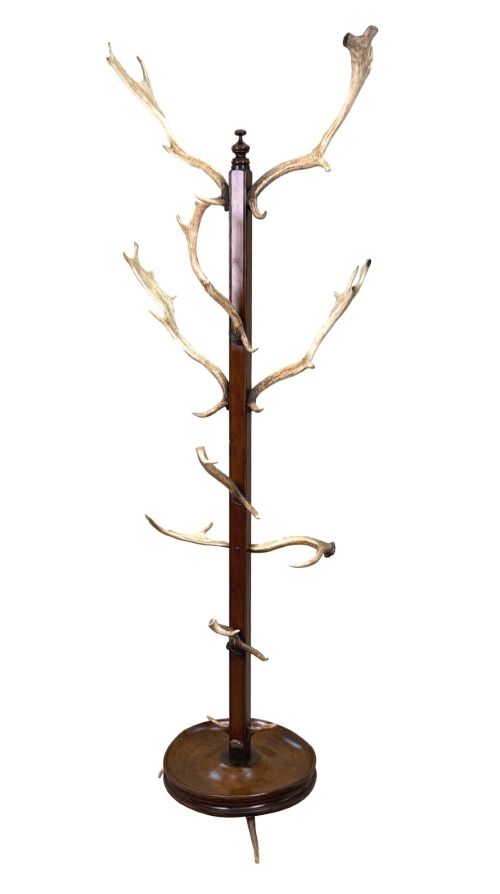
The materials reflect a practical, country house aesthetic, ranging from solid oak and walnut to carved lindenwood and cast iron. Many incorporate natural elements such as deer antlers and cow horns directly into the framework.
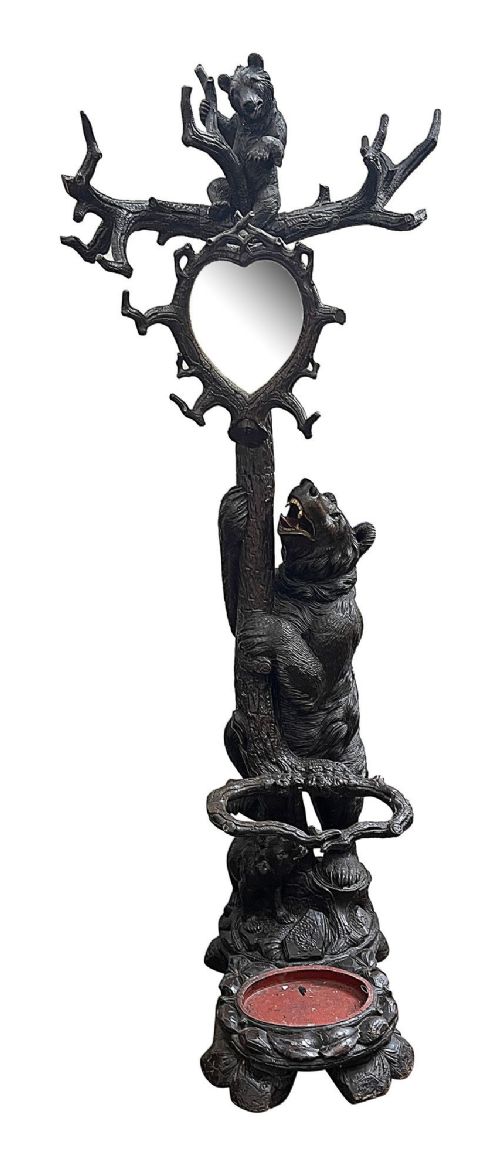
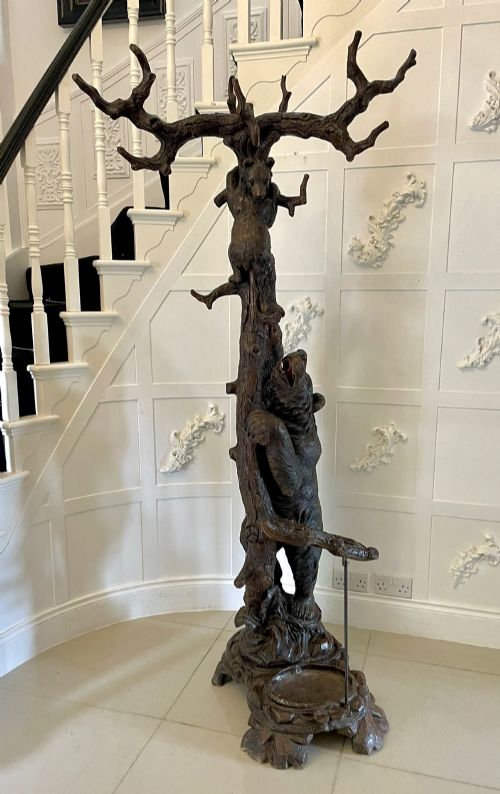
Black Forest carvings dominate the sculptural end of these pieces, featuring bears, foxes, and eagles integrated with stick holders and coat hooks. Simpler rectangular oak stands with drop trays represent the more restrained domestic versions.
How they were made
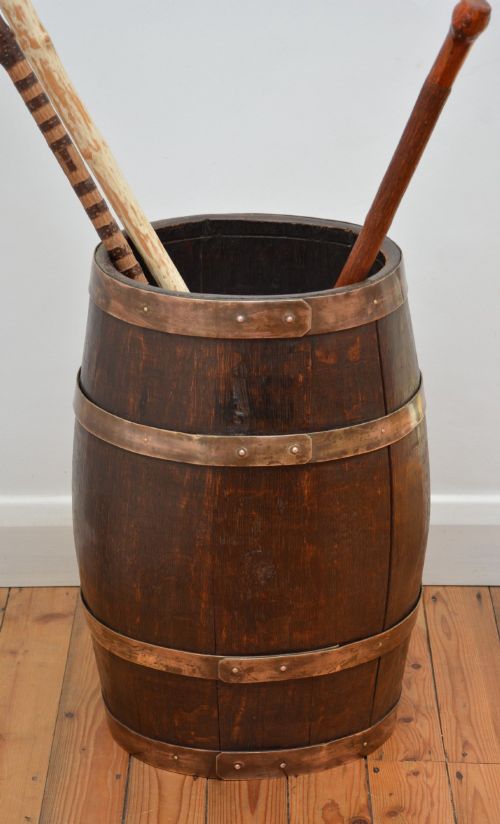
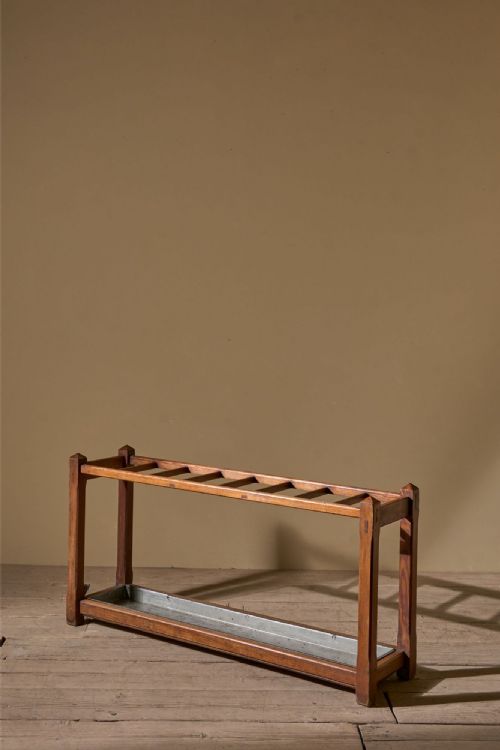
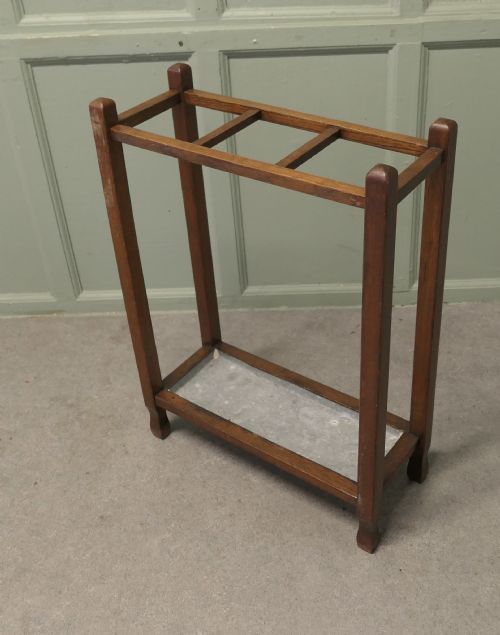
Carpenters utilised solid timbers like oak, walnut, and pine, constructing rectangular frames with canted corners and dedicated four-section dividers. Zinc liners and metal drop trays were fitted beneath to catch water from wet umbrellas.
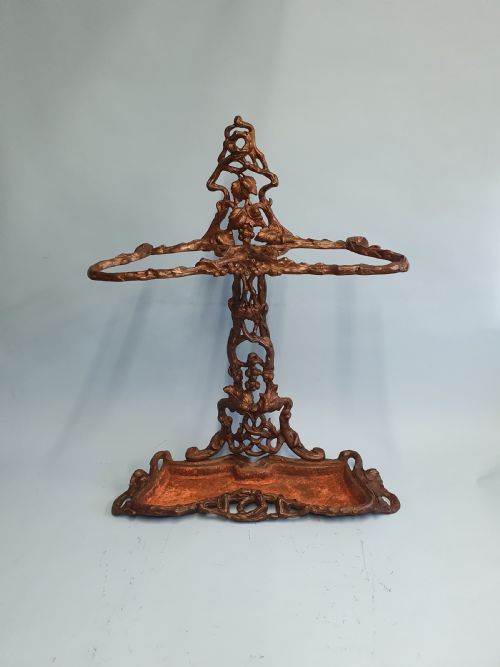
Carvers shaped lindenwood by hand to produce three-dimensional Black Forest animal figures, integrating natural antlers and horns as functional hooks for hats and coats. Foundries cast iron components for heavier Victorian umbrella stands requiring robust structural support.
Rustic Umbrella Rack Retail Price Guide 2026
Typical asking prices for rustic umbrella rack among the pieces listed under this phrase on Sellingantiques today, from the lower quarter to the upper quarter. They describe what is for sale here now, not the wider market.
Listings feature nineteen-century pieces incorporating oak, walnut, cast iron, and carved wood alongside natural antlers.
What varies in quality
The depth and animation of the wood carving separate ordinary production from exceptional Black Forest work, particularly in the rendering of animal forms and foliage. Natural elements like antlers and horns show greater quality when mounted securely and matched in size and symmetry.
Structural integrity in solid oak and walnut pieces depends on the joinery of the frame and the retention of original zinc or metal drop trays. Proportion and scale also dictate quality, ranging from long, simple pine racks to large pair formats intended for country houses.
A. Kenrick & Sons
The Rustic Umbrella Rack Glossary
- Hall stand
- A piece of furniture combining coat hooks, a mirror or panel, and a stick or umbrella stand at the base. These stood in entrance halls to receive outdoor wear.
- Stick stand
- A compact piece designed specifically to hold walking sticks and umbrellas upright. They often feature partitioned top rails and removable base trays.
- Drop tray
- A metal or zinc pan placed at the bottom of an umbrella rack to collect water from wet items. Original trays preserve the integrity of the piece.
- Gothic Revival
- An architectural and decorative style drawing inspiration from medieval design. It appears in umbrella stands through pointed arches and ecclesiastical motifs.
Rustic Umbrella Rack: Frequently Asked Questions
What is a rustic umbrella rack?
A rustic umbrella rack is a hallway furnishing built from timber, iron, or carved wood designed to store wet umbrellas and walking sticks. These pieces often include hooks for hats and coats.
Examples range from simple nineteenth-century pine stands to elaborate Black Forest carved bear designs and oak frames set with animal horns.
How were umbrella racks used?
They stood in entrance halls and vestibules of nineteenth-century homes to keep wet outerwear and walking aids organised near the front door. The built-in trays collected rainwater and mud.
Heavier examples combined multiple functions, offering a central mirror, storage for walking gear, and coat hooks for visitors and family members.
How do I care for wooden stands?
Keep wooden hall stands away from direct heat sources and sudden temperature changes to prevent the timber from splitting. Regular dusting preserves the carved details and polish.
Ensure that zinc or metal drop trays are emptied and dried after catching water from wet umbrellas to protect the surrounding wood from moisture damage.
How do I identify Victorian pieces?
Victorian umbrella racks often display period characteristics such as Gothic Revival motifs, cast iron construction, or heavy oak framing. The presence of nineteenth-century materials helps date the furniture.
Construction methods, such as traditional joinery and the use of period metals like zinc and cast iron, confirm the nineteenth-century origins of these stands.