
Rustic Pine Writing Table
A rustic pine writing table offers straightforward utility and honest vernacular charm, bridging the gap between practical workspace and warm domestic furniture.
Rustic Pine Writing Table
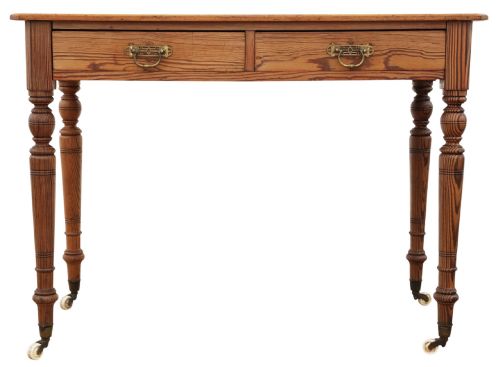
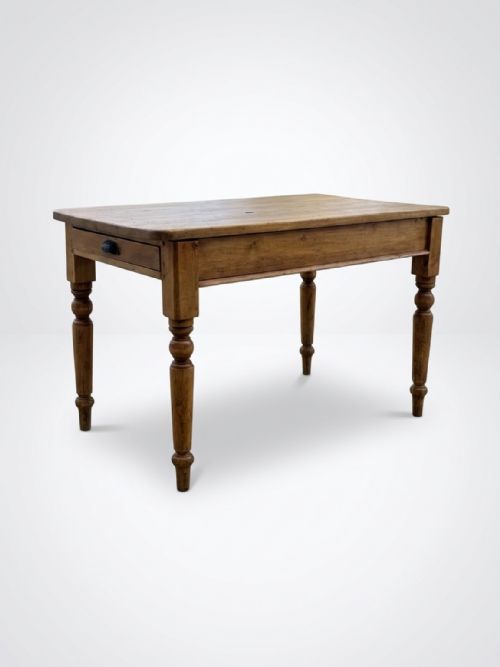
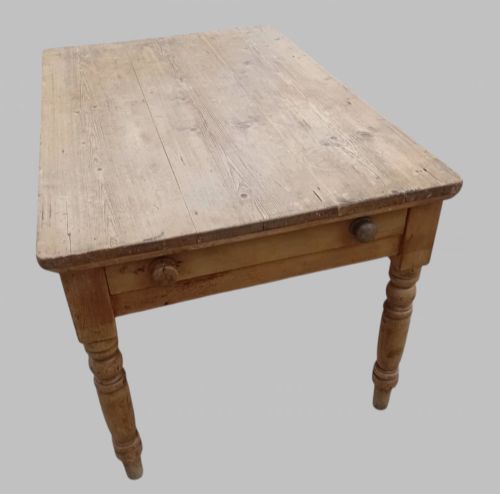
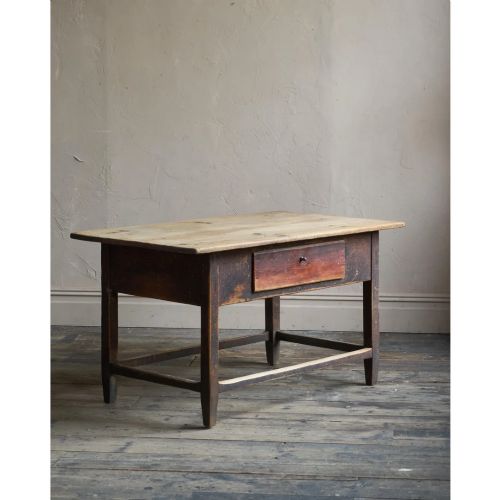
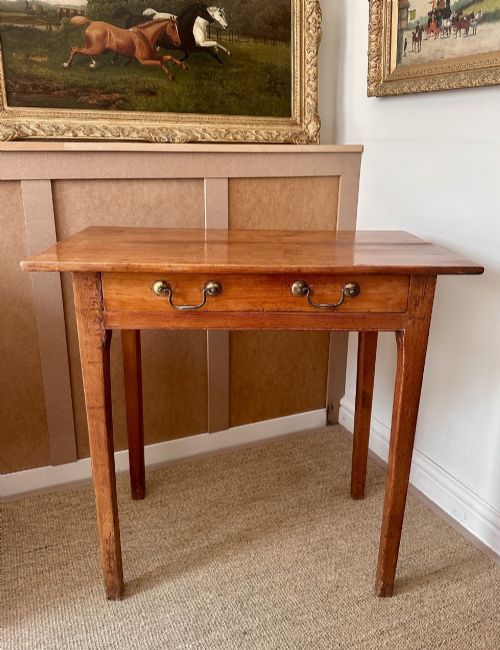
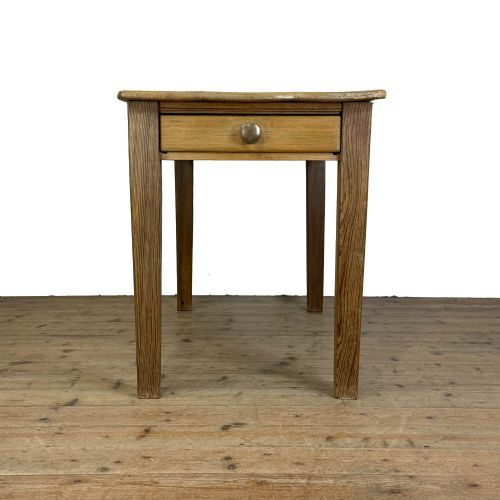
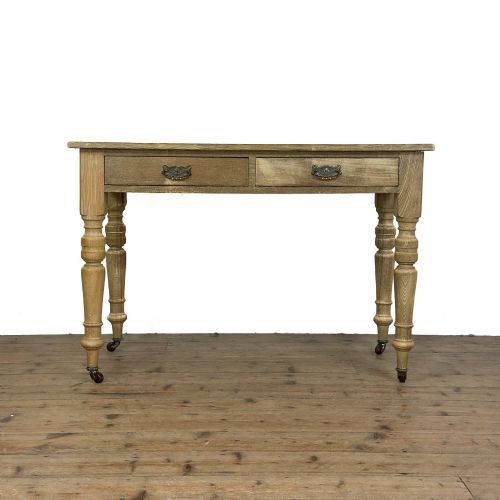
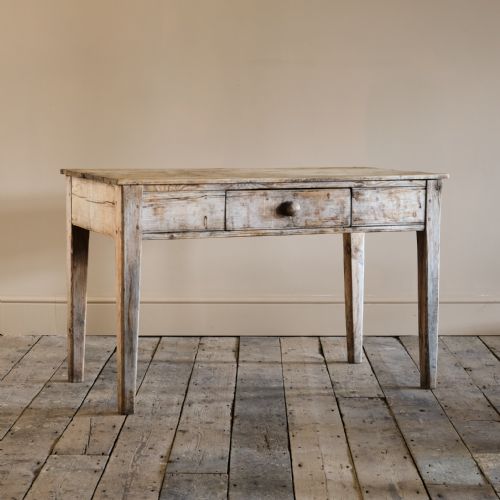
A rustic pine writing table brings together the utility of a desk and the unpretentious character of nineteenth-century domestic furniture. Buyers searching for this phrase typically find straightforward work surfaces equipped with single drawers or simple friezes, suited for writing or light administrative tasks.
The selections span various regional traditions, including English country pieces, French provincial forms, and Scandinavian painted examples. Most date from the nineteenth century, incorporating periods such as the Victorian era alongside occasional Georgian and early twentieth-century pieces.
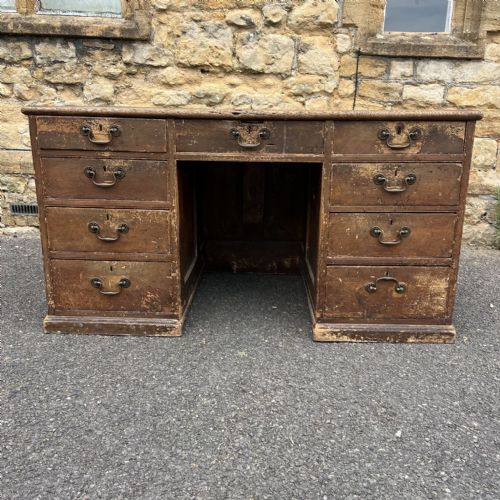
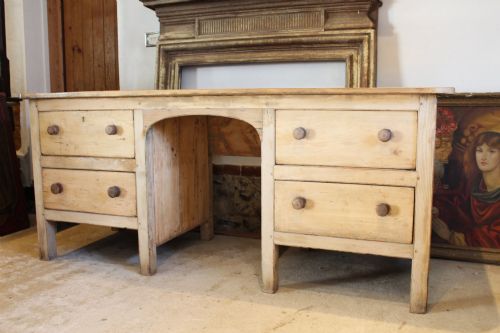
Forms vary from dedicated kneehole desks and school teacher tables to adaptable side tables and estate desks that double as writing surfaces. These items reflect everyday historical use, showing the practical requirements of past households and offices through honest construction.
How they were made
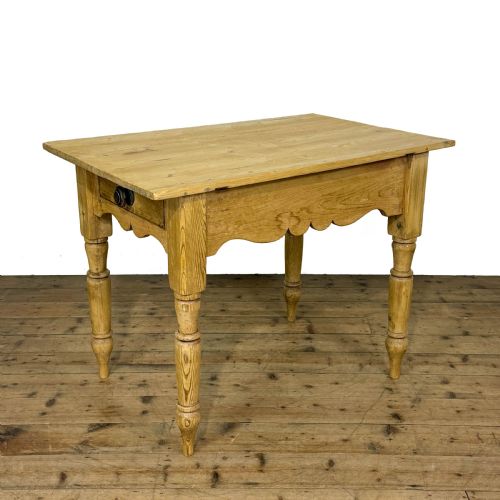
Makers relied primarily on native pine, occasionally incorporating pitch pine for increased durability, alongside secondary timbers like oak, sycamore, and elm for structural reinforcement or tops. Construction methods prioritise function, utilising dovetailed drawer joints and sturdy box stretchers or plain turned legs.
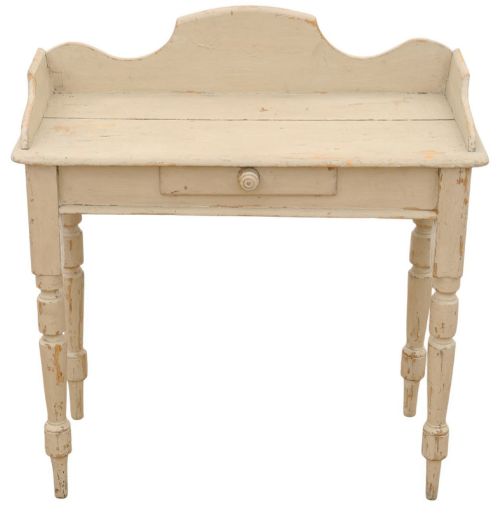
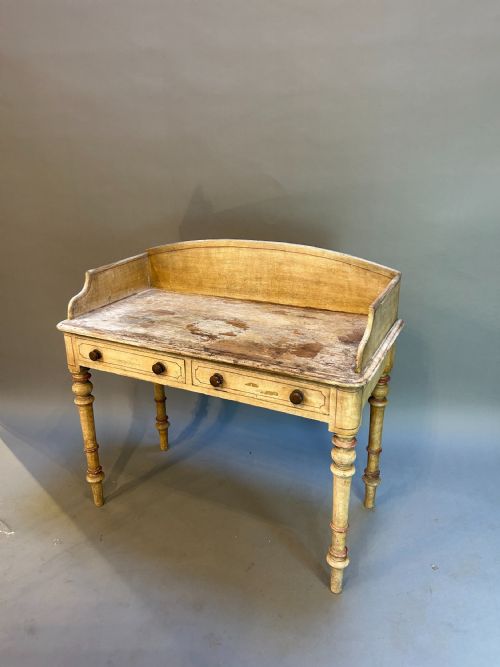
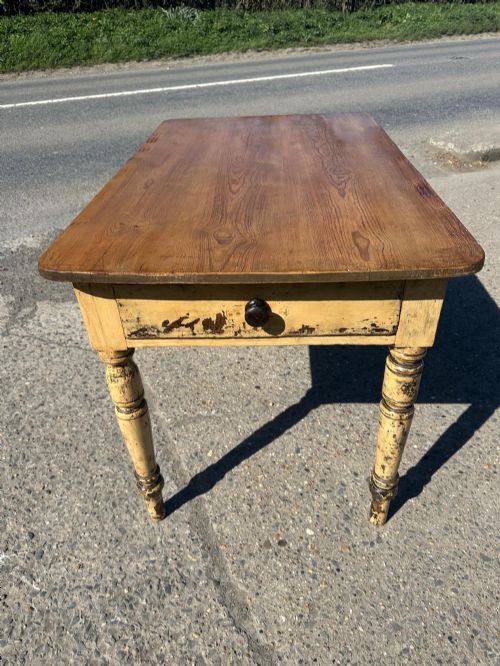
Surfaces frequently display evidence of their working history through original paint, scraped finishes, or scrubbed timber tops left bare for daily scrubbing. Metal components remain utilitarian, featuring simple iron brackets or brass pulls that serve the primary function of the desk.
Listings feature pine alongside materials such as brass, paint, pitch pine, iron, oak, and sycamore across various table formats.
What varies in quality
Quality in these pieces rests upon the integrity of the original construction and the preservation of authentic surface finishes. Examples retaining undisturbed original paint or honest scrubbed patination command greater interest than those stripped down or heavily altered over time.
Proportion and timber selection also differentiate the range, with denser pitch pine or carefully matched boards offering superior structural stability. Fine quality manifests in well-fitted drawers that operate smoothly within the frieze and sturdy joinery that avoids excessive modern intervention.
The Rustic Pine Writing Table Glossary
- Frieze
- The horizontal structural band beneath the table top, frequently housing one or more drawers in writing tables.
- Scrub-top
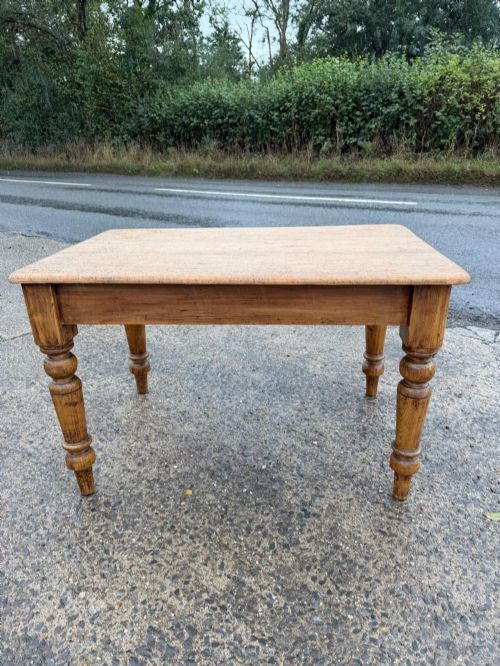
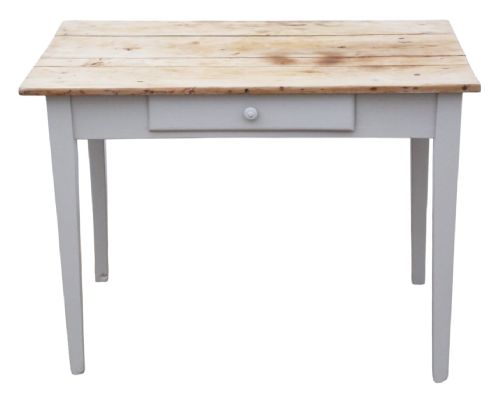
- A solid timber table top left unpolished and bare to withstand frequent scrubbing with water and sand in traditional sculleries and kitchens.
- Box stretcher
- An interconnecting framework of wooden rails near the base of the legs that adds rigidity and strength to the piece.
- Pitch pine
- A heavy, resinous variety of pine prized for its durability, distinct grain pattern, and resilience against wear.
- Kneehole desk
- A configuration featuring a central recess for the user's legs, flanked by banks of drawers or upright supports.
Rustic Pine Writing Table: Frequently Asked Questions
How do I use a rustic pine writing table today?
These tables function well as compact laptop desks in home offices, studies, or living areas. Their modest proportions allow them to fit into tighter spaces while providing a functional surface with drawer storage.
To preserve the surface, use leather desk pads or blotters when writing heavily. This protects historic timber or original painted finishes from ink stains and deep scratches.
What is the difference between a side table and a writing table?
Writing tables generally incorporate functional drawers beneath the top and provide adequate clearance and depth for sitting comfortably to write. Side tables are typically shallower and serve primarily for display or general surface storage.
Many nineteenth-century vernacular pieces overlap in utility, serving interchangeably as side tables, desks, or dressing tables depending on the room they inhabited.
How do I care for an original painted finish?
Dust the surface regularly with a soft, dry cloth to prevent dirt accumulation. Avoid harsh chemical cleaners or modern polishes that can degrade historical paint layers.
Maintain a stable indoor environment away from direct heat sources and strong sunlight to prevent the timber from warping and the historic paint from flaking.
How can I tell a Victorian pine table from an earlier piece?
Georgian and early nineteenth-century pieces often display tighter joinery details and specific secondary woods like sycamore or oak within the drawer construction. Victorian examples frequently utilise softer native pine and exhibit the broader industrial standardisation of the later nineteenth century.
Examining the tool marks, drawer construction methods, and nail types helps clarify the approximate decade of manufacture alongside stylistic cues.