
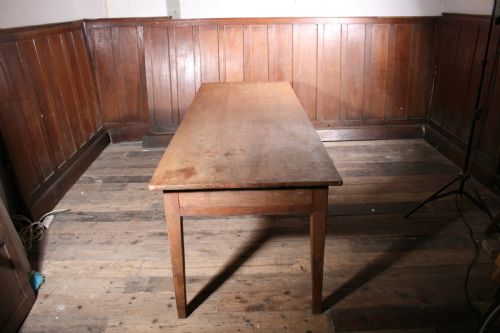
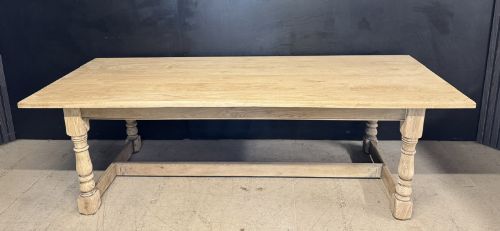
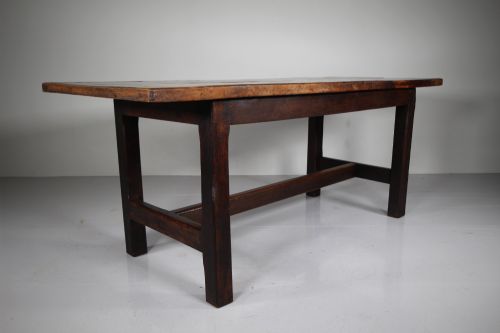
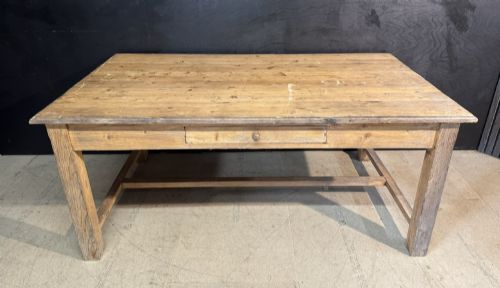
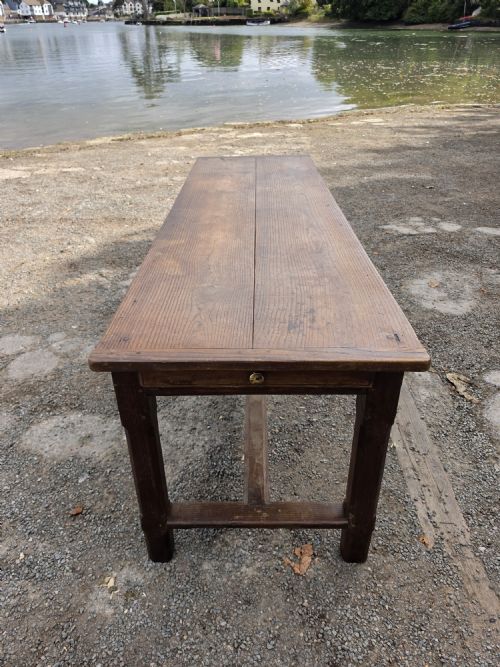
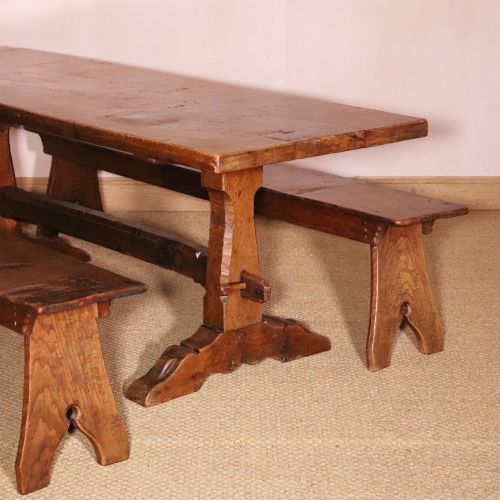
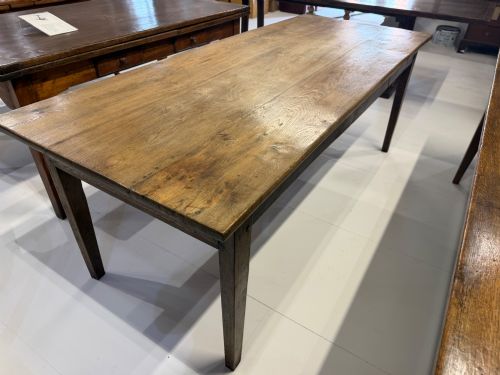
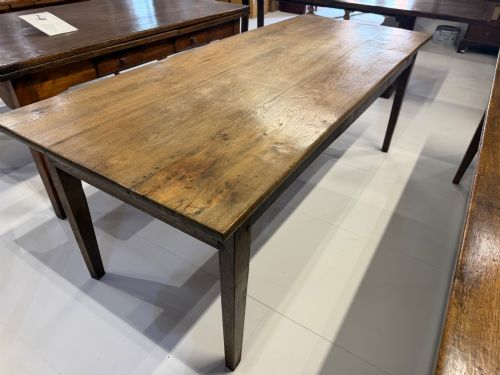
Rustic Country Refectory Table
A rustic country refectory table brings sturdy domestic heritage into a room, offering broad timber surfaces built for heavy daily use.
Rustic Country Refectory Table
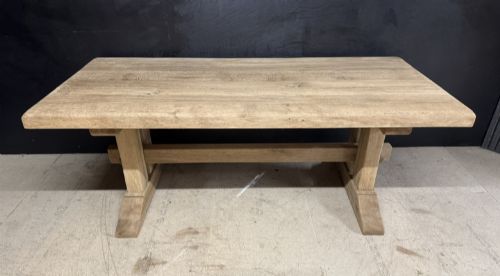
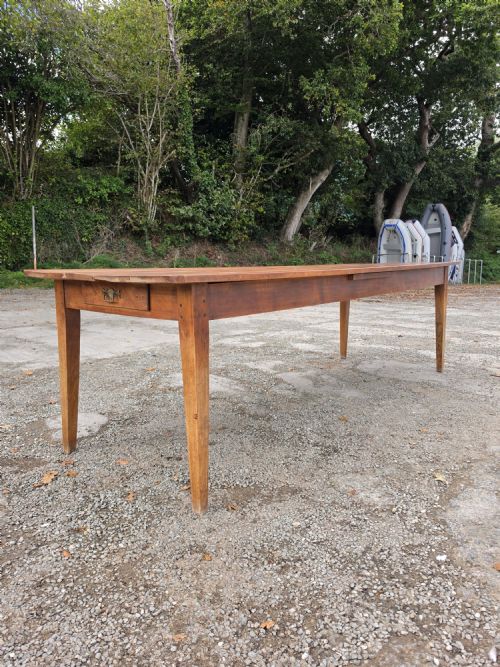
A rustic country refectory table represents a long, substantial form designed historically for communal dining in domestic or institutional settings. These pieces carry the visual weight of generations of gatherings, functioning as the central working surface of a kitchen or dining room.
The versions most common on this page span the eighteenth and nineteenth centuries, alongside early twentieth-century interpretations. They draw upon English, French, and Spanish provincial traditions, reflecting the utilitarian needs of rural households.
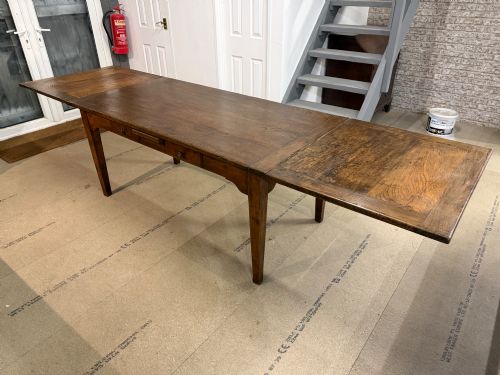
Makers constructed these tables primarily as dining tables, serving tables, or kitchen tables, utilising robust timber construction to withstand daily labour and family meals. Their forms range from single plank tops to double extending designs and harvest variants.
How they were made
Carpenters built these tables using solid hardwoods and softwoods selected for local availability, prominently oak, pine, elm, and fruitwoods such as cherrywood, pear wood, and walnut. These timbers provided the structural integrity needed for heavy tops and sturdy underframes.
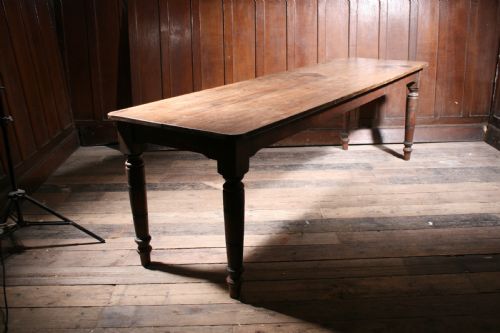
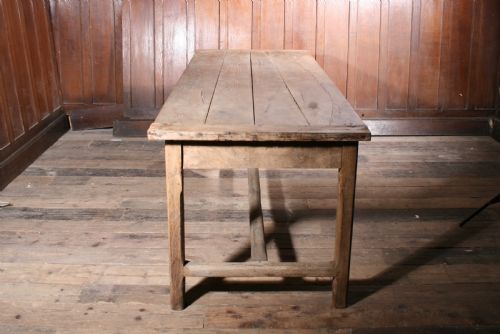
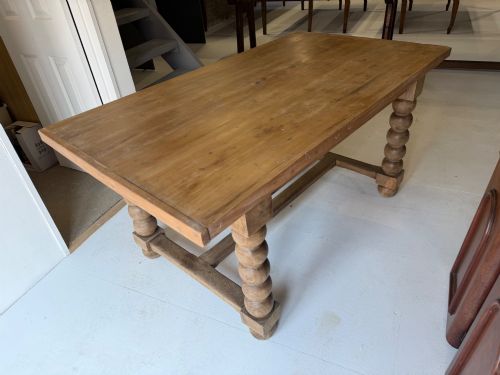
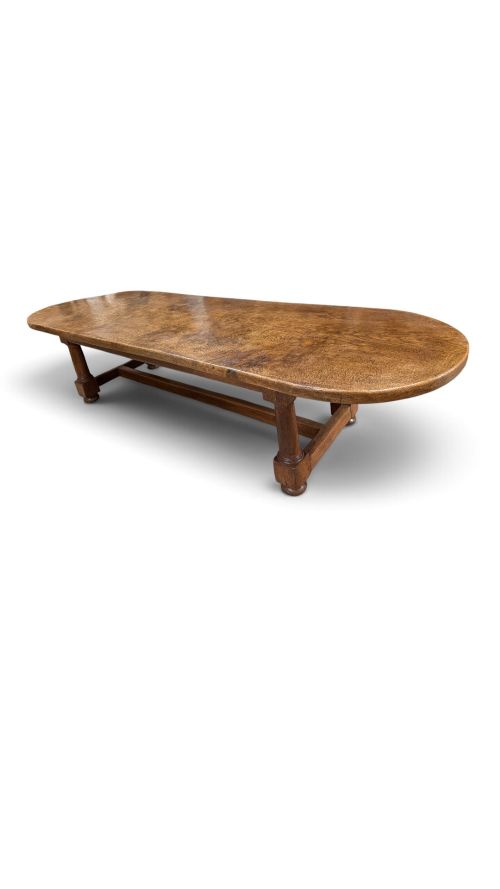
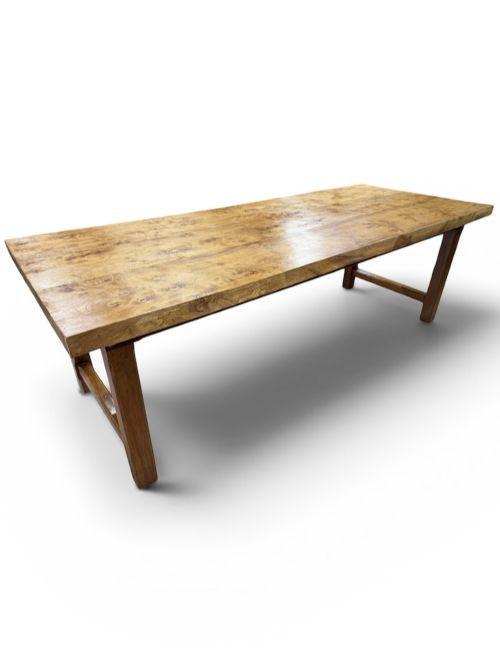
Construction techniques prioritized utility, utilising thick boards for table tops - sometimes arranged as single planks or two-board configurations - supported by substantial legs that include tapered, bobbin, or plain turnings. Iron fittings occasionally reinforced the joints in heavier refectory and serving formats.
Listings span the eighteenth, nineteenth, and early twentieth centuries, featuring solid oak, pine, elm, fruitwood, and cherrywood.
What varies in quality
Quality in these tables rests primarily in the selection and proportion of the timber, particularly where single plank or broad two-board tops display uniform grain and rich natural patina. Tables constructed from dense hardwoods like oak or aged fruitwood demonstrate superior longevity compared to lighter utility pieces.
The finesse of the underframe and leg turning distinguishes regional workshop standards, where deliberate joinery supports the substantial weight above without excessive bulk. Tables retaining original surface treatments, whether natural wax or aged finishes, maintain greater integrity of period character.
The Rustic Country Refectory Table Glossary
- Farmhouse table
- A domestic utility table built for everyday kitchen work and family dining. These pieces typically display straightforward construction using regional timbers like pine or oak.
- Harvest table
- A large dining table historically utilised during seasonal agricultural gatherings. They often incorporate long boards and generous seating capacity.
- Plank top
- A table top constructed from wide boards laid lengthwise. Single plank versions are particularly valued for the breadth of the timber used.
- Bobbin leg
- A turned furniture leg shaped to resemble a series of rounded bobbins or spools. This decorative turning technique appears frequently on seventeenth and eighteenth-century joinery.
Rustic Country Refectory Table: Frequently Asked Questions
How are these tables cleaned?
Maintain the surface with soft cloths and traditional waxes appropriate for aged timber.
Avoid excessive moisture or harsh modern detergents that strip the historical patina from the wood.
Will an antique refectory table seat eight people?
Many examples measure eight feet or longer, easily accommodating eight to ten diners along their length.
Check the clearance beneath the aprons to ensure proper legroom for seated guests.
What is the difference between oak and pine versions?
Oak provides a dense, heavy structure with prominent grain patterns suited for formal and robust rustic settings.
Pine offers a lighter tone and softer texture typical of traditional English and French provincial harvest rooms.
Can these tables fit in modern kitchens?
Their substantial proportions make them ideal focal points for open-plan dining spaces and large modern kitchens.
Measure the room carefully to allow adequate clearance for chairs around the entire perimeter.