

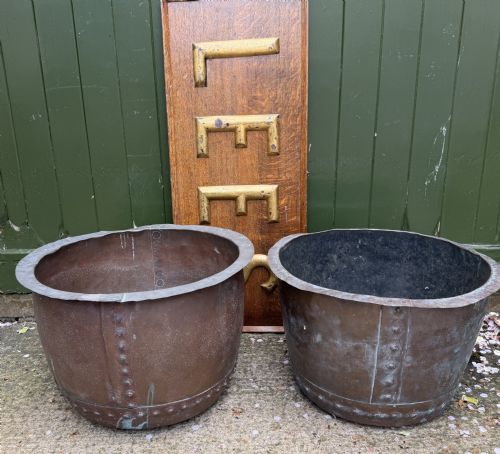


Rustic Copper Boiler
A rustic copper boiler brings heavy metal warmth to a room, holding centuries of hard utility in its hammered curves and verdigris surface.
Rustic Copper Boiler
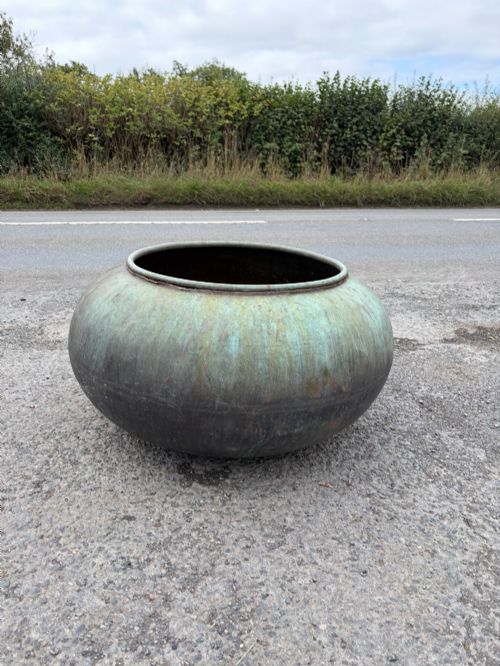
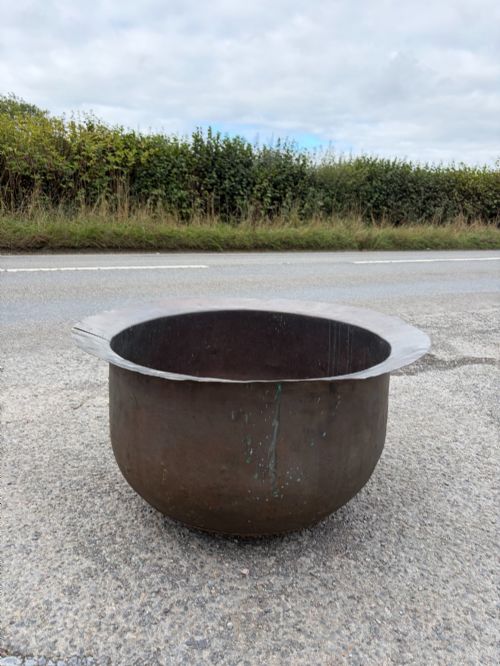
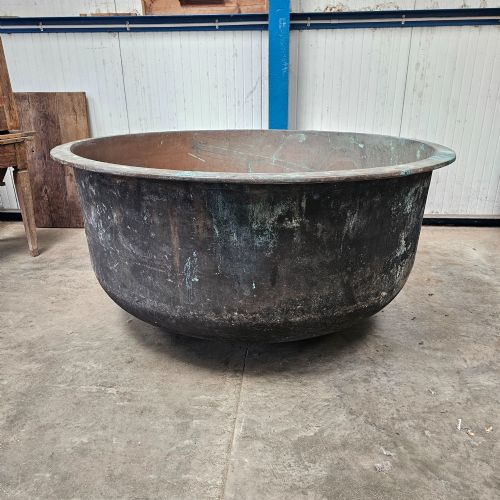
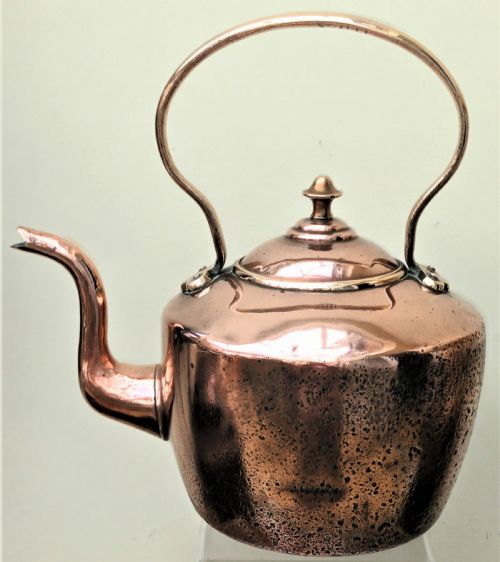
A rustic copper boiler is a substantial vessel forged for heavy daily labour, spanning periods from the 18th century to the 19th century and into the early 20th century. These pieces appear in forms such as large pots, cauldrons, wash tubs, cheese vats, and cooking vessels.
Most examples found here hail from the Victorian era and the Georgian period, often bearing the marks of utilitarian work in country houses and farmsteads. They serve today primarily as large log bins, garden planters, and decorative floor vessels.
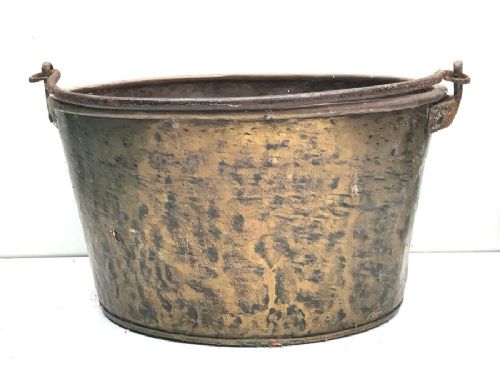
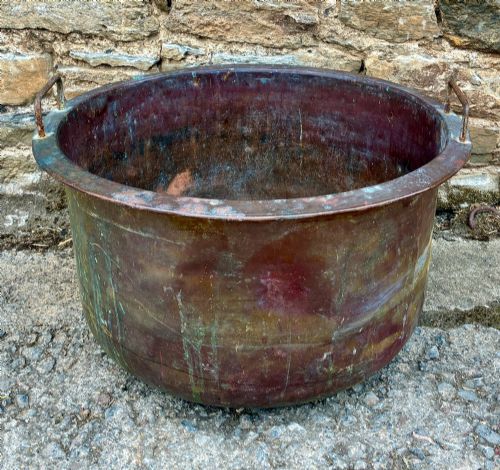
Makers shaped these items for practical domestic and agricultural tasks, utilising robust designs that transition easily into contemporary interior and exterior settings. The forms range from deep cylindrical tubs to rounded cauldrons with heavy swing handles.
How they were made
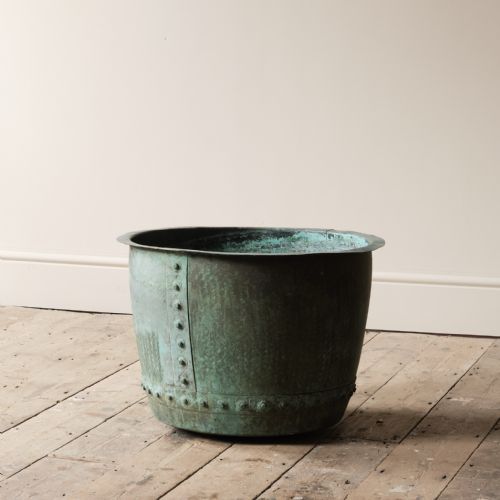
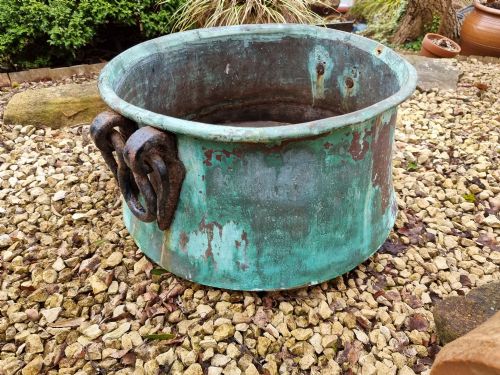
Coppersmiths constructed these vessels primarily from heavy gauge sheet copper, joining seams with hand-hammered rivets to withstand extreme heat and heavy loads. Many pieces incorporate robust iron, wrought iron, and cast iron handles, bands, or swing bails to support their immense weight.
Surface finishes developed naturally through decades of use and exposure, leaving behind a weathered patina, original paint traces, and mineral verdigris. Metalworking techniques relied heavily on manual beating and shaping, resulting in undulating walls and individual tool marks on each item.
Listings feature items spanning the Georgian period, the 19th century, and up to the 1920s, constructed mainly from copper, iron, and brass.
What varies in quality
Quality rests in the integrity of the original construction, specifically the weight of the copper sheet and the strength of the riveted joints. Thicker metal holds its structural form better over centuries, preventing deep warping and preserving the intended silhouette of the vessel.
The aesthetic appeal of the surface finish dictates distinction, particularly the depth of the weathered patina and the natural accumulation of verdigris. Pieces retaining sturdy iron swing handles and uncompromised structural bases command greater presence in a room.
The Rustic Copper Boiler Glossary
- Verdigris
- A green patina formed naturally on copper through atmospheric oxidation over long periods. This chemical layer provides a distinct visual characteristic valued for its rich colour.
- Patina
- The surface sheen and colour alteration acquired by metal and wood through age, handling, and exposure to the elements. It serves as a visual record of the object's longevity.
- Riveted
- Joined together by metal pins hammered flat to secure overlapping sheets of copper. This construction method ensures permanent strength in heavy utilitarian vessels.
- Cauldron
- A large metal pot with a wide opening and a swing handle, traditionally used over an open fire for boiling liquids. Their immense size makes them striking decorative floor pieces today.
Rustic Copper Boiler: Frequently Asked Questions
What were copper boilers originally used for?
These large vessels were heated over fires to boil water for household laundry, dyeing textiles, or large-scale food preparation in domestic and agricultural settings.
Their heavy construction allowed them to retain heat efficiently and endure the rigorous demands of daily utilitarian labour.
How do I clean a rustic copper boiler?
Most collectors prefer to leave the accumulated verdigris and weathered patina intact because these surface layers demonstrate age and authenticity.
Wash the metal gently with mild soap and warm water if needed, avoiding harsh chemical abrasive polishes that strip away the historical finish.
Can I use these boilers outdoors as planters?
Many of these sturdy vessels function exceptionally well as garden planters or log bins, provided they are placed on stable surfaces.
Ensure proper drainage if planting directly inside the copper, or use the vessel simply as an outer decorative cachepot.
How do I date an antique copper boiler?
Dating relies heavily on observing the construction techniques, such as the style of the hand-beaten rivets, the presence of iron swing handles, and general form.
Georgian and Victorian examples often display distinct hand-worked characteristics that separate them from later industrial machinery production.