


Rural Countryside Wall Art
Rural countryside wall art brings the quiet expanse of farmland and pastoral riverbanks directly into an interior.
Rural Countryside Wall Art
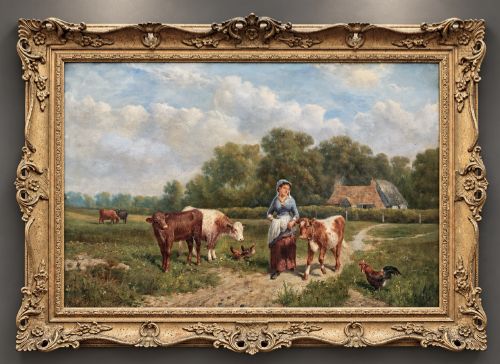
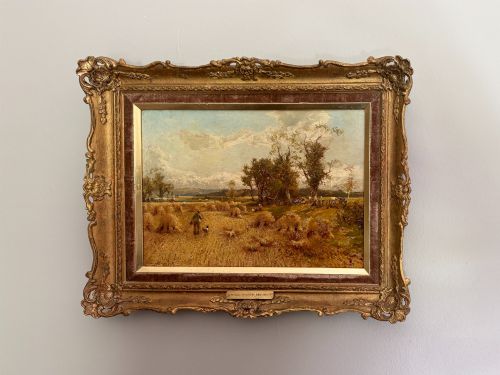
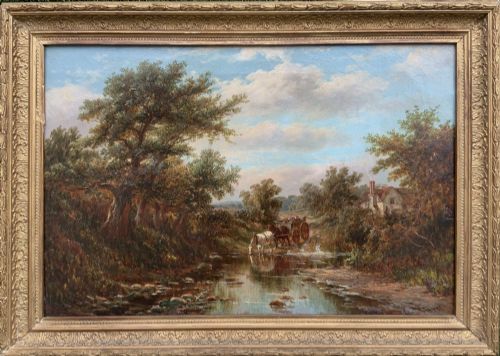
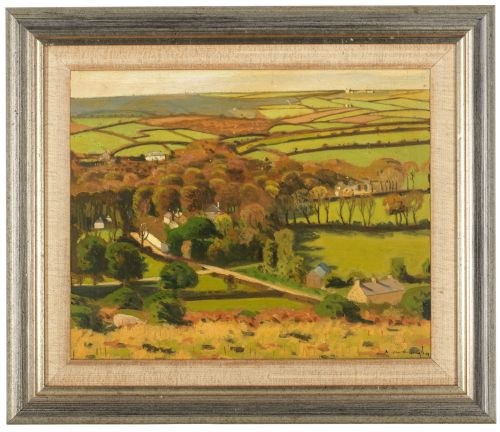
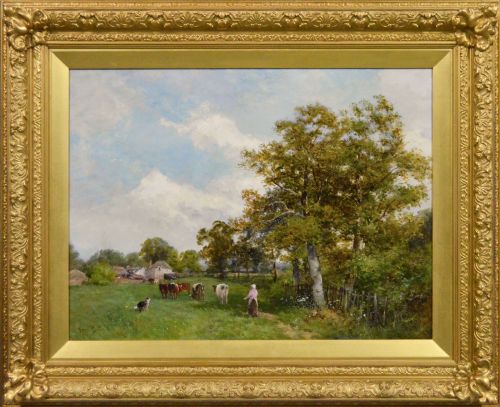
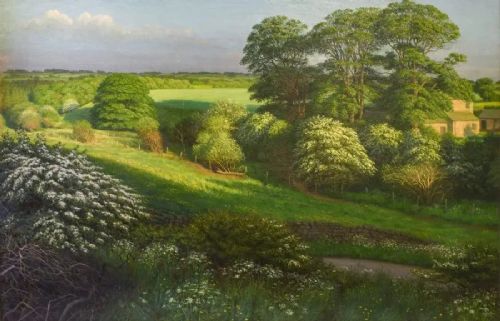
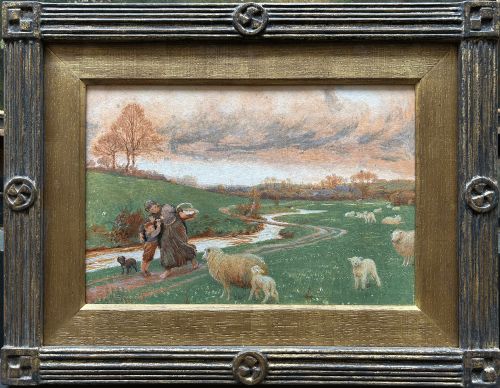
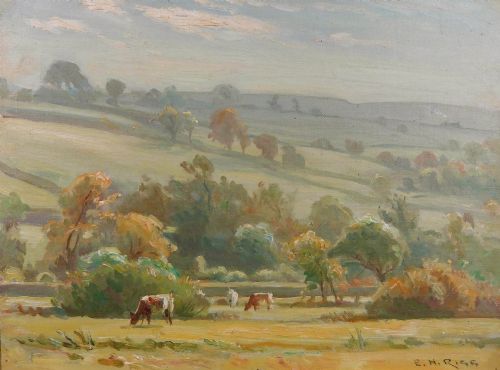
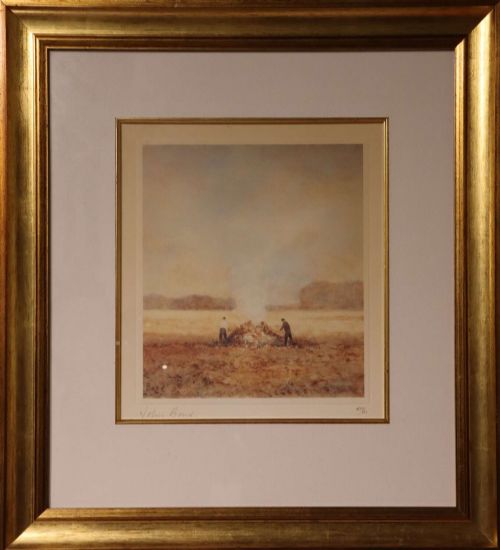
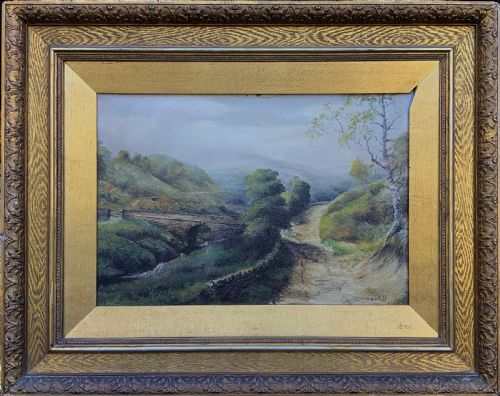
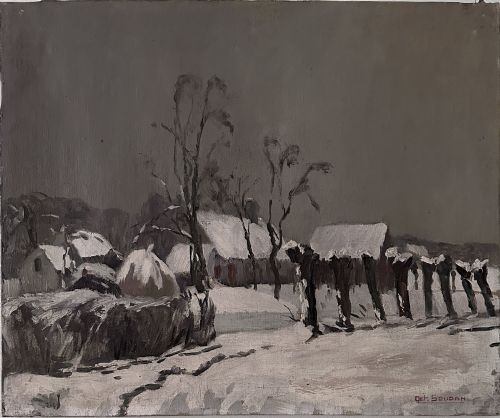
When a buyer looks for rural countryside wall art, they encounter framed pastoral scenes depicting agricultural fields, sheep, horses and thatched cottages. The pieces span from the nineteenth century through the mid twentieth century, capturing changing interpretations of agrarian life.
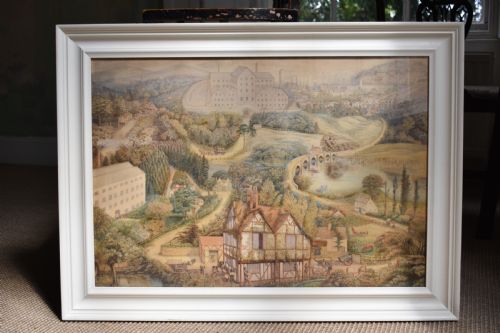
The most common formats on this page are oil paintings on canvas and panel, alongside delicate watercolours on paper. These works represent British Impressionism, the English School and traditional country scenes executed by named artists and regional painters.
Materials and Technique
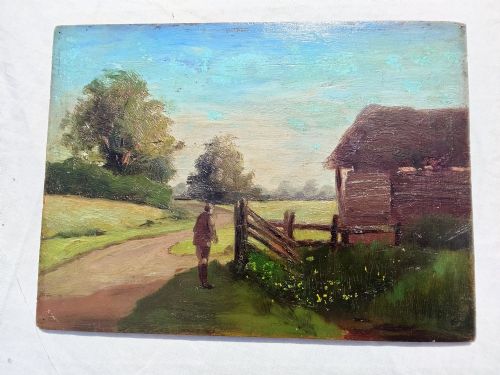
Artists painted primarily with oil paint on stretched canvas or wooden board, occasionally employing gesso grounds to prepare the wooden surfaces. Watercolours on paper provide a lighter alternative, often finished with framing and glass protection.
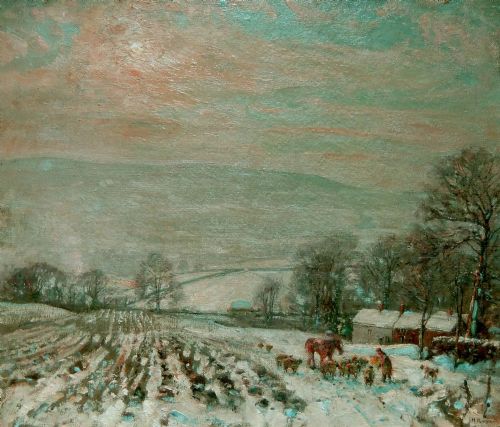
Brushwork varies from the smooth, detailed realism of the Victorian pastoral tradition to looser, post-impressionist applications seen in later twentieth-century works.
Materials span oil on canvas, oil on wooden board, watercolour on paper, and glass-fronted frames.
Factors of Quality
The distinction between ordinary and superior works rests on the artist's handling of natural light and atmospheric depth within the landscape. Works by recognised painters display a confident command of colour and composition that brings domestic farmyards and open fields to life.
Materials also influence the caliber of a piece, with securely stretched canvases and well-preserved watercolours retaining their original pigment vibrancy more effectively than neglected examples.
Herbert Royle·Robert Morson Hughes·David Bates·Raymond Booth·Frederick Walker·Ernest Higgins Rigg·John Bond·Owen Bowen·Charles Clair·Edgar Woollatt·Henry Charles Fox·Reginald Grange Brundrit·William Hoggatt·William Sydney Cooper·M. C. Hider·Robert John Hammond·Johannes Philippus Galjaard·William Greaves·Henry Bailey·John Linnell·James William Booth·Lorenzo Headley·William Joseph Boyes·Helmut Reuter·William Langley
The Rural Countryside Wall Art Glossary
- Oil on Canvas
- Pigment mixed with drying oil applied to a woven fabric support. This combination allows for rich colour blending and textured brushwork.
- Watercolour Painting
- Pigments suspended in a water-soluble vehicle applied to paper. It offers translucent washes and delicate detail.
- Gesso
- A paint mixture consisting of a binder mixed with chalk, gypsum, or pigment. It served as a smooth preparation layer for wooden boards.
- British Impressionism
- A painting style influenced by French movements focusing on light and everyday subjects. British practitioners applied these principles to rural landscapes.
- English School
- A collective term for artists working within a shared national tradition. These painters recorded regional topography and rural scenes.
Rural Countryside Wall Art: Frequently Asked Questions
What periods do these rural paintings cover?
The selection spans from the nineteenth century through Victorian pastoral works and into mid-twentieth-century interpretations.
Each era brings distinct shifts in colour palette and brush technique to the countryside subject matter.
How should I hang an oil painting?
Hang oil paintings away from direct sunlight and fluctuating heat sources to protect the canvas and paint layers.
Ensure the wall fixings match the weight of the frame and canvas.
Are watercolours framed differently than oils?
Watercolours on paper require glass protection and mount boards to keep the surface away from humidity.
Oil paintings on canvas generally remain open to the air within their frames.
How do I identify a Victorian landscape?
Victorian landscapes often feature narrative elements like labourers, sheep or cottages rendered with careful attention to detail.
The framing and preparatory techniques on the reverse often point to nineteenth-century workshop practices.