


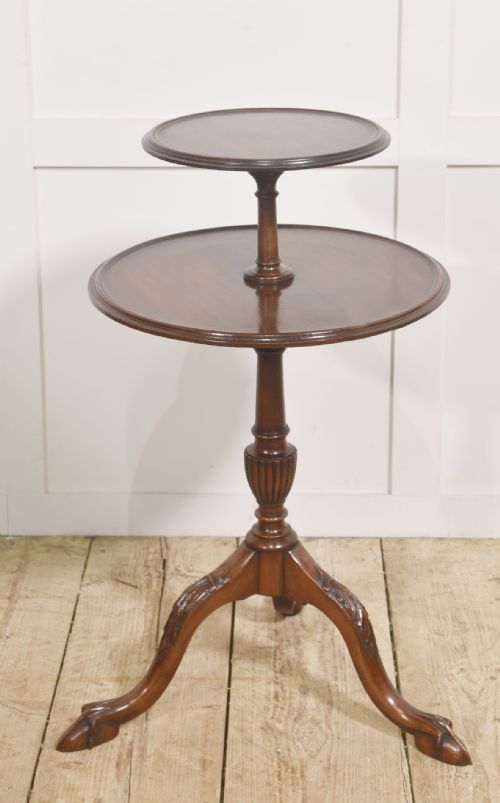


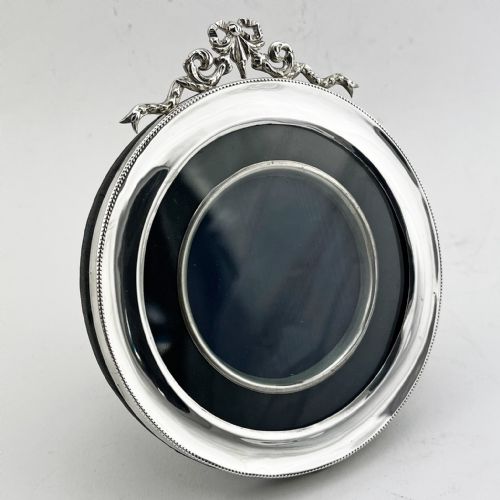


Round Display Table
A round display table brings timber and glass together to showcase small treasures in the middle of a room or beside a chair.
Round Display Table
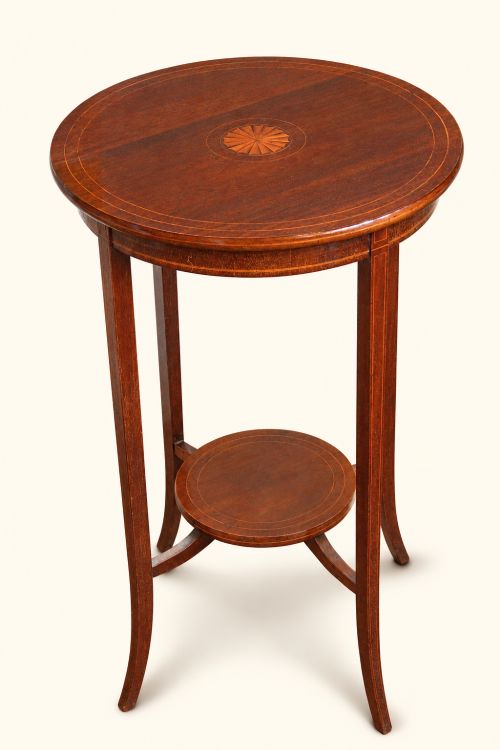
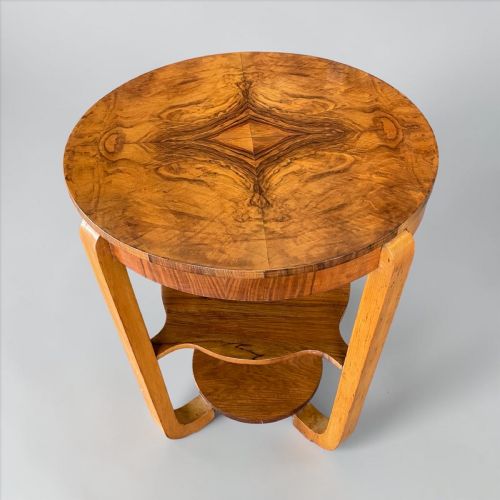
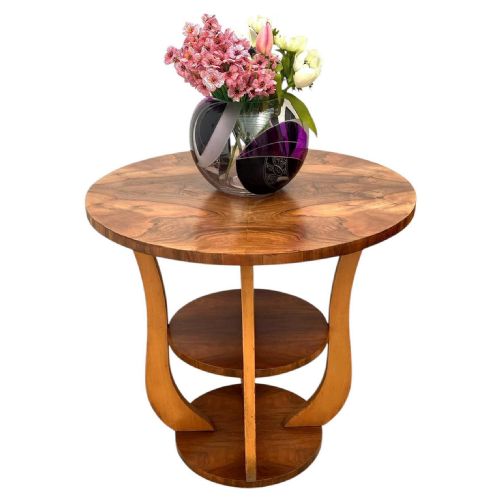
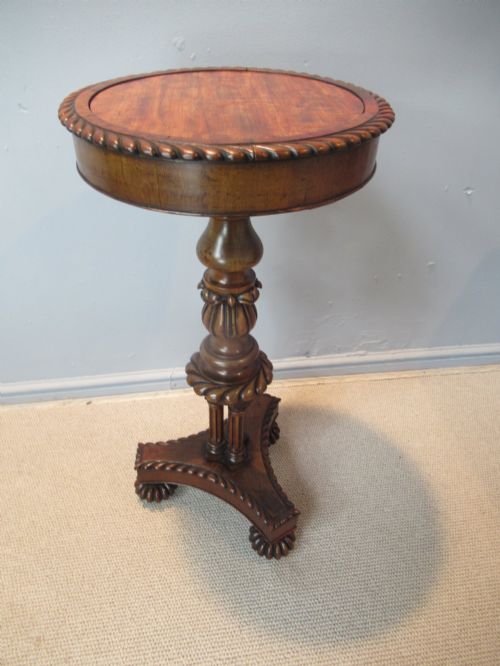
A round display table appears across several distinct periods, most frequently taking the form of a Victorian bijouterie table with glazed panels or an Art Deco tiered centre table. These pieces serve primarily to exhibit small objects while functioning as occasional or centre tables within a reception room.
The materials span traditional timbers such as mahogany, walnut, and rosewood alongside brass fittings and glass tops. Many examples incorporate multiple tiers or circular tops supported on tripod bases or central pedestals.
Origins range from English workshops to French ateliers, with specific regional preferences visible in the use of kingwood veneers or inlaid details. Buyers encounter everything from simple Edwardian circular occasional tables to elaborate French Victorian vitrines.
Materials and construction methods
Cabinet makers utilised solid hardwoods like mahogany and rosewood for structural frames, frequently applying walnut and kingwood veneers to create decorative surface patterns. These timbers provided the stability needed for circular tops and slender pedestal supports.
Glazing and metalwork defined the construction of glazed vitrines and bijouterie pieces, where brass frames secured glass panels around the display compartment. Joinery techniques varied from traditional mortise and tenon joints in earlier periods to laminated tiers in later Art Deco designs.
Round Display Table Retail Price Guide 2026
Typical asking prices for round display table among the pieces listed under this phrase on Sellingantiques today, from the lower quarter to the upper quarter. They describe what is for sale here now, not the wider market.
Current listings feature pieces spanning the Victorian, Edwardian, and Art Deco periods, constructed primarily from mahogany, walnut, and rosewood.
Distinctions in quality and execution
The standard of timber selection and veneer matching marks the division between ordinary furniture and finer examples. Superior pieces display carefully figured walnut or rosewood grain that follows the circular contour of the top without interruption.
Constructional refinement shows in the weight of the brass mounts, the tight fit of glazed doors, and the stability of the central pillar or tripod legs. Finer workshops ensured that hinged lids on bijouterie tables closed flush and stayed true over decades of use.
The Round Display Table Glossary
- Bijouterie table
- A glass-topped display table designed specifically for showcasing small valuables, medals, or jewellery beneath the surface.
- Vitrine
- A glass-sided cabinet or table used for the display of delicate ornaments and curiosities.
- Tripod table
- A small freestanding table supported by three pillar legs radiating from a central column.
- Veneer
- A thin layer of decorative timber applied to a secondary wood base to create patterned surfaces on tabletops.
- Occasional table
- A small, moveable piece of furniture intended for specific, intermittent use within a living space.
Round Display Table: Frequently Asked Questions
What is a round display table used for?
These pieces serve to exhibit small collections, porcelain, or personal ornaments beneath glass panels while functioning as a surface in a room.
They sit comfortably in reception rooms or hallways where visible storage adds decorative interest to the interior.
How do I identify the period of a table?
Dating relies on combining the timber species, decorative motifs, and construction methods visible in the frame. Victorian and Edwardian examples often feature rich mahogany or inlaid details, whereas Art Deco pieces show geometric tiers and walnut veneers.
Examining the underside and interior joinery provides further clues regarding the era of manufacture.
Are these tables sturdy enough for daily use?
Most occasional and centre tables are built to support lamps, books, or decorative items without difficulty. Glazed display compartments require gentle handling, particularly around the brass hinges and locking mechanisms.
Placing the table away from direct heat sources protects the timber veneers and prevents joint separation.
What is the difference between a centre table and an occasional table?
A centre table traditionally stands freestanding in the middle of a room, finished with detail on all sides to be viewed from any angle. An occasional table is generally smaller and designed to be moved around as needed.
Both forms appear frequently in round configurations across the nineteenth and twentieth centuries.