



Rosewood Whatnot Shelf
A rosewood whatnot shelf offers tiered display space in rich timber, combining practical storage with elegant nineteenth-century design.
Rosewood Whatnot Shelf
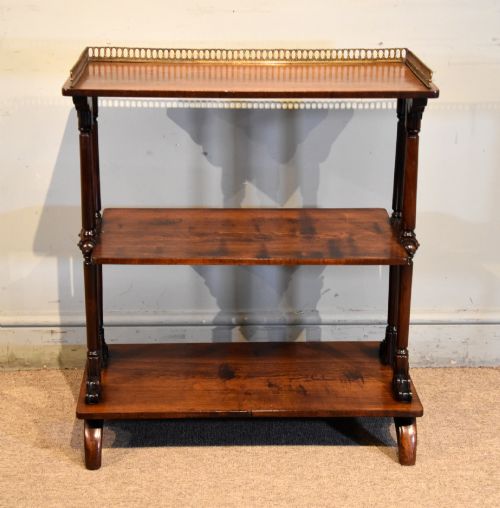
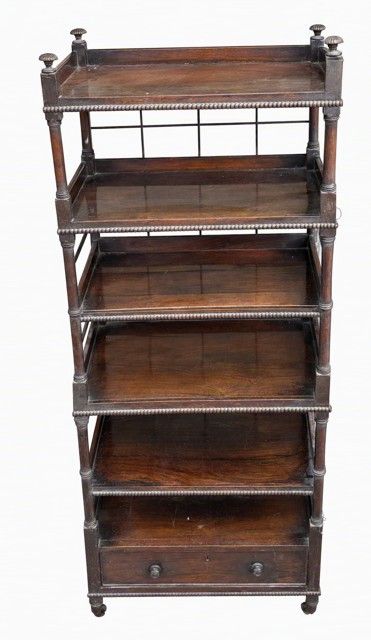
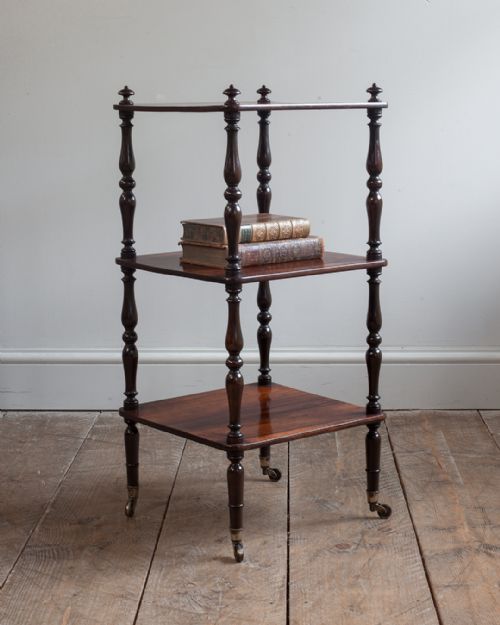
A rosewood whatnot shelf is a multi-tiered display stand designed to hold books, ornaments, and small decorative objects in nineteenth-century interiors. These pieces appear in configurations ranging from compact three-tier models to substantial six-tier stands, often incorporating drawers, canterbury sections, or reading stands.
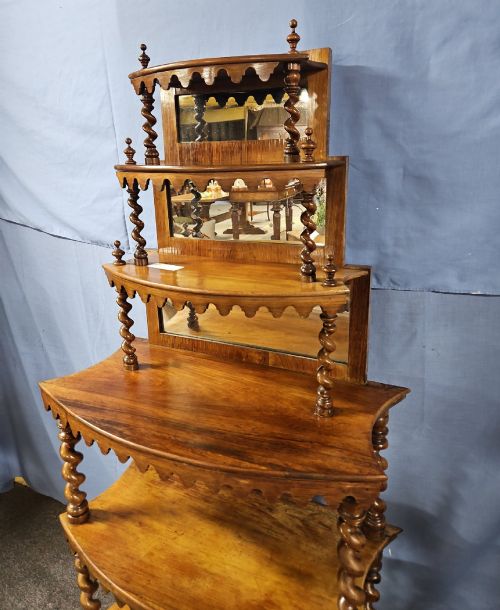
The pieces on this page span the Georgian, Regency, William IV, and Victorian periods, reflecting shifting domestic fashions across the nineteenth century. Most examples found here take the form of freestanding rectangular units, alongside occasional corner models and Chinese carved variants.
Makers such as Gillows and Samson & Son London represent the higher echelons of production seen in this category. Buyers will frequently encounter mid-nineteenth-century and Victorian iterations alongside earlier Regency pieces.
Materials and construction
Makers relied primarily on rosewood for its dense grain and deep colour, often enhancing the tiered structures with brass galleries, casters, and ormolu mounts. Secondary woods and structural frames support the multiple shelves, which are held by turned or carved upright supports.
Rosewood Whatnot Shelf Retail Price Guide 2026
Typical asking prices for rosewood whatnot shelf among the pieces listed under this phrase on Sellingantiques today, from the lower quarter to the upper quarter. They describe what is for sale here now, not the wider market.
Materials across these items include solid and veneered rosewood, brass galleries, ormolu, and mirrored glass.
Evaluating quality and proportion
Quality in these pieces rests upon the figuring of the rosewood timber and the crispness of any turned supports, carved details, or brass galleries. Superior examples display thoughtful proportions across their tiers, whereas standard versions rely on simpler uprights and plain boards.
The presence of secondary functions, such as integrated drawers, canterbury partitions, or reading stands, elevates the utility and distinction of an individual piece. Finer workshops demonstrate meticulous attention to the joints connecting each shelf to the vertical framework.
Gillows·Samson & Son London
The Rosewood Whatnot Shelf Glossary
- Whatnot
- A piece of furniture consisting of a set of open shelves for displaying small objects. They became popular in the eighteenth and nineteenth centuries.
- Etagere
- A piece of furniture with a set of open shelves for displaying ornaments, essentially synonymous with a whatnot. The term often describes French-influenced or lighter tiered stands.
- Canterbury
- A low stand with divisions for sheet music, books, or portfolios, frequently incorporated into the lower section of a whatnot. This combination served musical households in the nineteenth century.
- Ormolu
- Gilded bronze or brass applied as a decorative mount on furniture. It adds metallic contrast to the dark rosewood surfaces.
Rosewood Whatnot Shelf: Frequently Asked Questions
What is a rosewood whatnot shelf used for?
These pieces served as display stands for porcelain, books, and ornamental objects in nineteenth-century parlours and drawing rooms.
Their multiple tiers allowed households to organise and exhibit decorative possessions within a compact footprint.
How do I date a rosewood whatnot shelf?
Dating relies on stylistic markers from periods such as Regency, William IV, and Victorian, alongside construction methods.
Earlier pieces often feature crisper mahogany or rosewood turning, while mid-to-late Victorian versions incorporate varied shelf counts and occasional mirrored backs.
Where should I place a whatnot in my home?
These units suit living rooms, hallways, or studies where open shelving provides accessible display space for books and collections.
Freestanding and corner variants allow them to fit effectively against walls or within unused room angles.
What is the difference between a whatnot and an etagere?
The terms are largely interchangeable, though etagere often implies a slightly lighter or more decorative French-influenced design.
Both describe tiered shelving units intended for display rather than heavy enclosed storage.