




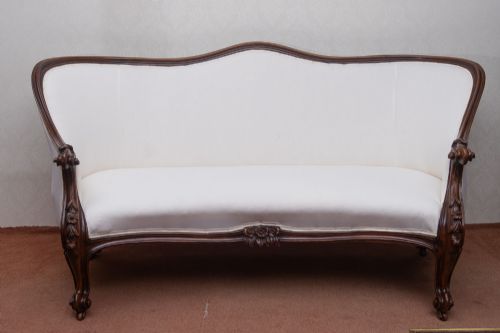
Rococo Revival Couch
These walnut and mahogany rococo revival couch pieces offer opulent curves and deep button upholstery, bringing nineteenth-century French and Victorian grandeur directly into a modern drawing room.
Rococo Revival Couch
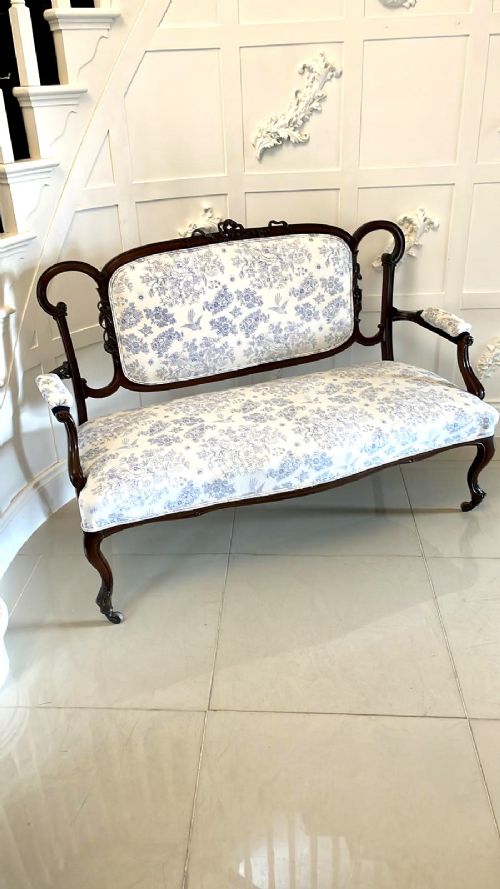
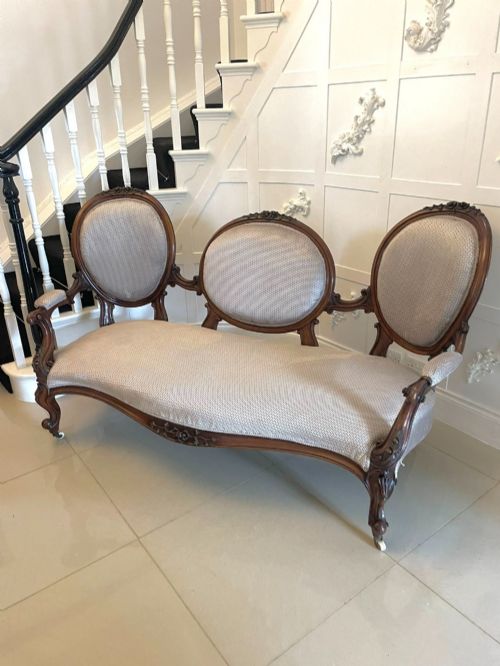
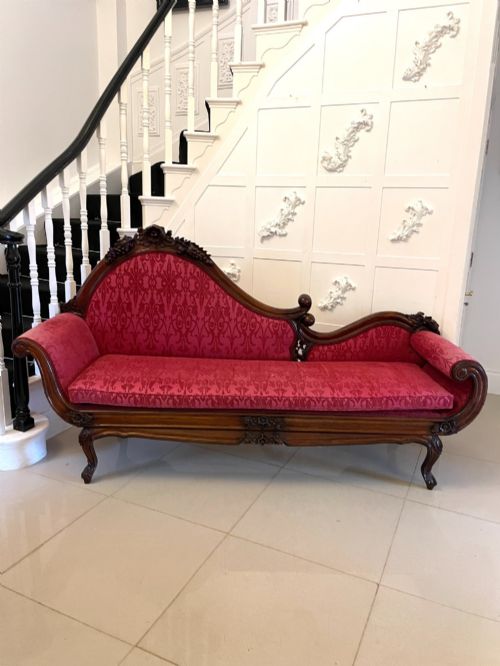
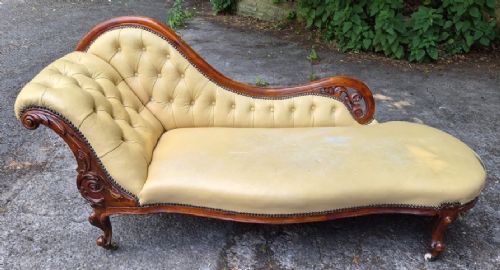
When you search for a rococo revival couch, you encounter nineteenth-century seating that revives the fluid, asymmetrical lines of the eighteenth-century Louis XV style. These pieces emerge predominantly in Victorian formats, ranging from double-end settees and cameo-back sofas to chaise longues and three-seater couches.
The versions you are most likely to meet on this page include walnut and mahogany frames featuring elaborate carvings, serpentine fronts, and showwood structures. They originate from British, French, German, and Irish workshops across the nineteenth century, including specific regional variations like country house settees.
Makers shaped these items as social seating for formal salons, utilising generous proportions and upholstered textiles designed to dominate a room. The forms vary from intimate two-seater settees to large salon sofas, each carrying the distinct asymmetrical scrolls and floral motifs characteristic of the taste.
How they were made
Craftsmen shaped solid timbers such as walnut, mahogany, and rosewood to form the curving structural frames of each couch. These woods allowed carvers to execute deep relief work, floral crestings, and sinuous cabriole legs without compromising the stability of the seating.
Upholsterers applied horsehair, stuffing, and springs beneath layers of fabric, velvet, or textile, securing the padding with meticulous buttoning techniques. Frames were frequently polished to a high sheen, while certain pieces received gilt or gold paint finishes to emulate French palace furniture.
Rococo Revival Couch Retail Price Guide 2026
Typical asking prices for rococo revival couch among the pieces listed under this phrase on Sellingantiques today, from the lower quarter to the upper quarter. They describe what is for sale here now, not the wider market.
What varies in quality
The distinction between ordinary production and the finest work lies in the depth and crispness of the timber carving. Superior examples display hand-chiselled foliage and flowing scrollwork that integrate seamlessly into the structural frame, whereas lesser pieces rely on shallow or machine-milled ornamentation.
The integrity of the showwood frame and the selection of cabinet timber dictate the upper tiers of the range. Dense, figured walnut and rich rosewood command greater presence, while clever framing ensures the couch remains rigid under weight despite its ornate, curving profile.
Morison and Co Edinburgh
The Rococo Revival Couch Glossary
- Cameo back
- A sofa or settee backrest shaped like a framed portrait medallion, often bordered by carved wood. This style focuses attention on the central cresting.
- Chaise longue
- An upholstered couch with a headrest at one end, designed for reclining. Nineteenth-century examples often feature elaborate asymmetric scroll ends.
- Double end settee
- A sofa featuring symmetrical rolled or scrolled ends of equal height at both sides. This form allows a sitter to recline facing either direction.
- Serpentine
- A furniture front or edge that curves inward at the centre and outward at the ends. It adds dynamic movement to the timber base of a sofa.
- Showwood
- Exposed polished timber on a chair or sofa frame where the wood is deliberately left visible around the upholstery. It highlights the quality of the cabinet work.
Rococo Revival Couch: Frequently Asked Questions
What is a rococo revival couch?
A rococo revival couch is a nineteenth-century seat inspired by earlier French Louis XV designs, featuring curving wooden frames and upholstered seating. These pieces celebrate asymmetry, floral carvings, and comfortable proportions.
Craftsmen built them to serve as focal points in Victorian and continental reception rooms, combining decorative showwood with soft textile coverings.
How were these couches used?
Owners placed these couches in formal drawing rooms, salons, and boudoirs for conversation, reading, and relaxed reclining. Their varied lengths accommodated multiple guests or allowed a single person to stretch out on a chaise lounge.
They functioned primarily as status symbols in nineteenth-century homes, signaling an appreciation for continental style and fine cabinet work.
Where should I place a rococo revival couch?
These couches suit spaces with high ceilings and traditional or eclectic interior schemes where their curving frames can stand away from walls. Placing one as the central seating piece in a living room allows the carved showwood back to remain visible.
Pairing them with neutral walls lets the rich walnut or mahogany tones and textured velvet or fabric upholstery draw the eye.
How do I tell periods apart?
Nineteenth-century pieces often combine Victorian proportions with French revival motifs, while specific decades introduce subtle shifts in carving depth and timber choice. Earlier examples from the William IV era show heavier mahogany frames with emerging scrollwork.
Later Victorian and turn-of-the-century pieces frequently utilise lighter walnut frames, bergere cane panels, or brighter gilt finishes depending on their regional origin.