



Retro Nightstands
Retro nightstands bring genuine twentieth century character to a bedroom, offering distinct forms and period materials that elevate everyday bedside storage.
Retro Nightstands
When buyers search for retro nightstands, they encounter bedside cabinets, open shelf bedside tables, and occasional tables spanning the nineteen twenties, nineteen thirties, and Edwardian eras. These pieces combine practical bedside utility with the defined aesthetics of Art Deco, Hollywood Regency, and Mid-Century Modern design.
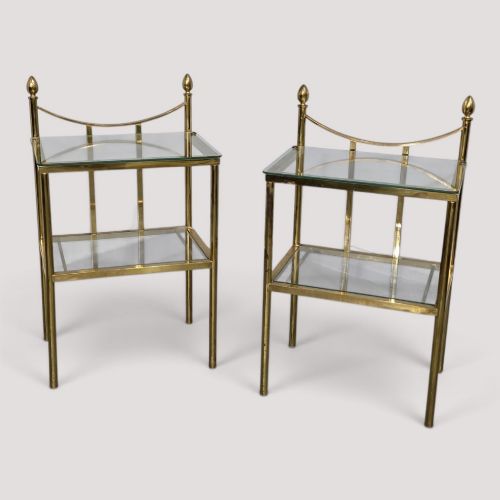
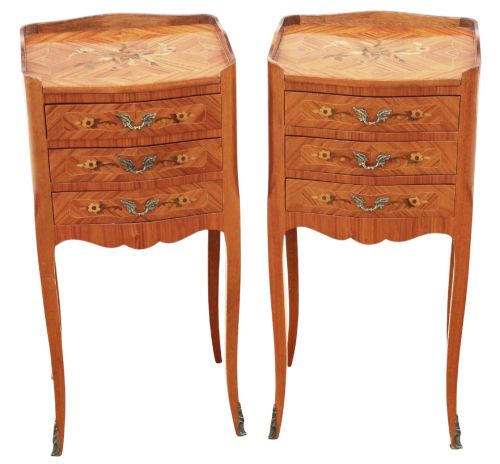
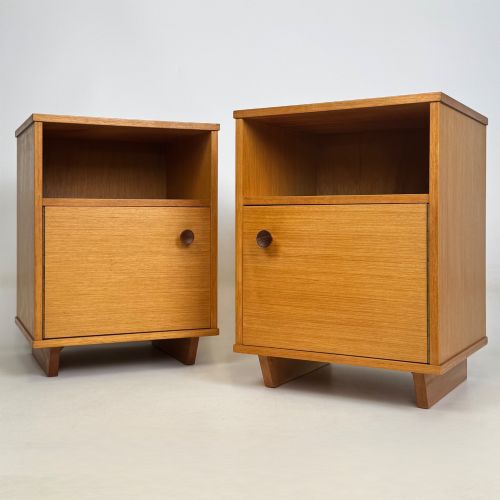
The selection on this page centres on pairs and individual cabinets constructed from woods such as teak, satinwood, and walnut, alongside metal and glass variants. Buyers often find matching pairs of bedside cabinets alongside occasional tables utilised for night-time storage.
Originating from British and continental workshops, these items reflect the transition from ornate revivals towards modernist geometric lines. Each piece provides a functional surface and storage compartment suited to contemporary interiors while retaining its original period manufacture.
How they were made
Cabinet makers utilised traditional timber construction alongside emerging industrial materials during the early twentieth century. Marquetry work adorns selected wood surfaces, while other pieces integrate bent cane, woven Lloyd loom fibre, or solid hardwood panels.
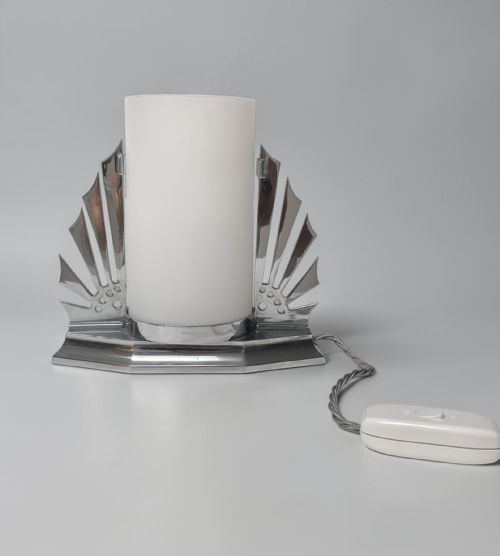
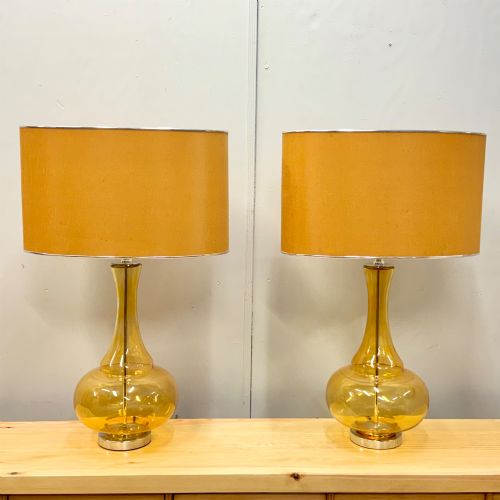
Metalworking techniques brought structural rigidity and decorative sheen through the use of polished chrome and cast brass. Glass components, including amber glass shades and mirrored table surfaces, were cast and cut to complement the metallic frames.
Current listings feature pieces spanning three distinct periods: the nineteen twenties, the nineteen thirties, and the Edwardian era.
What varies in quality
Quality separates standard utilitarian production from ambitious artistic design through the precision of the joinery and the selection of cabinet woods. Superior examples display carefully matched wood veneers, intricate marquetry patterns, and substantial metal fittings rather than plated base metals.
The distinction also lies in the integrity of secondary materials, such as heavy gauge chrome plating, robust brass framing, and unblemished coloured glass. Pieces retaining their original hardware and structural stability command greater appreciation from collectors.
The Retro Nightstands Glossary
- Marquetry
- Decorative veneer work arranged in geometric or pictorial patterns on wood surfaces. This technique requires skilled cutting and fitting of contrasting timber veneers.
- Lloyd loom
- A material formed by twisting craft paper around wire and weaving it into furniture panels. It provides a durable and smooth surface texture.
- Chrome
- Electroplated chromium applied over base metal to provide a bright, corrosion-resistant finish. It defines much of the modernist metalwork of the period.
- Art Deco
- A design style characterised by sleek geometric shapes, stylised motifs, and streamlined forms. It dominated decorative arts throughout the nineteen twenties and nineteen thirties.
- Satinwood
- A pale, hard timber with a natural sheen often used for fine cabinet making. Its lustrous grain catches the light effectively.
Retro Nightstands: Frequently Asked Questions
What defines a retro nightstand?
These pieces comprise bedside cabinets, tables, and open shelf units dating from the early twentieth century. They showcase historical periods such as Art Deco and Edwardian design.
Materials range from traditional hardwoods like walnut and teak to industrial elements including chrome, brass, and glass. Their compact proportions suit modern bedroom layouts while preserving historical integrity.
How do I care for wooden cabinets?
Maintain wooden surfaces by dusting regularly with a soft, dry cloth and applying natural beeswax periodically. Avoid placing furniture in direct sunlight or near heat sources to prevent timber cracking.
Protect finished surfaces from moisture by using coasters and mats beneath any objects placed upon them.
Are these pieces sold in pairs?
Listings frequently feature matching pairs of bedside cabinets and lamp tables intended for placement on either side of a bed. Single tables also appear for more compact bedroom arrangements.
Matching sets offer symmetrical balance and uniform material composition within an interior scheme.
How can I date a nightstand?
Dating relies on stylistic markers, construction methods, and material combinations typical of specific decades. Art Deco items feature geometric lines, while Edwardian pieces often display traditional cabinet joinery.
Hardware styles, secondary woods, and manufacturing techniques provide additional clues to the exact period of origin.