



Retro Cluster Earrings
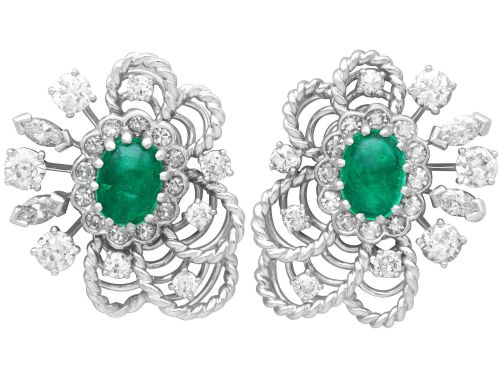
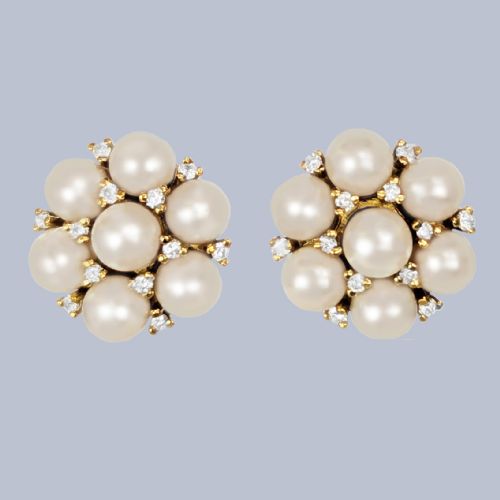
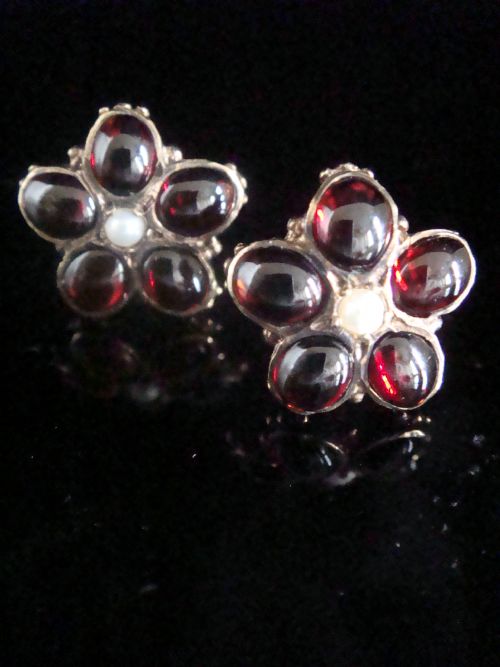
These retro cluster earrings bring together mid-century design and fine gemstones, offering a distinctive statement for daily wear or evening occasions.
Retro Cluster Earrings
Retro cluster earrings encompass a range of mid-century designs spanning the 1930s through to the 1960s, featuring tightly grouped stones that create a prominent focal point on the earlobe. When searching for retro cluster earrings, buyers frequently encounter floral motifs, daisy shapes, and geometric configurations rendered in gold or platinum.
The pieces available here incorporate diamonds, pearls, emeralds, sapphires, garnets, and turquoise, often arranged around a central stone. Formats range from simple studs and screw-backs to drop earrings, clip-ons, and matching jewellery suites.
Originating predominantly from the mid-century period, these earrings reflect the transition from ornate Art Deco geometry to the bolder, tactile styles of the 1940s and 1950s. The selection on this page demonstrates how jewellers utilised yellow gold, white gold, and platinum to support these stone groupings.
How they were made
Craftsmen utilised precious metals including 9ct gold, 14ct gold, 18ct white gold, 18ct yellow gold, and platinum to construct the settings for these clusters. Stones such as diamonds, emeralds, sapphires, and garnets were secured in close proximity to maximise surface brilliance and colour density.
Techniques varied from traditional claw settings to bezel and flush settings that held pearls, mabe pearls, and cabochon gemstones firmly within the gold or platinum framework. Screw-back and clip-on mechanisms were commonly integrated into the reverse of mid-century pairs to accommodate non-pierced ears.
Retro Cluster Earrings Retail Price Guide 2026
Typical asking prices for retro cluster earrings among the pieces listed under this phrase on Sellingantiques today, from the lower quarter to the upper quarter. They describe what is for sale here now, not the wider market.
Several pairs feature cheerful daisy clusters designed to sit flat against the ear like miniature bouquets.
What varies in quality
The choice of primary materials largely determines the tier of a piece, with platinum and 18ct gold settings housing graded diamonds or fine emeralds positioned at the upper end. Lower tiers typically utilise 9ct gold or silver-backed settings paired with garnets, turquoise, or smaller single-cut diamonds.
Construction precision also separates standard production from finer examples, visible in the symmetry of floral clusters, the secure seating of cabochon stones, and the robust articulation of drop and pendant components.
The Retro Cluster Earrings Glossary
- Cluster earring
- A style of earring featuring multiple gemstones grouped closely together around a central stone to create a concentrated focal point.
- Cabochon
- A gemstone shaped and polished with a smooth, rounded surface rather than faceted edges.
- Mabe pearl
- A cultured half-pearl grown against the inside shell of an oyster, resulting in a domed appearance with a flat back.
- Single cut diamond
- A simple diamond cut with a table, eight crown facets, and eight pavilion facets, frequently found in mid-century pieces.
Retro Cluster Earrings: Frequently Asked Questions
How do I wear clip-on retro cluster earrings?
Clip-on mechanisms rely on a hinged paddle that presses the earlobe against the decorative cluster. Adjusting the tension ensures a secure fit without causing discomfort during extended wear.
For added security, silicone cushions can be slipped over the clips to improve grip and distribute pressure evenly across the lobe.
Are these earrings suitable for daily wear?
Robust metalwork in gold and platinum allows many cluster designs to withstand regular use. However, pieces containing softer organic materials like pearls require careful handling to avoid surface scratching.
Removing the earrings before swimming, exercising, or applying cosmetics helps protect both the gemstones and the metal settings from unnecessary wear.
How do I distinguish a 1940s design from a 1960s pair?
Pieces from the 1940s often display heavier, sculptural gold work influenced by wartime restrictions on platinum. By contrast, 1960s designs frequently incorporate lighter white gold settings and playful floral or daisy motifs.
Examining the backings and metal hallmarks provides further clues regarding the exact decade of manufacture.
Can screw-back earrings be converted to posts?
A skilled jeweller can remove the screw-back mechanism and solder a standard post to the reverse of the earring. This conversion makes older pairs compatible with pierced ears.
Original mechanisms should be kept if maintaining the historical integrity of the piece is a priority for the collector.