







Regency Timepieces
Regency timepieces are precision instruments housed in architectural timber, gilt bronze, and marble, prized for reliable fusee movements and sculptural elegance.
Regency Timepieces
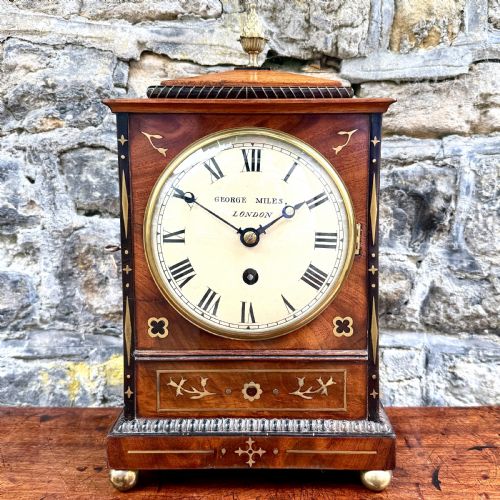
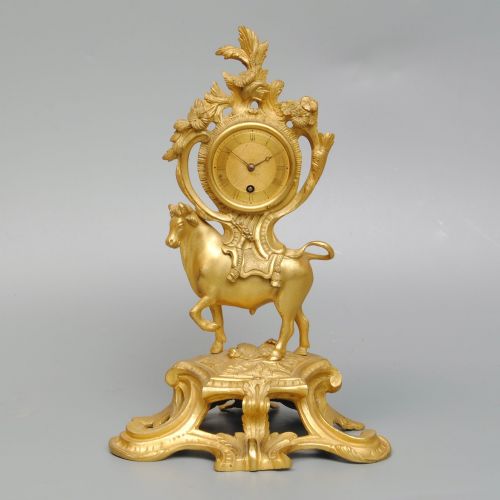
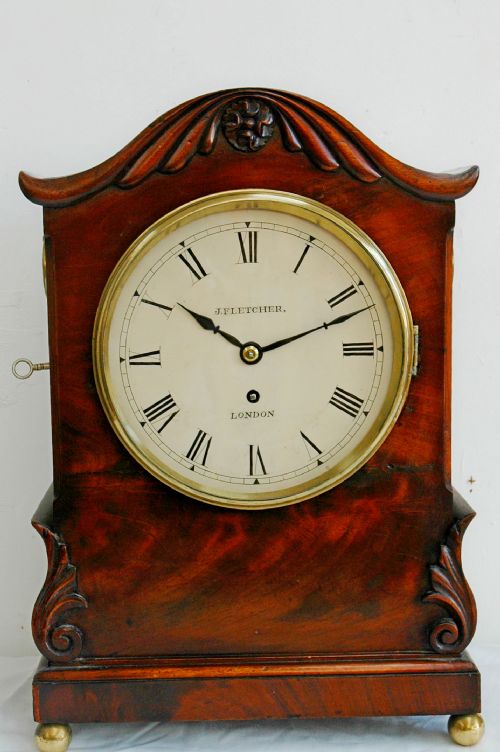
Regency timepieces encompass domestic clocks produced primarily during the early nineteenth century, drawing heavily on Georgian and French Empire aesthetics. The pieces on this page appear predominantly as mantel clocks, bracket clocks, and wall-mounted dial clocks designed for libraries, halls, and withdrawing rooms.
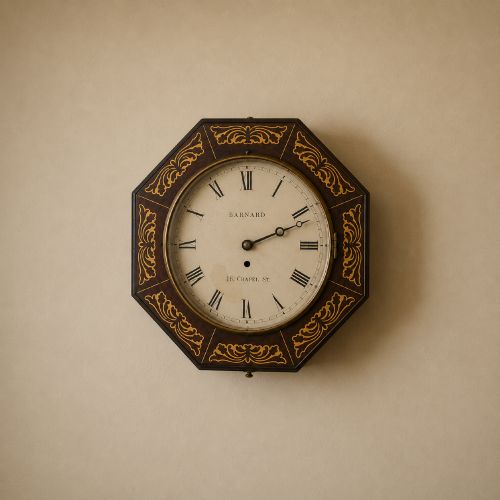
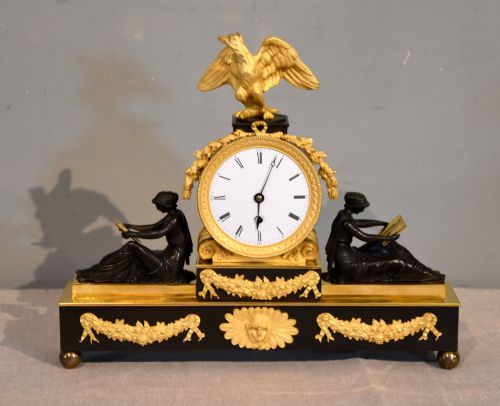
Makers housed these movements in varied timber and metal cases, ranging from octagonal wall clocks to architectural bracket clocks and figural mantel pieces. Mahogany, rosewood, and ebonised wood dominate the wooden housings, frequently accented with brass inlay, gilt bronze, or ormolu mounts.
The selection reflects both English workshops and continental makers, incorporating fusee movements alongside striking mechanisms. Provincial English makers sit alongside London specialists, offering everything from simple library timepieces to elaborate figural designs involving animals and classical motifs.
How they were made
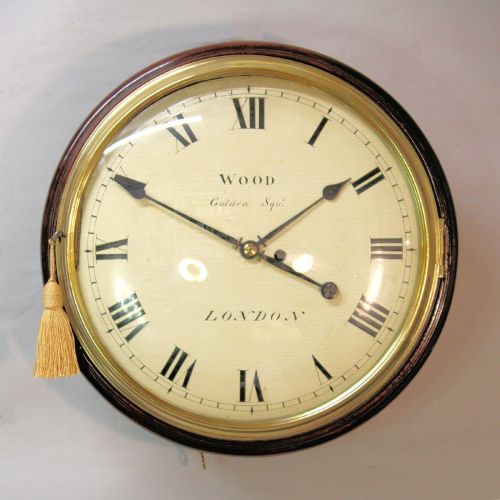
Cabinetmakers constructed the wooden housings using dense timbers like mahogany and rosewood, often applying brass stringing, marquetry, or clean architectural mouldings. Dial construction varied between painted metal, convex wooden faces, and glass-covered brass bezels designed to protect the hands.
Foundries cast the metal components in brass, ormolu, and patinated bronze, producing intricate figural mounts, bezel frames, and decorative feet. Movements relied on brass plates and wheels driven by weights or chain and spring fusee mechanisms to maintain steady power delivery.
Regency Timepieces Retail Price Guide 2026
Typical asking prices for regency timepieces among the pieces listed under this phrase on Sellingantiques today, from the lower quarter to the upper quarter. They describe what is for sale here now, not the wider market.
Object forms span mantel clocks, bracket clocks, wall clocks, and longcase clocks produced across the nineteenth century.
What varies in quality
Quality rests in the crispness of the bronze casting and the precision of the timber joinery, where sharper chased mounts and tighter wood fitments separate standard production from master workshop output. Dial execution also dictates standard, with cleanly painted numerals and well-proportioned hands showing greater care.
The sophistication of the internal movement governs the upper tiers, particularly complex fusee setups signed by noted makers rather than basic time-only gear trains. The integration between the sculptural bronze or marble case and the mechanical core defines the enduring appeal of the object.
Baetens London·Bush of London·John Bull of Bedford·Arnold and Frodsham·Taylor of London·Pons de Paul·Hessen Paris·Grimaldi and Johnson·John Wilson·Kleyser of London·William Hardy London·McCabe London·Haley and Milner·John Thwaites·FB Adams London
The Regency Timepieces Glossary
- Fusee
- A conical pulley used in clock movements to equalize the declining pull of the mainspring as it unwinds. This mechanism ensures steady force is delivered to the escapement for accurate timekeeping.
- Ormolu
- Gilt bronze created by applying a mercury-gold amalgam to a bronze base, producing a rich golden finish. It appears frequently as decorative mounts on French and English mantel clocks.
- Bracket clock
- A portable table clock designed originally to sit on a wooden wall bracket or a table surface. Many examples feature brass carrying handles on top and glazed side panels.
- Drop-dial clock
- A wall clock featuring a circular dial above an extended wooden trunk or drop box, often housing a pendulum. These were common in offices, halls, and public spaces.
- Verge escapement
- An early type of clock escapement that controls the release of the gear train using a crown wheel and vibrating balance or pendulum. It represents traditional mechanical construction found in earlier pieces.
Regency Timepieces: Frequently Asked Questions
What is a fusee movement?
A fusee is a conical pulley connected to the mainspring by a cord or chain, designed to maintain even tension as the spring winds down.
This clever mechanical device ensures the clock maintains consistent force and better accuracy throughout its running cycle.
Where were these clocks placed?
These timepieces sat upon mantelpieces, library desks, and wall brackets in principal rooms of grand houses and town residences.
Bracket clocks were easily moved between rooms, while larger longcase and wall clocks remained fixed in hallways or public areas.
How do I wind a mantel clock?
Winding requires inserting the appropriate key into the winding square on the dial and turning it gently until resistance is felt.
Care should be taken not to overwind the spring, and the pendulum should be allowed to settle into an even beat after setting.
How do I distinguish English from French clocks?
English examples often favour architectural timber cases in mahogany or rosewood with fusee movements and restrained brass mounts.
French pieces lean towards cast ormolu, patinated bronze, and elaborate figural or architectural marble forms with striking mechanisms.