

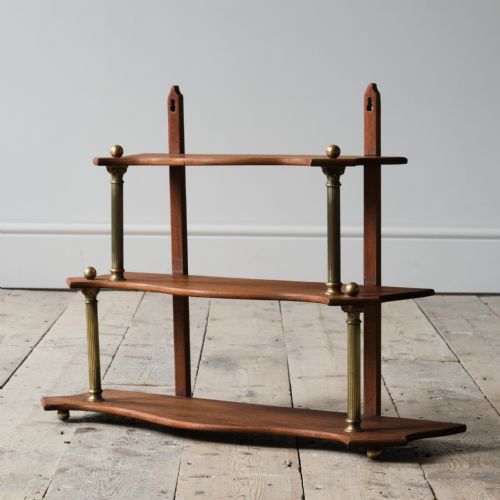
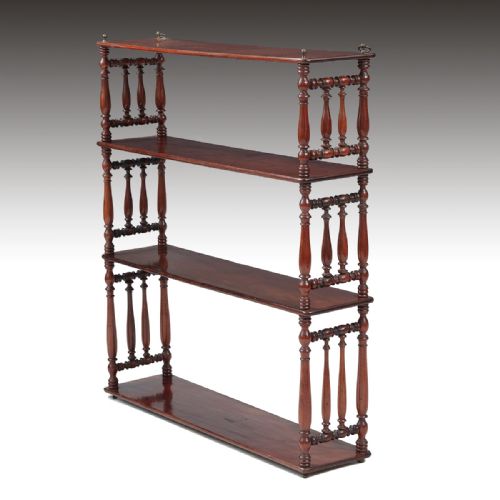


Regency Hanging Shelf
A regency hanging shelf brings architectural elegance to small wall spaces through fine timber construction and traditional tiered design.
Regency Hanging Shelf
A regency hanging shelf provides open display or storage mounted directly to the wall, taking forms such as standard wall shelves, corner shelves, portable bookshelves, and wall cabinets. These pieces span the Regency, Georgian, William IV, George IV, and Victorian periods, alongside general nineteenth-century and eighteenth-century examples.
The most common formats met on this page are mahogany wall hanging shelves and corner units, often featuring multiple tiers supported by turned columns or side panels. Makers such as Town and Emanuel also contributed enclosed wall cabinet variants to the broader category.
Makers utilised various timber configurations, occasionally incorporating mirrored backs, brass mounts, or bow-fronted designs to enhance the visual weight of the furniture.
How they were made
Cabinetmakers constructed these pieces primarily from solid and veneered timbers including mahogany, rosewood, yew, and tulipwood, often selecting figured grains for visual impact. Structural joints followed traditional cabinetmaking methods suitable for items intended to bear weight while suspended from a wall.
Metal elements such as brass rods, brackets, and ormolu mounts added both structural support and decorative contrast to the dark hardwoods. Selected examples integrated glass panels or mirrored backs to increase light reflection within interior spaces.
Regency Hanging Shelf Retail Price Guide 2026
Typical asking prices for regency hanging shelf among the pieces listed under this phrase on Sellingantiques today, from the lower quarter to the upper quarter. They describe what is for sale here now, not the wider market.
Portable bookshelves allowed nineteenth-century readers to move their favourite volumes from room to room without leaving the comfort of the parlour.
What varies in quality
The tier assembly and column turning dictate the architectural refinement of each piece, with crisper joinery separating standard workshop production from finer examples. Superior specimens display balanced proportions across bow fronts and integrated corner designs.
Material selection marks the distinction between grades, visible in the choice of richly figured rosewood or yew wood versus plain mahogany. The quality of supplementary brasswork and the integration of secondary elements like mirrored backs further define the upper tier of manufacture.
Town and Emanuel
The Regency Hanging Shelf Glossary
- Bow front
- A convex curved cabinet or shelf front that projects outward from the corners. This curved profile requires skilled carpentry to shape timber accurately.
- Ormolu
- Gilded bronze ornamentation applied to furniture for decorative accent. It provides a bright metallic contrast against dark hardwoods like mahogany and rosewood.
- Yew wood
- A dense British timber valued for its distinct grain pattern and warm golden-brown tones. It appears in select decorative wall furniture.
- Regency
- An English stylistic period spanning the early nineteenth century, characterised by classical restraint and refined proportions. Furniture from this era often draws inspiration from ancient Greek and Roman designs.
Regency Hanging Shelf: Frequently Asked Questions
What is a regency hanging shelf used for?
These wall-mounted units served to display decorative ceramics, books, or small ornaments in principal rooms. Their tiered structure allowed homeowners to utilise vertical wall space efficiently.
Today, they function well in similar display roles, bringing period character and practical surface area to compact interior settings.
How do I hang antique wall shelves securely?
Period wall furniture relies on original hanging brackets, flush plates, or structural uprights designed to bear downward weight. Fixing them safely requires locating appropriate wall studs or using heavy-duty proprietary wall anchors suited to the plaster.
Given the weight of dense hardwoods like rosewood and mahogany, professional installation is often advisable to protect both the wall and the timber frame.
How do I distinguish Regency pieces from Victorian ones?
Regency items generally exhibit cleaner classical lines, restraint in ornament, and leaner proportions influenced by neoclassical ideals. Victorian examples often introduce heavier carvings, revivalist flourishes like Rococo elements, or denser proportions.
Examining the secondary timbers and construction methods inside helps clarify the manufacturing era.
Can corner shelves fit standard room corners?
Corner shelves and cupboards are specifically constructed with ninety-degree or angled backs to nest neatly into room corners. This geometry maximises awkward spatial areas that standard flat furniture cannot occupy.
Buyers should measure wall angles carefully, as older properties frequently feature irregular wall geometry.