




Regency Crystal Pendant
Regency crystal pendant lights bring brilliant refraction and formal presence to interiors through classic cut glass forms.
Regency Crystal Pendant
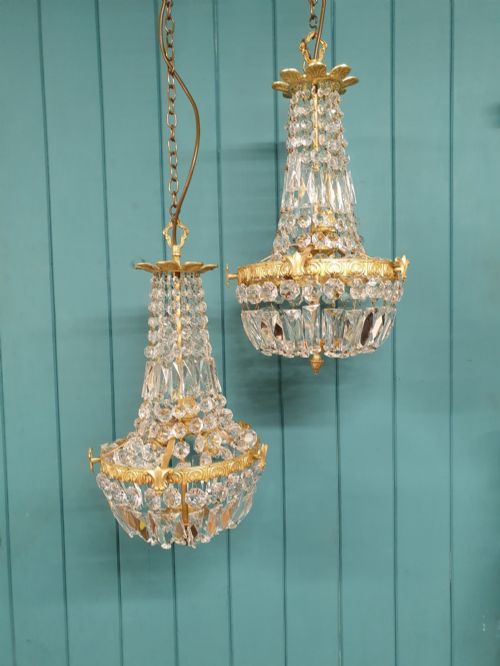
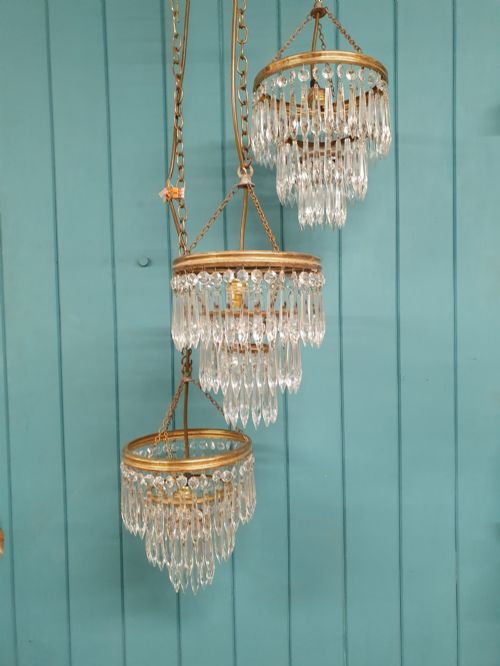
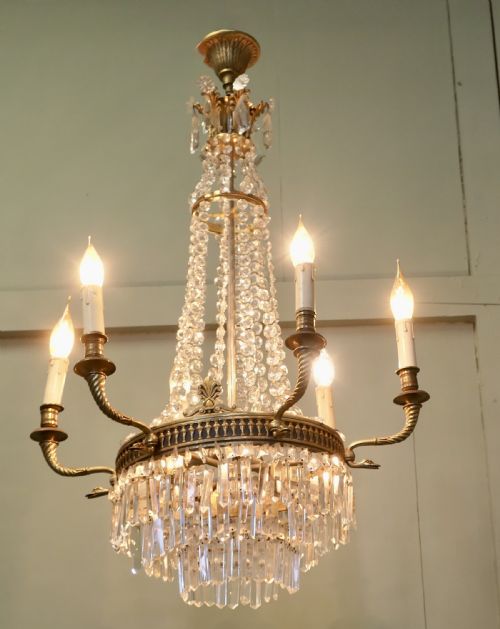
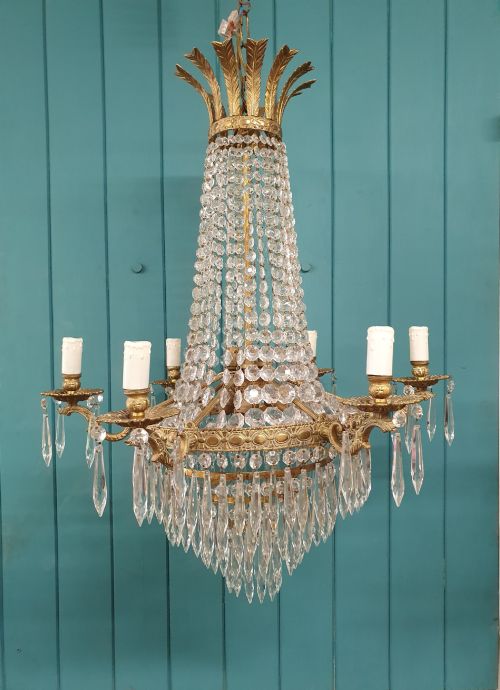
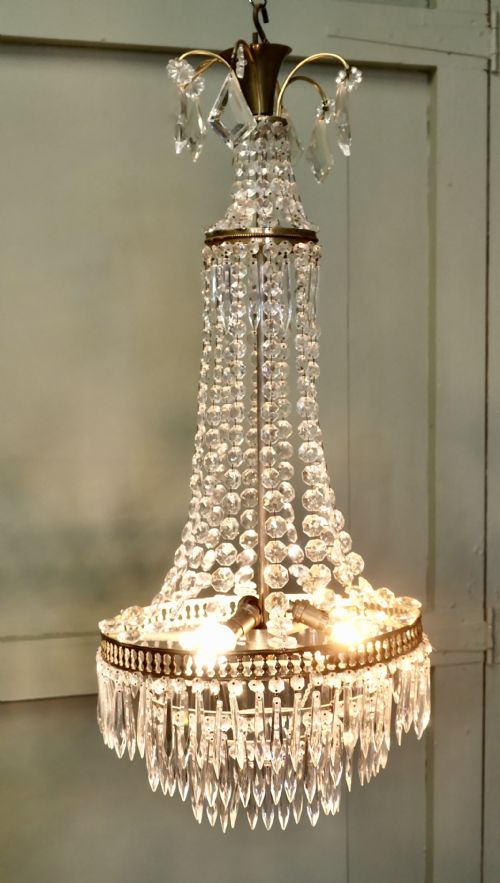
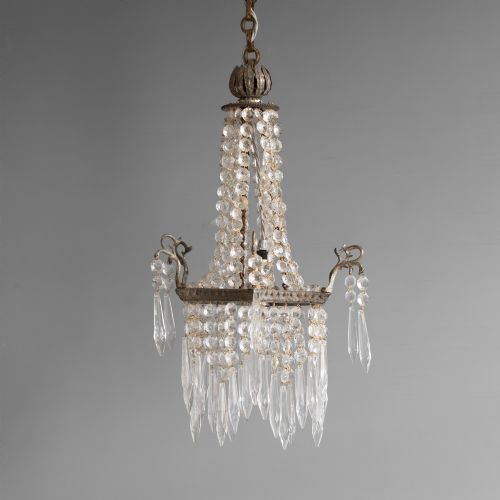
A regency crystal pendant draws the eye upward with tiered arrangements of glass drops, brass mounts, and structured frames. These pieces merge functional ceiling illumination with decorative glass design, spanning styles from French Empire to Edwardian and Victorian forms.
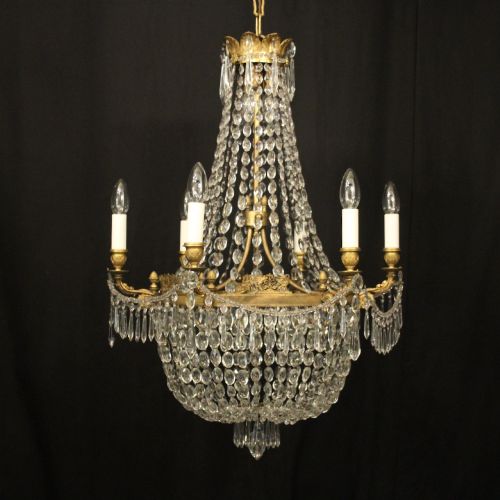
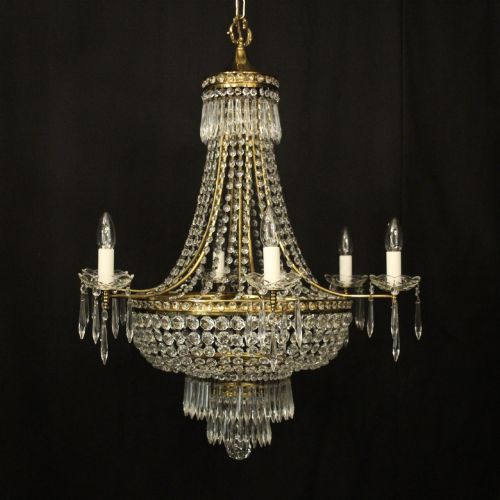
Buyers encountering a regency crystal pendant on this page will most commonly find twentieth-century interpretations, Edwardian iterations, and nineteenth-century examples. The selection includes tent and waterfall chandeliers, spike fixtures, bag chandeliers, and bell jar lanterns.
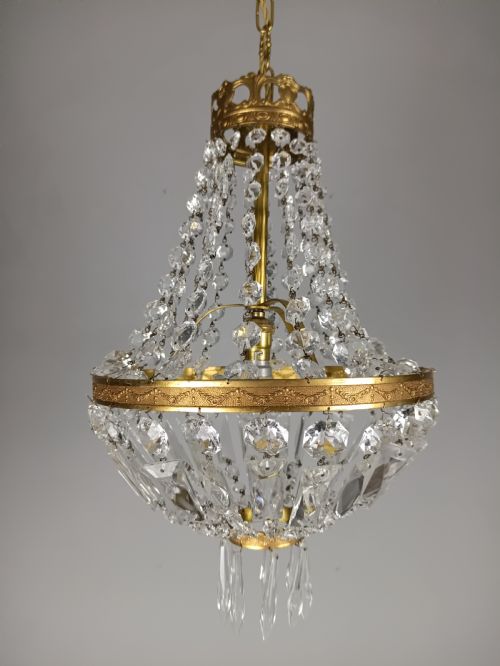
The physical form relies heavily on brass and gilded bronze framing to support complex formations of cut glass crystal and hand-blown elements. These light fittings vary in scale from compact eight-inch basket lights to large multi-branch chandeliers spanning numerous tiers.
Assessing quality
The standard of a regency crystal pendant rests on the clarity and precision of its cut glass components rather than mere scale. Crisp diamond cutting on crystal drops creates sharper light refraction compared to softer, moulded glass alternatives.
Construction methods also dictate grade, with heavier brass mounts, gilded bronze details, and secure wirework supporting the glass assemblies more durably than lighter, secondary metals. The integration of decorative elements like leaf motifs on arms and uniform prism spacing distinguishes finer workshop output.
Regency Crystal Pendant Retail Price Guide 2026
Typical asking prices for regency crystal pendant among the pieces listed under this phrase on Sellingantiques today, from the lower quarter to the upper quarter. They describe what is for sale here now, not the wider market.
Current listings feature pieces spanning the nineteenth century through the 1930s, utilising brass, crystal glass, and gilded bronze.
The Regency Crystal Pendant Glossary
- Tent and waterfall
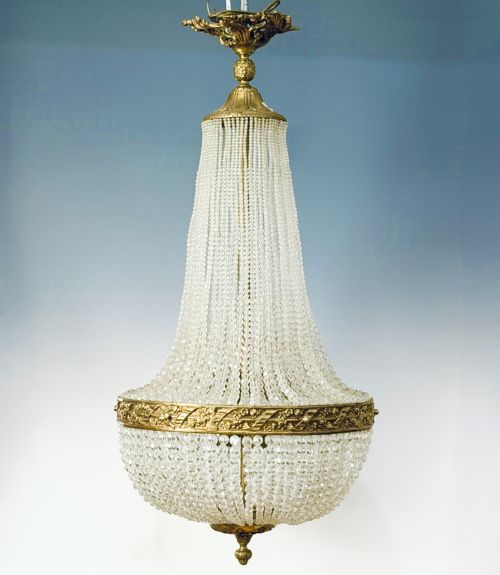
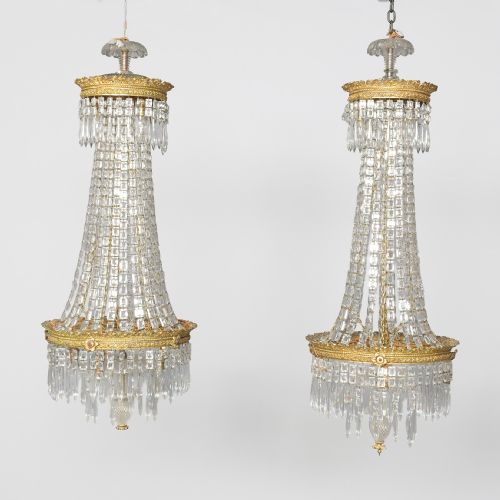
- A lighting configuration featuring an upper conical section of glass strings dropping into a wider, cascading tier below. This style creates a layered profile of cascading crystal.
- Bag chandelier
- A fixture shaped like a tapered pouch or basket where numerous small crystal drops are strung tightly together in a mesh. It diffuses light softly through a dense web of glass.
- Spike chandelier
- A vertical lighting form punctuated by upward-pointing central spikes or spires decorated with glass swags. These pieces offer a rigid, architectural silhouette.
- Bell jar lantern
- An enclosed glass vessel, often hand-blown and diamond cut, designed to house interior burner or bulb fittings. It protects the flame or bulb while scattering light evenly.
- Gilded brass
- A base metal treated with a thin layer of gold leaf or gilt finish to impart a warm, reflective metallic sheen. This material forms the primary structural armwork for many period fixtures.
Regency Crystal Pendant: Frequently Asked Questions
How do I clean a crystal pendant?
Maintenance requires gentle washing of individual glass drops with warm water and mild soap while leaving the metal framework intact. Careful handling prevents damage to the delicate wire connections holding the prisms.
Leaving the fixture suspended during cleaning works best if each glass component is dried thoroughly with a lint-free cloth. Regular dusting preserves the sharp refraction of the cut crystal surface.
What rooms suit a bag chandelier?
Bag chandeliers fit well in spaces with lower ceilings where a wide, compact light fitting provides ample illumination without hanging too low. Their flat-backed or rounded basket profiles hug the ceiling line effectively.
These fixtures also work admirably in hallways, bedrooms, or intimate dining spaces where intricate glass beadwork adds texture. Their dense prism arrangements cast gentle, diffused patterns across the surrounding walls.
Are these lights wired for modern use?
Most antique and vintage fixtures require professional rewiring to meet contemporary electrical standards before installation. Electricians can adapt internal lamp holders safely to accept modern bulbs.
Retaining the original brass mounts and glass bodies while updating the internal wiring ensures both safety and historical authenticity. Buyers should consult a qualified electrician regarding drop heights and weight capacities.
How do I tell Edwardian from Victorian pieces?
Victorian lighting typically displays heavier brass structures and denser, more elaborate arrangements of dark-toned metal alongside deep-cut crystal. Edwardian examples often lean towards lighter frames and simplified glass arrangements.
Examination of the mounting hardware and casting quality helps clarify the manufacturing era of the metal components. Stylistic nods to French Empire designs appear across multiple decades, making material analysis crucial for dating.